
In the realm of personal finance and wealth management, numbers are the fundamental building blocks of success. However, numbers in isolation rarely tell the full story. To truly understand the health of an investment, the efficiency of a budget, or the growth of a business, one must master the art of comparison. This is where the percentage comes in. Learning how to work out a percentage of two numbers is not merely a middle-school math exercise; it is a critical financial skill that allows investors and savers to normalize data, compare disparate assets, and make informed decisions.
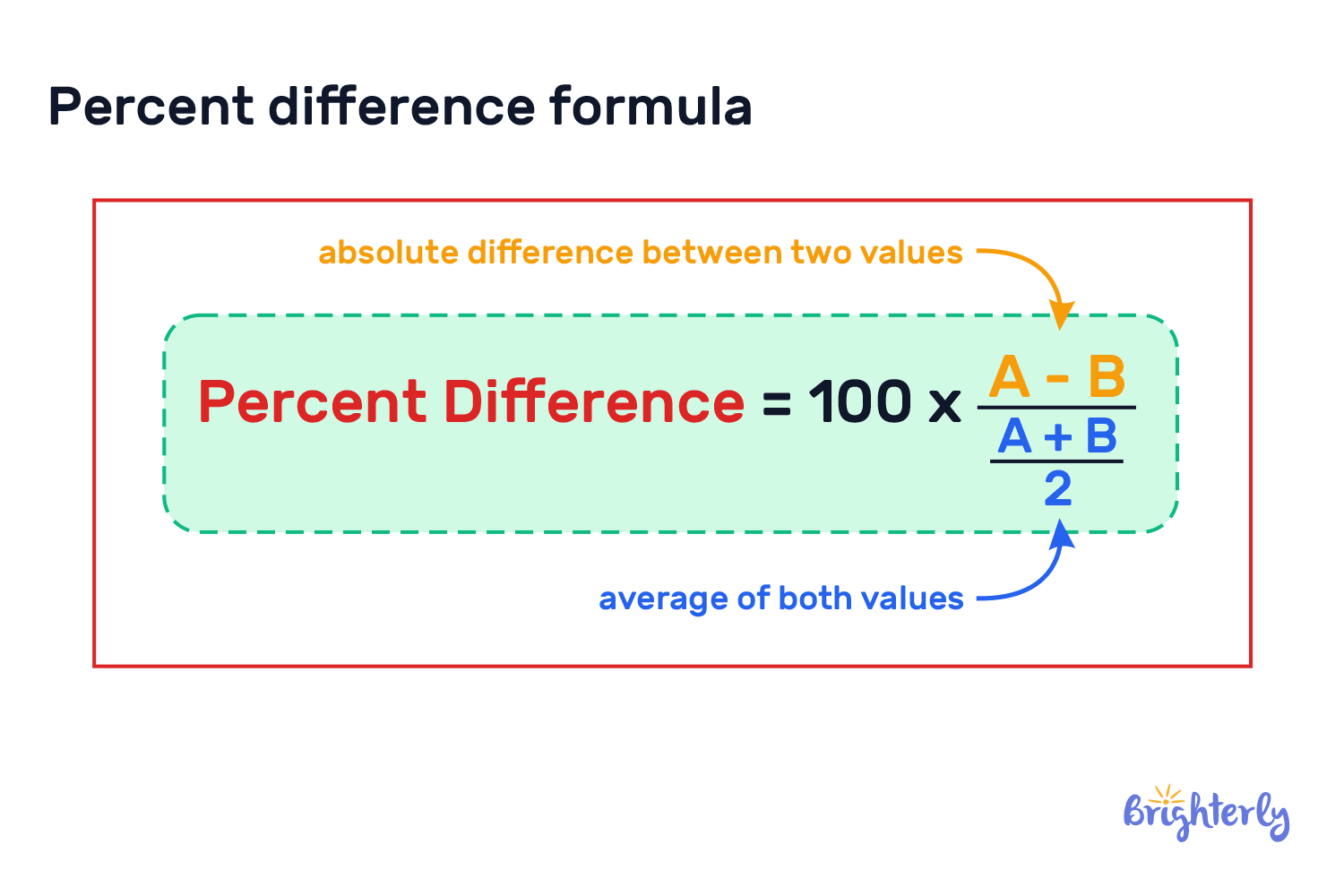
Whether you are calculating the return on a stock, determining your debt-to-income ratio, or figuring out a discount at the store, the ability to fluidly move between raw figures and percentages is essential. This guide explores the mechanics of percentage calculations through the lens of financial strategy, ensuring you can leverage these insights to build a more robust financial future.
1. The Foundation of Financial Literacy: Why Percentages Matter
At its core, a percentage is a way to express a number as a fraction of 100. In the world of money, this provides a “universal language” that allows us to compare a $1,000 profit on a $10,000 investment against a $1,000 profit on a $100,000 investment. Without percentages, both look like a “thousand-dollar gain.” With percentages, we see that one is a stellar 10% return while the other is a meager 1% return.
The Core Formula and Its Application in Personal Finance
The fundamental formula to find what percentage one number is of another is straightforward:
** (Part / Whole) × 100 = Percentage **
In personal finance, the “Part” is usually the specific expense or gain you are looking at, and the “Whole” is your total income or total investment. For example, if you want to know what percentage of your $5,000 monthly income is spent on a $1,500 rent payment, you divide 1,500 by 5,000 (0.3) and multiply by 100 to get 30%. Mastering this simple calculation allows you to benchmark your spending against financial standards, such as the common advice to keep housing costs under 30% of your gross income.
Translating Math into Actionable Data
Understanding the math is the first step; interpreting it is the second. In money management, percentages represent “efficiency.” A high savings rate percentage indicates a high level of financial discipline regardless of absolute income. By converting your financial totals into percentages, you remove the “noise” of large numbers and can focus on the trends. Are your grocery expenses as a percentage of income rising month over month? Is your portfolio’s percentage of high-risk assets exceeding your comfort zone? These questions are only answerable once you can confidently work out the percentage of two numbers.
2. Practical Applications in Investing and Wealth Building
For the modern investor, percentages are the primary metric for performance. Raw dollar gains are secondary to the rate of return, as the rate determines how fast your wealth will compound over time. When comparing two different mutual funds or stocks, the “percentage gain” is the only fair way to determine which asset is performing better relative to the capital deployed.
Calculating Return on Investment (ROI)
The most common use of percentage calculation in the Money niche is the Return on Investment (ROI). To calculate this, you take the “Part” (the net profit) and divide it by the “Whole” (the original cost of the investment).
ROI Formula: [(Current Value – Original Cost) / Original Cost] × 100
If you purchased a share of a tech company for $150 and it is now worth $180, your “Part” is the $30 profit. Dividing $30 by the original $150 gives you 0.20, or a 20% ROI. This percentage allows you to compare that stock’s performance against other benchmarks, like the S&P 500’s average annual return, to see if your investment strategy is actually beating the market.
Understanding Compounding and Growth Rates
Percentages also allow you to calculate Year-Over-Year (YoY) growth, which is vital for long-term wealth building. If your net worth was $50,000 last year and is $60,000 this year, you have seen a 20% increase. By tracking these percentages over a decade, you can project future wealth based on average growth rates. This is the logic behind the “Rule of 72,” a financial shortcut that helps you estimate how many years it will take to double your money at a specific percentage interest rate. Without a firm grasp of how to derive a percentage from two numbers, these high-level wealth strategies remain out of reach.

3. Managing Your Expenses and Budgeting Accuracy
Budgeting is the cornerstone of personal finance, and effective budgeting is almost entirely dependent on percentage-based allocations. Instead of focusing on “spending $400 on entertainment,” professional financial planners often focus on “spending 5% of income on entertainment.” This shift in perspective ensures that as your income grows, your lifestyle doesn’t inflate at a disproportionate rate.
The 50/30/20 Rule and Percentage-Based Budgeting
The 50/30/20 rule is a popular financial framework that suggests allocating 50% of your income to “Needs,” 30% to “Wants,” and 20% to “Savings and Debt Repayment.” To implement this, you must constantly work out the percentage of your spending categories relative to your take-home pay.
For instance, if you earn $4,000 a month and spend $800 on student loans and savings, you calculate ($800 / $4,000) × 100 to find that you are exactly at the 20% mark. If your “Wants” category starts creeping up to $1,600, a quick calculation ($1,600 / $4,000 = 40%) reveals that you are overspending in that category by 10% and need to adjust your habits.
Analyzing Debt-to-Income Ratios
When you apply for a mortgage or a car loan, lenders use a specific percentage to determine your creditworthiness: the Debt-to-Income (DTI) ratio. This is calculated by dividing your total monthly debt payments by your gross monthly income.
Lenders typically look for a DTI of 36% or less. If your monthly debts total $2,000 and your gross income is $6,000, your DTI is 33.3% ($2,000 / $6,000). Knowing how to work out this percentage before you walk into a bank gives you significant leverage and a realistic view of your borrowing power. It allows you to see yourself through the eyes of a financial institution, enabling you to take steps to lower that percentage—either by increasing income or paying down debt—before applying for a major loan.
4. Business Finance and Profitability Metrics
For entrepreneurs and side-hustlers, understanding percentages is the difference between running a profitable venture and running a charity. In business, “revenue” is a vanity metric; “margin” is a sanity metric. Margin is always expressed as a percentage, and it tells you how much of every dollar earned actually stays in your pocket.
Gross Profit Margin vs. Net Profit Margin
To find your Gross Profit Margin, you take your Gross Profit (Total Sales minus Cost of Goods Sold) and divide it by Total Sales.
Gross Margin % = (Gross Profit / Total Revenue) × 100
If your side hustle sells a product for $100 that costs $60 to make, your profit is $40. Your gross margin is 40%. However, the Net Profit Margin is even more telling, as it includes all other expenses like shipping, marketing, and taxes. If, after all those costs, you only keep $10 of that $100 sale, your net margin is 10%. Working out these percentages allows a business owner to identify where they are losing money and whether they need to raise prices or cut overhead.
Tax Calculations and Effective Rates
Taxation is another area where the percentage of two numbers is a vital calculation. Many people are confused by tax brackets, but the “Effective Tax Rate” is the only number that truly matters for your bottom line. Your effective tax rate is found by dividing your total tax paid by your total taxable income.
If you earned $100,000 but paid $18,000 in total taxes after deductions, your effective tax rate is 18%. This is a much more useful number for financial planning than your marginal tax bracket (which might be 22% or 24%), as it tells you exactly what percentage of every dollar earned is actually yours to keep. This helps in “tax-loss harvesting” and other advanced financial moves designed to lower that specific percentage over time.

Conclusion: The Power of Numerical Perspective
Mastering the calculation of a percentage from two numbers is one of the most empowering skills in the “Money” niche. It transforms raw, intimidating data into clear, comparative insights. By viewing your finances through the lens of percentages, you move away from emotional reactions to your bank balance and toward a systematic, analytical approach to wealth.
Whether you are optimizing an investment portfolio, tightening a household budget, or scaling a business, the ability to calculate and interpret these percentages is what separates those who work for money from those who make their money work for them. In the end, wealth is not just about the numbers you have; it is about the ratios you maintain and the growth percentages you achieve. Start applying these formulas to your daily financial life, and you will find a new level of clarity in every transaction you make.
aViewFromTheCave is a participant in the Amazon Services LLC Associates Program, an affiliate advertising program designed to provide a means for sites to earn advertising fees by advertising and linking to Amazon.com. Amazon, the Amazon logo, AmazonSupply, and the AmazonSupply logo are trademarks of Amazon.com, Inc. or its affiliates. As an Amazon Associate we earn affiliate commissions from qualifying purchases.