
The sight of a red dashboard across major stock indices often triggers a visceral reaction for investors. Whether you are a seasoned portfolio manager or a retail investor checking a brokerage app during a lunch break, seeing the S&P 500, the Nasdaq Composite, or the Dow Jones Industrial Average trending downward raises an immediate question: Why? Financial markets are complex ecosystems where millions of variables interact in real-time, but market downturns are rarely the result of a single, isolated event. Instead, they are usually the culmination of macroeconomic shifts, corporate performance anxieties, and the psychological tug-of-war between fear and greed.
Understanding why the market is down today requires looking past the surface-level price action to examine the underlying structural factors. From central bank policies to geopolitical shifts, the reasons for a market dip provide essential context for making informed financial decisions rather than reacting out of panic.
Macroeconomic Catalysts and the Federal Reserve’s Influence
At the heart of almost every major market move lies the influence of central banks, specifically the Federal Reserve in the United States. Because the U.S. dollar serves as the world’s reserve currency and the U.S. Treasury bond is considered the “risk-free rate,” any shift in monetary policy sends shockwaves through every asset class globally.
Interest Rate Expectations and Yield Curve Shifts
The most frequent driver of a down market in the current era is the trajectory of interest rates. When the Federal Reserve signals a “hawkish” stance—implying that rates will stay higher for longer or that further hikes are necessary to combat inflation—the market tends to sell off. Higher interest rates increase the cost of borrowing for corporations, which can eat into profit margins and stifle expansion plans.
Furthermore, as interest rates rise, the “discount rate” used to value future cash flows also increases. For growth stocks and tech companies, whose valuations are heavily dependent on earnings expected years in the future, a higher discount rate significantly reduces their present value. This is why the tech-heavy Nasdaq is often the first to dip when bond yields spike. When the 10-year Treasury yield climbs, investors often rotate out of “risky” equities and into the safety of fixed-income assets, creating downward pressure on stock prices.
Inflation Data and the Consumer Price Index (CPI)
Inflation remains the primary antagonist for market stability. Investors closely monitor the Consumer Price Index (CPI) and the Personal Consumption Expenditures (PCE) price index. If inflation data comes in “hotter” than economists predicted, the market reacts negatively because it anticipates that the Fed will be forced to maintain restrictive policies. Persistent inflation erodes consumer purchasing power, leading to lower demand for goods and services, which ultimately hurts the bottom line of publicly traded companies. Today’s market dip is often a delayed reaction to data suggesting that the “last mile” of bringing inflation down to the 2% target is proving more difficult than anticipated.
Corporate Earnings and the Burden of High Expectations
While macroeconomics sets the stage, corporate earnings are the individual performers that dictate the market’s mood. We are often in an environment where “good” news isn’t good enough. If the market has priced in a perfect growth trajectory, even a slight miss in revenue or a conservative forecast for the next quarter can lead to a sharp sell-off.
The Tech Sector’s Role in Driving Down Indices
Because the modern market is heavily weighted toward a handful of massive technology firms—often referred to as the “Magnificent Seven”—the performance of these few companies can dictate the direction of the entire market. If a leading AI chipmaker or a software giant reports earnings that suggest a slowing of capital expenditure or a saturation of the market, it doesn’t just affect that one stock. It triggers a sector-wide correction. When these “heavyweights” lose 2% or 3% of their value in a single session, the weighted indices almost inevitably fall, regardless of how the remaining hundreds of companies are performing.
Guidance and Growth Sustainability
Investors buy stocks based on future potential, not past performance. Therefore, a company’s “guidance”—its own projection of future earnings—is often more important than its current results. If CEOs express uncertainty about the consumer environment, mention rising labor costs, or highlight supply chain disruptions, the market interprets this as a signal to de-risk. A “down” day is frequently the result of a cluster of companies lowering their outlooks, leading analysts to revise their price targets downward across entire industries.
Geopolitical Uncertainty and Global Supply Chains
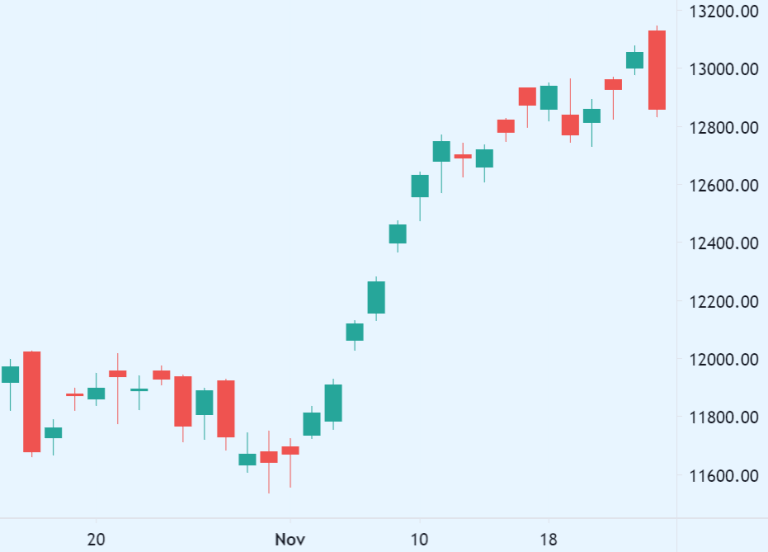
Financial markets loathe uncertainty. While domestic economic data is quantifiable, geopolitical events are volatile and unpredictable. When tensions rise in key economic regions, the market’s immediate response is to “price in” the worst-case scenario, leading to a flight to safety.
Energy Prices and Commodity Volatility
Geopolitical instability in oil-producing regions or major trade corridors can lead to a spike in energy prices. Since energy is an input cost for almost every business—from manufacturing to logistics—rising oil and gas prices are inherently inflationary. When the market sees a sudden jump in Brent Crude or Natural Gas futures, it anticipates higher operating costs for companies and less discretionary income for consumers. This creates a bearish sentiment that can pull the entire market down as investors prepare for a potential “stagflationary” environment where growth slows but prices rise.
Trade Tensions and International Market Contagion
We live in a hyper-connected global economy. A regulatory crackdown in an overseas market, a change in trade tariffs, or a slowing of the second-largest economy in the world can have immediate repercussions for domestic stocks. Multi-national corporations rely on global demand. If international markets are struggling or if trade barriers are being erected, the projected global growth for the fiscal year is downgraded. This “contagion” effect means that bad news in London, Tokyo, or Shanghai can manifest as a “down day” on Wall Street before the opening bell even rings.
Technical Analysis and Market Psychology
Not every market drop is fundamentally driven. Sometimes, the market goes down simply because it has gone up too much, too fast. This is where technical analysis and investor psychology come into play.
Resistance Levels and Profit Taking
After a sustained bull run, indices often hit “resistance levels”—psychological or historical price points where selling pressure outweighs buying pressure. When the market fails to break through these levels, institutional investors often decide to “take profits” off the table. This mass selling triggers a localized dip. If the dip breaks through “support levels” (price points where buyers usually step in), it can trigger automated sell orders, accelerating the downward momentum.
The Impact of High-Frequency Trading and Algorithms
A significant portion of daily trading volume is now driven by algorithms and high-frequency trading (HFT) systems. These programs are designed to react to specific triggers, such as a breach of a moving average or a specific keyword in a news headline. When a sell-off starts, these algorithms can amplify the movement. What might have been a modest 0.5% dip based on news can quickly turn into a 1.5% drop as automated systems cascade sell orders to minimize losses. This creates the “flash” volatility that characterizes many modern trading sessions.
Strategies for Investors During Downward Trends
While a down market can be unsettling, it is a natural and necessary part of the market cycle. Markets that only go up eventually form bubbles that result in catastrophic crashes; periodic “corrections” (a drop of 10%) or “pullbacks” (a drop of 5%) help to wash out excess speculation and reset valuations to more realistic levels.
Rebalancing and Risk Mitigation
For the long-term investor, a down market is an opportunity to rebalance. If your portfolio was weighted 80% in stocks and 20% in bonds, and the stock market drop has shifted that ratio to 75/25, rebalancing involves selling some of the “safer” assets to buy the “riskier” assets at a discount. This disciplined approach ensures that you are effectively “buying low,” which is the fundamental tenet of wealth accumulation.
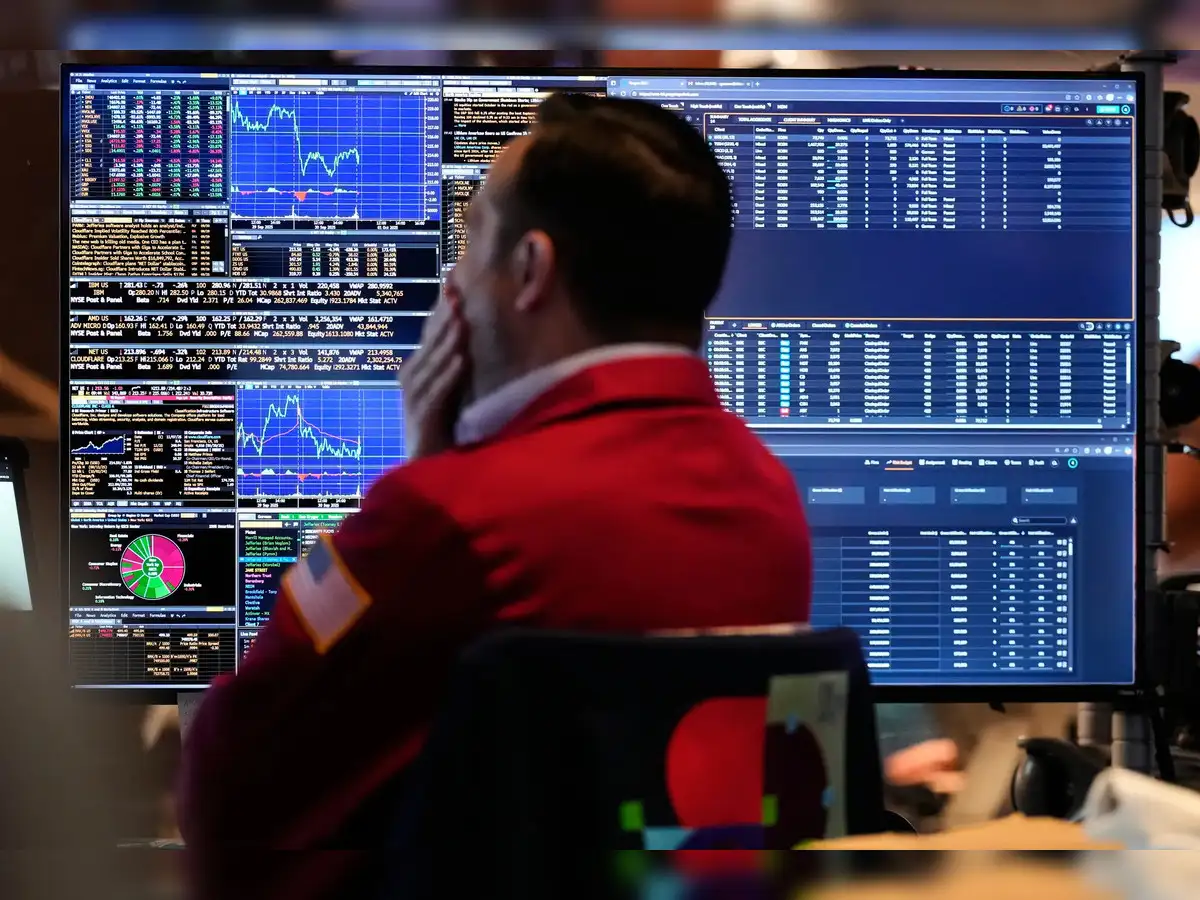
Finding Value in a Red Market
Professional investors often view down days as “sales.” When the entire market drops due to macro fears or algorithmic selling, high-quality companies with strong balance sheets and consistent earnings are often “thrown out with the bathwater.” This creates a disconnect between a company’s intrinsic value and its stock price. Identifying these opportunities requires a focus on fundamentals—looking at Price-to-Earnings (P/E) ratios, debt-to-equity levels, and free cash flow.
In conclusion, the reason the market is down today is rarely a mystery; it is usually a combination of rising yields, a cooling of corporate optimism, or a reaction to global instability. By understanding these levers, investors can move away from emotional reactions and toward a strategic mindset that views volatility not as a threat, but as a standard characteristic of a functional financial system. Staying the course during these fluctuations is often what separates successful long-term wealth builders from those who are sidelined by the noise of daily price action.
aViewFromTheCave is a participant in the Amazon Services LLC Associates Program, an affiliate advertising program designed to provide a means for sites to earn advertising fees by advertising and linking to Amazon.com. Amazon, the Amazon logo, AmazonSupply, and the AmazonSupply logo are trademarks of Amazon.com, Inc. or its affiliates. As an Amazon Associate we earn affiliate commissions from qualifying purchases.