
Unpacking Macroeconomic Headwinds
The current market downturn is not an isolated event but rather a confluence of powerful macroeconomic forces reshaping global financial landscapes. At the forefront of these pressures is persistent inflation, a phenomenon that has proven more tenacious than initially anticipated. Across major economies, consumer and producer prices have surged, eroding purchasing power and compressing corporate profit margins. This inflationary environment has compelled central banks, most notably the U.S. Federal Reserve, to adopt aggressive monetary tightening policies. Interest rates have been hiked repeatedly, increasing the cost of borrowing for both businesses and consumers. For companies, higher interest expenses directly impact profitability, while for consumers, increased mortgage and loan rates dampen spending on big-ticket items like homes and cars, slowing economic activity. Furthermore, rising rates push up bond yields, making fixed-income investments more attractive relative to riskier equities and increasing the discount rate applied to future corporate earnings, thereby reducing their present value.
Alongside inflationary concerns, the specter of a global economic slowdown, if not an outright recession, looms large. Several indicators signal this potential contraction: inverted yield curves, a traditional harbinger of recession, have appeared in key bond markets; manufacturing purchasing managers’ indices (PMIs) show declining activity; and retail sales figures, while sometimes resilient, exhibit underlying weaknesses in consumer confidence. A decelerating economy directly translates to reduced demand for goods and services, which in turn impacts corporate revenues and earnings forecasts. Businesses respond by scaling back expansion plans, delaying investments, and in some cases, implementing layoffs, further exacerbating the economic downturn. Even the seemingly strong labor market presents a double-edged sword; while low unemployment is generally positive, extreme tightness can fuel wage inflation, adding another layer of cost pressure on companies struggling with already thin margins. Any signs of weakening employment, such as rising jobless claims, could quickly shift market sentiment from inflation concerns to outright recession fears.
Sector-Specific Performance and Earnings Scrutiny
While broad macroeconomic trends set the stage, the current market downturn is also characterized by significant sector-specific pressures and intense scrutiny of corporate earnings. The technology sector, often a growth engine during bull markets, has demonstrated particular vulnerability. High-growth tech stocks, which derive a significant portion of their value from projected future earnings, are acutely sensitive to rising interest rates. As the cost of capital increases, those future earnings are discounted more heavily, leading to a de-rating of valuations. The market has shifted its focus from “growth at any cost” to profitability, free cash flow, and sustainable business models. This pivot has triggered a wave of layoffs and cost-cutting measures across prominent tech giants, signaling a recalibration of priorities and a more cautious outlook on expansion.
Energy and commodity markets, conversely, have experienced extreme volatility. Geopolitical events, such as ongoing conflicts, continue to disrupt supply chains and exert upward pressure on oil, natural gas, and other raw material prices. While this benefits energy producers, it significantly increases input costs for manufacturing, transportation, and agricultural sectors, contributing to broader inflationary pressures and impacting their respective profit margins. The financial sector, initially seen as a beneficiary of rising interest rates due to potentially wider net interest margins, now faces increasing risks. A slowing economy elevates the potential for loan defaults, particularly in areas like real estate lending, and could tighten credit conditions overall.
The earnings season plays a crucial role in validating or challenging market expectations. Recent quarters have seen a rising number of companies missing revenue or earnings estimates, or perhaps more critically, providing significantly lowered guidance for future performance. These downward revisions act as powerful negative catalysts, signaling that the difficult economic environment is indeed impacting the real economy. Supply chain disruptions, which seemed to be easing, have shown persistence in certain industries like automotive and electronics, continuing to impede production and inflate costs, further highlighting the fragility of global manufacturing and distribution networks.
Geopolitical Landscape and Global Interdependencies
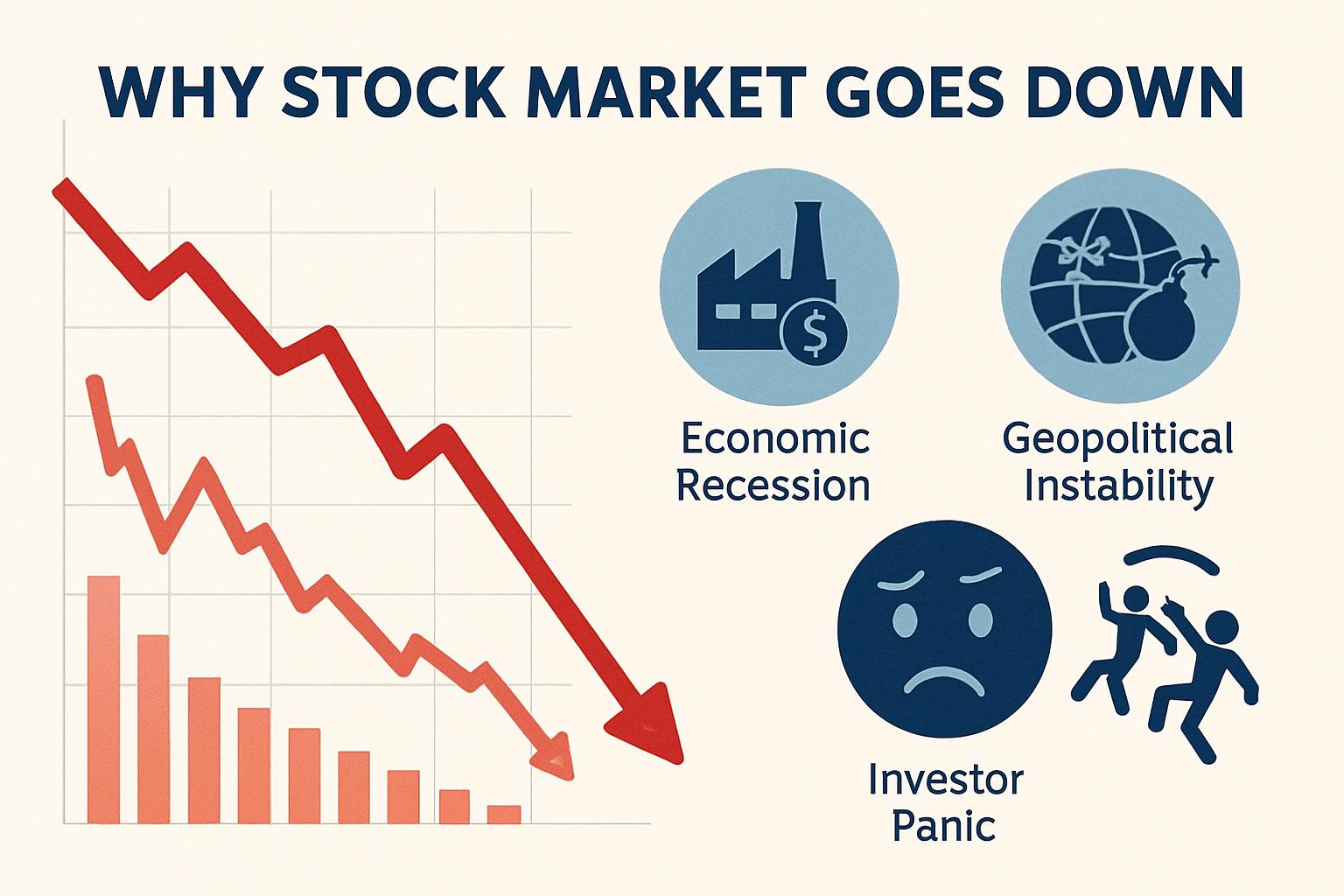
Beyond domestic economic indicators, the current market downturn is heavily influenced by a complex and often unpredictable geopolitical landscape, underscoring the interconnectedness of global financial systems. Ongoing international conflicts, most notably the war in Ukraine, have had profound and far-reaching effects. These conflicts directly disrupt global supply chains, particularly impacting energy markets and critical food supplies. The resulting volatility in commodity prices fuels inflation worldwide, making it harder for central banks to tame rising costs without stifling economic growth. Furthermore, such geopolitical tensions create an environment of heightened uncertainty, eroding investor confidence and encouraging a flight to safety, typically away from riskier equity markets. Trade tensions and the resurgence of protectionist policies in various regions also contribute to market jitters. These policies can lead to supply chain fragmentation, increased tariffs, and higher costs for businesses, ultimately dampening global trade volumes and profitability for multinational corporations.
Another significant factor is the economic health of major global players, particularly China. As the world’s second-largest economy and a critical manufacturing hub, China’s performance has global ripple effects. Recent slowdowns in China, driven by factors such as stringent COVID-19 lockdown policies impacting industrial output and consumer spending, alongside challenges in its property market, have created headwinds for global demand. A weaker China translates to reduced demand for commodities from resource-rich nations and fewer orders for manufactured goods from exporting countries, impacting global growth forecasts. The interconnectedness means that economic woes in one major economy can quickly transmit to others through trade, investment, and financial channels.
Currency fluctuations also play a vital role. The strength of the US dollar, often seen as a safe-haven asset during times of global uncertainty, impacts multinational corporations based outside the U.S. whose earnings are reported in dollars, potentially making their exports less competitive and reducing the dollar value of their overseas profits. Conversely, a strong dollar can create significant financial stress in emerging markets, increasing the cost of dollar-denominated debt and exacerbating inflationary pressures from imported goods, potentially leading to currency crises that spill over into broader market instability.
Investor Sentiment, Technical Signals, and Market Psychology
Beyond the tangible economic and geopolitical factors, investor sentiment, technical signals, and market psychology wield immense power in shaping market direction during a downturn. Periods of market decline are often characterized by an overwhelming sense of Fear, Uncertainty, and Doubt (FUD). Negative news cycles, whether concerning inflation, interest rates, earnings disappointments, or geopolitical events, are amplified, feeding into collective anxieties. This environment can trigger herd mentality, where investors, driven by fear of further losses, capitulate and sell off holdings, thereby accelerating the market’s descent regardless of individual company fundamentals. Retail investor participation has increased significantly in recent years, making shifts in their collective sentiment a more impactful force on daily market movements.
Technical analysis also plays a crucial role as markets breach significant support levels. Major market indices like the S&P 500, Nasdaq, and Dow Jones have experienced breakdowns below important moving averages and psychological price floors. Once these technical barriers are breached, it often triggers algorithmic trading strategies designed to sell, and can also lead to increased human selling pressure as traders anticipate further declines. Bearish technical patterns, such as a “death cross” (where a shorter-term moving average crosses below a longer-term one), often reinforce negative sentiment and signal potential for continued weakness, prompting more defensive positioning among institutional and individual investors alike.
Adding another layer of complexity is the phenomenon of quantitative tightening (QT). After years of quantitative easing (QE), where central banks injected liquidity into the financial system, many are now doing the opposite by unwinding their balance sheets. This process effectively pulls liquidity out of the market, reducing the availability of cheap capital that fueled asset price appreciation in prior years. Less liquidity can make markets more volatile, as there are fewer buyers to absorb selling pressure, and it contributes to higher borrowing costs across the economy. The combination of pessimistic sentiment, validated by technical breakdowns and a tightening liquidity environment, creates a self-reinforcing downward spiral that defines much of the current market movement.
Navigating the Downturn: Strategies for Resilient Investors
In the face of a down market, maintaining a disciplined and strategic approach is paramount for resilient investors. One fundamental strategy is rebalancing and diversification. Regularly reviewing and adjusting your portfolio to align with your long-term risk tolerance is crucial. This might involve reducing overexposure to highly volatile assets or sectors that have been particularly hard hit, and instead reallocating to more defensive sectors such as utilities, consumer staples, and healthcare, which tend to be less sensitive to economic cycles. A well-diversified portfolio across asset classes, geographies, and industries helps mitigate risk during turbulent times.
Another key approach is to focus on quality and value. During downturns, the market tends to differentiate between companies with strong fundamentals and those that relied on speculative growth. Identifying businesses with robust balance sheets, consistent free cash flow generation, sustainable competitive advantages, and reasonable valuations becomes critical. Such companies are better positioned to weather economic storms and often recover more strongly when market conditions improve. Dividend-paying stocks from financially sound companies can also become attractive, offering a source of income that can partially offset capital losses and signal financial stability.
Dollar-cost averaging stands as a powerful tool for long-term investors. Instead of attempting to time the market (which is notoriously difficult, especially in volatile periods), dollar-cost averaging involves systematically investing a fixed amount of money at regular intervals, regardless of market fluctuations. This strategy ensures that you buy more shares when prices are low and fewer when prices are high, effectively reducing your average cost per share over time and capitalizing on eventual market recoveries.
Perhaps most importantly, maintaining a long-term perspective and emotional discipline is essential. Market downturns are a normal, albeit uncomfortable, part of economic cycles. Panicking and selling off investments during a decline often locks in losses and prevents participation in the eventual rebound. Investors should focus on their long-term financial goals and avoid making rash decisions based on daily market swings or fear-driven headlines. Understanding that volatility is inherent in investing helps to cultivate the patience needed to ride out difficult periods. Finally, maintaining a cash position is prudent. While not for long-term investing, having sufficient cash reserves for emergencies provides financial security and, strategically, can offer the flexibility to capitalize on potential buying opportunities when quality assets become undervalued and market sentiment begins to turn.
aViewFromTheCave is a participant in the Amazon Services LLC Associates Program, an affiliate advertising program designed to provide a means for sites to earn advertising fees by advertising and linking to Amazon.com. Amazon, the Amazon logo, AmazonSupply, and the AmazonSupply logo are trademarks of Amazon.com, Inc. or its affiliates. As an Amazon Associate we earn affiliate commissions from qualifying purchases.