
The daily rhythm of the stock market — the open, the close, the relentless tick of buy and sell orders — is a fundamental aspect of global finance. Yet, on certain days, the cacophony of trading falls silent, and screens display no movement. For investors, traders, and financial professionals, understanding “why the stock market is closed today” is more than a trivial inquiry; it’s crucial for managing expectations, planning strategies, and comprehending the underlying mechanics that ensure market integrity and efficiency. These closures, whether anticipated or unexpected, serve vital functions, ranging from allowing necessary operational rest to safeguarding the very stability of the financial system.

Scheduled Market Holidays: A Cornerstone of Financial Operations
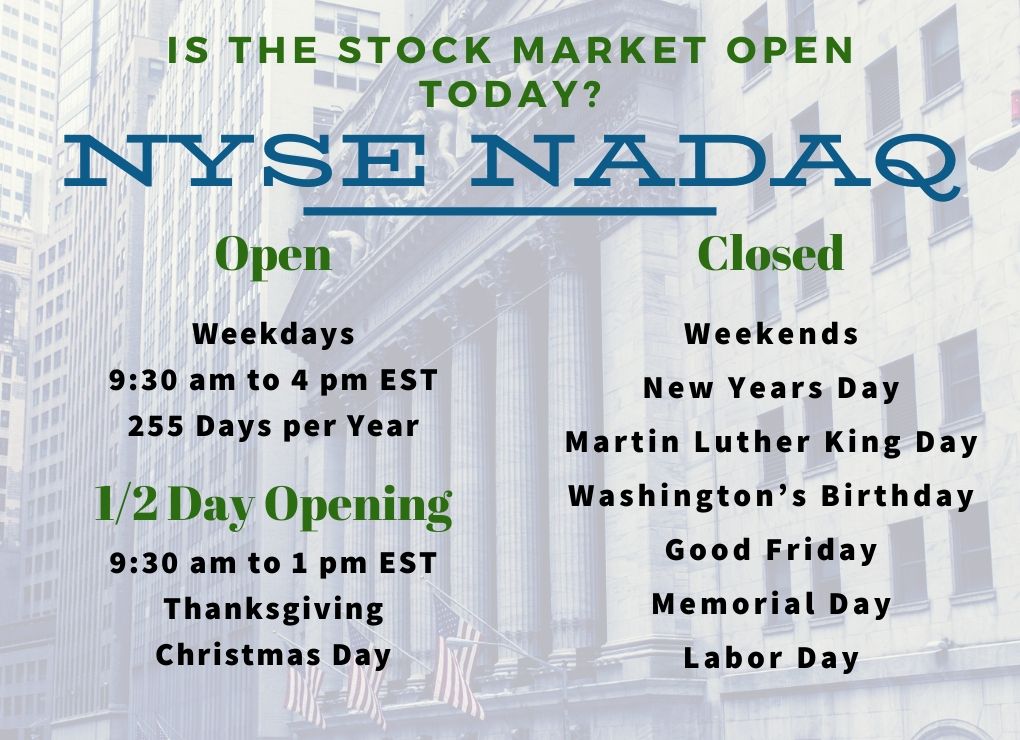
The most common reason for the stock market to be closed is the observance of a scheduled holiday. These are pre-determined dates when major exchanges like the New York Stock Exchange (NYSE) and Nasdaq halt trading, typically aligning with federal holidays or significant cultural observances.
Federal Holidays and Their Observance
In the United States, market holidays largely mirror federal holidays, ensuring that financial institutions and their employees can observe these national days of rest. Key examples include:
- New Year’s Day: January 1st marks the start of the new calendar year.
- Martin Luther King, Jr.’s Birthday: Celebrated on the third Monday of January, honoring the civil rights leader.
- Washington’s Birthday (Presidents’ Day): Observed on the third Monday of February.
- Good Friday: A Christian holiday falling on the Friday before Easter Sunday, often observed by financial markets despite not being a federal holiday.
- Memorial Day: The last Monday of May, commemorating fallen military personnel.
- Juneteenth National Independence Day: June 19th, marking the emancipation of enslaved African Americans.
- Independence Day: July 4th, celebrating the nation’s birth.
- Labor Day: The first Monday of September, honoring the American labor movement.
- Thanksgiving Day: The fourth Thursday of November, with markets often closing early on the subsequent Friday.
- Christmas Day: December 25th, celebrating the birth of Jesus Christ.
These days are not arbitrary; they reflect national priorities and provide a structured pause in the otherwise relentless pace of financial markets.
The Rationale Behind Holiday Closures
Beyond simply observing national holidays, market closures serve several strategic purposes:
- Employee Well-being: The financial sector is demanding. Holiday breaks offer crucial respite for countless professionals, from traders and brokers to back-office staff, preventing burnout and promoting work-life balance.
- Fairness and Equal Access: By closing markets, exchanges ensure that all participants, regardless of their location or access to information, are on an equal footing when trading resumes. This prevents a scenario where some market participants might be disadvantaged due to reduced staffing or connectivity during a holiday.
- Operational Alignment: Stock market closures often coincide with bank closures, simplifying the complex processes of trade settlement, clearing, and fund transfers that underpin all market activity.
- Preventing Low-Liquidity Volatility: Trading volume typically drops significantly on or around holidays. Operating markets during these times could lead to exaggerated price swings due to low liquidity, where even small orders can have disproportionate impacts. Closures mitigate this risk.
Global Variations in Market Holiday Schedules
It’s important to remember that financial markets are global. While the NYSE or Nasdaq might be closed, other major exchanges around the world could be operating. The London Stock Exchange, Tokyo Stock Exchange, Frankfurt Stock Exchange, and others each have their own unique holiday calendars, often reflecting their respective national and cultural observances. This highlights the decentralized nature of global finance and why “the stock market is closed today” is a statement that often requires specifying which stock market.
Beyond the Holiday: Understanding Exceptional Market Closures and Their Implications
While scheduled holidays are predictable, markets can also close under extraordinary circumstances, often with significant implications for investors and the broader economy.
Emergency Closures and Force Majeure
These are rare but critical instances when exchanges are forced to close due to unforeseen events. Examples include:
- Natural Disasters: Major weather events like hurricanes (e.g., Hurricane Sandy in 2012, which led to a two-day NYSE closure) can disrupt physical operations, power, and transportation, making it impossible to operate safely and efficiently.
- Acts of Terrorism or National Crisis: The most prominent example is the week-long closure of the NYSE after the September 11, 2001, terrorist attacks, necessitated by the physical damage in lower Manhattan and the need for national security and stability.
- Severe Technical Malfunctions: While less common for a full-day closure due to redundancies, a catastrophic system failure that compromises the integrity or functionality of an exchange could potentially trigger a closure.
Such closures are typically mandated by exchange authorities in consultation with regulatory bodies like the Securities and Exchange Commission (SEC) to protect investors and maintain market order during periods of extreme uncertainty or operational impossibility.
System Maintenance and Upgrades
Less frequently, significant infrastructure upgrades or system-wide maintenance might necessitate extended downtime, or even a full day of closure, though this is usually communicated well in advance. As trading systems become increasingly complex and reliant on high-speed technology, scheduled downtime allows exchanges to implement critical updates, test new features, and ensure the robustness of their platforms without disrupting live trading. This proactive maintenance is crucial for preventing future glitches and enhancing market efficiency.
Impact on Trading and Liquidity
Both anticipated and unanticipated closures can have distinct impacts:
- Delayed Trading: Orders placed during a closure are typically queued and executed at the market open, potentially at prices different from when the order was placed.
- Information Asymmetry: During a closure, significant news (economic data, corporate earnings, geopolitical events) can accumulate. When markets reopen, this pent-up information can lead to sharp price movements and increased volatility as participants react simultaneously.
- Reduced Liquidity: Off-hours trading (pre-market and after-hours) often has significantly lower liquidity than regular trading hours. During a full market closure, even these avenues cease, completely halting price discovery for exchange-traded securities. This can create price gaps when the market reopens.
Strategic Downtime: The Operational and Regulatory Benefits
Market closures, whether routine or exceptional, are not merely inconvenient pauses; they are strategic components of a well-regulated financial ecosystem, offering profound operational and regulatory benefits.
Maintaining Market Integrity and Fairness
Closures are instrumental in upholding the fairness and integrity of the market. During periods of significant news events or global developments that occur outside trading hours, a market closure ensures that all participants have the opportunity to digest the information fully before making trading decisions. This prevents a scenario where a subset of participants might gain an unfair advantage due to privileged early access or the ability to trade in a highly illiquid environment. When markets reopen, a more level playing field is established, reducing the potential for manipulation or informed trading based on fragmented information.
Facilitating Back-Office Operations and Settlement
The visible act of buying or selling a stock is just the tip of the iceberg. Beneath the surface, a complex network of back-office operations, clearinghouses, and banks work tirelessly to ensure trades are settled correctly, funds are transferred, and ownership records are updated. This process, known as settlement, typically takes several days (T+2, meaning trade date plus two business days). Market holidays provide invaluable downtime for these critical functions.
- Reconciliation: Financial institutions use these periods to reconcile their books and ensure that all trades match up perfectly, minimizing errors and discrepancies.
- System Upgrades and Testing: Downtime allows for the implementation and testing of software updates, security patches, and infrastructure improvements without risking disruption to live trading. This is vital for maintaining robust and secure financial systems.
- Risk Management: Clearinghouses, which act as intermediaries guaranteeing trades, use these periods to process risk assessments, manage collateral, and ensure the stability of the entire settlement process. Without these breaks, the immense volume and complexity of global trades could overwhelm these systems.
Reducing Volatility and Speculation
In times of high uncertainty or following major economic or geopolitical announcements, a market closure can act as a crucial circuit breaker. Instead of allowing immediate, potentially panic-driven reactions to unfold in a chaotic manner, the pause provides an opportunity for:
- Information Digestion: Investors and analysts have time to thoroughly assess the implications of new information, moving beyond initial emotional responses.
- Strategic Planning: Companies, institutional investors, and individual traders can formulate more reasoned strategies for when the market reopens, rather than making hasty decisions.
- Preventing Contagion: In extreme cases, a closure can prevent a localized shock from cascading into a broader market meltdown, giving regulators and policymakers time to intervene and stabilize the situation. This controlled pause can lead to a more orderly reopening and reduced overall volatility.
Navigating Closed Markets: Investor Strategies and Opportunities
For investors, a closed stock market doesn’t mean a halt to all financial activity. Instead, it presents unique opportunities for reflection, research, and strategic adjustment.
Off-Hours Trading and Its Limitations
When the main market is closed for the day, some investors might turn to off-hours trading, which includes pre-market and after-hours sessions. These periods allow for trading outside standard market hours, typically facilitated by electronic communication networks (ECNs). However, it’s crucial to understand their limitations:
- Lower Liquidity: Trading volume is significantly lower during off-hours, meaning fewer buyers and sellers are present. This can lead to wider bid-ask spreads and difficulty in executing large orders without impacting prices.
- Higher Volatility: Due to lower liquidity, prices can be more volatile, and significant news released after market close can cause dramatic price swings in limited trading.
- Limited Access: Not all brokers offer extensive off-hours trading, and certain types of orders (e.g., market orders) might be restricted.
Crucially, during a full market holiday closure, even off-hours trading sessions are typically halted, meaning no exchange-listed stock can be bought or sold until the next scheduled opening.
Utilizing Downtime for Research and Planning
A market holiday provides an invaluable opportunity to step back from the daily grind of monitoring prices and engage in deeper, more strategic financial work:
- Portfolio Review: Use the time to conduct a thorough review of your existing portfolio. Assess performance, re-evaluate asset allocation, and identify any holdings that no longer align with your investment goals or risk tolerance.
- Fundamental and Technical Analysis: Dive into company financial reports, earnings transcripts, and industry news. For those employing technical analysis, this is an ideal time to study charts, identify patterns, and backtest strategies without the pressure of live market movements.
- Financial Education and Goal Setting: Read financial books, listen to podcasts, or complete online courses to deepen your understanding of investing principles, macroeconomic trends, or specific investment vehicles. Revisit your long-term financial goals and ensure your current strategy is on track to meet them.
- Tax Planning: If it’s towards the end of the year, a market holiday offers a chance to review your taxable gains and losses, consider tax-loss harvesting strategies, or consult with a financial advisor.
Diversification Beyond Exchange-Traded Assets
While the stock market might be closed, other asset classes and investment vehicles operate on different schedules. For instance, real estate markets continue to function, and certain commodities or alternative investments may have different trading hours or structures. While not a direct substitute for stock trading, understanding these diverse avenues reinforces the concept of a holistic financial strategy that doesn’t solely rely on the equities market. For most investors, however, the primary focus during a stock market closure should remain on their existing portfolios and planning for when trading resumes.
Preparing for Reopening
As the market approaches its reopening, thoughtful preparation can give investors an edge:
- Monitor Global News: Keep an eye on international news, economic data releases, and corporate announcements that occurred during the closure. These can significantly influence market sentiment upon reopening.
- Review Pre-Market Activity (if available): On the day of reopening, check pre-market futures or index activity, which can offer clues about the likely direction of the market open.
- Set Limit Orders: If you have specific buy or sell targets, consider using limit orders rather than market orders when the market reopens. This allows you to control the price at which your trade is executed, protecting you from potentially volatile opening price gaps.
Ultimately, market closures are not just periods of inactivity but essential components of a robust, fair, and efficient financial system. They provide crucial breathing room for both the complex machinery of finance and the individuals who participate in it, ensuring that when the bells ring again, trading can resume with integrity and purpose.
aViewFromTheCave is a participant in the Amazon Services LLC Associates Program, an affiliate advertising program designed to provide a means for sites to earn advertising fees by advertising and linking to Amazon.com. Amazon, the Amazon logo, AmazonSupply, and the AmazonSupply logo are trademarks of Amazon.com, Inc. or its affiliates. As an Amazon Associate we earn affiliate commissions from qualifying purchases.