
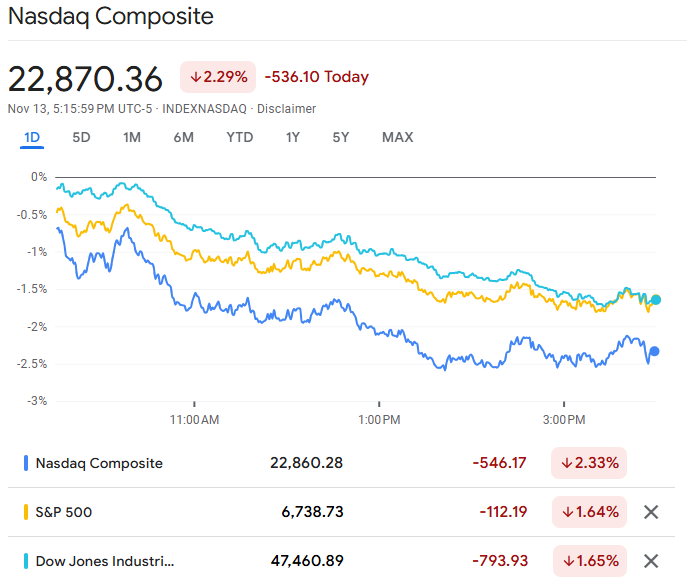
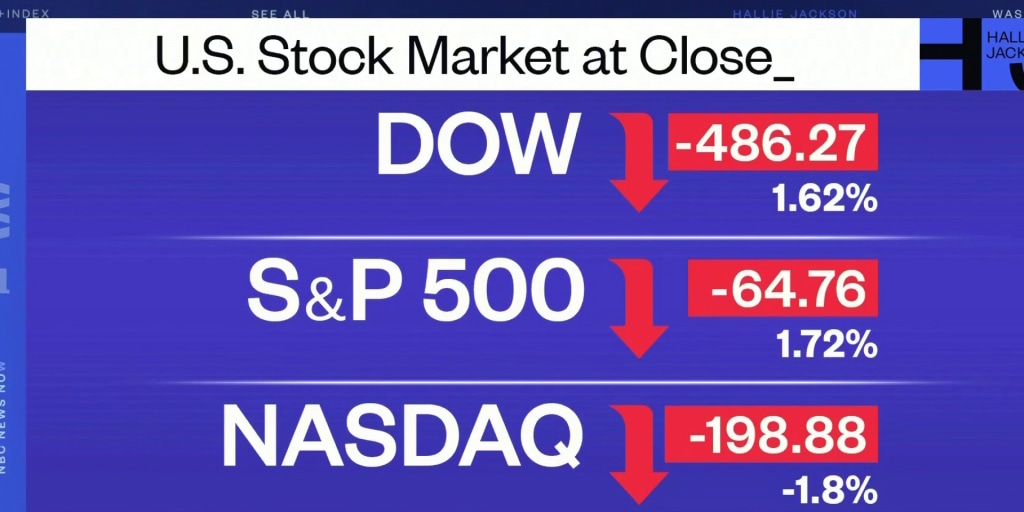
For many investors, opening a brokerage app to see a sea of red is a visceral experience that triggers an immediate question: “Why is the market dropping today?” While market fluctuations are a natural component of the financial ecosystem, sharp downturns often result from a complex intersection of macroeconomic data, corporate performance, geopolitical shifts, and psychological triggers. Understanding these mechanics is essential for any investor looking to navigate the complexities of personal finance and wealth management.
Market volatility is rarely the result of a single isolated event. Instead, it is typically the culmination of various pressures that finally reach a breaking point, causing institutional and retail investors alike to reassess their risk tolerance. To understand today’s movement, we must peel back the layers of the global economy to see how these disparate forces have aligned to push prices downward.

Macroeconomic Pressures and the Role of Central Banks
The most frequent driver of broad market sell-offs in the modern era is the shifting landscape of monetary policy. Central banks, particularly the Federal Reserve in the United States, act as the ultimate arbiters of liquidity. When the market drops, the first place seasoned analysts look is the interest rate environment.
The “Higher for Longer” Interest Rate Narrative
Interest rates are the gravity that holds stock valuations in check. When interest rates rise, the “discount rate” used to value future cash flows also increases. For growth stocks—companies that are expected to generate the bulk of their profits years into the future—higher rates make those future dollars less valuable today. If today’s drop is significant, it is often because the market has received a signal that interest rates will remain elevated for longer than previously anticipated. This repricing of risk affects everything from mortgage rates to corporate debt, squeezing profit margins and reducing the attractiveness of equities compared to “risk-free” assets like Treasury bonds.
Inflationary Data and the Consumer Price Index (CPI)
Inflation remains the primary antagonist for central banks. When the Consumer Price Index (CPI) or Personal Consumption Expenditures (PCE) data comes in higher than expectations, the market reacts violently. High inflation signals that the Fed may need to become more aggressive with rate hikes or delay planned cuts. Investors view persistent inflation as a double-edged sword: it erodes the purchasing power of consumers, potentially leading to a recession, while simultaneously forcing the hand of regulators to tighten the money supply. Today’s drop may be a direct reaction to data suggesting that the “inflation monster” has not yet been tamed.
Corporate Earnings and the “Priced for Perfection” Trap
While macroeconomics sets the stage, individual corporate health provides the script. The stock market is essentially a forward-looking machine that tries to predict the future profitability of businesses. When actual results or future guidance fail to meet these high expectations, the correction can be swift and merciless.
The Impact of Big Tech and Growth Stocks
In the current market structure, a handful of massive technology companies—often referred to as the “Magnificent Seven” or similar monikers—carry a disproportionate weight in major indices like the S&P 500 and the Nasdaq. If one or two of these giants report slowing growth, supply chain issues, or increased capital expenditure without an immediate return on investment, the entire index can be dragged down. Today’s drop might be rooted in a “earnings miss” or a downward revision in guidance from a sector leader, which causes a ripple effect across the broader market as investors fear a systemic slowdown.
Margin Compression and Labor Costs
Beyond the top-line revenue, investors are laser-focused on profit margins. In an environment of rising labor costs and fluctuating raw material prices, many companies are finding it difficult to maintain their historical profitability. If corporations report that they are unable to pass these costs on to consumers, it suggests that “margin compression” is taking hold. This realization often leads to a mass exit from stocks as investors seek refuge in sectors that are less sensitive to rising operational costs.
Geopolitical Instability and Global Uncertainty
The global economy is more interconnected than ever, meaning that a localized event on the other side of the world can trigger a massive sell-off in domestic markets. Uncertainty is the primary enemy of the stock market; while markets can price in “bad news,” they struggle to price in “unknown news.”
Energy Prices and Commodity Spikes
Geopolitical tensions in oil-producing regions or critical trade corridors can lead to immediate spikes in energy prices. Because energy is an input for almost every sector of the economy—from manufacturing to logistics—a sudden rise in the price of crude oil or natural gas acts as a de facto tax on both businesses and consumers. If today’s market drop is accompanied by a rise in the energy sector, it is likely that investors are bracing for higher operational costs and a potential slowdown in consumer discretionary spending.
Trade Relations and Regulatory Shifts
Global trade policy also plays a massive role in market stability. Sudden announcements regarding tariffs, export bans on critical technology like semiconductors, or major regulatory changes in large economies can disrupt established business models overnight. When a major trading partner shifts its policy stance, investors often sell first and ask questions later, leading to the “gap down” seen in many portfolios today.
Technical Factors and Market Psychology
Not every market drop is fundamentally driven. Sometimes, the mechanics of the market itself—the way trades are executed and the way humans react to fear—can amplify a minor decline into a significant rout.
Algorithmic Trading and Stop-Loss Cascades
A significant portion of daily trading volume is now controlled by sophisticated algorithms and high-frequency trading (HFT) systems. These programs are often designed to sell when certain technical “support levels” are breached. If the market dips below a psychologically important round number (like 5,000 on the S&P 500), it can trigger a wave of automated selling. This creates a feedback loop: the drop triggers the algorithms, the algorithms sell, the price drops further, and then more algorithms (and human stop-loss orders) are triggered. This “cascade effect” can explain why a market might drop 2% in an hour without any new breaking news.
The Fear and Greed Cycle
Human psychology remains a powerful force in finance. The “VIX,” often called the “fear gauge,” measures the market’s expectation of 30-day volatility. When the VIX spikes, it indicates that investors are buying protection against a further crash. Fear is contagious; when an investor sees their portfolio declining, the instinct to “preserve capital” often overrides their long-term strategy. This herd mentality can lead to “capitulation,” where a mass of investors sells at any price just to stop the pain, often marking the bottom of a short-term drop but causing significant carnage in the process.
Long-Term Strategies Amid Short-Term Volatility
While the reasons for today’s market drop are important for context, the more critical question for the individual investor is how to respond. Successful personal finance management is not about avoiding drops, but about surviving them with a strategy intact.
The Power of Diversification and Rebalancing
A well-diversified portfolio is the best defense against a market drop. If your investments are spread across different asset classes—such as domestic equities, international stocks, bonds, real estate, and commodities—a hit to one sector is often balanced by stability in another. Market drops also provide an opportunity for “rebalancing.” If the stock portion of your portfolio has dropped significantly, it may be time to move funds from more stable assets like bonds back into equities to maintain your target allocation. This forces you to “buy low,” which is the cornerstone of long-term wealth building.
Maintaining a Stoic Investment Perspective
History shows that the stock market has a 100% recovery rate from every downturn it has ever faced. While past performance is not a guarantee of future results, the upward trajectory of the global economy over decades suggests that today’s drop is likely a temporary setback rather than a permanent loss of capital—provided you don’t sell. For those with a long time horizon, such as those investing for retirement, these drops are often “noise.” In fact, for those who are in the “accumulation phase” of their lives, a market drop can be viewed as a sale, allowing them to purchase more shares at a lower cost through dollar-cost averaging.
In conclusion, “why the market drop today” is a question with many answers, ranging from Fed policy and inflation data to technical glitches and human fear. By understanding these catalysts, investors can move away from emotional reactions and toward a more analytical, disciplined approach to their financial future. The key is to remember that volatility is the price one pays for the superior long-term returns that the equity markets provide. Those who can withstand the red days are the ones who ultimately benefit from the green years.
aViewFromTheCave is a participant in the Amazon Services LLC Associates Program, an affiliate advertising program designed to provide a means for sites to earn advertising fees by advertising and linking to Amazon.com. Amazon, the Amazon logo, AmazonSupply, and the AmazonSupply logo are trademarks of Amazon.com, Inc. or its affiliates. As an Amazon Associate we earn affiliate commissions from qualifying purchases.