
Today, the financial markets are abuzz with speculation surrounding Tesla (TSLA), as its stock has experienced a notable upward movement. For investors, both seasoned and novice, understanding the drivers behind such a surge is paramount, not just for Tesla but for navigating the broader landscape of growth stocks and market sentiment. This article delves into the intricate financial mechanisms, investor psychology, and business fundamentals that likely contributed to Tesla’s positive performance today, offering insights strictly from a “Money” perspective.
Decoding Market Movements: Understanding Tesla’s Recent Surge
When a stock like Tesla experiences a significant uptick, it’s rarely attributable to a single factor. Instead, it’s often a confluence of immediate catalysts intersecting with broader market trends and underlying financial health. Pinpointing these elements is crucial for any investor attempting to rationalize market behavior.

The Immediate Catalysts: What Sparked the Rally?
Several short-term events or announcements can act as potent accelerants for stock prices. For Tesla, today’s rise could be linked to a variety of potential triggers. One common catalyst is positive analyst sentiment. A major investment bank or reputable analyst firm upgrading Tesla’s rating, increasing its price target, or issuing a bullish report can instantly sway institutional and retail investors alike. These upgrades often highlight perceived undervaluation, improved future earnings prospects, or a clearer path to profitability, all of which resonate directly with financial decision-making.
Another significant driver could be company-specific news releases. While an article explicitly detailing such a release isn’t provided, potential news could include better-than-expected production or delivery figures for a recent quarter, which directly impact revenue forecasts. An announcement of a new, substantial order for its vehicles or energy storage solutions from a corporate or governmental client could also trigger a positive reaction. Furthermore, any strategic partnerships that promise to expand market reach or improve supply chain efficiencies can be interpreted as a strong signal for future financial performance.
Finally, macroeconomic shifts can play a role. A broader market rally, perhaps fueled by positive inflation data, dovish remarks from central bank officials regarding interest rates, or optimistic GDP forecasts, often lifts all boats, especially for high-growth stocks like Tesla that are sensitive to economic outlooks and the availability of cheap capital. A general increase in investor appetite for risk, driven by improving economic indicators, could see capital flow back into growth sectors.
Broader Market Sentiment: A Tailwind for Growth Stocks?
Beyond specific triggers, the overarching market sentiment significantly influences how individual stocks perform. Tesla, often categorized as a high-growth, high-volatility stock, is particularly susceptible to shifts in this sentiment. In periods where investors are feeling optimistic about economic growth and corporate earnings, they tend to favor companies that promise substantial future returns, even if their current valuations appear stretched.
Today’s rise might suggest a renewed appetite for growth stocks. After periods of market uncertainty, inflation concerns, or rising interest rates, growth stocks often face headwinds as investors gravitate towards safer, dividend-paying equities. A pivot back towards growth indicates that market participants may be anticipating an economic recovery, or at least a stabilization of monetary policy, which would lower the discount rate applied to future earnings, thereby increasing the present value of growth companies.
Furthermore, sector-specific tailwinds can be impactful. The broader electric vehicle (EV) sector, or even the renewable energy sector, might be experiencing a positive shift. This could be due to new government incentives for EV adoption, declining battery costs, or increasing consumer demand for sustainable transport and energy solutions. As a leader in both EVs and energy storage, Tesla benefits significantly from any positive sentiment or policy support directed towards these burgeoning industries. Such developments promise expanded total addressableable markets and reduced operational costs, directly translating to enhanced financial prospects.
Tesla’s Financial Fundamentals: Beyond Daily Fluctuations
While daily stock movements often grab headlines, smart investors understand that sustainable growth is rooted in solid financial fundamentals. Tesla’s valuation, despite its volatility, is fundamentally tied to its ability to generate revenue, manage costs, and produce healthy cash flows.
Profitability and Margins: Sustaining Growth in a Competitive Landscape
A core pillar of any company’s financial health is its profitability. For Tesla, this involves examining its gross margins, operating margins, and net profit. Improving or even maintaining these margins in an increasingly competitive EV market is a significant challenge. Today’s stock appreciation could be an indicator that investors are gaining confidence in Tesla’s ability to sustain, or even expand, these margins.
This could stem from a few factors. Production efficiency gains at its gigafactories, such as increased output per employee or lower per-unit manufacturing costs due to economies of scale, directly boost gross margins. Furthermore, the increasing contribution of its higher-margin software and services revenue (e.g., Full Self-Driving subscriptions, energy generation and storage services) can significantly improve overall profitability, as these revenue streams typically have lower associated costs of goods sold.
Another aspect is pricing power. Despite fierce competition and occasional price cuts, if Tesla’s brand equity and technological lead allow it to command premium pricing for its most advanced vehicles or features, this directly translates to better margins. Investors constantly scrutinize these metrics to assess the company’s long-term earnings potential and its ability to weather economic downturns or intense market rivalry.
Cash Flow and Debt Management: A Healthy Balance Sheet?
Beyond profits, cash flow is king in corporate finance. Positive and growing free cash flow (FCF) indicates a company’s ability to generate cash after accounting for capital expenditures (CAPEX), which can then be used for debt reduction, share buybacks, or future investments without relying heavily on external financing. Tesla’s massive investments in new factories, battery technology, and AI require substantial CAPEX, making its FCF generation a critical metric.
Today’s rise might signal investor confidence in Tesla’s robust cash flow generation, perhaps from strong vehicle sales and efficient working capital management. A healthy cash position reduces financial risk and provides flexibility for future strategic initiatives. Conversely, a company with strong FCF is less reliant on taking on new debt or issuing new equity, which can dilute existing shareholders.
Relatedly, debt management is crucial. While Tesla has used debt to finance its ambitious growth, a well-managed balance sheet with declining net debt or manageable debt-to-equity ratios can reassure investors. If recent financial reports have shown an improvement in these areas, or if the market anticipates future deleveraging, it would positively impact the stock’s perception of financial stability and reduce credit risk premiums.
Valuation Metrics: Is the Stock Still Overvalued or Finding Its Footing?
Tesla has historically traded at what many consider to be an aggressive valuation, often based on future growth expectations rather than current earnings. For today’s move to be significant, investors might be reassessing these valuation metrics. This involves looking at the price-to-earnings (P/E) ratio, price-to-sales (P/S) ratio, and enterprise value to EBITDA, often compared against industry peers and historical averages.
A positive movement could imply that the market perceives Tesla’s future growth potential to be even stronger than previously anticipated, thereby justifying a higher multiple. This re-rating might be due to revised earnings forecasts, confidence in new product cycles (e.g., Cybertruck ramping up production, anticipated new models), or the successful expansion into new lucrative markets.

Alternatively, the rise could indicate that after a period of correction or consolidation, the stock is now seen as having found a more “fair” valuation, or even being undervalued, given its long-term growth trajectory and market leadership. Analysts often update their discounted cash flow (DCF) models based on new information, which could lead to a higher intrinsic value calculation, subsequently pushing up target prices and, in turn, the stock price. The perception of Tesla as more than just an automotive company, but rather a leader in AI, energy, and robotics, often leads to a higher “sum-of-the-parts” valuation.
Investor Psychology and Market Dynamics
Beyond cold financial numbers, the stock market is also a realm of human emotion and collective behavior. For a stock as prominent and frequently debated as Tesla, these psychological factors often play an oversized role in short-term price movements.
Short Squeeze Potential and Retail Investor Influence
Tesla has historically been one of the most shorted stocks, meaning a significant number of investors bet against its price going up. When a stock with high short interest begins to rise unexpectedly, it can trigger a short squeeze. This phenomenon occurs when short sellers, to limit their losses, are forced to buy back shares to close their positions. This buying pressure, in turn, pushes the price even higher, creating a self-reinforcing upward spiral. Today’s rally could partially be attributed to such a dynamic, especially if there was a sudden positive catalyst.
Furthermore, retail investors have an undeniable influence on Tesla’s stock. Fueled by online communities and accessible trading platforms, retail traders often act in concert, amplifying trends. A surge in positive sentiment among this segment, perhaps driven by optimistic social media chatter or a “fear of missing out” (FOMO), can inject significant buying volume into the market, driving prices up. Their collective buying power, particularly when concentrated on a single popular stock like Tesla, can create powerful short-term momentum.
Institutional Investor Confidence: Long-Term vs. Short-Term Plays
While retail investors create buzz, institutional investors (pension funds, hedge funds, mutual funds) hold the majority of capital and often drive sustained trends. An increase in Tesla’s stock today could signify growing confidence from these large players. This could manifest as increased buying by growth-oriented funds, or a re-weighting of portfolios to allocate more capital to Tesla, viewing it as a cornerstone of the future economy.
Their investment decisions are typically based on more thorough research into financial models, competitive advantages, and long-term market trends. A significant inflow of institutional capital signals a belief in Tesla’s enduring profitability and market leadership, moving beyond mere short-term speculation. Conversely, some institutions might be engaging in shorter-term trades, capitalizing on momentum or specific event-driven opportunities, further contributing to daily price swings.
Elon Musk’s Influence: A Double-Edged Sword for Shareholder Value
No discussion of Tesla’s stock dynamics is complete without acknowledging the profound impact of its CEO, Elon Musk. His public statements, decisions regarding his other ventures (like X/Twitter), and even his social media activity can send ripples through Tesla’s stock price. For better or worse, Musk’s personal brand and actions are inextricably linked to Tesla’s market perception.
Today’s rise might be a reaction to positive news or sentiment regarding one of Musk’s initiatives, or perhaps a period of relative quiet, allowing investors to focus solely on Tesla’s core business fundamentals without distraction. Conversely, a perceived positive outcome for X (e.g., stabilization of its financial situation, clarity on its future direction) could also indirectly benefit Tesla, as investors view Musk’s overall portfolio of companies with renewed optimism. His ability to rally enthusiasm for new projects and technological breakthroughs can often overshadow traditional financial metrics, for a time at least, and fuel investor conviction in Tesla’s audacious long-term vision. However, the inherent volatility associated with his persona remains a significant risk factor for investors focused on consistent, predictable returns.
Future Outlook and Investment Considerations
Today’s positive movement, while encouraging for existing shareholders, prompts a broader look at Tesla’s future trajectory and what it means for investment decisions moving forward. Understanding the interplay of growth drivers, competitive pressures, and inherent risks is crucial for any prudent financial strategy.
Expansion into New Markets and Product Lines: Growth Drivers
Tesla’s long-term investment thesis extends far beyond its current vehicle lineup. The company’s expansion into new geographic markets (e.g., emerging economies in Asia, Latin America) and new product categories represents significant future revenue growth. The anticipated ramp-up of the Cybertruck, the potential introduction of a more affordable next-generation vehicle, and advancements in its energy storage and AI divisions (like Optimus humanoid robots and Dojo supercomputer) are all critical drivers.
Investors are increasingly valuing Tesla not just as an automaker but as a diversified technology and energy company. Each new product or market entry opens up new total addressable markets, promising additional revenue streams and diversification away from primary reliance on passenger EV sales. This multi-faceted growth story often commands a premium valuation, as it suggests multiple avenues for financial expansion in the decades to come.
Competitive Landscape and Regulatory Headwinds
Despite its leadership, Tesla operates in an increasingly competitive landscape. Traditional automakers are aggressively transitioning to EVs, and new startups are emerging globally. This competition could pressure pricing, reduce market share, and compress margins in the future. Today’s stock performance might reflect a market belief that Tesla’s brand loyalty, technological lead, and superior manufacturing efficiency will allow it to withstand these pressures.
Moreover, regulatory changes can significantly impact Tesla’s financial performance. Government incentives for EV purchases, battery production, or charging infrastructure can boost sales and profitability. Conversely, stricter environmental regulations in certain markets or new trade policies could increase costs or limit market access. Investors constantly monitor these external factors, as they directly influence the company’s operational environment and, consequently, its financial outlook.
Risk vs. Reward: Navigating Volatility in a High-Growth Stock
Investing in Tesla has always been synonymous with high volatility. Its stock price can swing wildly based on news, market sentiment, and macroeconomic factors. While today’s rise offers rewards, future downturns are always a possibility. For investors, this necessitates a careful assessment of risk vs. reward.
Diversification remains a cornerstone of sound financial planning, especially when dealing with concentrated positions in volatile growth stocks. Long-term investors who believe in Tesla’s mission and technological superiority might view current fluctuations as noise, focusing instead on multi-year growth trends. Short-term traders, on the other hand, might seek to capitalize on momentum, but face greater exposure to sudden reversals. Understanding one’s personal financial goals, risk tolerance, and investment horizon is paramount before making any decisions regarding a stock like Tesla.
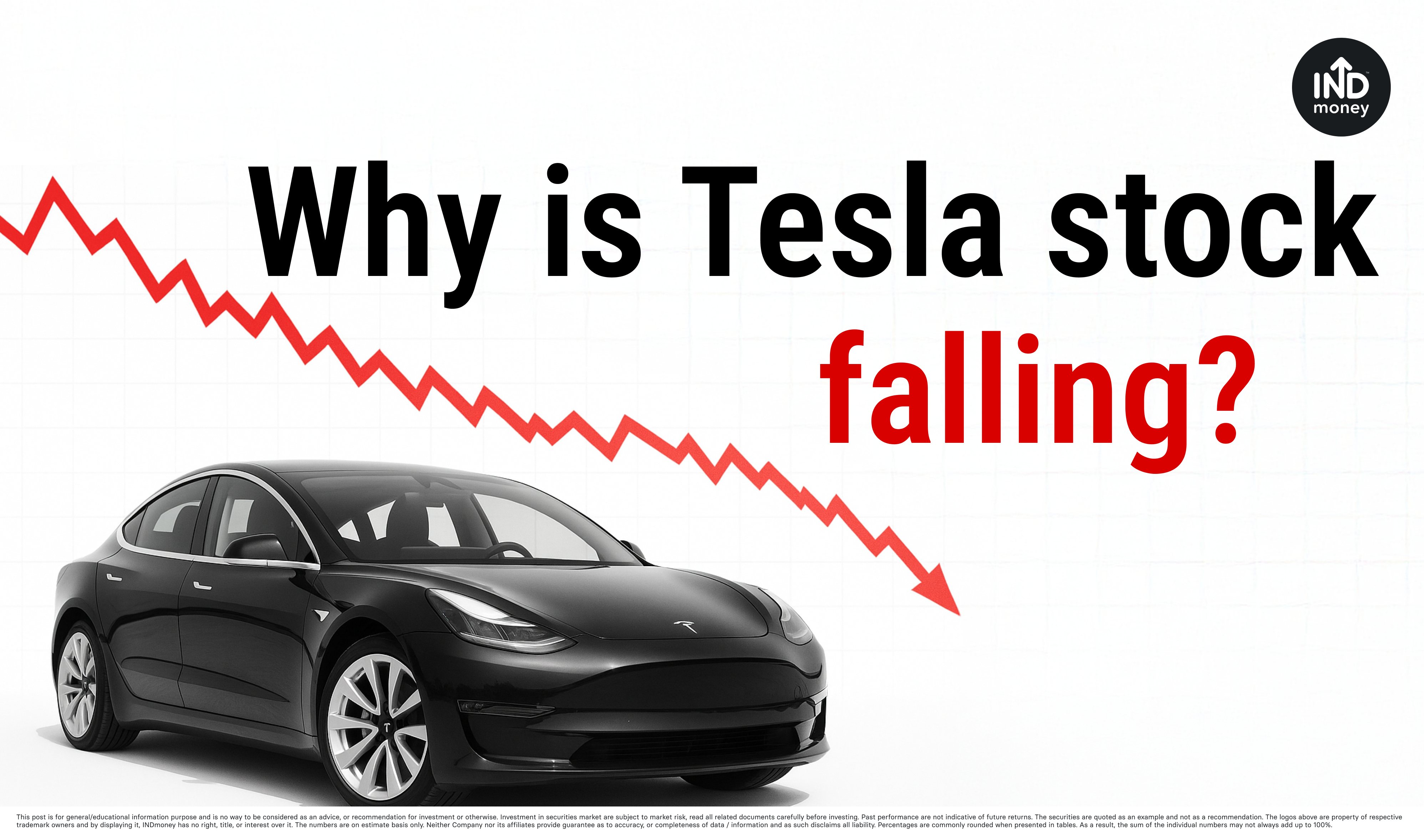
What This Means for Your Portfolio
The daily movements of stocks like Tesla offer a microcosm of market dynamics, reflecting a complex interplay of financial fundamentals, investor sentiment, and strategic outlooks. Today’s positive performance, whether driven by specific news, broader market tailwinds, or a reassessment of its robust financial position, underscores the importance of staying informed and strategic in one’s investment approach. For existing shareholders, it may validate their long-term conviction, while for potential investors, it offers a fresh opportunity to evaluate the company’s future prospects against its current valuation.
aViewFromTheCave is a participant in the Amazon Services LLC Associates Program, an affiliate advertising program designed to provide a means for sites to earn advertising fees by advertising and linking to Amazon.com. Amazon, the Amazon logo, AmazonSupply, and the AmazonSupply logo are trademarks of Amazon.com, Inc. or its affiliates. As an Amazon Associate we earn affiliate commissions from qualifying purchases.