
The ebb and flow of the stock market are a fundamental aspect of the global financial landscape. While periods of sustained growth are often celebrated, market downturns – corrections or bear markets – are an inevitable part of the economic cycle. Understanding “why the stock market went down” requires dissecting a complex interplay of macroeconomic forces, corporate performance, investor psychology, and technical factors. It’s rarely a single cause but rather a confluence of events that erodes investor confidence and triggers selling pressure across various asset classes. This article delves into the multifaceted reasons behind a stock market decline, offering insights into the underlying dynamics that shape financial markets.
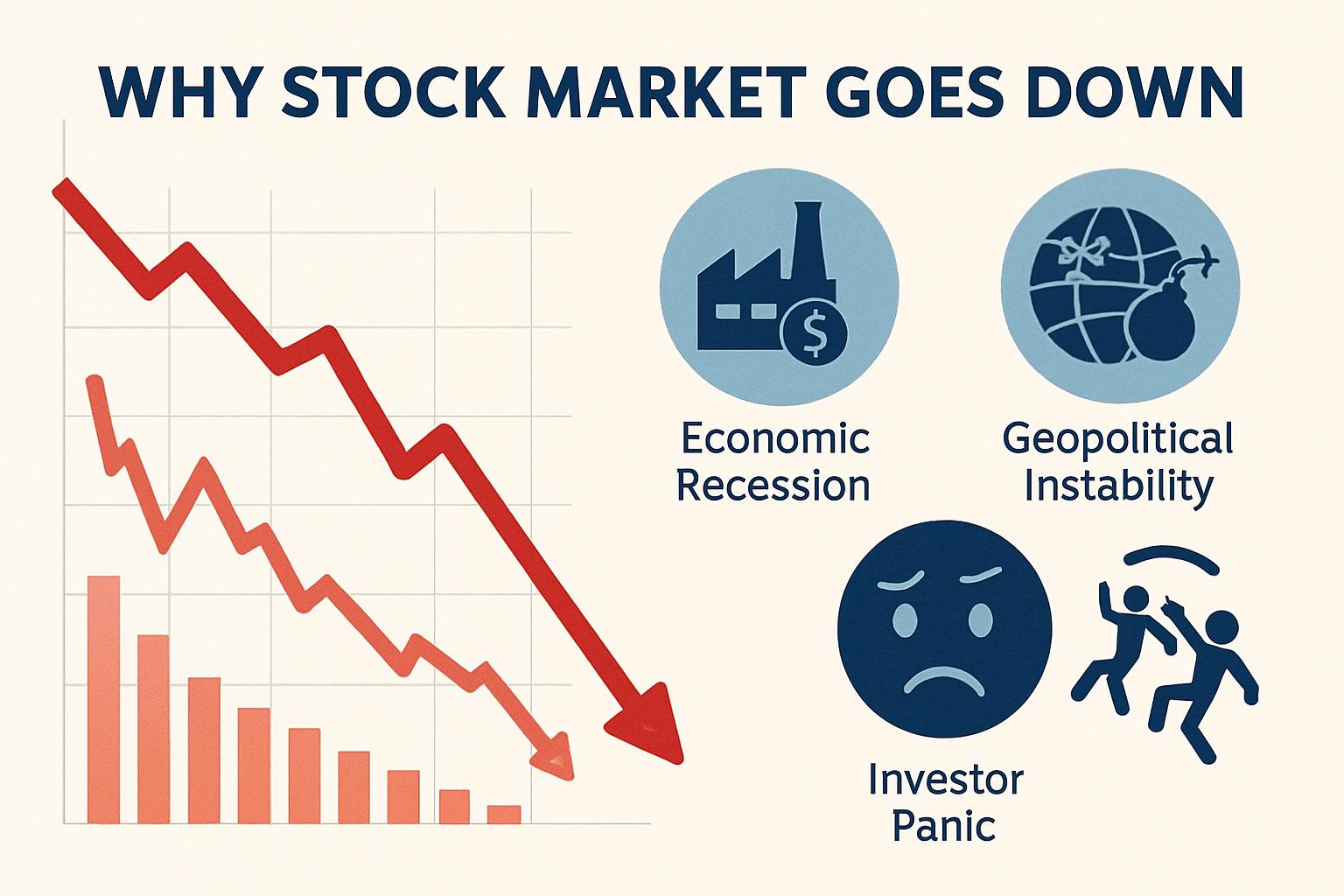
Unpacking Macroeconomic Headwinds: The Big Picture Drivers
The health of the broader economy is perhaps the most significant determinant of stock market performance. When macroeconomic indicators signal stress or uncertainty, investors often de-risk, leading to a market contraction.
Inflationary Pressures and Aggressive Monetary Policy
One of the most potent catalysts for a market downturn is persistent and elevated inflation. When the cost of goods and services rises significantly, it erodes the purchasing power of consumers and increases operational costs for businesses, thereby squeezing profit margins. Central banks, tasked with maintaining price stability, typically respond to high inflation by implementing tighter monetary policy. This primarily involves raising interest rates.
Higher interest rates make borrowing more expensive for businesses, potentially stifling investment and expansion plans. For consumers, increased borrowing costs (e.g., mortgages, car loans) can dampen spending, further impacting corporate revenues. Crucially, higher interest rates also affect the valuation of future earnings. In financial models, future cash flows are discounted back to their present value; a higher discount rate (due to higher interest rates) results in a lower present value, making stocks, particularly growth stocks with anticipated earnings far in the future, less attractive. This shift from “easy money” to a tighter monetary environment often marks a turning point for markets, prompting investors to reassess risk and seek safer assets. The aggressive pace of rate hikes can shock the system, leading to rapid repricing of assets and heightened volatility.
Geopolitical Instability and Supply Chain Disruptions
Global events far removed from direct economic data can have profound impacts on market sentiment. Geopolitical instability, such as international conflicts, trade wars, or significant political upheavals in key regions, introduces an immense layer of uncertainty. Such events can disrupt critical supply chains, leading to shortages of essential goods, components, or energy resources.
For instance, a conflict involving major oil-producing nations can cause energy prices to skyrocket, impacting transportation costs for businesses and heating costs for consumers, acting as a tax on economic activity. Similarly, restrictions on trade or blockades can disrupt the flow of goods, leading to bottlenecks, delays, and increased costs for manufacturers. These disruptions directly translate into higher input costs for companies and ultimately higher prices for consumers, exacerbating inflation and reducing corporate profitability. The unpredictability of geopolitical events makes it difficult for businesses to plan and for investors to forecast earnings, leading to widespread de-risking and a flight to perceived safety, often out of equities.
Economic Slowdown Fears and Recessionary Signals
Investors are constantly looking for signs of an impending economic slowdown or recession. A recession, generally defined as two consecutive quarters of negative GDP growth, signifies a broad-based contraction in economic activity. Leading indicators, such as an inverted yield curve (where short-term Treasury yields are higher than long-term yields), declining manufacturing purchasing managers’ indices (PMIs), softening consumer confidence, and a weakening labor market, can signal an impending downturn.
When these signals emerge, investors anticipate reduced corporate earnings, higher unemployment, and decreased consumer spending. Companies may cut back on investments, hiring, and even issue earnings warnings. The fear of a recession prompts a “risk-off” environment, where investors sell off equities and other riskier assets in favor of government bonds or cash, which are perceived as safer havens. This preemptive selling, driven by the anticipation of worsening economic conditions, can accelerate a market decline, creating a self-fulfilling prophecy to some extent as reduced investment and spending further weigh on the economy.
Corporate Fundamentals Under Pressure: Earnings and Outlook
While macroeconomic factors set the stage, the individual performance and outlook of publicly traded companies are what ultimately drive stock prices. When corporate fundamentals weaken, the market often follows suit.
Disappointing Earnings Reports and Revenue Warnings
The bedrock of stock valuation lies in a company’s ability to generate earnings and revenue. When a significant number of companies, especially those that are market leaders or bellwethers, report earnings that miss analyst expectations, or worse, issue lower guidance for future periods, it sends a negative signal across the market. Disappointing earnings indicate that the macroeconomic headwinds discussed earlier are indeed impacting businesses directly, leading to reduced profitability.
Lower revenue figures suggest weakening consumer demand or increased competitive pressures. When companies reduce their forward guidance, it signals that management foresees challenging times ahead, such as rising costs, slower sales growth, or increased regulatory burdens. Investors react by selling off shares of these companies, and if the trend is widespread, it can drag down the broader market as concerns about overall corporate health intensify. This often leads to a re-evaluation of valuation multiples, as future growth prospects diminish, making current stock prices seem overvalued.
Sector-Specific Challenges and Regulatory Shifts
Not all industries are affected equally by economic downturns or policy changes. Certain sectors may face unique challenges that contribute to a broader market decline. For example, a housing market slowdown might disproportionately impact construction companies, real estate firms, and banks with significant mortgage exposure. Similarly, the automotive industry could be hit by rising commodity prices or a global chip shortage.
Regulatory shifts can also create significant headwinds for specific sectors. New environmental regulations could increase compliance costs for manufacturing firms, or stricter antitrust enforcement could impact tech giants. Changes in tax policy, healthcare legislation, or financial regulations can dramatically alter the profitability landscape for companies within those industries. When key sectors that hold significant weight in market indices face such hurdles, their struggles can pull down the entire market, even if other sectors are relatively resilient.
Balance Sheet Health and Debt Concerns
In an environment of rising interest rates, the financial health of companies, particularly their balance sheet, comes under intense scrutiny. Companies that carry a high level of debt become more vulnerable as borrowing costs increase, making it more expensive to service existing debt or refinance maturing obligations. This can eat into profit margins, divert cash flow away from investments or share buybacks, and in extreme cases, raise concerns about solvency.
A weakened balance sheet can also limit a company’s flexibility to weather economic storms, invest in future growth, or return capital to shareholders. During a market downturn, investors become more risk-averse and tend to favor companies with strong balance sheets, ample cash reserves, and low debt-to-equity ratios. Companies perceived as financially fragile are often sold off first and fastest, contributing to the overall market decline. Concerns about corporate debt defaults can also spill over into the credit markets, creating wider financial instability.
Market Psychology and Technical Factors: The Human and Algorithmic Element
Beyond fundamentals, the emotional decisions of investors and the mechanics of market structure play a crucial role in amplifying downward trends.
The Role of Investor Sentiment: Fear, Uncertainty, and Doubt (FUD)
Markets are not purely rational; human psychology plays a massive role. During periods of economic uncertainty or negative news, investor sentiment can quickly shift from optimism to fear, uncertainty, and doubt (FUD). This collective psychological state can lead to panic selling, where investors offload assets regardless of their underlying fundamental value, simply out of a desire to avoid further losses.
The herd mentality can take over, with individual investors and even institutions following the crowd, fearing they will be left behind if they don’t sell. News cycles, social media, and financial pundits can amplify these emotions, creating a feedback loop where negative sentiment begets more selling, which in turn fuels more negative sentiment. This emotional trading often pushes prices far below what would be justified by a rational assessment of a company’s long-term prospects, creating market “overshoots” on the downside.
Liquidation Events, Margin Calls, and De-risking
Initial drops in the market can trigger a cascade of further selling due to various technical factors. Liquidation events occur when large institutional investors, such as hedge funds or pension funds, are forced to sell assets to meet redemption requests from their clients or to rebalance their portfolios according to predefined risk parameters. This forced selling adds pressure to already falling prices.
Margin calls are another significant factor. Investors who bought stocks using borrowed money (on margin) are required to maintain a certain equity level in their accounts. If the value of their holdings falls significantly, brokerage firms issue a margin call, demanding that the investor deposit more funds or sell off assets to bring their account back to compliance. The inability to meet a margin call results in forced liquidation of positions, further accelerating the market’s decline. Beyond forced selling, many investors and institutions proactively engage in de-risking strategies during downturns, reducing their exposure to equities and rotating into less volatile assets to protect capital.
Algorithmic Trading and Market Structure
Modern financial markets are heavily influenced by algorithmic trading, where computer programs execute trades based on pre-programmed rules and market data, often at high speeds. While these algorithms can increase liquidity and efficiency, they can also exacerbate market volatility during downturns. When a market starts to fall, algorithms designed to identify trends or manage risk can trigger automated selling, executing stop-loss orders or following momentum strategies. This can create a “flash crash” effect, where prices drop dramatically in a very short period, overwhelming human traders and amplifying the initial decline.
Furthermore, the interconnectedness of global markets and the sheer volume of daily trading mean that a localized shock can quickly ripple through the entire system. Market structure, including the fragmentation of exchanges and the speed of information dissemination, contributes to the rapid and often intense movements seen during downturns.
Navigating the Downturn: Strategies and Resilience
While understanding the reasons for a market downturn is crucial, equally important is knowing how to navigate such periods effectively.
Distinguishing Short-Term Volatility from Long-Term Value
It’s vital for investors to differentiate between short-term market volatility and the long-term value of quality assets. Market corrections and bear markets are normal, albeit uncomfortable, phases of the economic cycle. Historically, every major downturn has been followed by a recovery, eventually leading to new market highs. Panicking and selling off well-performing assets during a downturn can lock in losses and prevent participation in the subsequent recovery.
Instead, a long-term perspective encourages investors to view downturns not just as risks but as potential opportunities. Quality companies with strong fundamentals, healthy balance sheets, and robust business models that are temporarily undervalued due to market-wide selling can become attractive investment opportunities for those with the patience to hold through the volatility.
Diversification, Asset Allocation, and Risk Management
The adage “don’t put all your eggs in one basket” becomes particularly relevant during market downturns. A well-diversified portfolio, spread across different asset classes (stocks, bonds, real estate, commodities), geographies, and industries, can help mitigate the impact of a decline in any single area. When equities are falling, bonds might provide a cushion, or certain defensive sectors might outperform.
Regularly reviewing and rebalancing one’s asset allocation to align with a predetermined risk tolerance is a critical aspect of risk management. Understanding one’s personal financial goals and time horizon helps in constructing a portfolio that can withstand market fluctuations without requiring impulsive or detrimental actions. Diversification doesn’t guarantee profits or protect against losses, but it can smooth out the ride.
The Role of Patience and Prudent Decision-Making
Perhaps the most challenging, yet most rewarding, strategy during a market downturn is patience. Emotion-driven decisions, such as selling out of fear or trying to time the bottom, often lead to suboptimal outcomes. Instead, sticking to a well-thought-out investment plan, continuing to invest regularly (e.g., through dollar-cost averaging), and focusing on long-term financial goals are typically more prudent approaches.
Periods of market decline also offer an opportunity for financial introspection: reviewing one’s financial plan, ensuring emergency funds are adequate, and perhaps even tax-loss harvesting. Remaining disciplined and avoiding the urge to react to every market fluctuation are hallmarks of successful long-term investing.
In conclusion, the stock market’s descent is a multifaceted phenomenon, rarely attributable to a singular cause. It is typically the result of a confluence of macroeconomic pressures, weakening corporate fundamentals, amplified by investor psychology and technical market dynamics. While the experience of a downturn can be unsettling, understanding its underlying drivers empowers investors to approach such periods with a clearer perspective, making informed decisions that align with their long-term financial objectives rather than succumbing to panic.
aViewFromTheCave is a participant in the Amazon Services LLC Associates Program, an affiliate advertising program designed to provide a means for sites to earn advertising fees by advertising and linking to Amazon.com. Amazon, the Amazon logo, AmazonSupply, and the AmazonSupply logo are trademarks of Amazon.com, Inc. or its affiliates. As an Amazon Associate we earn affiliate commissions from qualifying purchases.