
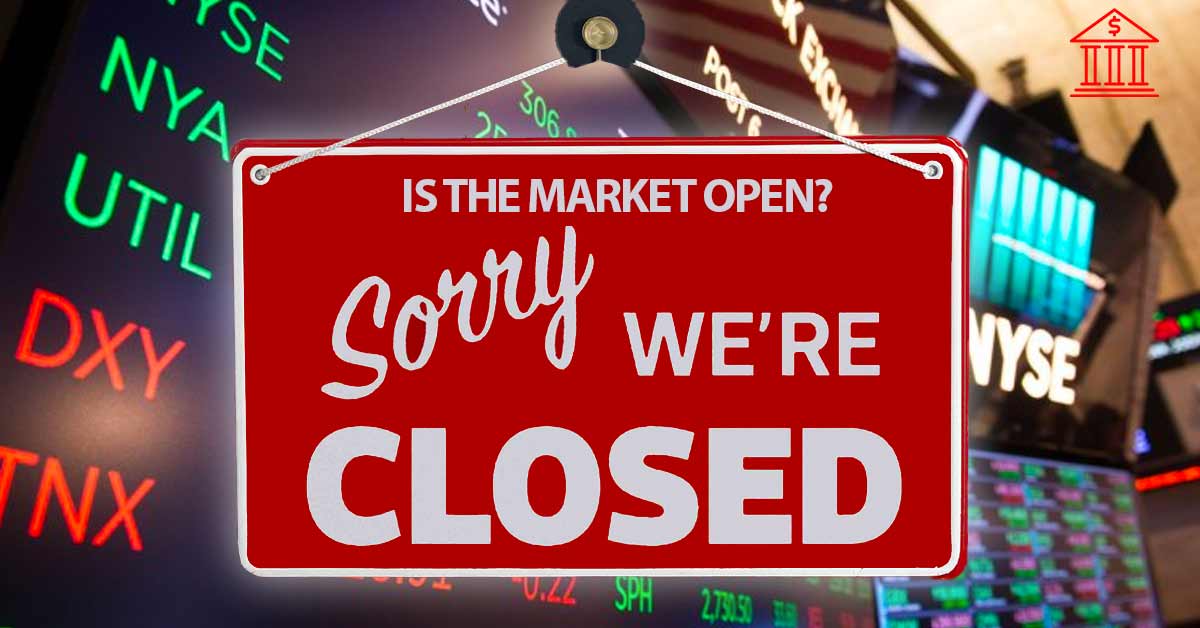
For many new to the world of investing, encountering a day when the stock market is closed can be a moment of confusion. Why, in an increasingly digital and always-on global economy, do these bastions of capitalism occasionally cease operations? The stock market, far from being an uninterrupted, 24/7 entity, operates on a meticulously planned schedule punctuated by weekends, federal holidays, and, on rare occasions, unforeseen events. These periods of closure are not arbitrary; they are integral to maintaining the efficiency, integrity, and stability of the financial system, providing crucial breathers for the vast ecosystem of investors, traders, brokers, and supporting infrastructure. Understanding the “why” behind these closures is fundamental to grasping the operational nuances of modern finance and is a key piece of knowledge for anyone engaging with their money in the market.
The Regular Rhythms of Market Closures: Scheduled Holidays and Weekends
The most predictable and frequent reasons for the stock market to be closed are the standard weekend and a series of predetermined holidays. These scheduled closures are vital for operational logistics, employee welfare, and the alignment of the financial system with national observances. They represent a deliberate pause in the relentless pace of trading, ensuring that the market remains an orderly and robust mechanism for capital allocation.
The Ubiquitous Weekend Pause
Perhaps the most universally accepted reason for market closure is the weekend. Stock exchanges around the globe typically operate on a five-day week, from Monday to Friday, with Saturday and Sunday reserved as non-trading days. This tradition is rooted in historical practices, dating back to a time when manual trading floors required significant human presence and physical infrastructure. While technology has drastically transformed trading, making it largely electronic, the weekend closure persists for several compelling reasons.
Firstly, it provides a necessary break for the vast network of professionals who power the financial markets. This includes traders, brokers, analysts, back-office staff, clearinghouse personnel, and technology teams responsible for maintaining the complex trading systems. An uninterrupted 24/7 market would lead to burnout and potential errors, compromising efficiency and integrity. Secondly, the weekend allows for critical maintenance and system upgrades. The intricate digital architecture that supports billions of dollars in daily transactions requires downtime for patches, security enhancements, and performance optimization. Performing these tasks during non-trading hours minimizes disruption and risk. Finally, the weekend closure aligns with the broader societal rhythm, allowing individuals and businesses to step away from active market participation and focus on other aspects of life, fostering a healthier balance.
Federal Holidays and Commemorative Days
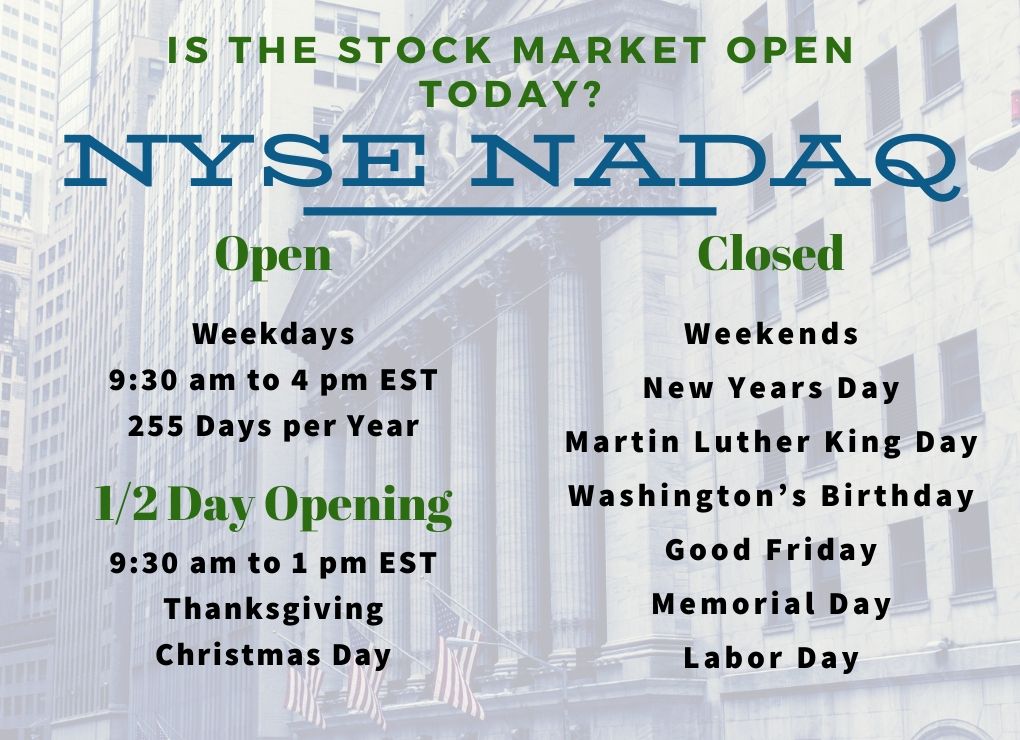
Beyond the weekend, a fixed calendar of federal holidays sees the stock market close its doors. In the United States, for instance, major exchanges like the New York Stock Exchange (NYSE) and NASDAQ observe holidays such as:
- New Year’s Day
- Martin Luther King Jr. Day
- Presidents’ Day (Washington’s Birthday)
- Good Friday
- Memorial Day
- Juneteenth National Independence Day
- Independence Day (Fourth of July)
- Labor Day
- Thanksgiving Day
- Christmas Day
These closures are not just about giving employees a day off; they serve several critical financial functions. Observing national holidays ensures that the financial system is synchronized with other sectors of the economy, many of which also cease operations. Banks, government agencies (which release crucial economic data), and other related institutions often close on these days. Keeping the market open would create logistical challenges, as the support infrastructure necessary for seamless trading would be diminished. Furthermore, aligning with national holidays reflects a respect for collective social and cultural practices, allowing market participants to partake in national observances. From a market stability perspective, these closures prevent sporadic, low-volume trading sessions that could lead to exaggerated price swings due to limited liquidity, ensuring that when the market is open, it operates under robust and fair conditions.
Half-Day Sessions: A Glimpse into Reduced Trading
Occasionally, the market might observe a “half-day” session, where trading closes earlier than usual. A common example in the U.S. is the day after Thanksgiving (Black Friday) or, less frequently, Christmas Eve. These shorter sessions are a compromise between maintaining some level of market activity and acknowledging the festive or transitional nature of the day.
The rationale behind half-day sessions often blends tradition with practical considerations. For instance, the day after Thanksgiving is historically a period of reduced trading interest as many people begin holiday travels or shopping. Opening for a half-day allows for some essential business to be conducted while still providing employees an earlier departure and acknowledging the holiday spirit. From an investor’s perspective, these shorter sessions can sometimes lead to lower liquidity and potentially more volatile price movements, but they are a relatively infrequent occurrence, designed to bridge the gap between full closure and full operation efficiently.
Unforeseen Halts: Emergency and Extraordinary Closures
While scheduled closures are predictable, there are rare occasions when the stock market might close due to unforeseen, emergency, or extraordinary circumstances. These are typically reactive measures taken to protect market integrity, ensure public safety, or allow for national reflection during times of crisis. Such events underscore the market’s role as a reflection of broader society and its vulnerabilities.
Weathering the Storm: Natural Disasters and Extreme Weather
Natural disasters and extreme weather events can pose significant logistical and safety challenges, sometimes necessitating a market closure. For example, severe hurricanes, blizzards, or widespread power outages in financial hubs like New York City can disrupt transportation, communication networks, and the physical operations of exchanges and brokerage firms. In such scenarios, the decision to close the market is primarily driven by the safety of personnel and the practical impossibility of maintaining orderly trading.
During Hurricane Sandy in 2012, both the NYSE and NASDAQ were closed for two consecutive days—a rare event not seen since the Great Depression—due to widespread power outages and transportation paralysis in New York City. The primary concern was not just the physical exchange buildings but also the ability of thousands of market participants to safely reach their offices and operate the systems. An attempt to operate under such conditions would be chaotic, risking errors, inequitable access for traders, and potential system failures. These closures highlight the fact that despite increasing digitalization, the financial markets still rely heavily on human infrastructure and stable physical environments.
National Mourning and Unprecedented Events
In moments of profound national tragedy or mourning, markets may close as a gesture of respect and to allow for national reflection. The most significant modern example is the closure of U.S. markets for four trading days following the September 11, 2001, terrorist attacks. This closure was unprecedented in its length and was necessitated not only by the physical damage to infrastructure (including a direct hit near Wall Street) but also by the immense psychological shock and uncertainty gripping the nation. The decision aimed to prevent a panic-driven sell-off, allow time for authorities to assess the situation, and provide a period for the nation to grieve.
Similar, though typically shorter, closures have occurred for state funerals of prominent national figures, such as former presidents. These closures are symbolic, signifying a collective pause to honor a shared loss and provide an opportunity for reflection, acknowledging that the nation’s financial machinery should not operate business as usual during such solemn times. The rationale extends beyond mere respect; it also recognizes the potential for emotional volatility to influence market behavior, making an orderly market operation challenging if not impossible.

Technical Glitches and Operational Security
While extremely rare, technical malfunctions or severe operational security breaches could theoretically lead to a market closure or an extended trading halt. Modern trading systems are incredibly complex, relying on intricate algorithms, high-speed networks, and vast databases. A significant system failure, a major cyberattack, or a data integrity issue could compromise the fairness and reliability of trading.
In such an extreme scenario, a temporary closure would be a defensive measure to prevent erroneous trades, maintain data integrity, and allow technical teams to diagnose and rectify the problem without further exacerbating the issue. The goal would be to restore confidence in the market’s operational soundness before allowing trading to resume. While individual stocks or even entire exchanges might experience temporary halts for various reasons (e.g., circuit breakers during extreme volatility or issues with a specific stock’s data feed), a full-day, system-wide closure due to a technical glitch is a nightmare scenario that exchanges work diligently to prevent through redundant systems, robust security protocols, and continuous monitoring.
The Economic and Investor Implications of Market Closures
When the stock market closes, its impact extends beyond simply stopping trading. These pauses, whether scheduled or emergency-driven, have significant implications for market participants, investor behavior, and the broader financial landscape, influencing everything from how orders are executed to how global finance continues to operate.
Impact on Trading and Price Discovery
The most immediate consequence of a market closure is the cessation of trading activity for listed securities. This means no new trades can be executed, and the prices of stocks, ETFs, and other market-traded instruments remain static. For active traders and institutional investors, this can be a source of frustration, especially if significant news breaks during the closure period. Any orders placed during market closure (e.g., through an online brokerage) are typically queued and executed at the opening price when the market resumes, often leading to “gap ups” or “gap downs” if there’s been substantial news or sentiment shifts overnight or over the holiday.
This disruption to continuous price discovery means that when the market reopens, there can be a surge of activity as accumulated orders are processed and investors react to events that transpired during the downtime. This can sometimes lead to increased volatility in the initial hours of trading, as the market rapidly adjusts to new information and supply/demand dynamics that built up while it was closed.
The Investor’s Perspective: Opportunity or Frustration?
For the everyday investor, market closures offer a mixed bag of experiences. On one hand, they can be a source of frustration, particularly for those who wish to react immediately to news, perhaps wanting to buy into a surging stock or sell off a declining one. The inability to execute trades can feel restrictive, especially in a fast-paced news cycle.
On the other hand, market closures can be viewed as an enforced pause, providing a valuable opportunity for reflection and strategic planning without the immediate pressure of fluctuating prices. It’s a time when investors can step back, research new opportunities, review their portfolio’s performance, assess their long-term goals, or simply disconnect from the daily market noise. For long-term investors focused on fundamental value, a day or two of closure is often inconsequential, as their investment horizon extends far beyond short-term movements. It allows for a more considered approach to financial decision-making, away from the herd mentality that can sometimes dominate open trading hours.
Global Context: When One Market Closes, Others May Open
It’s crucial to remember that a closure in one stock market, such as the NYSE or NASDAQ, does not mean the entire global financial system grinds to a halt. While the U.S. market takes a break, exchanges in other time zones and regions—such as London, Tokyo, Hong Kong, or Sydney—may very well be open and actively trading. This interconnectedness means that significant global economic news or geopolitical events can continue to impact markets worldwide, even if a major market like the U.S. is closed.
Furthermore, certain financial instruments might have different operating hours. Foreign exchange (forex) markets, for instance, operate 24 hours a day, five days a week, regardless of national stock market holidays. Commodity markets (like oil and gold) also have different trading schedules, often extending beyond traditional stock market hours. This global and multi-asset perspective means that while your personal stock portfolio might be dormant, the wider financial world continues to churn, processing information and setting the stage for when your local market reopens.
The Deeper Philosophy: Why Regulation and Order Matter
Beyond the practicalities and immediate impacts, the reasons for market closures delve into the fundamental philosophy of how financial markets are structured and regulated. These pauses are a testament to the ongoing effort to balance free-market principles with the imperative for stability, fairness, and investor protection.
Maintaining Market Integrity and Fairness
A core responsibility of market regulators and exchange operators is to ensure market integrity. This means that all participants have access to the same information at the same time, that trading is conducted transparently, and that the risk of manipulation or unfair advantage is minimized. Closures, especially emergency ones, are often a regulatory tool to uphold this integrity. If market conditions are such that fair and orderly trading cannot be guaranteed—perhaps due to a technical fault, extreme information asymmetry, or a lack of reliable communication channels—it is deemed safer to close the market than to allow it to operate in a compromised state.
These decisions are not taken lightly, as they carry significant economic implications. However, the long-term health and credibility of the financial system depend on public trust. Preserving this trust by demonstrating a commitment to fair and orderly markets, even if it means temporary closure, is paramount. It protects investors from potentially exploitative situations and reinforces the foundational principles upon which legitimate capital markets are built.
Preventing Panic and Fostering Stability
In times of extreme uncertainty, whether due to a natural disaster, a national crisis, or a severe market shock, market closures can serve as a circuit breaker, preventing panic and fostering stability. Imagine a situation where a major terrorist attack or a sudden, devastating economic announcement hits during active trading hours. Without the option to close, a wave of irrational panic selling could rapidly escalate, leading to a market freefall that might not accurately reflect long-term economic realities but rather short-term emotional responses.
By implementing a closure, regulators and exchanges provide a cooling-off period. This allows investors to process new information, differentiate facts from rumors, and make more rational decisions. It gives institutions time to shore up their operations, assess their exposures, and deploy risk management strategies. This pause can prevent what might otherwise become a self-fulfilling prophecy of market collapse, ultimately contributing to the long-term resilience and stability of the financial system. It’s a recognition that human psychology plays a significant role in market dynamics, and sometimes, a forced timeout is the most prudent course of action to maintain equilibrium.
In conclusion, the decision to close the stock market, whether for a scheduled holiday or an unforeseen emergency, is a multi-faceted one driven by a blend of tradition, operational necessity, and a deep commitment to market integrity and stability. These pauses, far from being inconvenient interruptions, are essential mechanisms that ensure the financial markets remain robust, fair, and ultimately, trustworthy engines of economic growth. For investors, understanding these closures demystifies a seemingly complex aspect of finance and reinforces the importance of a long-term, informed perspective, even when the tickers temporarily go silent.
aViewFromTheCave is a participant in the Amazon Services LLC Associates Program, an affiliate advertising program designed to provide a means for sites to earn advertising fees by advertising and linking to Amazon.com. Amazon, the Amazon logo, AmazonSupply, and the AmazonSupply logo are trademarks of Amazon.com, Inc. or its affiliates. As an Amazon Associate we earn affiliate commissions from qualifying purchases.