
The stock market’s daily gyrations often leave investors asking, “Why stock down today?” While a single, definitive answer can be elusive, market downturns are typically the confluence of several powerful forces, ranging from broad macroeconomic trends to company-specific news and the intricate dance of market psychology. Understanding these underlying drivers is crucial for both seasoned investors and those new to the market, offering perspective amidst the volatility and informing more strategic decisions.
Unpacking Macroeconomic Headwinds
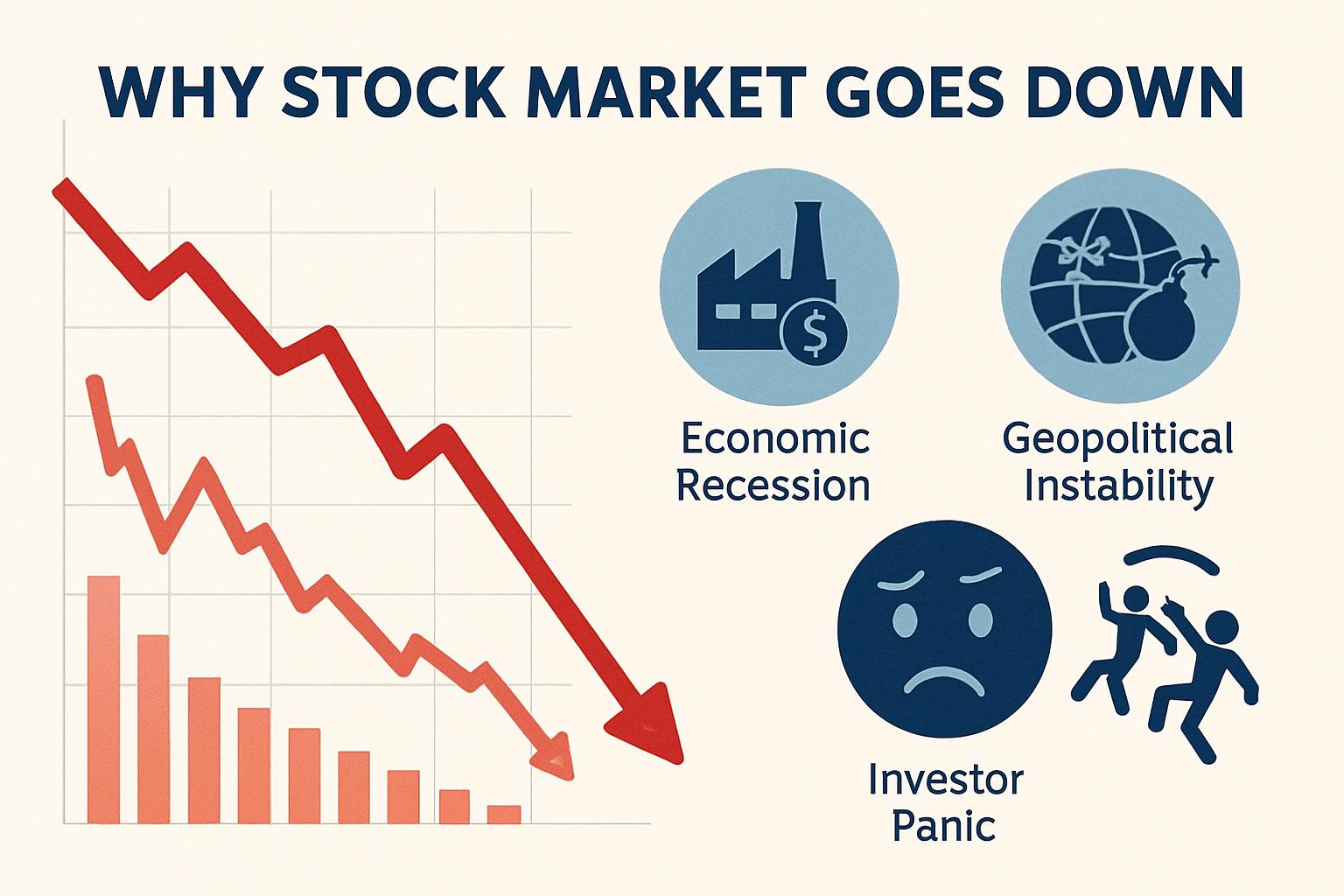
The health of the broader economy is perhaps the most significant determinant of stock market performance. When the economic landscape appears uncertain or deteriorates, investor confidence wanes, leading to widespread sell-offs.
Interest Rate Hikes and Monetary Policy
Central banks globally, most notably the U.S. Federal Reserve, wield immense influence over financial markets through their monetary policy decisions. When inflation runs hot, as it has in recent periods, central banks often respond by raising benchmark interest rates. Higher interest rates have a multi-faceted impact on stocks. Firstly, they increase the cost of borrowing for businesses, making it more expensive to finance expansion, invest in new projects, or even manage existing debt. This can compress profit margins and dampen future growth prospects.
Secondly, higher rates make alternative investments, such as bonds and high-yield savings accounts, more attractive. As “risk-free” rates rise, investors may rotate out of riskier assets like stocks in search of more predictable returns. Furthermore, higher discount rates used in valuation models reduce the present value of future corporate earnings, making stocks appear less valuable, particularly growth stocks whose earnings are heavily weighted towards the future.
Persistent Inflationary Pressures
Inflation, the sustained increase in the general price level of goods and services, acts as a stealth tax on both consumers and corporations. For businesses, rampant inflation translates to higher input costs for raw materials, labor, transportation, and energy. While some companies can pass these costs on to consumers, many face squeezed profit margins and reduced demand as consumer purchasing power erodes.
High inflation also introduces significant uncertainty. Businesses struggle to plan effectively when future costs and consumer spending patterns are unpredictable. This uncertainty leads investors to demand a higher risk premium for holding stocks, pushing valuations lower. When consumers face higher prices for everyday necessities, their discretionary spending often declines, impacting the revenue streams of a wide range of companies, from retail to entertainment.
The Specter of Recession and Economic Slowdown
Perhaps the most potent fear driving market downturns is the prospect of a recession – a significant, widespread, and prolonged downturn in economic activity. Aggressive interest rate hikes aimed at taming inflation often increase the risk of an economic slowdown or outright recession, as higher borrowing costs and reduced demand ripple through the economy.
A recession typically means lower corporate earnings, higher unemployment, and decreased consumer spending. Companies report weaker sales, revise profit forecasts downwards, and may even announce layoffs. Investors, anticipating these challenging conditions, often front-run the actual economic data, selling off stocks well in advance of an official recession declaration. Leading economic indicators, such as manufacturing data, consumer confidence surveys, and housing starts, are closely watched for signs of an impending slowdown.
Geopolitical Instability and Global Ripples
Beyond purely economic metrics, global events and geopolitical tensions frequently inject volatility and uncertainty into financial markets, causing broad declines.
International Conflicts and Sanctions
Major international conflicts, such as the war in Ukraine, have far-reaching economic consequences. They disrupt global supply chains, drive up commodity prices, and lead to significant shifts in trade relationships. Sanctions imposed on belligerent nations can ripple across industries, affecting everything from energy supplies to technology components. The uncertainty surrounding the duration and escalation of such conflicts naturally makes investors risk-averse, leading them to divest from equities, especially those in regions or sectors directly impacted. Increased defense spending and shifts in alliances can also redirect capital flows, creating winners and losers in specific industries.
Supply Chain Vulnerabilities
While initially exacerbated by the pandemic, supply chain vulnerabilities remain a persistent concern. Geopolitical events, natural disasters, and localized disruptions can still cause bottlenecks, leading to shortages of critical components and finished goods. When companies cannot source necessary inputs or deliver products to market efficiently, their revenues and profitability suffer. For instance, a shortage of semiconductor chips can impact countless industries, from automotive to consumer electronics, leading to production delays and lost sales that are reflected in stock prices. The fragility of just-in-time inventory systems means that even minor disruptions can have outsized effects across global networks.
Volatile Energy Markets
Energy prices are particularly sensitive to geopolitical developments. Conflicts in oil-producing regions, sanctions against major energy exporters, or disruptions to key shipping routes can send crude oil and natural gas prices soaring. Higher energy costs directly feed into inflation, as businesses face increased transportation and production expenses. Consumers, in turn, feel the pinch at the gas pump and on their utility bills, reducing their disposable income for other goods and services. This dual impact on corporate costs and consumer demand makes energy price volatility a significant factor in market downturns, acting like a direct tax on global economic activity.
Sector-Specific Pressures and Corporate Performance
While macroeconomic forces drive broad market movements, specific sectors or individual companies can also be the catalyst for a downturn, or at least contribute significantly to market weakness.
Disappointing Earnings Reports and Guidance
For individual companies, an earnings report that misses analyst expectations or, more critically, provides pessimistic forward guidance can trigger a sharp sell-off in its stock. If a pattern of weak earnings or downward revisions in outlook emerges across an entire sector, it can pull down the entire industry group and even have a spillover effect on the broader market. For example, if several major technology companies report slowing growth in advertising revenue or cloud spending, it could signal broader weakness in the tech sector, prompting investors to re-evaluate their positions in similar companies. These reports offer a granular look into corporate health and directly impact valuation.
Regulatory Scrutiny and Policy Shifts
New government regulations, antitrust investigations, or significant policy shifts can create substantial headwinds for specific industries or companies. For instance, increased regulatory scrutiny on large technology platforms regarding data privacy or market dominance can lead to hefty fines, restrictions on business practices, or even forced divestitures, impacting their growth prospects and profitability. Similarly, shifts in environmental policy can significantly affect energy companies or manufacturing firms, necessitating costly operational changes or limiting future expansion. The uncertainty surrounding potential new rules can cause investors to de-risk from affected companies.
Industry-Specific Challenges
Beyond broad economic trends, certain industries may face unique challenges that depress their stock values. For example, the housing market might be impacted by rising mortgage rates, leading to fewer home sales and reduced demand for construction materials, hurting real estate and related sectors. The retail sector might struggle with intense competition from e-commerce, shifting consumer preferences, or over-inventory issues. The biotech industry could face setbacks from clinical trial failures or increased regulatory hurdles for drug approvals. These specific headwinds can lead to investor exits from those particular sectors, contributing to overall market weakness.
Market Psychology and Technical Trading Dynamics
Beyond fundamentals, the collective psychology of investors and the mechanics of trading can significantly amplify market movements, turning minor corrections into more substantial downturns.
Shifting Investor Sentiment and Risk Aversion
Financial markets are not purely rational; they are heavily influenced by human emotion. Negative news, whether economic or geopolitical, can trigger a rapid shift from optimism to fear, leading to widespread risk aversion. During such times, investors prioritize capital preservation over growth, leading them to sell off assets perceived as risky and move into “safe-haven” assets like government bonds, gold, or cash. The CBOE Volatility Index (VIX), often called the “fear gauge,” typically spikes during periods of heightened uncertainty, reflecting increased demand for options to hedge against market declines. This herd mentality can exacerbate selling pressure, as investors rush for the exit.
Profit-Taking and Technical Corrections
After periods of sustained gains, it is natural for markets to experience pullbacks as investors take profits. A “technical correction” is generally defined as a decline of 10% or more from a recent peak. These corrections can be a healthy part of the market cycle, helping to reset valuations and prevent the market from becoming excessively overbought. However, they can be unsettling. Often, a specific catalyst might trigger initial profit-taking, which then gains momentum as other investors follow suit, leading to a broader market decline. These movements are often identified using technical analysis, which studies past market data, primarily price and volume, to forecast future price movements.
Algorithmic Trading and Liquidity Concerns
A significant portion of daily trading volume is now executed by sophisticated algorithms. These programs are designed to react to specific market signals, news events, or price movements with extreme speed. While they can enhance market efficiency, they can also amplify sell-offs. When a negative catalyst emerges, algorithms can rapidly execute millions of sell orders based on pre-programmed rules, overwhelming human traders and exacerbating price declines. This effect is particularly pronounced during periods of low market liquidity, where there aren’t enough buyers to absorb the sudden influx of sell orders, leading to sharper and more volatile price drops.
Navigating the Volatility: An Investor’s Mindset
When stocks are down, it’s easy to panic. However, a well-informed and disciplined approach is crucial for long-term financial success.
The Long Game vs. Short-Term Noise
One of the most important lessons in investing is to distinguish between short-term market noise and long-term fundamental trends. Daily or even weekly market movements are often transient, influenced by fleeting news cycles, technical adjustments, and sentiment swings. Successful investing is typically a multi-year or multi-decade endeavor, focused on the power of compounding and the underlying strength of quality businesses. Reacting to every dip by selling can lock in losses and cause investors to miss out on subsequent recoveries, which historically have followed every downturn. Patience and a long-term perspective are paramount.
The Power of Diversification and Risk Management
Diversification remains the cornerstone of sound investment strategy. Spreading investments across various asset classes (stocks, bonds, real estate, commodities), different sectors, and geographical regions can help mitigate the impact of a downturn in any single area. When one part of a portfolio is struggling, another might be performing relatively better, helping to cushion the overall impact. Furthermore, establishing a personal risk tolerance and ensuring your portfolio’s asset allocation aligns with it is vital. An appropriate allocation helps prevent emotional decision-making during volatile periods.
Strategic Rebalancing and Identifying Opportunities
While market downturns can be unsettling, they also present potential opportunities for long-term investors. A disciplined strategy of rebalancing your portfolio involves selling assets that have performed well (and may now represent a larger portion of your portfolio than desired) and buying assets that have fallen in price, assuming their fundamental prospects remain strong. This allows investors to “buy low” from a position of strength. Periods of market weakness can be excellent times to accumulate shares of high-quality companies at more attractive valuations, positioning the portfolio for substantial gains when the market eventually recovers. However, this requires careful research and a belief in the long-term resilience of the underlying assets.
aViewFromTheCave is a participant in the Amazon Services LLC Associates Program, an affiliate advertising program designed to provide a means for sites to earn advertising fees by advertising and linking to Amazon.com. Amazon, the Amazon logo, AmazonSupply, and the AmazonSupply logo are trademarks of Amazon.com, Inc. or its affiliates. As an Amazon Associate we earn affiliate commissions from qualifying purchases.