
In the world of investing, the sight of a “sea of red” on a trading dashboard can be a source of significant anxiety for both seasoned investors and retail newcomers. When the share market experiences a downturn, the immediate question is always: “Why?” Understanding the mechanics behind a market slide is essential not only for managing one’s portfolio but also for maintaining the psychological discipline required for long-term financial success.
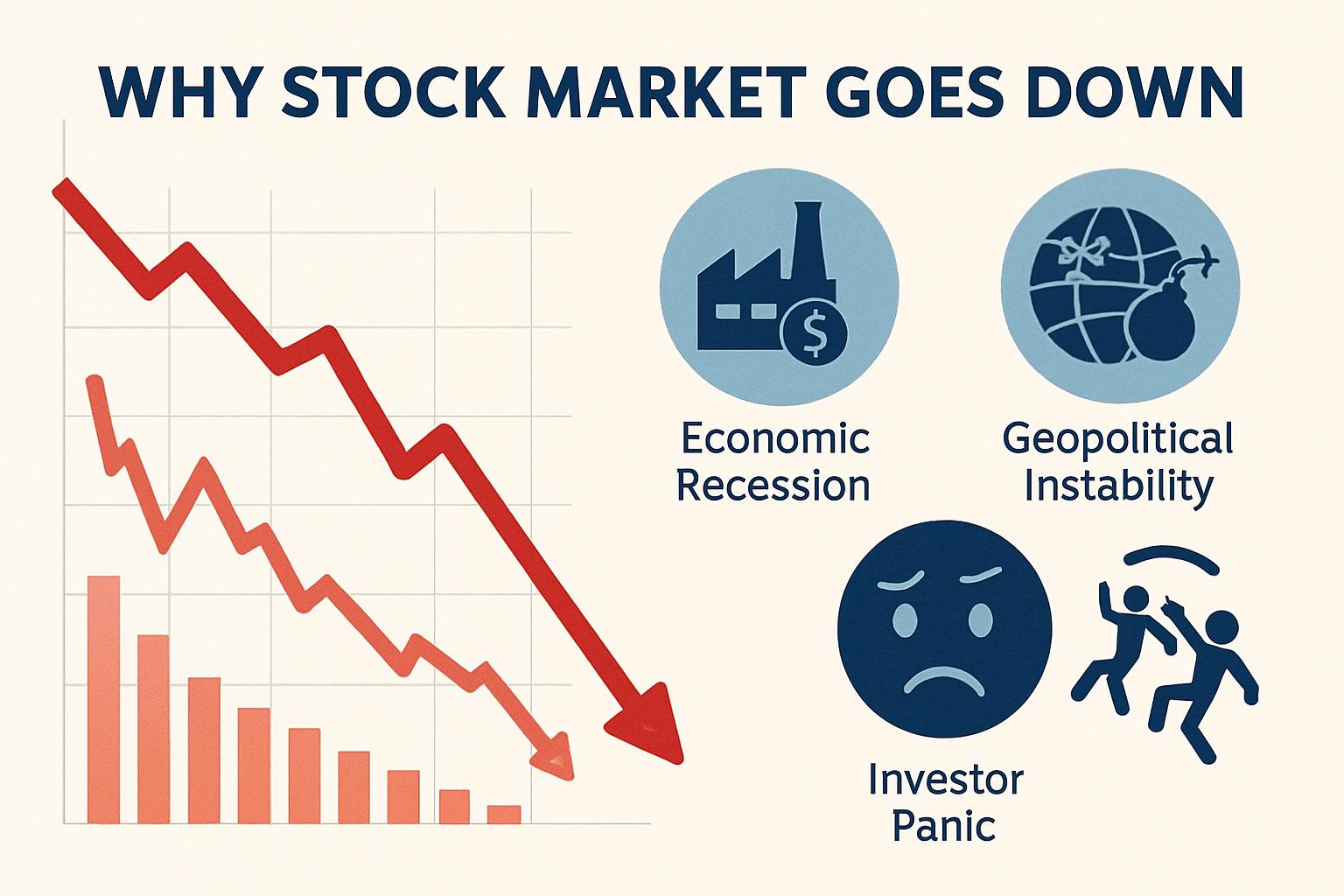
Market fluctuations are rarely the result of a single isolated event. Instead, they are usually a complex interplay of macroeconomic data, geopolitical shifts, corporate performance, and the collective psychology of millions of participants. This article explores the primary drivers behind market downturns, examining the structural and emotional factors that cause indices to retreat.
1. Macroeconomic Drivers and Central Bank Policy
The most common catalyst for a broad market sell-off is a shift in the macroeconomic landscape, particularly regarding inflation and interest rates. Markets are forward-looking mechanisms; they do not just price in what is happening today, but what they expect to happen six to twelve months from now.
The Impact of Rising Interest Rates
Central banks, such as the Federal Reserve in the United States or the European Central Bank, use interest rates as their primary tool to control the economy. When inflation rises too quickly, central banks increase interest rates to “cool down” the economy. For the share market, this is generally a negative signal. Higher rates mean that borrowing costs for corporations increase, which can squeeze profit margins. Furthermore, higher interest rates make fixed-income assets, like bonds, more attractive compared to stocks. When investors can get a guaranteed 5% return on a government bond, they are less likely to risk their capital in the volatile equity market.
Inflationary Pressures and Purchasing Power
Inflation is a double-edged sword for the stock market. While a moderate amount of inflation suggests a growing economy, runaway inflation erodes the purchasing power of consumers. If consumers have to spend more on essentials like food and fuel, they have less discretionary income to spend on products from publicly traded companies. Additionally, inflation increases the cost of raw materials for businesses. If a company cannot pass these costs on to the consumer, its earnings will suffer, leading to a drop in its share price.
Currency Fluctuations and Global Trade
In an interconnected global economy, the strength of a nation’s currency plays a vital role in market performance. For instance, a strong U.S. Dollar can actually hurt large multinational corporations that earn a significant portion of their revenue overseas. When they convert those foreign earnings back into dollars, the total amount appears lower on the balance sheet. Currency volatility creates uncertainty, and the market generally hates uncertainty.
2. Geopolitical Instability and External Shocks
The share market thrives on stability and predictability. When geopolitical events threaten the flow of trade or the price of essential commodities, the market often reacts with a sharp sell-off as investors flee to “safe-haven” assets like gold or treasury bills.
Energy Security and Commodity Prices
Geopolitical tensions in oil-producing regions frequently lead to spikes in energy prices. Since energy is a fundamental input for almost every industry—from manufacturing to transportation—high oil prices act as a “tax” on the global economy. When the cost of shipping goods increases, it puts downward pressure on corporate profits across the board, leading to a general decline in stock indices.
Trade Wars and Supply Chain Disruptions
The modern world relies on “just-in-time” supply chains. Any event that disrupts these chains—be it a trade war, a regional conflict, or a global health crisis—creates bottlenecks. If a technology company cannot get the semiconductors it needs to build its products, its revenue will stall. Investors quickly price in these potential “misses,” leading to a preemptive drop in stock prices.
The “Flight to Quality” Phenomenon
During times of international turmoil, institutional investors often engage in a “flight to quality.” This involves selling off “risk assets,” such as stocks and cryptocurrencies, and moving that capital into more secure environments. This mass exodus of capital from the equity market creates a downward spiral: as more people sell, prices drop further, which triggers automated “stop-loss” orders, accelerating the decline.
3. Corporate Earnings and Sector-Specific Headwinds
While macroeconomic and geopolitical factors set the stage, the individual performance of companies remains the bedrock of market valuation. A market-wide downturn is often triggered or exacerbated by poor performance in key sectors or disappointing reports from “bellwether” companies.
The Weight of Disappointing Guidance
During earnings season, companies report their profits for the previous quarter. However, the market often ignores the past and focuses entirely on the “guidance”—the company’s forecast for the future. If a major tech giant or a leading retail chain suggests that growth is slowing or that margins are being compressed, it can drag down the entire sector. Because major indices like the S&P 500 or the Nasdaq are market-cap weighted, a significant drop in just five or six “mega-cap” stocks can cause the entire index to appear “down.”
Regulatory Changes and Anti-Trust Actions
Government intervention can also cause sudden market drops. If the government announces new regulations regarding data privacy, environmental standards, or anti-trust litigation, the affected sectors often see an immediate sell-off. For example, if rumors circulate that a new tax will be levied on financial transactions, bank stocks will likely plummet, taking a large chunk of the market index with them.
Sector Rotations
Sometimes, the market isn’t “down” in a fundamental sense, but rather undergoing a “rotation.” This happens when investors move money out of one sector (like high-growth Technology) and into another (like defensive Utilities or Healthcare). If the sector being exited is larger than the sector being entered, the headline index numbers will show a decline, even if some parts of the market are performing well.
4. Market Psychology and Technical Factors
It is a mistake to view the share market as a purely rational machine. In reality, it is driven by human emotions—primarily fear and greed. Once a downward trend begins, psychological and technical factors often take over, creating a feedback loop.
Fear, Panic, and the VIX Index
The CBOE Volatility Index (VIX), often called the “Fear Gauge,” measures market expectations for near-term volatility. When the VIX spikes, it indicates that investors are nervous. Fear is a much more powerful motivator than greed in the short term. When investors see their portfolio balances dropping, the “loss aversion” instinct kicks in, leading many to sell their positions to “save what’s left,” regardless of the long-term value of the companies they own.
The Role of Algorithmic and High-Frequency Trading
In the modern era, a significant portion of daily trading volume is executed by algorithms. these programs are often designed to sell when certain technical levels are broken. If a major index drops below its “200-day moving average,” thousands of algorithms may trigger sell orders simultaneously. This “cascading effect” can turn a minor dip into a major daily loss within minutes, often leaving human investors wondering what happened.
Margin Calls and Liquidation
Many institutional and individual traders use “margin”—borrowed money—to increase their buying power. When the market drops, the value of the collateral holding these loans decreases. If it drops too far, brokers issue “margin calls,” requiring the trader to either deposit more cash or sell their stocks immediately. Forced liquidations of this nature add immense selling pressure to the market, often pushing prices down further than the fundamental data would suggest is necessary.
5. Strategic Approaches for Investors During a Downturn
While a down market can be stressful, it is a natural and necessary part of the economic cycle. For the disciplined investor, these periods represent an opportunity to reassess and strengthen their financial position.
The Importance of Diversification
The oldest rule in finance remains the most effective: do not put all your eggs in one basket. A diversified portfolio that includes different asset classes (stocks, bonds, real estate, cash) and different sectors (tech, healthcare, energy) is much better equipped to weather a storm. When the tech sector is down, perhaps energy or gold is up, helping to blunt the impact of the market’s decline.
Dollar-Cost Averaging (DCA)
One of the most effective strategies during a downturn is Dollar-Cost Averaging. This involves investing a fixed amount of money at regular intervals, regardless of the share price. When the market is down, your fixed investment buys more shares. When the market eventually recovers, these “cheap” shares contribute significantly to your overall returns. This strategy removes the emotional burden of trying to “time the bottom,” which is nearly impossible even for professionals.
Maintaining a Long-Term Perspective
Historically, the share market has an upward trajectory over decades. Every major crash—from the Great Depression to the 2008 Financial Crisis and the 2020 Pandemic dip—has been followed by a recovery and subsequent new all-time highs. For those with a long-term time horizon, today’s “down” market is often just a “blip” on a much larger chart. The key to building wealth in the share market is not avoiding the downturns, but remaining invested through them.
In conclusion, the share market is down today because of a confluence of factors ranging from central bank policies and inflationary fears to geopolitical tensions and technical selling triggers. While the volatility is uncomfortable, understanding these drivers allows an investor to move away from emotional reactions and toward a strategic, informed approach to personal finance. Stay focused on the fundamentals, maintain your diversification, and remember that in the world of investing, time in the market is almost always superior to timing the market.
aViewFromTheCave is a participant in the Amazon Services LLC Associates Program, an affiliate advertising program designed to provide a means for sites to earn advertising fees by advertising and linking to Amazon.com. Amazon, the Amazon logo, AmazonSupply, and the AmazonSupply logo are trademarks of Amazon.com, Inc. or its affiliates. As an Amazon Associate we earn affiliate commissions from qualifying purchases.