
Palantir Technologies (PLTR) has long been one of the most polarizing names in the software sector. For retail investors, it represents a generational bet on the future of data-driven decision-making and artificial intelligence. For institutional skeptics, it is often viewed as an overvalued consultancy masquerading as a high-margin SaaS company. When Palantir’s stock experiences a significant pullback, the financial community immediately dissects every metric, from government contract renewals to commercial growth rates.
Understanding why Palantir stock is down requires a multifaceted approach. It is rarely a single event that triggers a sell-off in a high-beta growth stock; rather, it is usually a combination of valuation resets, macroeconomic shifts, and specific fundamental hurdles that the company must overcome. To navigate the current landscape, investors must look beyond the headlines and analyze the underlying financial mechanics driving the share price movement.

The Valuation Conundrum: A Premium Priced for Perfection
The primary reason Palantir often experiences sharp declines is its valuation. In the world of investing, a company can be performing exceptionally well from an operational standpoint and still see its stock price drop if the market’s expectations have outpaced reality. Palantir has historically traded at a significant premium compared to its peers in the software-as-a-service (SaaS) and data analytics space.
The “AI Hype” Correction
Palantir’s stock frequently benefits from “AI fever.” As a leader in the Artificial Intelligence Platform (AIP) space, the stock tends to surge whenever there is a macro-rally in tech. However, when the initial excitement cools and investors begin to demand tangible revenue results from AI implementation, the stock often undergoes a valuation reset. If Palantir’s quarterly earnings show anything less than hyper-growth, the market penalizes the stock because its high price-to-sales (P/S) and price-to-earnings (P/E) ratios leave no room for error.
Comparative Multiples and Industry Norms
When compared to other enterprise software companies, Palantir’s multiples can appear stretched. During periods of market volatility or rising interest rates, investors shift their capital from “growth at any price” stocks to “value” or “reasonable growth” stocks. If Palantir is trading at 20x or 30x forward revenue while the rest of the sector averages 10x, a downward correction is often a mathematical inevitability as institutional portfolios rebalance to mitigate risk.
Decelerating Growth in Government Contracts
Palantir’s origin story is rooted in the public sector. For years, the company relied heavily on large, multi-year contracts with the Department of Defense, the CIA, and other government agencies. This provided a stable revenue base, but it also introduced a specific set of risks that have recently weighed on the stock.
The Lumpiness of Public Sector Revenue
Government contracts are notoriously “lumpy.” They involve long procurement cycles, bureaucratic hurdles, and political sensitivities. When Palantir reports a slowdown in government revenue growth—or a delay in a major contract renewal—the market reacts negatively. Investors worry that the company’s “Gotham” platform may be reaching a saturation point within domestic agencies, forcing the company to look toward international governments where margins may be lower or geopolitical risks higher.
High Stakes and Fierce Competition
The defense tech landscape is no longer a monopoly. While Palantir was an early mover, legacy defense contractors and new Silicon Valley startups are increasingly competing for the same pots of federal funding. As competition intensifies, Palantir faces pressure on its pricing power and contract win rates. Any signal that Palantir is losing its “moat” in the government sector is a direct catalyst for a share price decline.
Macroeconomic Pressure and Interest Rate Sensitivities
Palantir does not exist in a vacuum. Like all growth stocks, its valuation is heavily influenced by the broader macroeconomic environment, specifically the actions of the Federal Reserve.
The Impact of Treasury Yields
Growth stocks are valued based on the present value of their future cash flows. When interest rates (and consequently Treasury yields) rise, the “discount rate” applied to those future earnings increases. This mathematically lowers the current value of the stock. For a company like Palantir, which is still in its scaling phase and expects its most significant profits to occur years into the future, higher interest rates are a significant headwind. When the 10-year Treasury yield spikes, Palantir is often among the first stocks to be sold off by automated trading algorithms.
Institutional De-risking and Flight to Quality
In times of economic uncertainty, institutional investors—the large pension funds and hedge funds that move markets—engage in a “flight to quality.” This usually means selling high-volatility tech stocks and moving into cash or defensive sectors like consumer staples and utilities. Because Palantir is high-beta (meaning it moves more aggressively than the broader market), it tends to drop faster and further than the S&P 500 during a market-wide correction.
Stock-Based Compensation and Dilution Concerns
One of the most persistent criticisms of Palantir from a financial perspective is its heavy use of stock-based compensation (SBC). This is a common practice in Silicon Valley to attract top talent without burning through cash, but it has significant implications for shareholders.
The Dilution Effect
Every time Palantir issues new shares to its employees, it dilutes the ownership stake of existing investors. For the stock price to go up, the company’s market capitalization must grow faster than the rate of dilution. If investors feel that the management team is being too generous with stock grants at the expense of shareholders, they may sell the stock. This “dilution overhang” acts as a ceiling on the stock price, and during periods of lackluster performance, it becomes a focal point for bearish sentiment.
GAAP vs. Non-GAAP Earnings
Palantir often highlights its “non-GAAP” profitability, which excludes the cost of stock-based compensation. However, sophisticated investors look at GAAP (Generally Accepted Accounting Principles) numbers. If Palantir’s GAAP net income is negative or thin due to high SBC expenses, the stock can be perceived as riskier than a company with “cleaner” earnings. A disconnect between the company’s reported “adjusted” profits and its actual bottom line often leads to skepticism and downward pressure on the stock.
The Bumpy Transition to Commercial Dominance
Palantir’s long-term thesis rests on its ability to conquer the commercial sector with its “Foundry” and “AIP” platforms. While the company has shown impressive growth in US commercial revenue, the path has not been entirely smooth.
The Challenge of Commercial Scaling
Unlike government contracts, which are massive and long-term, commercial contracts often start smaller. Palantir has moved toward a “bootcamp” model to onboard commercial clients quickly. While this has accelerated customer acquisition, it also increases the cost of sales. If the market perceives that Palantir is spending too much to acquire new customers—or if those customers are not scaling their spend fast enough—the stock price reflects that anxiety.
Integration and “Stickiness” Issues
Enterprise software is a crowded market. Companies like Microsoft, Salesforce, and Snowflake all offer data analytics solutions. Palantir’s platforms are often described as highly complex and requiring a significant cultural shift within a client organization. If prospective commercial clients view Palantir as too difficult or expensive to integrate compared to more traditional “off-the-shelf” solutions, the company’s growth trajectory could stall. Investors are constantly looking for signs of churn or slowing adoption in the commercial segment as a reason to reassess the stock’s value.
Conclusion: Navigating the Volatility
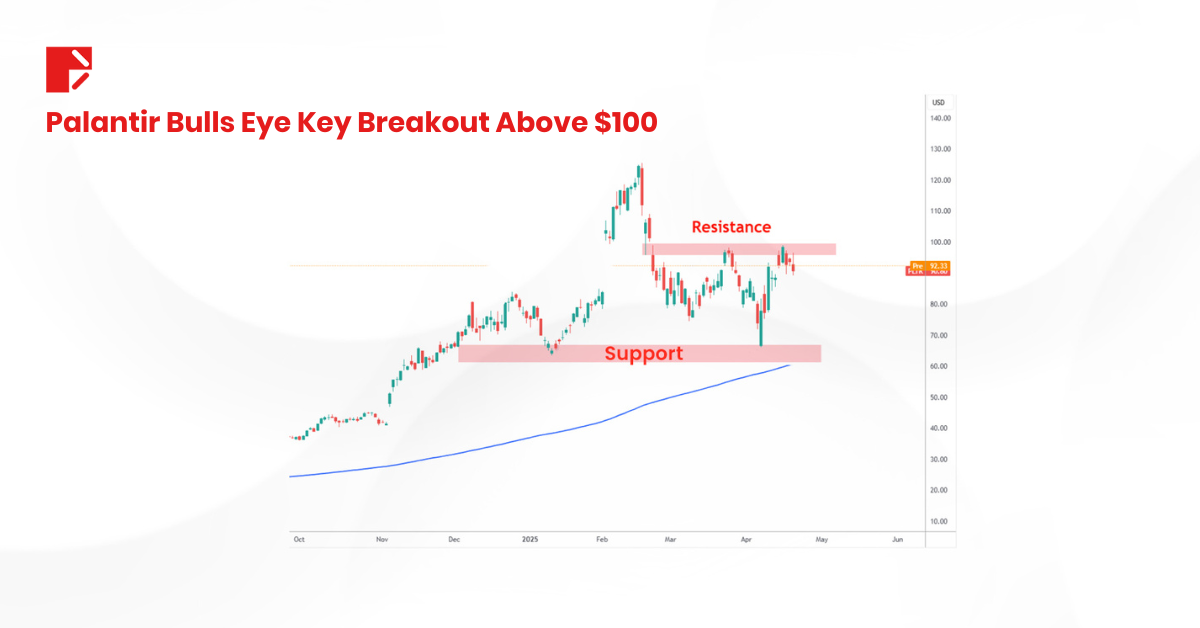
Palantir remains a “story stock,” fueled by its visionary leadership and its involvement in the most critical technological shifts of our time. However, the reasons for its downward movements are rooted in cold, hard financial reality: high valuation multiples, the impact of interest rates, and the ongoing challenge of scaling a complex business model.
For the disciplined investor, Palantir’s dips are often seen as opportunities to build a position in a disruptive company. For the cautious investor, these declines serve as a reminder that growth-stage tech companies come with substantial risk. Understanding that the stock is down due to a combination of macro factors and internal fundamental hurdles—rather than a failure of the technology itself—is key to maintaining a balanced perspective on Palantir’s role in a modern investment portfolio. As the company continues to mature and seeks consistent GAAP profitability, the volatility may subside, but for now, Palantir remains a high-stakes barometer for the market’s appetite for innovation and risk.
aViewFromTheCave is a participant in the Amazon Services LLC Associates Program, an affiliate advertising program designed to provide a means for sites to earn advertising fees by advertising and linking to Amazon.com. Amazon, the Amazon logo, AmazonSupply, and the AmazonSupply logo are trademarks of Amazon.com, Inc. or its affiliates. As an Amazon Associate we earn affiliate commissions from qualifying purchases.