
The ebb and flow of financial markets are a constant, intricate dance, a reflection of the collective sentiment and myriad forces shaping the global economy. While a precise, singular reason for a daily market downturn is often elusive, “today’s” decline typically stems from a convergence of specific macroeconomic indicators, corporate announcements, geopolitical shifts, and inherent investor psychology. Understanding these underlying drivers is crucial for investors seeking to navigate volatility and make informed decisions, transforming potential panic into a strategic opportunity.
Macroeconomic Headwinds and Systemic Pressures
Market downturns are frequently a symptom of broader macroeconomic shifts that signal potential challenges to economic growth and corporate profitability. These systemic pressures create an environment of uncertainty that can quickly dampen investor enthusiasm.
Inflationary Pressures and Interest Rate Hikes
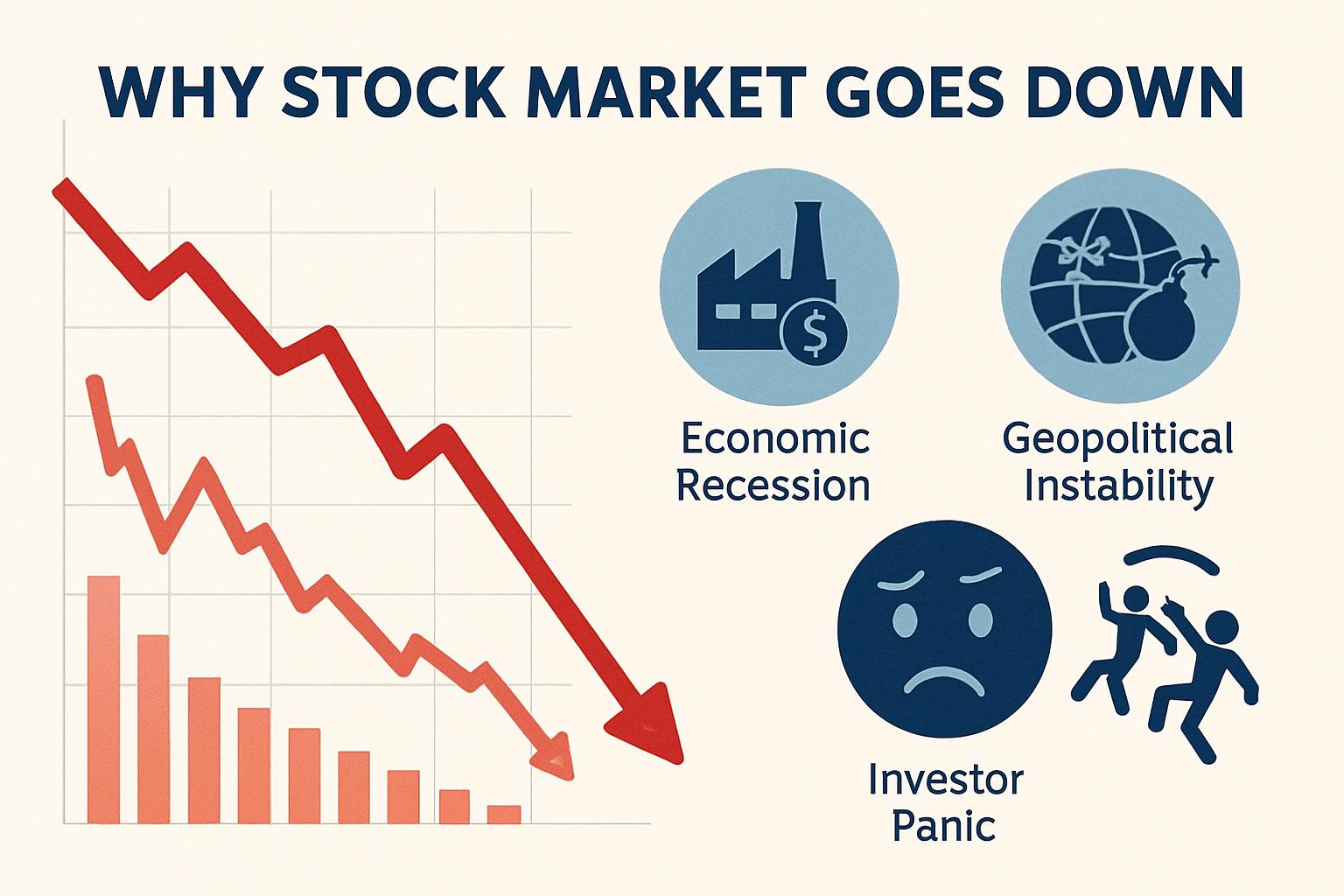
One of the most persistent and significant concerns for financial markets has been the surge in inflation across major economies. When the cost of goods and services rises rapidly, it erodes the purchasing power of consumers and increases input costs for businesses, squeezing profit margins. In response to persistent inflation, central banks worldwide typically resort to monetary tightening policies, primarily by raising benchmark interest rates. Higher interest rates make borrowing more expensive for businesses and consumers, which can slow economic activity and reduce demand. For investors, higher interest rates also make fixed-income investments more attractive relative to equities, as the “risk-free” rate of return increases, consequently making future corporate earnings less valuable when discounted back to the present. The market’s reaction to expectations or actual announcements of rate hikes can often trigger significant selling pressure, as investors re-evaluate their portfolios in a higher-rate environment.
Geopolitical Tensions and Global Instability
The interconnectedness of the global economy means that geopolitical events, no matter where they occur, can send ripples throughout financial markets. Conflicts, political instability in key regions, trade disputes, or even significant diplomatic breakdowns can disrupt global supply chains, drive up commodity prices (especially energy), and introduce a layer of unpredictability that investors inherently dislike. Such events often lead to increased risk aversion, prompting investors to pull capital from riskier assets like stocks and move towards safer havens such as government bonds or gold. The resulting capital flight can cause broad market indices to fall as confidence wanes and the specter of wider economic disruption looms. Uncertainty around the future implications of geopolitical events makes it difficult for businesses to plan and for investors to forecast earnings, leading to a general de-risking across portfolios.
Economic Growth Concerns (Recession Fears)
A pervasive fear that frequently precipitates market declines is the specter of an economic recession. Signals of slowing economic growth, such as declining Purchasing Managers’ Index (PMI) readings, lower-than-expected Gross Domestic Product (GDP) reports, weakening consumer confidence, or rising unemployment figures, can trigger concerns that a recession is imminent. Businesses facing reduced demand and tighter credit conditions may report lower earnings or issue cautious guidance for the future. As the likelihood of an economic downturn increases, investors anticipate a significant hit to corporate profits and future valuations, leading to a preemptive sell-off of stocks. This proactive selling often occurs well before a recession is officially declared, as markets are forward-looking mechanisms, attempting to discount future economic realities into current prices.
Corporate Performance and Sector-Specific Challenges
Beyond the broad macroeconomic landscape, the daily performance of the stock market is heavily influenced by the micro-level dynamics of individual companies and specific industry sectors.
Disappointing Earnings Reports and Guidance
At the heart of stock valuations lies corporate profitability. When prominent companies, particularly those within influential sectors, report earnings that fall short of analyst expectations, or when their management issues weak guidance for future quarters, it can have a disproportionately negative impact on the broader market. A single poor report from a tech giant, a major financial institution, or a bellwether industrial company can trigger a re-evaluation of the entire sector’s prospects, leading to widespread selling. Furthermore, if several companies across different industries begin to report similar challenges—such as shrinking margins, declining revenue, or reduced outlooks—it can signal systemic issues affecting corporate America, prompting a wider market correction. Investors are constantly scrutinizing these reports for insights into the health of the economy and the sustainability of corporate growth.
Supply Chain Disruptions and Input Costs
The fragility of global supply chains has been a recurring theme, and ongoing disruptions continue to pose significant challenges to businesses. Bottlenecks in manufacturing, logistics, and transportation can lead to delays in production and delivery, impacting sales and revenue. Compounding this, rising input costs—whether for raw materials, energy, or labor—directly eat into profit margins. Companies that cannot effectively pass these increased costs on to consumers through higher prices risk seeing their profitability diminish. When these issues become widespread, affecting multiple sectors from automotive to retail, the cumulative effect can depress overall market sentiment as investors anticipate lower corporate earnings across the board. The inability of businesses to efficiently produce and deliver goods at reasonable costs is a direct threat to their financial health and, by extension, to their stock valuations.
Regulatory Changes and Sectoral Risks
Specific industries can face unique challenges that contribute to market volatility. New government regulations, whether related to antitrust, environmental standards, data privacy, or financial oversight, can significantly alter the competitive landscape and profitability of companies within affected sectors. For instance, increased scrutiny on tech monopolies, tighter regulations on cryptocurrency, or new environmental mandates for energy companies can introduce uncertainty and potential costs that weigh heavily on investor confidence in those specific areas. Similarly, sector-specific risks, such as a downturn in real estate, a major product recall in healthcare, or intense pricing competition in telecommunications, can lead to a concentrated sell-off in related stocks, often spilling over into the broader market as investors reassess systemic risk.
Investor Psychology and Technical Factors
Beyond the fundamental and macroeconomic drivers, the daily movements of the market are also heavily influenced by the often-irrational forces of human psychology and the mechanics of trading.
Fear, Panic, and the Contagion Effect
Financial markets are profoundly influenced by investor sentiment, which can swing dramatically from greed to fear. When negative news emerges, or a downturn begins, fear can quickly take hold, leading to a cascade of selling. This “panic selling” often goes beyond rational assessment, as investors rush to liquidate positions to avoid further losses. The contagion effect describes how this fear can spread from one stock or sector to another, even if the underlying fundamentals are unrelated. Media headlines, social media chatter, and the perception of widespread distress can amplify these emotional responses, creating a self-fulfilling prophecy where fear drives prices down, which in turn fuels more fear. Understanding that market movements are not always purely logical helps in maintaining a long-term perspective.
Technical Breakdowns and Algorithmic Trading
Modern markets are heavily influenced by technical analysis and algorithmic trading. Technical analysts look for patterns and trends in price and volume data to predict future movements. When key technical support levels are breached—for example, if a stock or index falls below its 50-day or 200-day moving average—it can trigger automated selling programs (algorithms) designed to execute trades based on these technical indicators. These algorithms, operating at high speeds, can rapidly accelerate a market downturn as they collectively dump shares once certain price thresholds are crossed. While individual investors might react slowly, algorithmic trading contributes to the speed and intensity of market moves, turning gradual declines into sharp plunges in a matter of minutes or hours, making “today’s” drop feel more acute.
Profit-Taking and Rebalancing
Sometimes, a market dip is not necessarily a sign of impending doom but rather a natural part of the trading cycle. After a significant period of upward momentum or a strong bull run, many investors, both individual and institutional, will engage in “profit-taking.” This involves selling off a portion of their holdings that have appreciated substantially to lock in gains. Similarly, institutional investors, such as pension funds and mutual funds, regularly “rebalance” their portfolios to maintain their desired asset allocation. If equities have performed exceptionally well, their allocation might become overweight relative to their target, prompting them to sell stocks and reallocate funds to other asset classes like bonds. While these actions are rational and planned, a confluence of profit-taking and rebalancing activities on a particular day can collectively contribute to a temporary market decline.
The Role of News and Information Flow
In the digital age, information travels at lightning speed, and the market’s reaction to economic data, central bank communications, and media narratives can be instantaneous and profound.
Impact of Economic Data Releases
Regularly scheduled economic reports provide snapshots of the health of the economy, and unexpected deviations from forecasts can dramatically sway market sentiment. Key data points such as inflation rates (CPI, PPI), unemployment figures, retail sales, manufacturing output, and consumer confidence indices are closely watched. A negative surprise—for example, higher-than-expected inflation or weaker-than-anticipated job growth—can instantly trigger a market sell-off as investors adjust their expectations for future corporate earnings, monetary policy, and overall economic stability. The market’s interpretation of these numbers, and particularly how they might influence future central bank actions, is often a primary driver of daily fluctuations.
Central Bank Communications
Central banks, such as the U.S. Federal Reserve, the European Central Bank, and the Bank of England, play a pivotal role in shaping economic conditions through monetary policy. Their statements, press conferences, and meeting minutes are meticulously scrutinized by market participants for clues regarding future interest rate decisions, quantitative easing/tightening programs, and their overall assessment of economic health. Any hint of a more hawkish (tighter money) or dovish (looser money) stance can lead to immediate market reactions. For example, if a central bank signals a more aggressive path for interest rate hikes than anticipated, it can cause stocks to fall as investors price in higher borrowing costs and potentially slower economic growth. The clarity and consistency of these communications are vital for market stability.
Media Narratives and Speculation
The financial media plays a significant role in shaping investor perceptions. News outlets, financial analysts, and even social media influencers can amplify certain narratives, whether they are based on concrete data or speculative rumors. A particular headline or an analyst’s report can initiate or accelerate a market trend. For example, if a prominent news source highlights a specific economic concern or a negative outlook from a well-known investor, it can influence a broad segment of the investing public, contributing to selling pressure. While often reflecting underlying realities, the framing and emphasis of news can, at times, create or exacerbate market movements beyond what might be warranted by objective facts alone.
Navigating Market Downturns: A Proactive Approach
For investors, understanding why markets decline is the first step toward developing resilience and making rational decisions during volatile periods.
Diversification and Asset Allocation
One of the most fundamental principles of investing, especially during downturns, is diversification. Spreading investments across various asset classes (stocks, bonds, real estate, commodities), different industries, and geographical regions helps mitigate risk. When one segment of the market performs poorly, others may hold steady or even gain, cushioning the overall portfolio. Proper asset allocation, tailored to an individual’s risk tolerance and financial goals, ensures that a portfolio is robust enough to withstand significant market shocks, making “today’s” decline less impactful on long-term wealth creation.
Long-Term Perspective and Dollar-Cost Averaging
Reacting impulsively to daily market fluctuations is often detrimental to long-term investment success. Adopting a long-term perspective helps investors weather short-term storms, recognizing that market downturns are a normal, albeit uncomfortable, part of economic cycles. Strategies like dollar-cost averaging, where a fixed amount of money is invested regularly regardless of market conditions, can be particularly effective during volatile periods. This approach means buying more shares when prices are low and fewer when prices are high, potentially leading to a lower average cost per share over time and capitalizing on market rebounds.
Reassessing Risk Tolerance and Financial Goals
Market downturns serve as crucial stress tests for an investor’s risk tolerance. It’s an opportune time to revisit one’s financial goals and ensure that the current portfolio strategy aligns with personal comfort levels for risk. If the downturn causes significant anxiety or prompts a desire to sell everything, it might indicate that the portfolio’s risk level is too high. Conversely, for those with a high risk tolerance and a long investment horizon, a downturn might present attractive buying opportunities for quality assets at lower prices. A periodic reassessment ensures that investment choices remain aligned with personal circumstances and objectives, even in the face of unsettling market movements.
In conclusion, “today’s” market decline is rarely the result of a single isolated factor. Instead, it is typically a complex interplay of macroeconomic pressures, corporate performance, investor psychology, technical trading patterns, and the instantaneous flow of information. While unsettling, these downturns are an inherent feature of dynamic financial markets. For the informed investor, understanding these multifaceted causes provides clarity, fosters a disciplined approach, and ultimately reinforces the importance of a well-thought-out, long-term investment strategy over reactive, emotion-driven decisions.
aViewFromTheCave is a participant in the Amazon Services LLC Associates Program, an affiliate advertising program designed to provide a means for sites to earn advertising fees by advertising and linking to Amazon.com. Amazon, the Amazon logo, AmazonSupply, and the AmazonSupply logo are trademarks of Amazon.com, Inc. or its affiliates. As an Amazon Associate we earn affiliate commissions from qualifying purchases.