
The financial markets are often a barometer of global economic health, investor sentiment, and geopolitical stability. When the market experiences a significant decline, it naturally triggers concern, curiosity, and sometimes, panic among investors, businesses, and the general public. Understanding why the market is falling today requires a nuanced look at a complex interplay of macroeconomic forces, corporate fundamentals, geopolitical events, and even human psychology. It’s rarely a single cause but rather a confluence of factors that erode confidence and prompt a reassessment of asset values.
A falling market, often referred to as a “bear market” if the decline is sustained and significant (typically 20% or more from recent highs), is a normal, albeit uncomfortable, part of the economic cycle. Historically, markets have always recovered from downturns, but the immediate pain can be considerable. For individual investors, a falling market can mean seeing their retirement savings shrink; for businesses, it can signal tougher times ahead for raising capital or maintaining consumer demand. This article aims to unpack the primary drivers behind current market declines, provide context for their impact, and outline strategies for navigating such challenging periods with resilience and foresight.
The Multifaceted Forces Behind Market Downturns
Market declines are seldom attributable to a single, isolated event. Instead, they typically emerge from a complex web of interconnected factors that impact investor confidence and corporate profitability. Identifying these forces is the first step toward understanding the broader economic landscape and making informed decisions.
Macroeconomic Headwinds: Inflation, Interest Rates, and Recession Fears
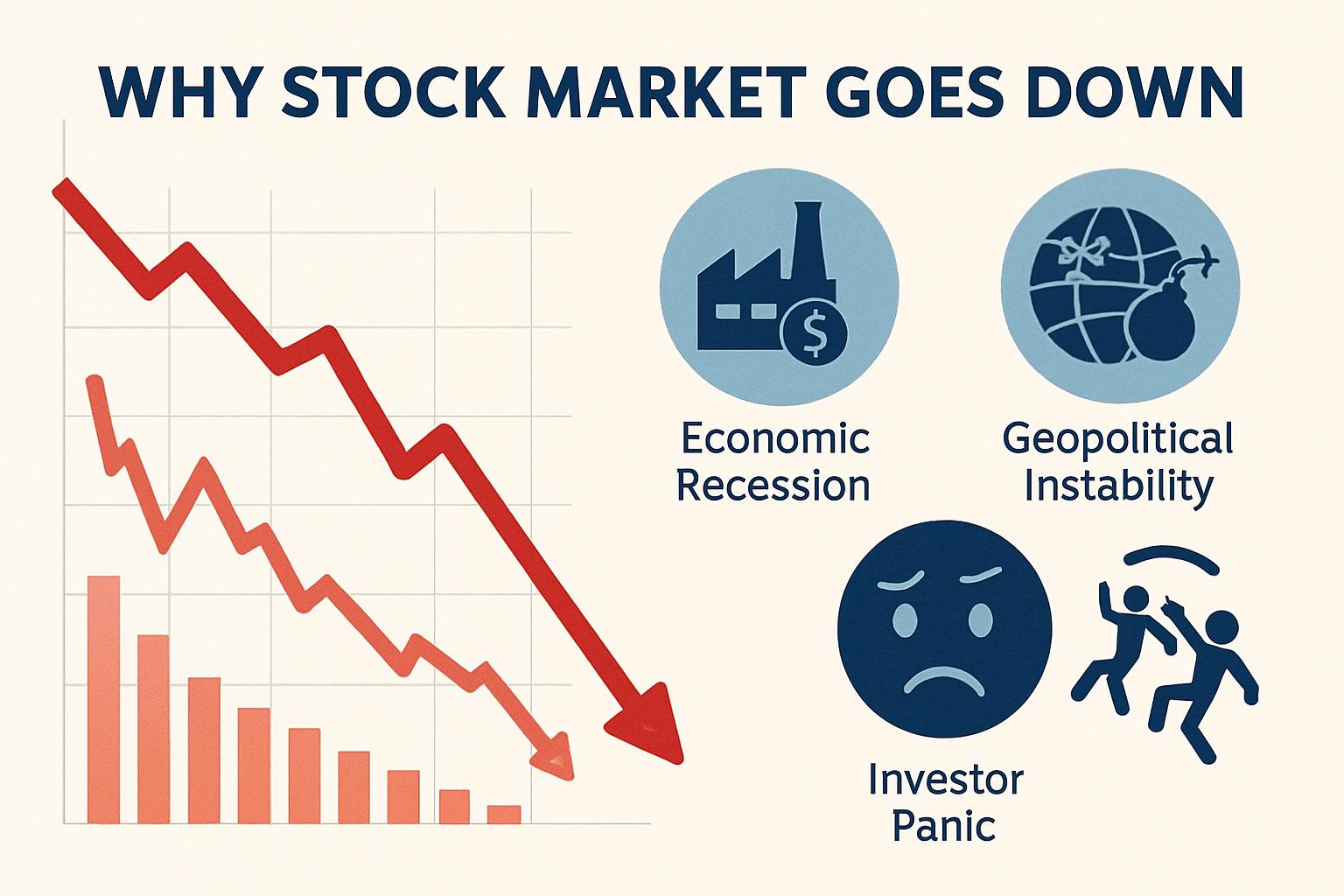
Perhaps the most dominant narrative in recent market downturns revolves around macroeconomic pressures. Inflation, a sustained increase in the general price level of goods and services, erodes purchasing power and corporate profit margins. When inflation runs hot, central banks, like the U.S. Federal Reserve, typically respond by raising interest rates. The intention is to cool down the economy by making borrowing more expensive, thereby reducing demand and bringing prices under control.
However, rising interest rates have a cascading effect on financial markets. Higher rates increase the cost of capital for businesses, dampening investment and expansion plans. They also make future earnings streams less valuable in present terms, which can depress stock valuations. Moreover, a higher interest rate environment makes fixed-income investments, such as bonds, more attractive relative to riskier assets like stocks, prompting a shift in capital. The aggressive tightening of monetary policy, while necessary to combat inflation, raises the specter of an economic recession – a significant, widespread, and prolonged downturn in economic activity. The fear of a recession, which implies reduced consumer spending, higher unemployment, and lower corporate profits, is a powerful catalyst for market selling. Investors begin to price in future economic weakness, leading to immediate declines in equity markets.
Geopolitical Tensions and Supply Chain Disruptions
Beyond the domestic economic landscape, global events play a crucial role in shaping market sentiment. Geopolitical tensions, such as international conflicts, trade wars, or political instability in key regions, can introduce immense uncertainty. These events disrupt established trade routes, affect the supply of critical commodities (like oil and natural gas), and can even lead to sanctions that impact global economic flows. For instance, a war in an energy-producing region can send oil prices soaring, which then feeds into inflation and increases operational costs for businesses worldwide.
These tensions often exacerbate existing supply chain disruptions, a lingering issue since the global pandemic. Bottlenecks in manufacturing, logistics, and shipping lead to delays, shortages, and increased costs for producers. When companies cannot reliably source components or deliver finished goods, their profitability suffers, and consumers face higher prices and limited availability. The combined effect of geopolitical instability and fragmented supply chains creates a challenging environment for businesses to operate efficiently, leading to downward revisions in earnings forecasts and, consequently, lower stock prices.
Corporate Earnings and Sector-Specific Challenges
Ultimately, the value of a stock is tied to the underlying company’s profitability and growth prospects. A significant driver of market declines can be disappointing corporate earnings reports. When major companies, particularly those with high market capitalization, report weaker-than-expected profits, issue cautious forward guidance, or face declining sales, it sends a ripple effect through their respective sectors and the broader market. These reports can indicate that the macroeconomic headwinds discussed earlier are indeed impacting real-world business performance.
Furthermore, specific sectors can face unique sector-specific challenges that contribute to a broader market downturn. For example, a tech sector that experienced rapid growth and high valuations might face a correction if interest rates rise significantly, making future growth prospects less attractive. Similarly, a housing market slowdown driven by higher mortgage rates can impact construction companies, real estate firms, and related financial services. Regulatory changes, competitive pressures, or shifts in consumer preferences can also disproportionately affect certain industries, contributing to overall market weakness as investors rotate out of struggling sectors.
The Role of Investor Psychology and Market Sentiment
While fundamental economic and corporate factors provide the bedrock for market movements, the emotional and behavioral aspects of investing – collectively known as market sentiment – play a surprisingly powerful role, especially during periods of stress. Markets are not just rational machines; they are also complex aggregations of human decisions.
The Contagion of Fear: Panic Selling and Volatility
When markets begin to fall, a psychological phenomenon known as the “contagion of fear” can take hold. Initial declines, driven by rational concerns, can trigger widespread panic selling. As prices drop, some investors, particularly those with a shorter-term outlook or higher risk aversion, may rush to liquidate their positions to avoid further losses. This selling pressure, irrespective of a company’s underlying fundamentals, pushes prices down even further, creating a self-fulfilling prophecy of decline. The herd mentality can overwhelm rational analysis, leading to irrational exuberance during rallies and extreme pessimism during downturns.
This emotional response significantly contributes to market volatility, characterized by rapid and unpredictable price swings. High volatility makes investors nervous, leading them to demand a higher risk premium for holding stocks, or to pull out of the market altogether. News cycles, social media, and expert commentary can amplify this sentiment, creating a feedback loop that can accelerate market movements beyond what fundamental data alone might suggest. Understanding this psychological aspect is crucial, as it often explains why market movements can sometimes appear to decouple from objective economic realities in the short term.
Technical Indicators and Algorithmic Trading
Beyond human emotion, modern financial markets are also heavily influenced by technical indicators and algorithmic trading. Technical analysis involves studying past market data, primarily price and volume, to forecast future price movements. Many traders and institutions use these indicators (e.g., moving averages, support/resistance levels) to make buy and sell decisions. When key technical levels are breached on the downside, it can trigger automatic selling orders programmed into trading systems.
Furthermore, a significant portion of daily trading volume is executed by algorithmic trading systems. These programs are designed to execute trades based on pre-defined rules and quantitative models, often reacting to market news, price movements, or other data points at lightning speed. In a falling market, if algorithms detect certain patterns or thresholds being crossed, they can initiate large-scale selling, accelerating the downward trend. This can create a ‘flash crash’ scenario or exacerbate an existing decline, as programmed reactions can cascade across different trading platforms without human intervention. While these systems aim for efficiency, they can sometimes amplify market volatility during periods of stress, adding another layer of complexity to market dynamics.
Navigating the Downturn: Strategies for Resilient Investing
A falling market can be unsettling, but it also presents an opportunity for informed investors to refine their strategies and position themselves for future growth. Panic selling is often the worst response; instead, a methodical, long-term approach typically yields better outcomes.
The Power of Perspective: Long-Term Vision vs. Short-Term Noise
One of the most critical strategies during a market downturn is to maintain a long-term vision. History unequivocally demonstrates that equity markets recover from declines and generally trend upwards over extended periods. Focusing on the day-to-day, or even month-to-month, volatility can lead to rash decisions driven by emotion. Investors with a horizon of 10, 20, or 30 years should remember that current market dips are often just noise in the context of their overall financial journey.
Reviewing your original investment thesis and financial goals is paramount. If your goals haven’t changed, and the underlying fundamentals of your investments remain sound, then short-term market fluctuations should not dictate your strategy. This perspective helps in resisting the urge to panic sell and allows for a more rational assessment of the situation, differentiating between temporary headwinds and fundamental shifts.
Prudent Portfolio Management: Rebalancing and Diversification
A falling market is an opportune time to reassess your portfolio management. Rebalancing involves adjusting the asset allocation of your portfolio back to your target weights. For instance, if stocks have fallen significantly, they might now represent a smaller percentage of your portfolio than you intended. Rebalancing would involve selling some assets that have performed relatively well (e.g., bonds or cash) and buying more of the now cheaper stocks, effectively buying low.
Diversification across different asset classes (stocks, bonds, real estate, commodities), industries, geographies, and company sizes remains a cornerstone of prudent investing. A well-diversified portfolio is better equipped to weather sector-specific downturns or regional economic shocks. During a market fall, some parts of your portfolio might perform better than others, providing a cushion against losses and potential sources of capital for rebalancing. This strategy reduces reliance on any single asset performing well, mitigating overall risk.
Seizing Opportunities: Value Investing and Dollar-Cost Averaging
While others are selling, astute investors can look for opportunities. A falling market often brings down the prices of fundamentally strong companies, allowing investors to acquire quality assets at a discount. This is the essence of value investing, where the focus is on buying stocks trading below their intrinsic worth. Thorough research into a company’s balance sheet, earnings potential, competitive advantages, and management quality becomes even more crucial during these times.
Another powerful strategy is dollar-cost averaging (DCA). This involves investing a fixed amount of money at regular intervals (e.g., monthly) regardless of the market’s performance. When prices are high, your fixed sum buys fewer shares; when prices are low, it buys more shares. Over time, DCA helps to reduce the average cost per share and takes the emotion out of timing the market. In a falling market, DCA ensures that you are consistently buying shares at lower prices, which can significantly boost your returns when the market eventually recovers. It’s a disciplined approach that leverages volatility to an investor’s advantage.
Beyond the Headlines: Broader Economic Implications
The immediate impact of a falling market is felt by investors, but its repercussions extend much further, influencing businesses, consumer behavior, and government policy. Understanding these broader implications provides a more complete picture of why current market dynamics matter.
Impact on Businesses and Consumer Spending
A sustained market downturn can significantly affect the real economy. For businesses, a decline in stock valuations means a higher cost of capital. Companies looking to raise funds by issuing new shares will find it more expensive, potentially hindering expansion plans, mergers and acquisitions, and research and development. Smaller businesses, in particular, may find it harder to secure financing or manage cash flow if economic uncertainty leads to tighter lending conditions. This can result in slower job growth, or even layoffs, as companies cut costs to preserve profitability.
Consumer spending, which is a major component of GDP in many economies, can also take a hit. When individuals see their investment portfolios decline, they often experience a “wealth effect” in reverse; they feel poorer and tend to reduce discretionary spending. This reduced demand can further impact corporate revenues and profits, creating a downward spiral. Consumer confidence surveys often correlate with market performance, reflecting this psychological link between personal wealth and spending habits.
Policy Responses and Future Outlook
Governments and central banks do not passively observe market declines. They often consider policy responses to stabilize the economy and restore confidence. Central banks might pause or slow interest rate hikes, or even consider quantitative easing measures if a recession becomes severe. Governments might implement fiscal stimuli, such as tax cuts or infrastructure spending, to inject demand into the economy. However, these responses often come with their own set of challenges, such as potential for increased national debt or reigniting inflation.
The future outlook for markets remains inherently uncertain, but historical patterns offer some guidance. Markets are cyclical, and every bear market has eventually been followed by a bull market. The speed and intensity of recovery depend on various factors, including the resolution of underlying economic issues (e.g., inflation getting under control), geopolitical stability, and renewed corporate earnings growth. Analysts and economists continuously update their forecasts based on incoming data, but the path to recovery is rarely linear. Investors must remain adaptive, continually assessing the evolving landscape and adjusting their strategies accordingly.
Conclusion: A Cyclical Reality and the Importance of Financial Preparedness
The question of “why market is falling today” often yields a complex answer, revealing a mosaic of macroeconomic pressures, corporate challenges, geopolitical events, and powerful psychological forces. From inflationary pressures driving up interest rates and sparking recession fears, to global tensions disrupting supply chains, and the contagious fear among investors, the factors are numerous and interconnected.
However, it is crucial to remember that market downturns are a cyclical reality of investing. They are painful, but they are also temporary and have historically represented opportunities for long-term wealth creation for those who maintain discipline and perspective. For investors, the key is not to attempt to perfectly time the market’s bottom, but rather to focus on financial preparedness: understanding your risk tolerance, maintaining a diversified portfolio, embracing strategies like dollar-cost averaging, and adhering to a long-term investment plan.
While the headlines may fuel anxiety, a professional and insightful approach involves looking beyond the immediate noise, understanding the underlying drivers, and making informed decisions that align with your financial goals. The market’s current fall serves as a powerful reminder of the importance of sound financial principles and the enduring power of patience in the journey towards financial success.
aViewFromTheCave is a participant in the Amazon Services LLC Associates Program, an affiliate advertising program designed to provide a means for sites to earn advertising fees by advertising and linking to Amazon.com. Amazon, the Amazon logo, AmazonSupply, and the AmazonSupply logo are trademarks of Amazon.com, Inc. or its affiliates. As an Amazon Associate we earn affiliate commissions from qualifying purchases.