
For many investors, the stock market is a pulse—a constant, rhythmic indicator of global economic health. We are accustomed to the rapid-fire updates of green and red tickers, the constant flow of financial news, and the ability to execute trades with a single tap on a smartphone. However, there are specific days when this pulse seemingly stops. If you have checked your brokerage account or a financial news portal only to find stagnant prices and a “Market Closed” notification, you are likely encountering a scheduled market holiday.

Understanding why the stock market is closed today requires a dive into the structural mechanics of the financial system, the history of labor laws, and the strategic importance of “market downtime.” While digital assets like cryptocurrency trade 24/7, the traditional equity markets—centered around institutions like the New York Stock Exchange (NYSE) and the Nasdaq—adhere to a strict schedule that balances economic necessity with social and cultural observances.
The Mechanics of Market Closures: Why Timing Matters for Investors
The stock market does not operate in a vacuum; it is an infrastructure managed by humans and regulated by federal frameworks. In the United States, the two primary exchanges, the NYSE and Nasdaq, generally synchronize their schedules. These closures are not arbitrary; they are meticulously planned to ensure that the financial system remains stable and that the workforce powering these institutions can observe significant national events.
The New York Stock Exchange (NYSE) and Nasdaq Standards
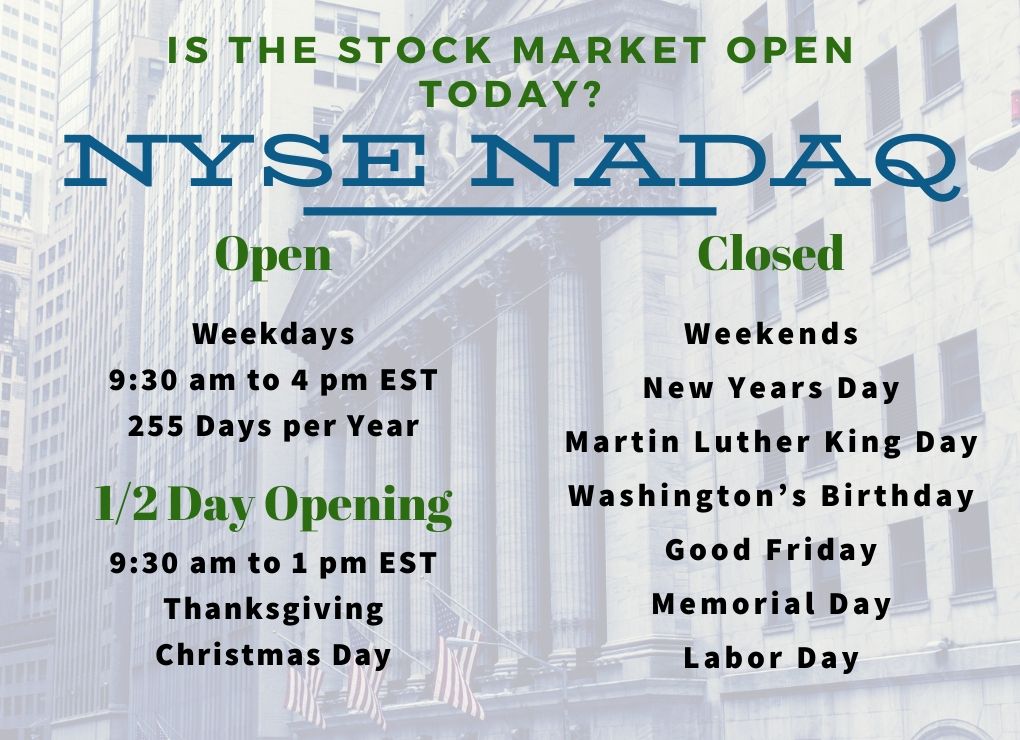
While the stock market is often viewed as a singular entity, it is actually a collection of competing exchanges. However, for the sake of national stability, the NYSE and Nasdaq almost always follow the same holiday calendar. These exchanges operate from Monday through Friday, 9:30 AM to 4:00 PM Eastern Time. When the market is “closed,” it refers to the cessation of this standard trading session. During these periods, the electronic communication networks (ECNs) that facilitate trades are powered down for the general public, preventing the price discovery mechanism from functioning until the next opening bell.
Federal Holidays vs. Market Holidays
A common point of confusion for investors is the distinction between a federal bank holiday and a stock market holiday. While they often overlap, they are not identical. For instance, the stock market remains open on Veterans Day and Columbus Day (Indigenous Peoples’ Day), even though the U.S. bond market and most commercial banks are closed. This creates a unique trading environment where equities are moving, but the underlying “plumbing” of the financial system—settlement and wire transfers—might be delayed. Understanding this distinction is crucial for managing cash flow within a brokerage account.
The “Weekend Effect” and After-Hours Trading
The most common reason the market is closed is simply the weekend. Saturday and Sunday closures are a legacy of early 20th-century labor standards. However, the concept of a “closed” market is becoming increasingly nuanced. While the main exchange is closed, “after-hours” and “pre-market” sessions allow institutional and some retail investors to trade outside standard hours. Yet, even these extended sessions are suspended during official market holidays to ensure a true “circuit break” for the financial system.
A Calendar of Silence: Recurring Annual Market Holidays
The U.S. stock market observes nine to ten major holidays per year. These dates are finalized well in advance, allowing institutional traders and algorithmic systems to adjust their strategies. When the market is closed for these observances, it provides a moment for the global financial community to recalibrate.
Traditional Observances: New Year’s, Christmas, and July 4th
The pillars of the market holiday calendar are New Year’s Day, Independence Day, and Christmas Day. These closures are absolute. If these holidays fall on a Saturday, the market typically closes on the preceding Friday. If they fall on a Sunday, the market closes on the following Monday. These “observed” holidays ensure that the total number of trading days in a year remains relatively consistent, usually around 252 days.
Religious and Cultural Inclusions: Good Friday
One of the more unique market holidays is Good Friday. Unlike many federal holidays that are secular in nature, the U.S. stock market has historically closed on the Friday before Easter. Interestingly, Good Friday is not a federal holiday in the United States, meaning banks and post offices remain open while the NYSE and Nasdaq go dark. This tradition dates back over a century and highlights the cultural heritage baked into the foundations of Wall Street.
Modern Additions: Juneteenth and its Financial Significance
In 2022, the U.S. stock market officially added Juneteenth (June 19th) to its holiday schedule following its designation as a federal holiday. The inclusion of new holidays is a rare event and reflects the financial industry’s effort to align with evolving national values. For investors, this addition meant recalibrating June trading volumes, as mid-month liquidity is now interrupted by a full day of closure.
Beyond the Calendar: Unscheduled and Emergency Market Closures
While most “closed” days are predictable, the market occasionally shuts down due to unforeseen circumstances. These emergency closures are designed to protect the integrity of the market during periods of extreme duress, whether physical or financial.
National Days of Mourning
When a former U.S. President passes away, the federal government may declare a National Day of Mourning. Historically, the NYSE has closed its doors to honor the deceased leader. For example, the market closed on December 5, 2018, to honor President George H.W. Bush. These closures are seen as a mark of corporate and national respect, temporarily halting the pursuit of profit to acknowledge history.
Extreme Volatility and “Circuit Breakers”
The market may close “today” not because of a holiday, but because of a catastrophic drop in prices. “Circuit breakers” are regulatory tools that automatically halt trading when the S&P 500 drops by certain percentages (7%, 13%, and 20%). A Level 3 breach (a 20% drop) results in the market closing for the remainder of the trading day. These unscheduled pauses are designed to prevent panic selling and allow investors to digest information rationally rather than emotionally.
Technical Glitches and Infrastructure Failures
In an era of high-frequency trading and digital dominance, technical failures can also force a closure. Whether it is a massive power outage, a cybersecurity threat, or a “flash crash” caused by faulty algorithms, the exchanges reserve the right to halt all activity to prevent erroneous trades. While rare, these events remind investors that the market is a fragile ecosystem of hardware and software.
The Ripple Effect: How Market Closures Impact Your Portfolio
When the market is closed, the value of your stocks doesn’t “freeze”—the perception of their value continues to change as world events unfold. This creates several phenomena that every investor should understand to manage their risk effectively.
Liquidity Risks and Price Gaps
The biggest risk of a market closure is the “gap.” Because you cannot trade while the market is closed, any news that breaks during a holiday—such as a geopolitical conflict or a surprise economic report—cannot be acted upon immediately. When the market finally reopens the following day, the price may “gap” significantly higher or lower than its previous close. This lack of liquidity during closures is why professional traders often reduce their “overnight” or “over-holiday” exposure.
Psychological Benefits of Market Downtime
From a personal finance perspective, market holidays serve an important psychological function. The 24/7 news cycle can lead to “ticker fatigue,” where investors feel pressured to monitor their portfolios constantly. A closed market provides a mandatory break, encouraging a long-term “buy and hold” mentality. It shifts the focus from minute-by-minute fluctuations to fundamental analysis and personal financial planning.
Strategizing During Market Lulls
Savory investors use market holidays as a time for “financial housekeeping.” Since you cannot execute trades, these days are ideal for reviewing your asset allocation, researching new companies, or reading quarterly earnings reports that you may have missed during a busy trading week. The absence of market noise allows for clearer, more strategic thinking.
Global Perspectives: When Domestic Markets Are Open but Foreign Ones Are Closed
In our interconnected global economy, the phrase “the market is closed” often depends on where you are looking. A holiday in the United States does not mean the rest of the world stops trading.
Cross-Border Trading Challenges
If you hold international stocks or ETFs that track foreign indices, you may find that your “local” market is open while the underlying assets are closed. For example, if you own a Japanese ETF traded on the NYSE, the ETF will move during U.S. hours, but the underlying Nikkei stocks are not trading. This can lead to “tracking errors,” where the price of the ETF fluctuates based on speculation about what will happen when the Tokyo Stock Exchange reopens.
The Impact of Time Zones on Global Liquidity
The “Sun Never Sets” on global finance. As the New York market closes, the Tokyo and Hong Kong markets are preparing to open. However, when a major hub like the U.S. is closed for a holiday, global liquidity often dries up. Major European and Asian banks often wait for U.S. market signals. Consequently, even if foreign markets are open, trading volumes may be thinner, leading to higher volatility and wider bid-ask spreads.
In conclusion, when the stock market is closed today, it is rarely a cause for alarm. Instead, it is a structural pause—a moment of rest for a system that otherwise moves at the speed of light. Whether it is a scheduled holiday like Thanksgiving or an unscheduled halt due to volatility, these closures are essential for maintaining the order, fairness, and human balance of the financial world. For the individual investor, these breaks are an invitation to step back from the screen, assess the broader horizon, and remember that wealth is built over decades, not just during market hours.
aViewFromTheCave is a participant in the Amazon Services LLC Associates Program, an affiliate advertising program designed to provide a means for sites to earn advertising fees by advertising and linking to Amazon.com. Amazon, the Amazon logo, AmazonSupply, and the AmazonSupply logo are trademarks of Amazon.com, Inc. or its affiliates. As an Amazon Associate we earn affiliate commissions from qualifying purchases.