
For both seasoned investors and curious novices, encountering a closed stock market on a seemingly ordinary weekday can be a source of momentary confusion. While the relentless 24/7 nature of some global financial markets might suggest constant activity, major stock exchanges like the NYSE and NASDAQ adhere to specific schedules, punctuated by regular closures. Understanding these periods of downtime is not just about avoiding frustration; it’s a fundamental aspect of savvy financial planning, investment strategy, and appreciating the intricate mechanics that safeguard market integrity.
The reasons behind market closures are multifaceted, ranging from widely observed national holidays to critical operational necessities and, on rare occasions, unforeseen emergencies. These scheduled pauses are not arbitrary; they serve vital functions, ensuring fair play, allowing for systematic maintenance, and providing all market participants with time to digest information and reset. Let’s delve into the comprehensive reasons why the stock market might be closed today, and what these closures mean for your financial journey.

The Regular Rhythms: Weekends and Federal Holidays
The most common and predictable reasons for the stock market to be closed today fall into two primary categories: weekends and federal holidays. These scheduled breaks are deeply embedded in the financial calendar and are crucial for the orderly functioning of the market.
Weekends: A Time for Reflection, Not Trading
Perhaps the most straightforward answer to “why is the stock market closed today?” is simply that it’s Saturday or Sunday. Major stock exchanges in the United States, including the New York Stock Exchange (NYSE) and the NASDAQ, operate on a standard Monday through Friday schedule. This weekend closure is a global norm, observed by most major exchanges worldwide.
The rationale behind weekend closures is multi-layered. Firstly, it allows for a crucial period of rest and recuperation for all market participants—traders, brokers, analysts, and exchange staff. The intensity and high-stakes nature of daily trading can be mentally and emotionally taxing, and these two non-trading days provide an essential respite. Secondly, weekends offer a window for the intricate back-end systems of the exchanges to undergo maintenance, upgrades, and system checks without disrupting live trading. These behind-the-scenes operations are critical for ensuring the stability, security, and efficiency of the trading infrastructure. Finally, from a behavioral finance perspective, the weekend break allows investors time to process the week’s economic news, company announcements, and global events without the pressure of immediate trading decisions. This pause can help temper emotional reactions and foster more rational, long-term thinking, contributing to overall market stability.
Observing National Milestones: Federal Holidays
Beyond the weekend, federal holidays represent another predictable reason for market closures. In the US, the financial markets largely follow the federal holiday schedule, with a few notable additions and exclusions specific to market operations. These closures honor significant national events, figures, and traditions, aligning the financial world with the broader societal calendar.
Common holidays that result in a full market closure include:
- New Year’s Day (January 1st): Kicking off the new year with a national day of observance.
- Martin Luther King, Jr. Day (Third Monday in January): Honoring the civil rights leader.
- Washington’s Birthday / Presidents’ Day (Third Monday in February): Acknowledging historical leadership.
- Good Friday (Variable, before Easter Sunday): A significant religious holiday observed by the financial markets, though not a federal holiday.
- Memorial Day (Last Monday in May): Commemorating fallen service members.
- Juneteenth National Independence Day (June 19th): Celebrating the emancipation of enslaved African Americans.
- Independence Day (July 4th): Marking the birth of the nation.
- Labor Day (First Monday in September): Honoring the American workforce.
- Thanksgiving Day (Fourth Thursday in November): A day of gratitude and family.
- Christmas Day (December 25th): Celebrating the Christmas holiday.
These holiday closures ensure that market participants can observe national celebrations and remembrances, reinforcing a sense of community and shared values that extend beyond the trading floor. They also provide additional opportunities for system maintenance and allow for a collective pause in the fast-paced world of finance.
Beyond the Calendar: Early Closures and Special Circumstances
While weekends and federal holidays account for the vast majority of market closures, there are other, less frequent scenarios that can lead to altered trading hours or even unexpected shutdowns. Being aware of these exceptions is vital for managing your investment portfolio effectively.
Shortened Trading Days: The Eve of Holidays
In addition to full-day closures, the stock market often observes shortened trading days, particularly around major holidays. These “early close” days typically mean the market closes at 1:00 PM ET instead of the usual 4:00 PM ET. Common instances for early closures include:
- The day before Independence Day (if it falls on a weekday): To facilitate an extended holiday weekend.
- The day after Thanksgiving (Black Friday): Acknowledging the start of the holiday shopping season while still providing some trading hours.
- Christmas Eve (if it falls on a weekday): Allowing market participants to prepare for the Christmas holiday.
These shortened trading sessions are a compromise, acknowledging the importance of holiday observance while still providing some liquidity and allowing for urgent transactions for part of the day. For investors, it’s crucial to note these early closes as they can impact intraday trading strategies and the timing of order execution. The reduced trading volume in these shorter sessions can sometimes lead to increased volatility, making precise timing even more critical.
Exceptional Circumstances: Unforeseen Market Pauses
Extremely rare but historically significant, stock markets can also close due to extraordinary, unforeseen circumstances. These emergency closures are typically enacted to protect investors, maintain market integrity, or respond to national emergencies. Examples include:
- National Tragedies: Following the September 11, 2001, terrorist attacks, the U.S. stock markets remained closed for four trading days, the longest closure since 1933. This closure allowed for security concerns to be addressed, systems to be checked, and a period of national mourning.
- Natural Disasters: Hurricane Sandy in 2012 forced a two-day closure of the NYSE due to power outages and safety concerns in downtown Manhattan, marking the first weather-related closure in decades.
- Technological Failures: While typically resolved quickly, severe and widespread technological malfunctions that compromise trading could theoretically lead to a temporary market suspension.
- Extreme Volatility and Circuit Breakers: While not a full closure, markets employ “circuit breakers” that temporarily halt trading during periods of extreme downward volatility. These are designed to give investors a moment to pause and reassess, preventing panic selling from spiraling out of control. In very rare, extreme cases, these could lead to extended halts.
Such emergency closures underscore the delicate balance between continuous market access and the need to protect the financial system from systemic risks. They are a testament to the fact that even in an increasingly digitized world, human safety and systemic stability take precedence.
The Rationale Behind Market Closures: Stability and Investor Protection
Beyond simply providing breaks, market closures are integral to the architecture of modern financial systems. They are designed with specific goals in mind, primarily focusing on operational integrity, market stability, and the ultimate protection of investors.
Ensuring Operational Integrity and Settlement
One of the most critical functions of market closures is to provide a window for essential operational tasks that cannot be performed during live trading. The vast complexity of stock exchanges involves massive computer networks, communication systems, and settlement processes. During non-trading hours, these systems can undergo:
- Maintenance and Upgrades: Software updates, hardware maintenance, and security patches are continuously applied to keep the trading infrastructure robust and secure.
- Trade Settlement: While many trades settle electronically, the full reconciliation and transfer of ownership and funds require a systematic process. Closures allow for the meticulous clearing and settlement of trades from the preceding trading day, ensuring that all transactions are accurately recorded and assets properly exchanged.
- Regulatory Compliance Checks: Exchanges and regulatory bodies use this time to perform audits, review trading data, and ensure compliance with complex financial regulations, contributing to market fairness.
Without these dedicated periods, the continuous operation of the market would be prone to technological glitches, security vulnerabilities, and backlogs in settlement, which could erode confidence and introduce significant systemic risks.
Preventing Volatility and Promoting Informed Decisions
Market closures also play a psychological and economic role in managing volatility. In a world of instant information and algorithmic trading, continuous market operation could exacerbate panic selling or irrational exuberance.
- A Breather from Information Overload: Financial markets are constantly bombarded with news, economic data, corporate earnings, and geopolitical developments. Closures provide investors with a necessary break from the relentless flow of information, allowing them to digest, analyze, and form reasoned opinions without the pressure of immediate trading decisions. This can prevent knee-jerk reactions that might be detrimental to long-term portfolio performance.
- Reducing Emotional Trading: Human psychology plays a significant role in market movements. Fear and greed can drive irrational decisions. Scheduled breaks act as circuit breakers for emotional trading, allowing passions to cool and fostering a more rational approach when markets reopen.
- Ensuring Orderly Reopening: When markets reopen after a closure, the influx of accumulated news and orders might create volatility. However, the structured opening process, including pre-market trading and opening auctions, is designed to absorb this initial shock and establish fair opening prices, preventing chaotic starts.
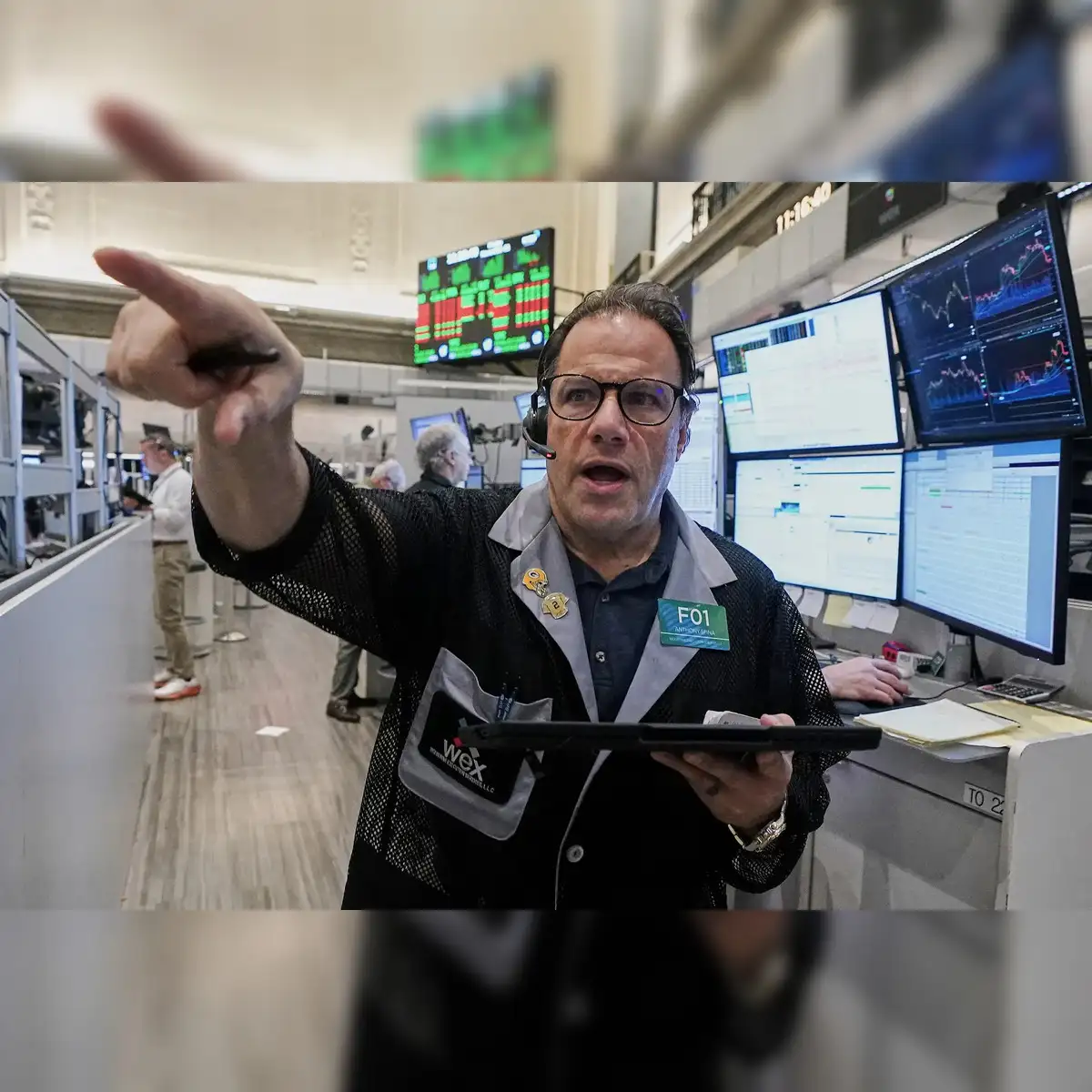
By providing these pauses, markets aim to create an environment where decisions are more likely to be based on fundamental analysis rather than reactive impulses, ultimately contributing to a more stable and efficient market.
A Global Perspective: Divergent Market Schedules
It’s also worth noting that market closures are not uniform across the globe. While the NYSE and NASDAQ are closed, other international markets might be open, creating a continuous flow of global economic activity. For instance, an investor in the U.S. might find their domestic market closed for a federal holiday, but European or Asian markets could be actively trading. This divergence highlights:
- Interconnectedness of Global Finance: News breaking during a U.S. market holiday can still influence prices on international exchanges, and these movements will often be reflected in U.S. pre-market trading when it resumes.
- Challenges for Global Investors: Investors with international portfolios or those trading global ETFs need to be acutely aware of holiday schedules across different regions. This necessitates careful planning to manage risk exposure and execute trades efficiently.
- Forex and Cryptocurrency Markets: Unlike traditional stock markets, foreign exchange (forex) and cryptocurrency markets often operate 24/5 or even 24/7. This continuous liquidity appeals to some traders but also carries different risks and opportunities that traditional market closures mitigate.
Understanding these global nuances is crucial for any investor looking beyond their domestic borders, underscoring that while one market might be closed, the broader world of finance rarely stops moving entirely.
Navigating Market Downtime: Implications for Investors
When the stock market is closed, it doesn’t mean your financial life grinds to a halt. For investors, understanding the implications of these closures is crucial for managing portfolios, executing strategies, and maintaining financial health.
Impact on Trading Strategies and Order Execution
Market closures directly affect how orders are handled and how trading strategies play out:
- Pending Orders: If you have placed a “Good-Til-Cancelled” (GTC) order (like a limit order or stop-loss order) that hasn’t been executed, it will typically remain active through market closures, resuming its potential for execution when the market reopens. However, “Day Orders” expire at the end of the trading day, so they would not carry over.
- Market Orders: Market orders, which instruct your broker to buy or sell at the best available price immediately, cannot be executed when the market is closed. Any market order placed during non-trading hours will typically be queued and executed at the opening price when the market reopens, which could be significantly different from the closing price before the break. This highlights the risk of “gap openings” after significant news breaks during a closure.
- Short-Term vs. Long-Term Strategies: Day traders and short-term swing traders are most impacted by closures, as their strategies rely on intraday price movements. Long-term investors, however, are less affected, as their focus is on the multi-year trajectory of their investments, making daily or weekly closures largely insignificant.
- Futures and Options: While the underlying stock market is closed, some related markets, like futures and options on broad market indices, might have extended or different trading hours, sometimes including overnight sessions. This can offer a hedge or a speculative opportunity, but it also means potential price discovery is happening elsewhere, influencing how the stock market opens.
Investors must check their broker’s specific policies regarding order handling during non-trading hours and always be mindful of the potential for price discrepancies upon market reopening, especially if major news emerges during the closure.
Financial Planning and Investment Management During Closures
Market closures are excellent reminders that financial planning extends far beyond merely buying and selling stocks. They offer an opportune moment to focus on broader financial health:
- Portfolio Review: Use the downtime to review your portfolio’s performance, assess your asset allocation, and re-evaluate your investment goals. Are you still aligned with your risk tolerance? Have your life circumstances changed?
- Research and Due Diligence: Without the distraction of live price action, you can dedicate time to researching new companies, understanding macroeconomic trends, or delving deeper into the fundamentals of your existing holdings.
- Rebalancing Considerations: If your portfolio has drifted significantly from your target asset allocation, you can plan your rebalancing strategy for when markets reopen. This might involve adjusting your stock-to-bond ratio or diversifying across sectors.
- Cash Management: Review your cash position, emergency fund, and other liquid assets. Ensure you have adequate liquidity for upcoming expenses or investment opportunities.
- Beyond Stocks: Remember that personal finance encompasses more than just the stock market. Use this time to review your budget, manage debt, contribute to retirement accounts, or explore other investment avenues like real estate or alternative assets.
The pause in market activity provides a mental space to step back and assess your financial picture holistically, ensuring that your investment decisions are part of a well-thought-out long-term strategy.
The Persistence of Global News and Off-Market Trading
It’s a common misconception that when the stock market closes, all financial news stops. In reality, significant events can (and often do) occur during non-trading hours, both domestically and internationally.
- Earnings Announcements: Companies sometimes release earnings reports after market close or before market open, or even on holidays. These can significantly impact their stock price when trading resumes.
- Economic Data Releases: Government agencies might publish key economic indicators (e.g., inflation reports, jobs data) during market closures, which can influence market sentiment.
- Geopolitical Events: International political developments, trade negotiations, or conflicts don’t adhere to stock market schedules and can create ripple effects that influence global markets and, subsequently, the opening of your domestic market.
- Pre-Market and After-Hours Trading: While the main trading session is closed, many brokers offer pre-market and after-hours trading. These sessions, typically with lower liquidity and higher volatility, allow some institutional investors and active traders to react to news before the official opening or after the official close. The prices established in these sessions can give an indication of how the market might open.
Savvy investors understand that while trading ceases, the flow of information and market-moving events does not. Staying informed through reputable financial news sources, even during closures, is crucial for anticipating market movements when trading resumes.
Maximizing Your Financial Acumen When Markets Pause
Market closures are not simply dead air in the financial calendar; they are strategic intervals that, when leveraged effectively, can significantly enhance an investor’s financial acumen and long-term success.
Research and Re-evaluation: A Strategic Opportunity
The absence of live ticker prices provides a valuable mental space to step away from the immediate gratification or anxiety of trading and engage in deeper, more thoughtful analysis.
- Deep Dive into Company Fundamentals: Instead of merely glancing at headlines, use this time to read annual reports, earnings call transcripts, and investor presentations. Understand a company’s business model, competitive landscape, management team, and long-term growth prospects.
- Sector and Industry Analysis: Explore broader industry trends. Are there emerging technologies, demographic shifts, or regulatory changes that could impact certain sectors? This macroscopic view can reveal new investment opportunities or highlight potential risks in your current holdings.
- Economic Research: Dive into macroeconomic indicators, central bank policies, and geopolitical analyses. Understanding the broader economic climate is fundamental to making informed investment decisions.
- Learning and Education: Use the time to read investment books, take online courses, or review financial concepts. Continuously expanding your knowledge base is one of the best investments you can make in yourself.
Treat market closures as dedicated research and development days for your financial portfolio. The insights gained during these periods can lead to more confident and well-reasoned investment choices when trading resumes.
Personal Financial Planning: Beyond the Stock Market
While the stock market is a significant component of many individuals’ financial lives, it’s just one piece of a larger puzzle. Market closures are a perfect time to address other critical aspects of personal finance that often get overlooked amidst the daily grind.
- Budgeting and Expense Tracking: Review your monthly budget. Are you sticking to it? Are there areas where you can optimize spending or identify unnecessary costs? Effective budgeting is the foundation of wealth accumulation.
- Debt Management: Assess your outstanding debts. Are you making progress on high-interest debts like credit cards? Could you consolidate loans or refinance to lower interest rates? Reducing debt frees up capital for investing and reduces financial stress.
- Emergency Fund Review: Ensure your emergency fund is adequately stocked, typically covering 3-6 months of living expenses. This safety net is crucial for weathering unexpected financial challenges without dipping into long-term investments.
- Retirement Planning: Check your contributions to 401(k)s, IRAs, or other retirement vehicles. Are you maximizing employer matches? Are you on track to meet your retirement goals?
- Estate Planning: For many, estate planning is a task often deferred. Use this time to review or establish wills, trusts, and power of attorney documents, ensuring your assets are managed according to your wishes.
- Insurance Coverage: Review your insurance policies—health, life, auto, home. Are you adequately covered? Are there opportunities to save money or get better coverage?
By broadening your focus during market downtime, you strengthen your overall financial foundation, making your investment journey more resilient and successful in the long run.
Staying Informed: Reliable Sources and Market Calendars
Finally, knowing why the market is closed and anticipating future closures is a matter of proactive information gathering. Relying on accurate and official sources is paramount.
- Official Exchange Websites: The NYSE and NASDAQ publish official holiday schedules on their respective websites well in advance. These are the definitive sources for market closures and early closings.
- Reputable Financial News Outlets: Major financial news organizations (e.g., Wall Street Journal, Bloomberg, Reuters, CNBC, Financial Times) consistently report on upcoming market holidays and any unexpected closures.
- Brokerage Platforms: Most online brokerage platforms integrate market calendars and provide notifications about trading hours. Your personal account interface is often a convenient place to check.
- Economic Calendars: Beyond market holidays, an economic calendar (available through many financial news sites) will list key economic data releases, earnings dates, and central bank meetings, helping you anticipate market-moving events even when the market is closed.
Being prepared for market closures is a mark of a disciplined investor. It allows you to avoid surprises, manage your expectations, and strategically allocate your time and resources to aspects of finance that contribute most to your long-term wealth and financial well-being. The stock market may close today, but your journey toward financial mastery is always open.
aViewFromTheCave is a participant in the Amazon Services LLC Associates Program, an affiliate advertising program designed to provide a means for sites to earn advertising fees by advertising and linking to Amazon.com. Amazon, the Amazon logo, AmazonSupply, and the AmazonSupply logo are trademarks of Amazon.com, Inc. or its affiliates. As an Amazon Associate we earn affiliate commissions from qualifying purchases.