
The Nasdaq Composite Index, often seen as a bellwether for the technology sector and growth stocks, periodically experiences significant downturns, leaving investors and market watchers questioning the underlying causes. Understanding why the Nasdaq is down requires a multifaceted approach, delving into macroeconomic trends, sector-specific challenges, investor psychology, and the unique composition of the index itself. This analysis aims to dissect the primary drivers behind recent declines, providing a comprehensive overview for investors seeking clarity and strategic direction in volatile markets.
Understanding the Nasdaq and Its Unique Composition
To truly grasp the implications of a Nasdaq downturn, one must first understand what the index represents and why its movements are often distinct from broader market indicators like the S&P 500 or the Dow Jones Industrial Average. The Nasdaq’s identity is intrinsically linked to innovation and growth, making it particularly sensitive to certain economic shifts.
What is the Nasdaq Composite Index?
The Nasdaq Composite Index is a stock market index that includes nearly all stocks listed on the Nasdaq stock exchange. Unlike the Dow, which is price-weighted and composed of 30 large companies, or the S&P 500, which is market-cap-weighted and includes 500 of the largest U.S. publicly traded companies, the Nasdaq Composite is heavily weighted towards technology and growth-oriented companies. This breadth and specific sector concentration give it a unique character and volatility profile. It reflects the performance of companies ranging from small startups to global tech giants, providing a broad snapshot of the innovation economy.
The Tech-Heavy Nature of the Nasdaq
The defining characteristic of the Nasdaq Composite is its overwhelming concentration in technology companies. Giants like Apple, Microsoft, Amazon, Google (Alphabet), and Meta (Facebook) command significant portions of its market capitalization. This tech-heavy composition means that the Nasdaq’s performance is highly sensitive to factors affecting the technology sector specifically. When tech stocks are booming, the Nasdaq soars; when they face headwinds, the index often experiences disproportionately larger declines compared to other indices. This reliance on a single sector, albeit a vast and diverse one, makes the Nasdaq more susceptible to sentiment shifts, regulatory pressures, and changes in investor appetite for growth versus value. Its constituents often rely heavily on future earnings potential and access to cheap capital, making them vulnerable to shifts in interest rates and economic outlook.
Macroeconomic Headwinds Driving Downturns
While the Nasdaq’s internal structure plays a role, broader macroeconomic forces are often the most potent catalysts for significant market corrections. These systemic factors create an environment where even the strongest companies can face formidable challenges.
The Impact of Rising Interest Rates and Inflation
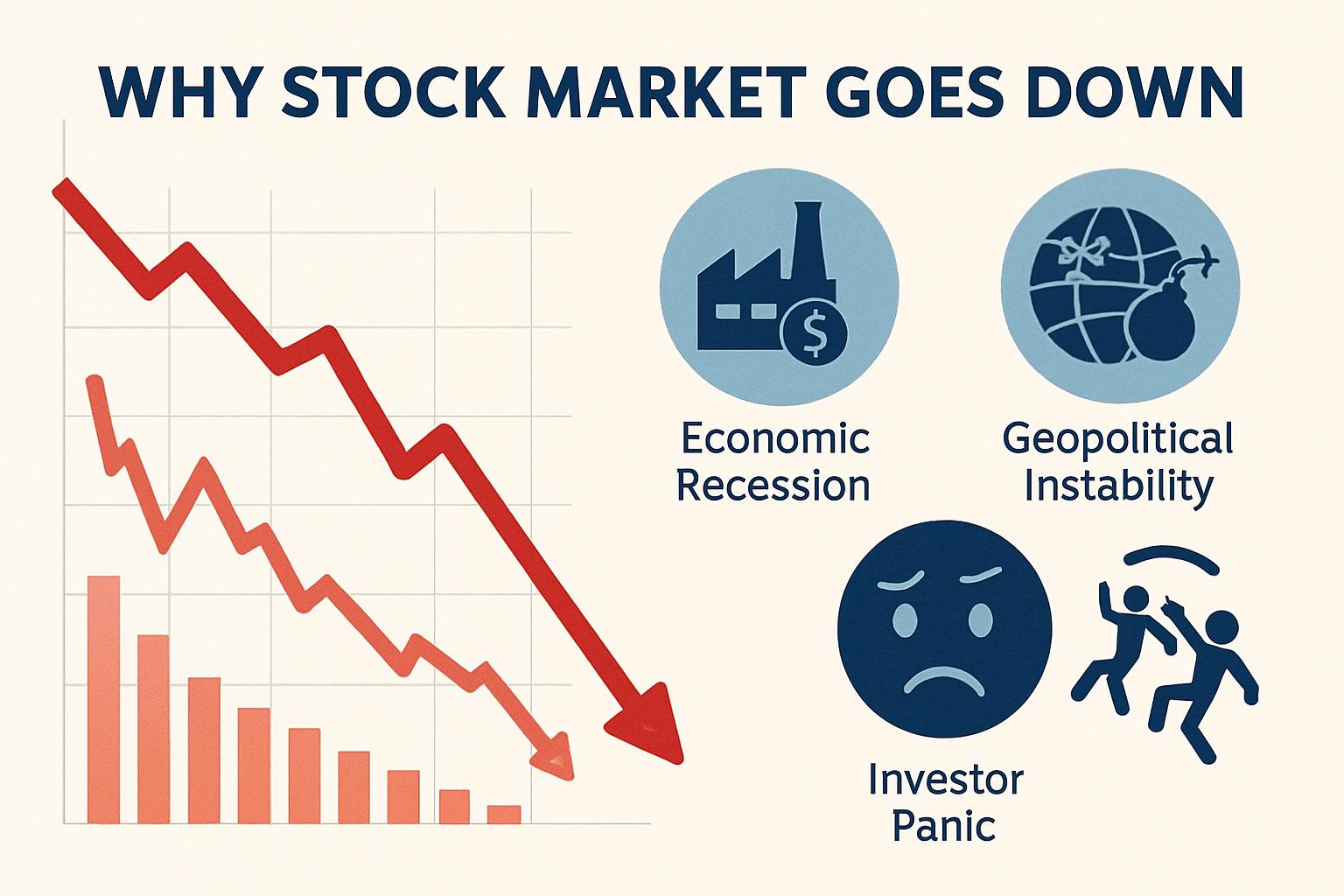
One of the most significant macroeconomic headwinds for the Nasdaq, particularly its growth-oriented companies, is the rise in interest rates and persistent inflation. Growth stocks, especially those in the tech sector, derive much of their valuation from projected future earnings. When interest rates rise, the present value of those future earnings decreases, making these stocks less attractive to investors. Higher borrowing costs also impact companies directly, increasing the cost of capital for expansion and innovation. Simultaneously, inflation erodes purchasing power and can squeeze profit margins if companies cannot pass on increased costs to consumers. The Federal Reserve’s aggressive stance on interest rate hikes to combat inflation often triggers a flight from riskier growth assets to safer, yield-bearing investments, leading to sharp declines in the Nasdaq.
Geopolitical Tensions and Supply Chain Disruptions
Global geopolitical tensions add another layer of complexity and risk to the market. Conflicts, trade wars, and political instability can disrupt international supply chains, leading to shortages of critical components (such as semiconductors, which are vital for tech). These disruptions increase production costs, delay product launches, and ultimately impact companies’ revenue and profitability. For a globally integrated sector like technology, any significant geopolitical event can have ripple effects across the entire industry, making investor sentiment cautious and often leading to sell-offs. The uncertainty generated by such events can also deter investment and consumer spending, further dampening economic activity.
Global Economic Slowdown Fears
Concerns about a global economic slowdown or recession are particularly detrimental to the Nasdaq. During periods of economic contraction, consumer spending typically decreases, and businesses often scale back investments. This directly impacts technology companies that rely on consumer electronics sales, cloud service subscriptions, advertising revenue, and enterprise software demand. A widespread economic slowdown can lead to lower earnings forecasts for tech companies, causing investors to re-evaluate their valuations and potentially exit positions. The fear of a recession often precedes actual economic data, driving preemptive market corrections as investors attempt to de-risk their portfolios in anticipation of tougher times ahead.
Sector-Specific Challenges and Valuations
Beyond macroeconomic pressures, the technology sector itself faces inherent challenges and undergoes periods of re-evaluation that can contribute to a Nasdaq downturn. These factors often relate to the specific dynamics within the tech industry and how investors perceive its future prospects.
Overvaluation Concerns in Tech Stocks
For years, many tech stocks enjoyed soaring valuations, often based on aggressive growth projections rather than current profitability. The “growth at any cost” mantra fueled speculative bubbles in certain segments. However, during periods of economic uncertainty or rising interest rates, investors become more discerning. They begin to scrutinize balance sheets, demand profitability, and question whether current stock prices are justified by fundamental metrics. When companies fail to meet these elevated expectations, or when the cost of capital makes future growth less attractive, a re-rating of the entire sector can occur. This often leads to a significant correction as investors shed overvalued assets in favor of more fundamentally sound companies or those offering clearer pathways to profitability. The “dot-com bubble” of the early 2000s serves as a stark historical reminder of how rapidly overvaluation can unwind.

Regulatory Scrutiny and Antitrust Debates
The immense power and influence wielded by major technology companies have attracted increasing attention from regulators worldwide. Antitrust concerns, data privacy regulations (like GDPR), content moderation debates, and calls for greater accountability for “Big Tech” can pose significant headwinds. New legislation or stricter enforcement of existing laws could lead to forced divestitures, limits on expansion, increased compliance costs, or changes to business models that reduce profitability. The mere threat of such regulatory action can introduce substantial uncertainty, deterring investors and putting downward pressure on tech stock prices. Furthermore, potential fines or legal battles can directly impact a company’s financial performance and reputation.
The Shift from Growth to Value Investing
Market cycles often see shifts in investor preference between growth stocks and value stocks. Growth stocks, predominantly found on the Nasdaq, are companies expected to grow revenues and earnings at a faster rate than the overall market. Value stocks, conversely, are typically mature companies with stable earnings and often pay dividends, trading at lower multiples relative to their earnings or assets. During periods of high inflation and rising interest rates, the perceived risk of future growth becomes higher, making value stocks with their more predictable earnings and tangible assets more attractive. This rotation of capital from growth to value acts as a direct drain on the Nasdaq, as investors reallocate funds away from the tech-heavy index towards sectors like energy, financials, and industrials, which are typically found in more value-oriented indices.
Investor Sentiment and Market Psychology
Beyond fundamentals and macroeconomics, the collective psychology of investors plays a critical role in market movements. Fear, uncertainty, and herd behavior can amplify downturns and create self-fulfilling prophecies.
Fear, Uncertainty, and Doubt (FUD)
Market downturns are often characterized by a surge in Fear, Uncertainty, and Doubt (FUD). Negative news, whether economic, geopolitical, or company-specific, can trigger panic selling. This emotional response often overrides rational analysis, leading investors to dump stocks irrespective of their long-term potential. The interconnectedness of financial markets and the speed of information dissemination through social media can accelerate the spread of FUD, creating a cascade effect where fear itself becomes a primary driver of further declines. Once bearish sentiment takes hold, it can be difficult to reverse, as investors become more sensitive to negative news and less responsive to positive developments.
The Role of Media and Analyst Reports
Financial media outlets and analyst reports play a significant role in shaping investor sentiment. While they provide crucial information and analysis, they can also contribute to market volatility. Sensationalized headlines, overly pessimistic reports, or a relentless focus on negative news can amplify existing fears and encourage selling. Conversely, overly optimistic reports during bull markets can contribute to speculative bubbles. When a prominent analyst downgrades a key tech stock, or a major financial publication highlights recession risks, it can trigger widespread reactions across the market, particularly impacting the sentiment-driven Nasdaq. Investors often react more strongly to negative news than positive, further exacerbating downward trends.
Behavioral Biases in Market Reactions
Human psychology is rife with biases that influence financial decision-making, especially during market volatility. Confirmation bias leads investors to seek out information that confirms their existing bearish views. Loss aversion makes the pain of losing money feel greater than the pleasure of gaining an equivalent amount, prompting hasty selling to avoid further losses. Herd mentality, where individuals follow the actions of a larger group, can lead to widespread sell-offs even when individual analysis might suggest otherwise. These behavioral biases can distort rational market pricing and contribute to extended downturns, making the Nasdaq’s recovery dependent not just on improving fundamentals but also on a shift in collective investor psychology.
Navigating Volatility: Strategies for Investors
While a Nasdaq downturn can be unsettling, it also presents an opportunity for informed investors to refine their strategies and position themselves for future growth. Understanding the drivers of volatility is the first step toward building resilience.
Diversification and Risk Management
One of the most fundamental principles of investing, especially during volatile periods, is diversification. Relying too heavily on a single sector, such as technology, or a handful of high-growth stocks exposes an investor to concentrated risk. By spreading investments across different asset classes (stocks, bonds, real estate), industries (tech, healthcare, industrials, consumer staples), and geographies, investors can mitigate the impact of a downturn in any single area. Effective risk management also involves setting clear investment goals, understanding one’s risk tolerance, and regularly rebalancing portfolios to maintain desired allocations. During a Nasdaq dip, it might be an opportune time to re-evaluate portfolio diversification and ensure it aligns with long-term financial objectives.
Long-Term Perspective vs. Short-Term Noise
Successful investing often hinges on adopting a long-term perspective. While daily market fluctuations, especially in the Nasdaq, can be dramatic, they often represent short-term noise that distracts from the underlying long-term growth trajectory of strong companies. Historically, equity markets have demonstrated a consistent upward trend over extended periods, despite numerous corrections and bear markets. For investors with a time horizon of several years or decades, focusing on the fundamentals of the companies they own rather than reacting to every news cycle is crucial. Dollar-cost averaging, investing a fixed amount regularly regardless of market movements, can also help smooth out returns and reduce the risk of buying at market peaks.
Opportunities in a Down Market
Contrary to the immediate fear a downturn evokes, bear markets and corrections can present significant opportunities for long-term investors. When the Nasdaq is down, high-quality technology companies with robust balance sheets, strong competitive advantages, and proven business models may trade at more attractive valuations. This allows investors to acquire shares of these companies at a discount, potentially enhancing future returns when the market eventually recovers. Identifying such opportunities requires diligent research, a commitment to fundamental analysis, and the courage to invest when others are fearful. It’s a time to distinguish between fundamentally strong companies experiencing a temporary setback and those whose business models are genuinely at risk.
In conclusion, the Nasdaq’s downturn is rarely attributable to a single factor but rather a confluence of macroeconomic pressures, sector-specific re-evaluations, and shifts in investor sentiment. While the immediate impact can be challenging, a clear understanding of these drivers empowers investors to make informed decisions, manage risk effectively, and ultimately leverage market volatility to their long-term advantage within the dynamic world of money and finance.
aViewFromTheCave is a participant in the Amazon Services LLC Associates Program, an affiliate advertising program designed to provide a means for sites to earn advertising fees by advertising and linking to Amazon.com. Amazon, the Amazon logo, AmazonSupply, and the AmazonSupply logo are trademarks of Amazon.com, Inc. or its affiliates. As an Amazon Associate we earn affiliate commissions from qualifying purchases.