
For many investors, opening a brokerage app to find a sea of red can be a jarring experience. The immediate question—”Why is the market down today?”—is often met with a complex array of answers ranging from geopolitical tensions to subtle shifts in monetary policy. While the stock market is often viewed as a barometer for economic health, it is, in reality, a sophisticated discounting mechanism that reacts to information, emotion, and anticipation.
Understanding why the market dips is essential for any disciplined investor. It allows one to distinguish between a temporary “hiccup” and a fundamental shift in the economic landscape. This guide explores the multi-faceted reasons behind market downturns, categorizing them into macroeconomic shifts, corporate performance, and the intricate psychology of the trading floor.
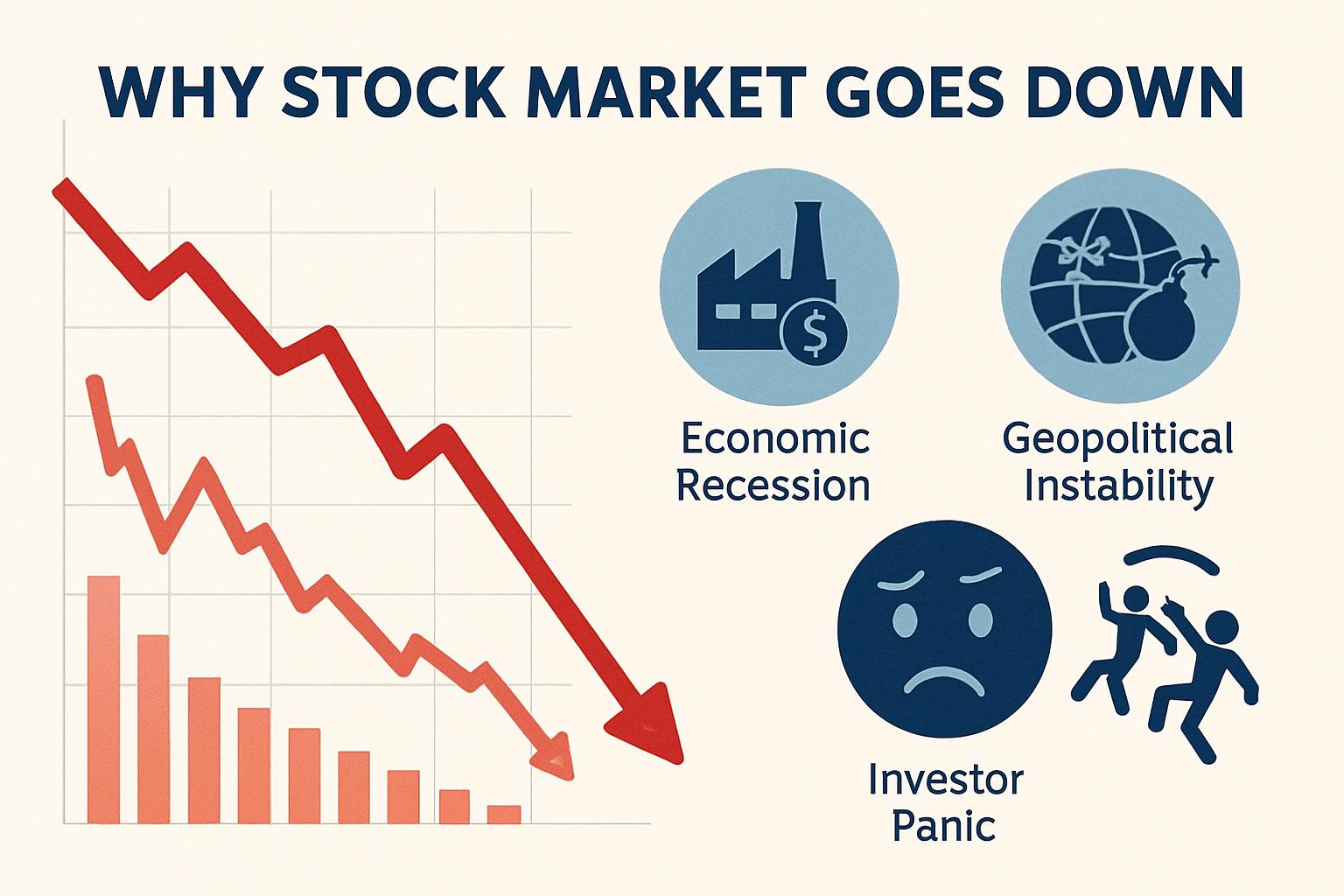
Macroeconomic Pressures and Central Bank Policy
The most common driver of broad market movement is the macroeconomic environment. Investors are constantly scanning the horizon for signs of growth or contraction, and no entity carries more weight in this assessment than the central bank.
The Role of Interest Rates and the Federal Reserve
In the United States, the Federal Reserve (the Fed) acts as the primary architect of monetary policy. When the market is down, it is frequently due to signals—or actual moves—regarding interest rates. Interest rates are essentially the “cost of money.” When rates rise, it becomes more expensive for companies to borrow for expansion and for consumers to take out loans for homes or cars.
From an investment perspective, higher interest rates make the future cash flows of a company less valuable in today’s terms. This disproportionately affects growth sectors, such as technology, where valuations are often based on earnings expected years down the line. When the Fed adopts a “hawkish” stance (signaling higher rates), the market often reacts with a sell-off as investors recalibrate their risk appetite.
Inflationary Pressures and Purchasing Power
Inflation is the silent predator of market gains. When the cost of goods and services rises too rapidly, it erodes the purchasing power of consumers. For a corporation, inflation means higher input costs—raw materials, logistics, and labor all become more expensive. If a company cannot pass these costs on to the consumer, its profit margins shrink.
The market often declines on the release of Consumer Price Index (CPI) or Producer Price Index (PPI) data that exceeds expectations. Investors fear that persistent inflation will force the central bank to keep interest rates higher for longer, creating a “double-whammy” effect of increased costs and decreased valuation multiples.
Employment Data and Labor Market Strength
While a strong labor market sounds positive, the stock market sometimes views it with skepticism. If the monthly jobs report shows unexpectedly high wage growth or an extremely low unemployment rate, the market may sell off. The logic is that a “hot” labor market contributes to a wage-price spiral, fueling inflation and necessitating further interest rate hikes. Conversely, a sudden spike in unemployment can signal a looming recession, leading to a flight to safety and a drop in equity prices.
Corporate Earnings and Fundamental Performance
Beyond the “big picture” of the economy, the individual performance of the companies within the market dictates daily fluctuations. Since the stock market is a collection of businesses, their health is paramount.
Earnings Misses and Guidance Adjustments
Four times a year, during earnings season, companies report their financial results. A market downturn is often triggered when “bellwether” companies—the giants like Microsoft, Apple, or JPMorgan—fail to meet analyst expectations.
However, the “miss” isn’t always about the past quarter; it is often about the “guidance.” If a CEO expresses caution about the next six months or lowers their revenue forecasts, investors tend to sell first and ask questions later. Because the market is forward-looking, a pessimistic outlook from a major player can drag down an entire sector or even the broader indices.
Supply Chain Disruptions and Input Costs
In our interconnected global economy, a bottleneck in one part of the world can lead to a market dip elsewhere. Whether it is a shortage of semiconductor chips, a blockage in a major shipping canal, or a spike in the price of raw materials like lithium or copper, supply chain issues directly impact the “bottom line.” When investors perceive that companies will struggle to fulfill orders or maintain inventory, they adjust their valuations downward, leading to a “red” day on the charts.
Sector-Specific Slumps and Contagion
Sometimes, the market is down not because of a systemic issue, but because of a localized crisis in a specific sector. For example, a sudden decline in oil prices might cause energy stocks to plummet. Because many index funds are weighted by market capitalization, a significant drop in a major sector can pull down the entire S&P 500 or Nasdaq. Furthermore, “contagion” occurs when problems in one area—such as a regional banking crisis—lead investors to fear that similar issues might be hidden in other industries, causing a broad-based exit from the market.
Geopolitical Instability and Global Events
Markets crave stability and predictability. Geopolitical events introduce “unknown unknowns,” which are the primary enemies of investor confidence.
International Conflicts and Trade Relations
Wars, territorial disputes, and trade embargoes create massive uncertainty. A conflict in a resource-rich region can lead to immediate spikes in energy or food prices, stoking the fires of inflation. Similarly, trade wars—marked by the imposition of tariffs—can disrupt global commerce and increase the cost of doing business for multinational corporations. When geopolitical tensions escalate, the market often experiences a “flight to quality,” where investors sell stocks and buy “safe-haven” assets like gold or U.S. Treasury bonds.
Commodity Price Volatility
The price of oil is perhaps the most significant commodity-based market mover. Because oil is a fundamental input for transportation and manufacturing, a sudden increase in prices acts as a tax on both businesses and consumers. If energy prices surge due to geopolitical instability, the market often reacts negatively, anticipating that discretionary spending will fall and corporate operating expenses will rise.
Regulatory Changes and Legislative Uncertainty
Government intervention can also cause the market to stumble. Changes in corporate tax law, new antitrust regulations targeting big tech, or shifts in environmental policy can all alter the profitability landscape for various industries. If a new piece of legislation is introduced that threatens the status quo of a high-performing sector, investors may preemptively sell their positions to avoid potential losses.
Investor Psychology and Technical Market Dynamics
The market is not just a collection of numbers; it is a collection of humans (and their algorithms). Fear and technical structures often drive price action as much as fundamental data.
The “Fear and Greed” Index
Investor sentiment is a powerful force. When the market has been on a long winning streak, it becomes vulnerable to “profit-taking.” Investors who have seen significant gains may decide to lock in their profits at the first sign of trouble. This selling creates downward pressure, which can trigger fear in other investors, leading to a snowball effect of panic selling. The “Fear and Greed” index often moves into “Extreme Fear” territory during these periods, as the collective psyche of the market shifts from optimism to self-preservation.
Algorithmic Trading and Margin Calls
A significant portion of modern daily trading volume is driven by high-frequency algorithms. These programs are designed to sell automatically when certain price levels are breached. This can lead to “flash crashes” or accelerated downturns where the selling happens faster than human traders can react.
Additionally, many investors trade on “margin”—using borrowed money from their brokers. When the market drops a certain percentage, these investors may receive “margin calls,” forcing them to either deposit more cash or sell their positions immediately. This forced selling adds further liquidity to the downside, making a bad day even worse.
Technical Pullbacks and Support Levels
Market analysts often look at “charts” to determine where prices might go. After a period of rapid growth, a market is often considered “overbought.” A downward move today might simply be a “healthy correction” or a “mean reversion,” where the market returns to its long-term moving average. If the market breaks through a significant “support level”—a price point where buyers have historically stepped in—it can trigger a technical sell-off as traders realize the upward trend has been broken.
Strategies for the Disciplined Investor
While seeing the market down can be stressful, it is a natural part of the economic cycle. Successful long-term investing requires a strategy that accounts for these “red” days.
The Importance of Diversification
One of the best defenses against a market downturn is a diversified portfolio. While the tech sector might be down 5% today, healthcare or consumer staples might be flat or even up. By spreading investments across different asset classes (stocks, bonds, real estate) and different sectors, an investor can mitigate the impact of a decline in any single area.
Long-term Perspective vs. Emotional Reaction
History shows that the stock market has a positive bias over the long term. Despite wars, recessions, and pandemics, the market has historically recovered and reached new highs. The most common mistake investors make is selling during a downturn out of fear, thereby “locking in” their losses. Maintaining a long-term horizon—thinking in decades rather than days—helps to weather the emotional volatility of a down market.
Finding Opportunities in the Downturn
For the savvy investor, a down market is often seen as a “sale.” Through a strategy known as Dollar-Cost Averaging (DCA), an investor continues to buy a fixed dollar amount of an asset at regular intervals, regardless of the price. When the market is down, your fixed dollar amount buys more shares. Over time, this lowers the average cost of your investment and positions you for significant gains when the market inevitably recovers.
In conclusion, the market is down today due to a complex intersection of economic data, corporate outlooks, and human emotion. By understanding these drivers, you can move away from reactive panic and toward a position of informed, strategic confidence. Remember: the market’s “bad days” are often the foundation upon which future wealth is built.
aViewFromTheCave is a participant in the Amazon Services LLC Associates Program, an affiliate advertising program designed to provide a means for sites to earn advertising fees by advertising and linking to Amazon.com. Amazon, the Amazon logo, AmazonSupply, and the AmazonSupply logo are trademarks of Amazon.com, Inc. or its affiliates. As an Amazon Associate we earn affiliate commissions from qualifying purchases.