
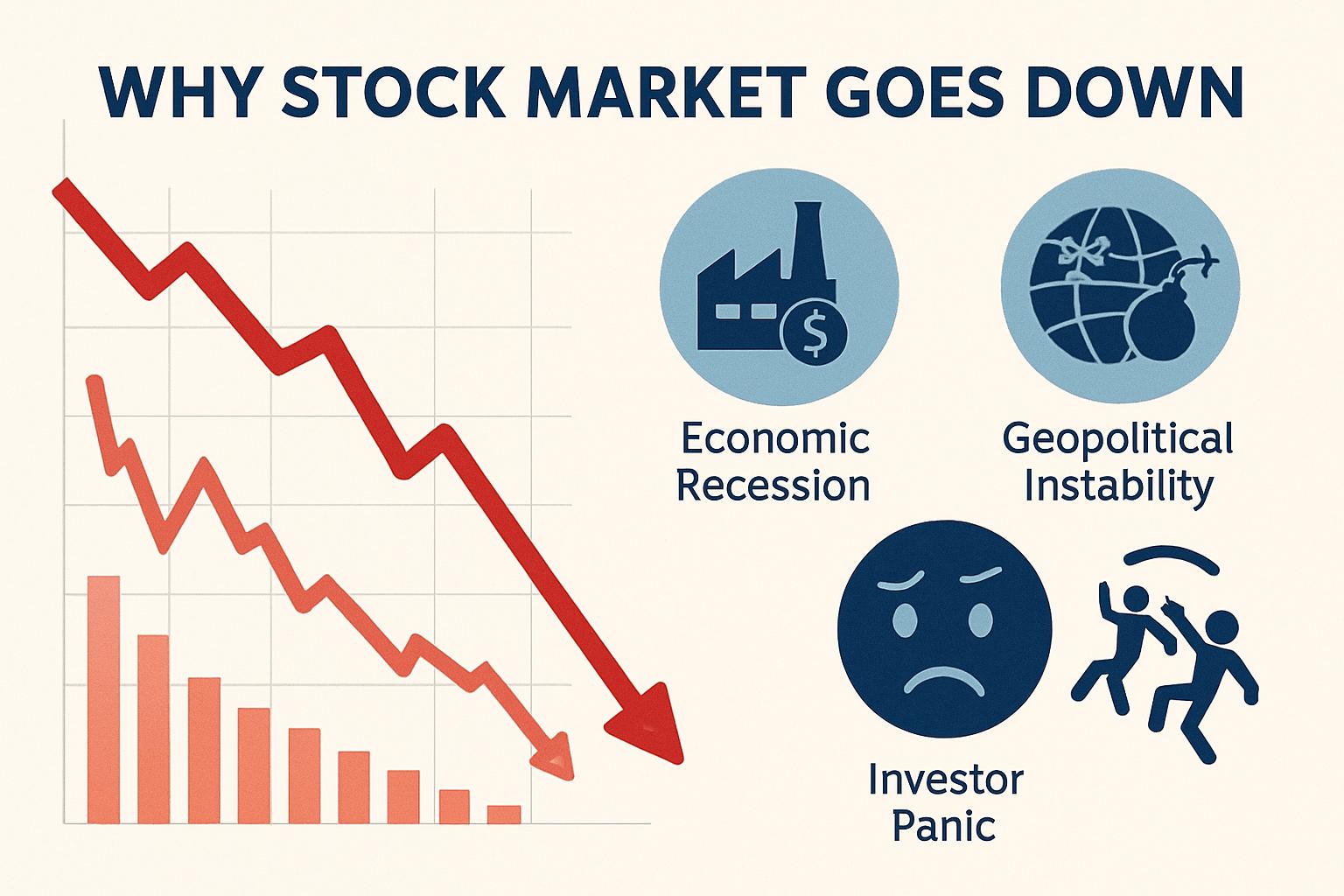
The financial markets are often likened to a complex, living organism, reacting in real-time to a global nervous system of data, sentiment, and geopolitical shifts. When the major indices—the S&P 500, the Nasdaq, and the Dow Jones Industrial Average—begin to retreat, investors naturally seek a singular “why.” However, market downturns are rarely the result of a single event. Instead, they are typically the culmination of various macroeconomic pressures, shifting monetary policies, and behavioral psychology. Understanding the current downward trajectory requires a deep dive into the structural forces currently reshaping the global economy.
Macroeconomic Pressures and the Federal Reserve’s Mandate
The most significant driver of market volatility in the current era is the shift in monetary policy. For over a decade following the 2008 financial crisis, investors lived in an environment of “easy money,” characterized by near-zero interest rates and quantitative easing. This provided a massive tailwind for stocks, particularly in the technology and growth sectors. However, that era has ended, and the market is currently struggling to price in a more restrictive environment.
The Battle Against Persistent Inflation
Central banks, led by the Federal Reserve in the United States, have a dual mandate: maximum employment and stable prices. When inflation spiked to multi-decade highs, the Fed was forced to pivot from a stimulative stance to a hawkish one. High inflation erodes the purchasing power of consumers and increases the input costs for businesses. If a company cannot pass these costs on to customers, its profit margins shrink. The market reacts to this by discounting the future earnings of these companies, leading to a drop in share prices.
Interest Rates and the Discounted Cash Flow Model
Interest rates are the “gravity” of the financial world. When rates rise, the present value of future cash flows decreases. This is particularly punishing for “growth” stocks—companies that are expected to generate the bulk of their profits years or even decades into the future. When the risk-free rate (the yield on government bonds) rises, investors demand a higher return on equity to justify the risk. If the expected return doesn’t meet this new threshold, investors sell, driving prices down. Furthermore, higher rates make borrowing more expensive for corporations, slowing down expansion and share buyback programs that previously supported stock prices.
The Inverted Yield Curve and Recession Fears
The bond market often serves as a crystal ball for the equity market. One of the most watched indicators is the yield curve, specifically the gap between the 2-year and 10-year Treasury notes. When short-term rates are higher than long-term rates—an “inversion”—it signals that investors are pessimistic about the near-term economic outlook. Historically, a yield curve inversion has been a reliable precursor to a recession. The current market downturn reflects a “priced-in” expectation that a period of economic contraction may be necessary to fully extinguish inflationary pressures.
Geopolitical Instability and Global Supply Chains
The global economy is more interconnected than ever before, meaning that localized conflicts or policy shifts can have ripple effects that reach every corner of the stock market. We are currently witnessing a transition from an era of hyper-globalization to one of “friend-shoring” and regionalization, which is inherently inflationary and disruptive to established market valuations.
Energy Security and Commodity Volatility
Geopolitical tensions in key oil and gas producing regions have a direct impact on the “tax” consumers pay at the pump and businesses pay for logistics. When energy prices spike due to conflict or sanctions, it acts as a drag on discretionary spending. This creates a double-edged sword for the market: energy companies may see record profits, but the rest of the S&P 500 suffers as consumer demand cools and shipping costs soar. The uncertainty regarding energy supply chains keeps volatility high, as traders hate nothing more than an unpredictable cost environment.
The Semiconductor Tug-of-War
Technology is the backbone of the modern economy, and semiconductors are the backbone of technology. Current trade restrictions and the push for domestic manufacturing of chips (such as the CHIPS Act in the US) have introduced friction into a previously streamlined system. As nations compete for technological dominance, the “efficient” global supply chain is being replaced by a “resilient” one. While resilience is good for long-term national security, it is expensive for corporations. The market is currently adjusting to the reality that the high-margin, low-cost manufacturing era of the last 20 years is facing significant headwinds.
Sector-Specific Pullbacks and Corporate Earnings
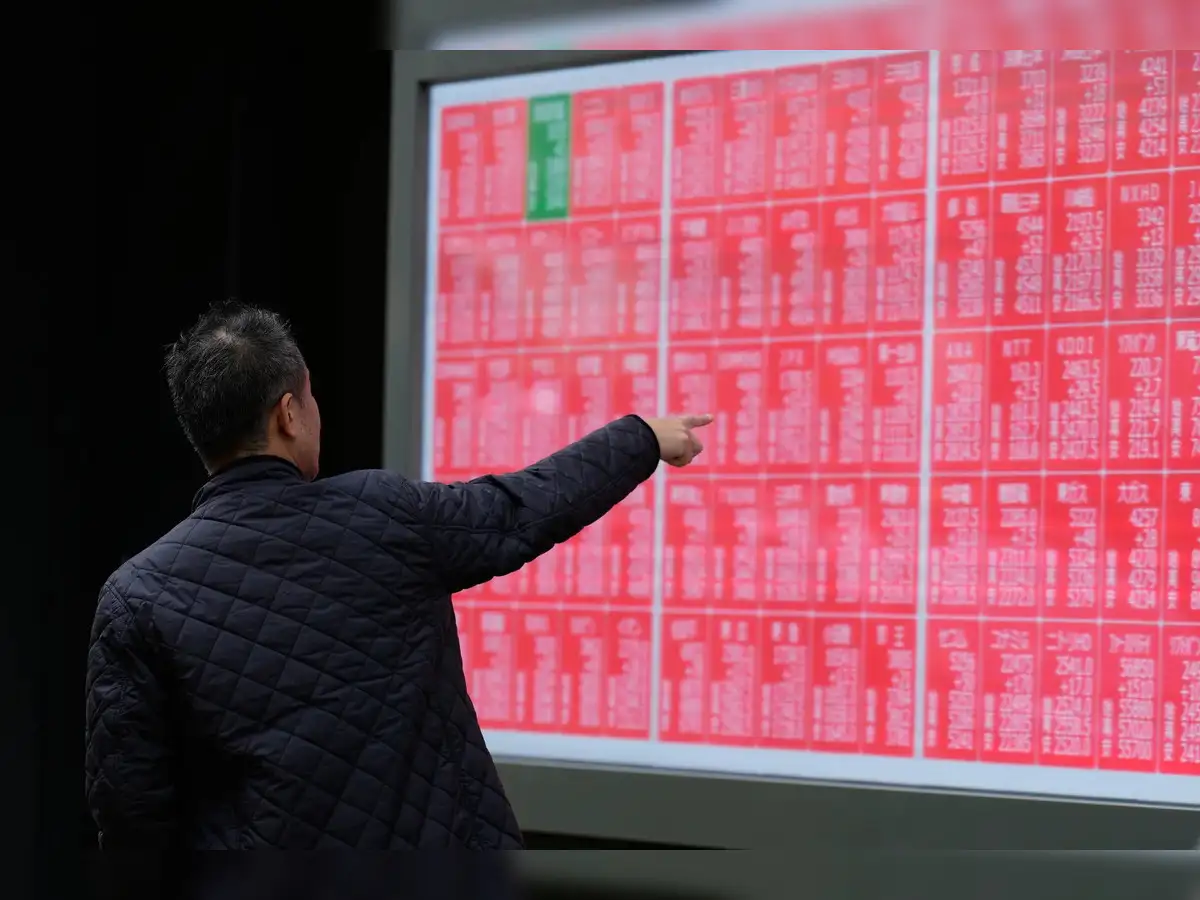
While the “broad market” might be down, the pain is often concentrated in specific sectors that had become overvalued or over-leveraged during the bull run. Understanding where the selling pressure is coming from can provide clarity on the market’s overall health.
The Great Tech De-Rating
For years, technology stocks were the darlings of the market, seemingly immune to traditional valuation metrics. However, as liquidity dried up, the “growth at any cost” mentality shifted to “profitability at all costs.” Companies that were burning through cash to acquire users without a clear path to net income have seen their valuations crater. Even “Big Tech” giants have not been immune, as a slowdown in digital advertising and enterprise cloud spending suggests that even the most robust business models are susceptible to a cooling economy.
Softening Guidance and Margin Compression
During earnings season, the market cares less about what a company did in the last three months and more about what it says it will do in the next twelve. We are currently seeing a trend of “softening guidance.” Management teams are becoming increasingly cautious, citing high labor costs, inventory gluts, and a weakening consumer. When a company beats its current earnings expectations but lowers its future outlook, the stock often drops. This collective lowering of expectations across multiple sectors is a primary reason the indices are trending downward.
The Retail Transition and Consumer Health
The consumer represents roughly 70% of the US economy. Recent data shows a shift in how people are spending their money. High prices for essentials like groceries and rent are crowding out discretionary purchases like electronics, apparel, and travel. Retailers that expanded rapidly during the pandemic are now stuck with excess inventory, leading to heavy discounting that eats into profits. The market is currently trying to gauge whether the consumer is simply “shifting” their spending or “stopping” it entirely.
Market Sentiment and Behavioral Finance
The stock market is not always a rational machine; it is driven by human emotion. Fear and greed often push prices far beyond their intrinsic value in both directions. In a down market, behavioral triggers can turn a healthy correction into a sustained decline.
The Role of Algorithmic Trading
A significant portion of daily market volume is driven by high-frequency trading algorithms and “passive” index funds. Many of these algorithms are programmed to sell when certain technical levels are breached (such as the 200-day moving average). This can create a “waterfall effect,” where automated selling triggers more selling, leading to rapid drops that seem disconnected from the day’s actual news.
The Flight to Quality and Liquidity
When uncertainty rises, investors move into “defensive” postures. This is the “flight to quality.” Capital moves out of speculative small-cap stocks and into “cash equivalents” or defensive sectors like utilities and healthcare. In extreme cases, investors sell everything—including gold and bonds—just to hold cash. This “liquidity squeeze” can cause all asset classes to fall simultaneously, adding to the sense of panic.
The Psychological Cycle of the Bear Market
The transition from a bull market to a bear market usually follows a pattern: optimism, followed by denial, then anxiety, and finally capitulation. Many analysts believe the market is currently in the “anxiety” or “denial” phase. Investors are looking for a “bottom,” but every rally is met with more selling. True market bottoms are often characterized by “capitulation”—a moment of total despair where the last of the “weak hands” sell their positions, finally allowing prices to stabilize based on fundamental value rather than fear.
Long-Term Outlook: Strategic Positioning in a Down Market
While a down market is painful for those watching their portfolios daily, it is a natural and necessary part of the economic cycle. For the disciplined investor, these periods represent an opportunity to rebalance and refocus on long-term goals.
The Power of Dollar-Cost Averaging
Trying to “time the bottom” is a losing game for most. Instead, many professional advisors suggest dollar-cost averaging—continuing to invest a fixed amount at regular intervals. When the market is down, your fixed investment buys more shares. When the market eventually recovers, those shares purchased at “discounted” prices contribute significantly to overall wealth accumulation.
Identifying Value Amidst the Noise
Market-wide sell-offs often throw the “baby out with the bathwater.” High-quality companies with strong balance sheets, consistent cash flow, and wide moats are often sold off alongside speculative ventures. For the astute investor, a down market is the best time to perform fundamental analysis. Finding companies that are trading below their intrinsic value because of broader market panic is the foundation of many of the world’s greatest fortunes.
Rebalancing and Risk Mitigation
A down market is a stress test for your asset allocation. If your portfolio was too heavily weighted in one sector (like tech), a correction is a stark reminder of the importance of diversification. Professional wealth management often involves “tax-loss harvesting” during these times—selling losing positions to offset gains elsewhere, thereby reducing your tax liability and repositioning for the eventual market upswing.
The market is down right now because it is digesting a massive amount of change: higher costs of capital, geopolitical realignment, and a return to fundamental valuation metrics. While the headlines may be discouraging, the “cleansing” effect of a down market eventually paves the way for the next period of sustainable growth. Understanding the mechanics behind the decline is the first step in moving from reactive fear to proactive strategy.
aViewFromTheCave is a participant in the Amazon Services LLC Associates Program, an affiliate advertising program designed to provide a means for sites to earn advertising fees by advertising and linking to Amazon.com. Amazon, the Amazon logo, AmazonSupply, and the AmazonSupply logo are trademarks of Amazon.com, Inc. or its affiliates. As an Amazon Associate we earn affiliate commissions from qualifying purchases.