
The Dow Jones Industrial Average (DJIA) stands as one of the world’s most recognized and frequently cited stock market indices. For decades, its performance has served as a widely watched barometer of the U.S. economy’s health and the broader market sentiment. When headlines proclaim the Dow is “so high” or reaching new record peaks, it sparks a mix of curiosity, excitement, and sometimes, apprehension. Is it a sign of robust economic strength, irrational exuberance, or something in between? Understanding the drivers behind the Dow’s elevated levels requires a deeper dive into its unique composition, prevailing macroeconomic conditions, the fundamental health of its constituent companies, and the psychological currents that sway investor behavior.

This article will dissect the multifaceted reasons contributing to the Dow Jones’s impressive ascent, offering a professional and insightful perspective on a topic central to the world of finance and investing. We will explore how a blend of corporate prowess, technological integration, monetary policy, and investor confidence culminates in the index’s current valuation, while also touching upon the inherent risks and complexities involved.
Understanding the Dow’s Composition and Significance
To grasp why the Dow is so high, one must first understand what it represents and how its components influence its overall movement. Unlike broader market indices, the DJIA possesses unique characteristics that shape its trajectory.
A Legacy of Industrial Powerhouses, Reimagined
Initially conceived by Charles Dow in 1896, the Dow Jones Industrial Average was designed to track the performance of the most influential industrial companies in the United States. Its original focus reflected an economy dominated by manufacturing and heavy industry. Today, while the name “Industrial Average” remains, its composition has dramatically evolved. The index comprises 30 large, publicly owned companies listed on the NASDAQ and the New York Stock Exchange. These aren’t just “industrial” firms in the traditional sense; they are titans across various sectors, including technology, healthcare, finance, consumer goods, and entertainment. Companies like Apple, Microsoft, Johnson & Johnson, Visa, and McDonald’s now share space with older guard members like Boeing and Caterpillar. This evolution means the Dow, while still a venerable index, now reflects a much broader and more diversified segment of the American corporate landscape than its name suggests.
Price-Weighted Nuances and Market Dominance
A critical aspect of the Dow’s calculation is its price-weighted methodology. Unlike market-capitalization-weighted indices (like the S&P 500), where companies with larger market values have a greater impact, a higher-priced stock in the Dow carries more weight. This means a percentage change in a high-priced stock will move the index more than the same percentage change in a lower-priced stock, even if the latter has a larger overall market capitalization. The constituent companies are often leaders in their respective industries, boasting significant market share, strong brand recognition, and consistent profitability. Their sheer size and stability often make them attractive investments during periods of both economic expansion and uncertainty, contributing to their enduring high valuations and, consequently, the Dow’s overall elevation. While the Dow represents only 30 companies, their collective influence on the economy and market sentiment is substantial.
Macroeconomic Tailwinds Fueling Sustained Growth
Beyond the individual strengths of its components, the Dow’s elevated position is significantly shaped by broader macroeconomic forces that create a fertile ground for corporate profitability and investor confidence.
Robust Economic Performance and Corporate Earnings
At its core, a healthy stock market reflects a healthy economy. Periods of sustained economic growth, characterized by strong Gross Domestic Product (GDP) figures, low unemployment rates, and robust consumer spending, directly translate into higher corporate revenues and profits. When consumers have jobs and disposable income, they spend on goods and services, directly benefiting the companies within the Dow. Many of these companies are bellwethers for economic activity, and their strong earnings reports often underscore the underlying vitality of the U.S. economy. Furthermore, global economic expansion can also provide a boost, as many Dow components have significant international operations and revenue streams.
Navigating Interest Rate Environments and Monetary Policy
Interest rates play a pivotal role in equity valuations. Historically, periods of low-interest rates, driven by accommodative monetary policies from central banks like the Federal Reserve, have tended to make equity investments more attractive relative to fixed-income assets (like bonds). When bond yields are low, investors seeking higher returns often shift capital into the stock market, driving up demand and valuations. Conversely, while rising interest rates can make borrowing more expensive for businesses and consumers, leading to concerns about economic slowdowns, markets often adapt. The “high” Dow can also reflect investor confidence that companies can absorb or pass on increased costs, or that the economy is strong enough to withstand tighter monetary conditions without collapsing. The market’s interpretation of future monetary policy—whether it signals stability or potential challenges—is a constant factor in valuations.
Inflationary Dynamics and Pricing Power
Interestingly, inflation can also contribute to nominal market highs. While high inflation erodes purchasing power, companies with strong brands and market dominance (many of which are in the Dow) often possess significant pricing power. This allows them to pass on increased costs of raw materials, labor, and logistics to consumers, maintaining or even expanding their profit margins in dollar terms. These higher nominal earnings, even if real growth is more modest, can still push share prices upward and contribute to the index’s overall rise. The market often views a certain level of controlled inflation as a sign of economic dynamism, further boosting investor sentiment.
Corporate Fundamentals and Investor Sentiment

The Dow’s ascent isn’t purely an abstract economic phenomenon; it’s deeply rooted in the performance of its constituent companies and the collective mood of the investment community.
Sustained Corporate Profitability and Innovation
Perhaps the most direct driver of any stock index’s rise is the consistent and strong profitability of its underlying companies. The 30 companies in the Dow are, by definition, among the most successful and resilient businesses in the world. They are often leaders in innovation, research and development, and market penetration. Their ability to consistently generate substantial earnings, manage costs effectively, and adapt to changing market conditions provides a solid foundation for their share prices. Many of these companies leverage technological advancements, optimize supply chains, and engage in strategic mergers and acquisitions to maintain their competitive edge, fueling their growth and, by extension, the index’s upward trajectory.
Shareholder Value Creation: Buybacks and Dividends
Companies in the Dow frequently employ strategies aimed at directly enhancing shareholder value, which can contribute to higher stock prices. Share buybacks, where a company repurchases its own stock from the open market, reduce the number of outstanding shares. This action, assuming constant earnings, increases earnings per share (EPS), making the stock appear more attractive and often pushing its price higher. Additionally, many Dow components are known for their consistent payment of dividends, returning a portion of profits directly to shareholders. In a world where income generation can be challenging, reliable dividend payers often attract a loyal base of investors, particularly institutional investors and retirees, providing a steady demand for their shares.
Investor Confidence, Speculation, and the Search for Yield
Financial markets are as much about psychology as they are about fundamentals. Strong investor confidence, fueled by positive economic news, robust corporate earnings, and a belief in future growth, can create a virtuous cycle. When investors are confident, they are more willing to allocate capital to equities, driving up demand and prices. This can sometimes lead to speculative buying or a “fear of missing out” (FOMO) phenomenon, where investors rush into the market for fear of being left behind. Furthermore, in periods when traditional safe-haven investments like bonds offer low yields, investors often “reach for yield” by investing in dividend-paying stocks, many of which are found within the Dow, thus bolstering their valuations.
Technological Advancement and Strategic Adaptation
While not exclusively a “tech index,” technology plays an increasingly vital role in the Dow’s performance, both through the inclusion of tech giants and the technological adaptation of traditional companies.
The Influence of Tech Titans within the Dow
The evolution of the Dow’s composition reflects the shifting landscape of the U.S. economy. The inclusion of technology behemoths like Apple, Microsoft, and Salesforce.com means that a significant portion of the Dow’s performance is directly tied to the exponential growth and innovation within the tech sector. These companies are global leaders in software, hardware, cloud computing, and digital services, consistently generating immense revenues and profits. Their robust earnings, strong growth prospects, and often high-flying stock prices exert a substantial upward pull on the overall index, disproportionately contributing to its “high” status.
Digital Transformation Across Diverse Sectors
Beyond the pure-play tech companies, many of the Dow’s traditional industrial, healthcare, and financial components have successfully embraced and integrated technology into their core operations. Companies like Johnson & Johnson utilize AI in drug discovery, Boeing employs advanced analytics in manufacturing, and Visa relies on cutting-edge payment processing technology. This digital transformation leads to enhanced operational efficiency, reduced costs, improved customer experiences, and the development of new revenue streams. By leveraging automation, big data, and artificial intelligence, these companies remain competitive and continue to grow their profitability, indirectly contributing to the Dow’s strength. This strategic adaptation demonstrates the resilience and forward-thinking nature of many Dow components, allowing them to thrive in an increasingly tech-driven global economy.
Is It Too High? Risks and Future Outlook
While the Dow’s current heights signal strength, it’s crucial for investors to consider whether these valuations are sustainable and what potential headwinds could impact its future trajectory.
Valuation Concerns and Historical Precedent
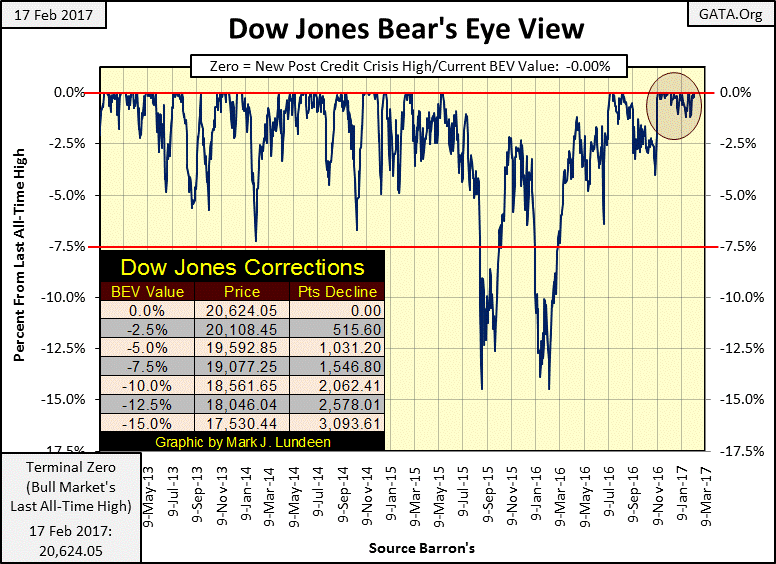
When the Dow reaches successive highs, it inevitably raises questions about market overvaluation. Metrics like the price-to-earnings (P/E) ratio are often scrutinized. If P/E ratios are significantly above historical averages without a corresponding acceleration in earnings growth, it can suggest that stocks are priced for perfection and vulnerable to pullbacks. While current high valuations can be justified by low-interest rates or anticipated future growth, a disconnect between price and fundamental value can signal an impending correction or bear market. Investors must weigh the current enthusiasm against historical cycles and sound valuation principles.
Economic Headwinds and Geopolitical Instability
The factors that drive the Dow higher—economic growth, low inflation, stable interest rates—can reverse. A significant economic slowdown, persistent high inflation leading to aggressive monetary tightening, or an unexpected recession could severely impact corporate earnings and investor confidence. Furthermore, geopolitical tensions, international trade disputes, supply chain disruptions, and global health crises can introduce profound uncertainty and volatility into the markets, making sustained highs difficult to maintain. The Dow, being composed of global companies, is particularly sensitive to such international developments.
The Path Forward for Investors
For investors, the Dow’s high levels present both opportunities and challenges. While record highs can be exhilarating, they also underscore the importance of prudent investing. Diversification across asset classes and geographies remains paramount to mitigate risks. A long-term perspective, focusing on the fundamental strength and earnings potential of companies rather than short-term market fluctuations, is often the most effective strategy. Emotional decisions driven by fear or greed should be avoided. The Dow’s journey is a testament to the adaptive capacity of American corporations and the dynamism of the U.S. economy, but it also serves as a constant reminder that markets are cyclical and that careful consideration of risk is always warranted, regardless of how high the index flies.
In conclusion, the Dow Jones’s impressive valuation is not the result of a single factor but a complex interplay of robust corporate performance, strategic technological adoption, favorable macroeconomic conditions, and strong investor confidence. While its high levels reflect a resilient economy and powerful companies, understanding the underlying drivers and potential risks is key to navigating the financial landscape wisely.
aViewFromTheCave is a participant in the Amazon Services LLC Associates Program, an affiliate advertising program designed to provide a means for sites to earn advertising fees by advertising and linking to Amazon.com. Amazon, the Amazon logo, AmazonSupply, and the AmazonSupply logo are trademarks of Amazon.com, Inc. or its affiliates. As an Amazon Associate we earn affiliate commissions from qualifying purchases.