
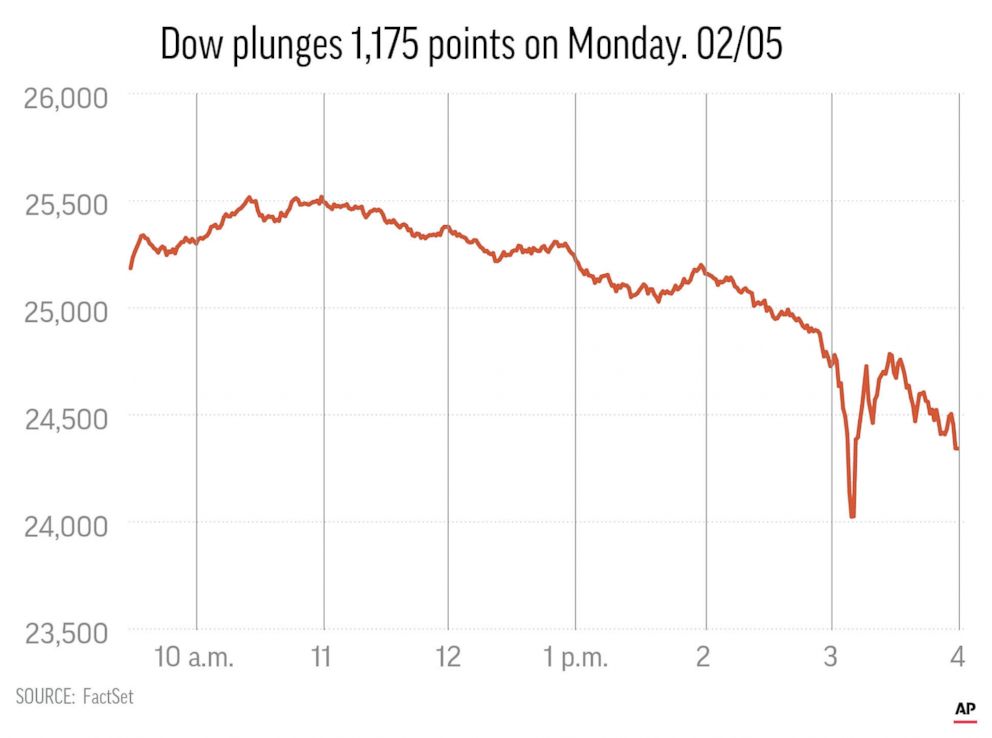
The Dow Jones Industrial Average (DJIA), often simply referred to as “the Dow,” is one of the most widely watched stock market indices globally. Comprising 30 large, publicly traded companies based in the United States, it serves as a critical barometer of the health and sentiment of the broader U.S. economy and, by extension, global markets. When the Dow experiences a significant drop, it often signals underlying economic anxieties, shifts in market conditions, or pivotal changes in investor confidence. Understanding the multifaceted reasons behind such declines is crucial for investors, policymakers, and anyone keen on deciphering market movements. A falling Dow is rarely attributable to a single factor; rather, it’s typically the confluence of several interconnected economic, geopolitical, and corporate forces.

The Dow Jones Industrial Average: A Bellwether of Economic Health
Before delving into the reasons for its decline, it’s essential to appreciate what the Dow represents and why its movements are so closely scrutinized. Unlike market-capitalization-weighted indices, the Dow is a price-weighted index, meaning companies with higher stock prices have a greater impact on its value. While this methodology has its critics, the Dow’s constituent companies are titans of industry, representing diverse sectors from technology and manufacturing to finance and consumer goods, making it a reliable, albeit imperfect, snapshot of economic activity.
Understanding the Dow: Composition and Significance
The 30 companies in the Dow are selected to be representative of the U.S. economy. These include household names like Apple, Microsoft, Boeing, and JPMorgan Chase. Their collective performance offers a window into the health of corporate America, consumer spending patterns, industrial output, and the financial sector. When these companies collectively face headwinds – be it slowing sales, rising costs, or regulatory challenges – their stock prices tend to fall, pulling the entire index down. The significance of the Dow lies not just in its numerical value, but in its psychological impact. A rising Dow often correlates with optimism and economic growth, while a dropping Dow can trigger fear, uncertainty, and a broader flight to safety among investors.
How Market Indices Reflect Economic Sentiment
Market indices like the Dow are forward-looking indicators. Investors buy and sell stocks based on their expectations of future earnings, economic growth, and the overall business environment. Therefore, a sustained drop in the Dow reflects a collective reassessment of these future prospects. It’s a real-time aggregation of millions of individual decisions, each driven by analysis of current events, financial data, and prevailing sentiment. Economic data points – such as GDP growth, inflation rates, unemployment figures, and consumer confidence surveys – all feed into this collective assessment, influencing whether the market anticipates prosperity or contraction.
Key Macroeconomic Headwinds Weighing on the Dow
The primary drivers behind a Dow drop are often broad macroeconomic forces that impact nearly all businesses and consumers. These factors create an environment of uncertainty and can erode corporate profitability, leading investors to de-risk their portfolios.
Inflationary Pressures and Consumer Spending
One of the most potent threats to market stability is persistent inflation. When the cost of goods and services rises significantly, it erodes purchasing power for consumers and increases operational costs for businesses. High inflation can lead to a decrease in consumer spending, particularly on discretionary items, which directly impacts the revenue and profit margins of Dow components. Furthermore, companies face higher input costs for raw materials, labor, and transportation, squeezing their bottom lines. If businesses cannot pass these costs onto consumers, or if consumers resist higher prices, corporate earnings suffer, prompting investors to sell off stocks.
The Impact of Rising Interest Rates
In response to high inflation, central banks, most notably the U.S. Federal Reserve, typically raise benchmark interest rates. While intended to cool down an overheating economy and bring inflation under control, rising interest rates have several adverse effects on the stock market. Higher borrowing costs make it more expensive for companies to finance operations, expansion, and debt. This can stifle investment and slow growth. For consumers, higher rates mean more expensive mortgages, car loans, and credit card debt, further dampening spending. Moreover, higher interest rates make fixed-income investments, like government bonds, more attractive relative to equities, drawing capital away from the stock market as investors seek safer, guaranteed returns. This “risk-off” sentiment often precipitates a Dow decline.
Recession Fears and Economic Slowdown Signals
The fear of an impending recession is a significant catalyst for a market downturn. A recession is characterized by a significant decline in economic activity spread across the economy, lasting more than a few months, normally visible in real GDP, real income, employment, industrial production, and wholesale-retail sales. Indicators such as an inverted yield curve (where short-term bond yields are higher than long-term yields), declining manufacturing indices, and weaker retail sales data often signal a potential slowdown. When investors anticipate a recession, they expect corporate earnings to decline sharply, leading them to sell stocks in anticipation of lower future valuations. This proactive selling can accelerate a market drop as fear becomes self-fulfilling.
Labor Market Dynamics and Wage Growth
The labor market plays a crucial role in the broader economic picture. While a strong labor market with low unemployment is generally positive, rapid wage growth can sometimes be a double-edged sword. On one hand, it indicates healthy consumer demand. On the other, if wage growth outpaces productivity gains, it can contribute to inflationary pressures, forcing companies to increase prices or absorb higher costs, impacting profits. Furthermore, a tight labor market can signal that the economy is running “too hot,” potentially prompting the Fed to tighten monetary policy more aggressively, which as discussed, often leads to market pullbacks.
Geopolitical Shocks and Global Market Instability
Beyond domestic economic factors, global events and geopolitical tensions can send ripples through financial markets, causing significant volatility and leading to a Dow drop.
International Conflicts and Trade Tensions
Major geopolitical events, such as wars, regional conflicts, or heightened trade tensions between economic superpowers, introduce immense uncertainty. Such events can disrupt global supply chains, increase the cost of essential commodities, and create widespread anxiety about future stability. For instance, an oil price spike due to conflict in a major producing region can significantly impact energy-intensive industries and consumer budgets, leading to a broader economic slowdown. Similarly, trade wars can impose tariffs, making imports more expensive for consumers and exports less competitive for businesses, ultimately hurting corporate profits and economic growth. Investors typically react to these uncertainties by moving capital out of riskier assets like stocks into safer havens like gold or government bonds.
Energy Price Volatility
Energy is a critical input for almost every industry and a significant expenditure for households. Sudden and dramatic swings in oil and natural gas prices can have a profound impact on the economy and the stock market. A sharp increase in energy prices acts like a tax on consumers and businesses, reducing disposable income and increasing operational costs. Airlines, transportation companies, manufacturers, and even retail businesses feel the pinch of higher fuel and utility bills, leading to reduced profitability. Conversely, extreme drops in energy prices can sometimes signal weakening global demand, hinting at a broader economic slowdown, which also causes concern for investors.
Global Supply Chain Disruptions
Modern economies are interconnected through complex global supply chains. Events like pandemics, natural disasters, or geopolitical conflicts can severely disrupt these chains, leading to shortages of components, delays in production, and increased shipping costs. When companies cannot source necessary parts or deliver finished products efficiently, it impacts their ability to meet demand, leading to lost sales and reduced earnings. These disruptions can also exacerbate inflation as limited supply meets persistent demand. The Dow’s multinational components are particularly vulnerable to these issues, as their operations often span multiple continents.
Corporate Performance and Sectoral Dynamics
While macroeconomic and geopolitical factors paint the big picture, the underlying performance of the 30 companies that make up the Dow is the ultimate driver of its value. When a significant number of these corporate giants face challenges, the index inevitably declines.
Earnings Reports and Profit Margins
Regular earnings reports are critical checkpoints for investors. If a substantial number of Dow companies report weaker-than-expected earnings, lower profit margins, or provide a pessimistic outlook for future quarters, it signals deteriorating business conditions. Factors like slowing sales, rising operational costs (labor, raw materials, energy), increased competition, or unfavorable exchange rates can all depress profits. When analysts downgrade their earnings expectations for a broad swathe of the market, it triggers selling pressure as investors adjust their valuations downwards.
Sector-Specific Challenges and Opportunities
While the Dow is diversified, certain sectors within it can face unique challenges that disproportionately impact the index. For instance, a downturn in the housing market might severely affect financial institutions or construction-related companies. Similarly, stricter regulations in a particular industry, technological disruption, or shifts in consumer preferences can create headwinds for specific Dow components. If these challenges affect several large-cap companies simultaneously, their collective drop can drag the entire index lower. Conversely, even during a broader downturn, certain sectors might remain resilient or even thrive, though usually not enough to offset widespread weakness.
Valuations and Market Corrections
Sometimes, the Dow drops simply because stocks have become overvalued. Periods of sustained economic growth and investor optimism can push stock prices to levels that are not justified by underlying corporate earnings or future growth prospects. When this “irrational exuberance” gives way to a more sober assessment, or when a catalyst (like rising interest rates) makes alternatives more attractive, investors may decide to take profits or rebalance their portfolios. This often leads to a “market correction,” a decline of 10% or more from a recent high, which is a natural and healthy part of the market cycle, though often painful for investors in the short term.
Investor Sentiment and Future Outlook
Ultimately, stock market movements are driven by investor psychology – a complex interplay of fear, greed, and confidence. While fundamental factors provide the rational basis for investment decisions, sentiment can amplify trends, leading to sharper drops or rebounds.
The Role of Fear and Uncertainty
Fear is a powerful emotion that can override rational decision-making in financial markets. When macroeconomic headlines are bleak, geopolitical tensions are high, or corporate earnings disappoint, fear can become contagious, leading to panic selling. This often results in market downturns that are steeper and faster than what fundamental analysis alone might suggest. Uncertainty about the future – whether it pertains to inflation, interest rates, or geopolitical stability – makes investors hesitant to commit capital, leading them to hold onto cash or safer assets, further exacerbating selling pressure in riskier assets like stocks.
Technical Indicators and Market Psychology
Beyond fundamental economic analysis, some investors and traders rely on technical analysis, studying historical price movements and trading volumes to predict future trends. Technical indicators such as breaking key support levels, bearish chart patterns, or increased volatility can trigger further selling as algorithms and human traders react to these signals. This self-reinforcing dynamic, where technical signals prompt further selling, can accelerate a Dow drop, even if the underlying fundamentals haven’t drastically changed in the short term. Market psychology, therefore, can create a feedback loop that amplifies both upward and downward movements.
Strategies for Navigating a Downturn
For investors, understanding why the Dow is dropping is the first step towards navigating such periods. During downturns, common strategies include:
- Diversification: Ensuring your portfolio is spread across different asset classes (stocks, bonds, real estate, commodities) and geographies can mitigate losses.
- Long-Term Perspective: Historically, stock markets recover from downturns. Maintaining a long-term view can help weather short-term volatility.
- Dollar-Cost Averaging: Investing a fixed amount regularly, regardless of market fluctuations, allows you to buy more shares when prices are low and fewer when prices are high.
- Rebalancing: Adjusting your portfolio back to its target asset allocation can help manage risk.
- Seeking Professional Advice: A financial advisor can provide personalized guidance based on your risk tolerance and financial goals.

The Path Forward: Economic Resilience and Recovery
Despite the immediate concerns a dropping Dow presents, it is crucial to remember that market corrections and downturns are an inherent part of the economic cycle. Economies are resilient, and businesses continually adapt to new challenges. Eventually, the factors causing the drop—inflation, high interest rates, geopolitical tensions—tend to stabilize or recede. As these headwinds ease, investor confidence returns, capital flows back into equities, and the Dow typically begins its ascent once more. The path to recovery might be bumpy, but understanding the underlying reasons for a decline empowers investors to make informed decisions rather than reacting solely out of fear.
aViewFromTheCave is a participant in the Amazon Services LLC Associates Program, an affiliate advertising program designed to provide a means for sites to earn advertising fees by advertising and linking to Amazon.com. Amazon, the Amazon logo, AmazonSupply, and the AmazonSupply logo are trademarks of Amazon.com, Inc. or its affiliates. As an Amazon Associate we earn affiliate commissions from qualifying purchases.