
In the intricate world of financial markets, the daily movements of stock prices often spark immediate curiosity, and sometimes, anxiety. A question as simple as “Why is stock down today?” can unveil a complex interplay of global economics, corporate performance, geopolitical shifts, and raw human sentiment. For both seasoned investors and curious onlookers, understanding the underlying forces behind market downturns is not just academic; it’s essential for informed decision-making and strategic planning. Today’s dip in stock values, whether modest or significant, is rarely the result of a single isolated factor, but rather a confluence of interconnected pressures that ripple through the financial ecosystem. This article delves into the primary culprits often behind a red market day, offering clarity on the multifaceted nature of stock price depreciation.
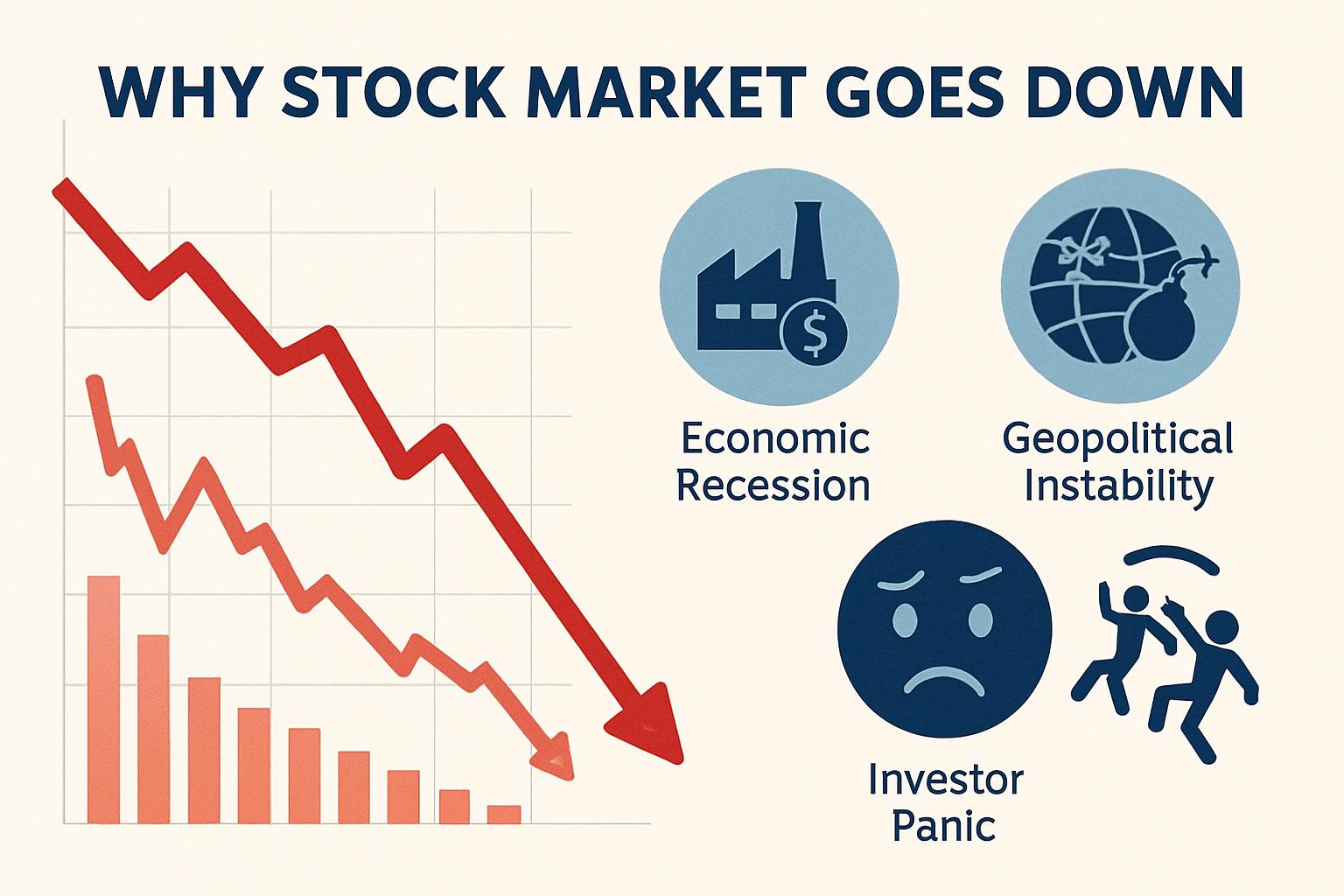
Macroeconomic Headwinds: The Broader Economic Picture
The health of the global economy serves as the fundamental backdrop against which stock markets operate. When this picture shows signs of strain, equities often bear the brunt, as investor confidence wanes and future earnings prospects dim. Understanding these macroeconomic forces is paramount to deciphering daily market movements.
Inflationary Pressures and Interest Rate Hikes
One of the most potent forces impacting stock prices today is the specter of inflation. When the cost of goods and services rises persistently, the purchasing power of money erodes, affecting both consumer spending and corporate profit margins. Central banks, in their mandate to maintain price stability, often respond to high inflation by raising interest rates. While necessary to cool down an overheating economy, higher interest rates have several direct negative impacts on the stock market. Firstly, they increase the cost of borrowing for companies, making it more expensive to fund expansion, operations, and even service existing debt, which can eat into profits. Secondly, higher interest rates make fixed-income investments, such as bonds, more attractive relative to stocks, as they offer guaranteed returns at a lower risk. This shift in attractiveness can draw capital away from equities, leading to selling pressure. Furthermore, a higher discount rate is applied to future corporate earnings in valuation models, meaning that future profits are worth less today, thereby reducing intrinsic stock values. The anticipation and realization of these rate hikes often precede and accompany market downturns.
Global Economic Slowdown and Recession Fears
Beyond inflation, the broader trajectory of economic growth is a critical determinant of market performance. When major economies around the world show signs of slowing, or worse, contracting, the outlook for corporate earnings darkens considerably. A global economic slowdown implies reduced demand for products and services, supply chain disruptions, and increased competition, all of which put pressure on companies’ top and bottom lines. Recession fears, often triggered by consecutive quarters of negative GDP growth or a combination of other warning indicators (like an inverted yield curve), can send shivers through investor communities. During a recession, unemployment typically rises, consumer spending falls, and corporate bankruptcies may increase. In anticipation of such an environment, investors often sell off riskier assets like stocks and flock to safer havens, driving down equity prices across the board. The interconnectedness of modern economies means that a downturn in one major region can quickly spill over to others, creating a domino effect that impacts global stock markets.
Labor Market Dynamics and Consumer Spending
The state of the labor market and its influence on consumer spending is another critical economic indicator. A robust labor market, characterized by low unemployment rates and rising wages, generally supports strong consumer spending, which in turn fuels corporate revenues and profits. Conversely, a weakening labor market, with increasing job losses or stagnant wage growth, can significantly dampen consumer confidence and spending. As consumers tighten their belts, businesses face reduced demand, leading to lower sales and potentially layoffs, creating a negative feedback loop. For example, sectors heavily reliant on discretionary spending, such as retail, hospitality, and luxury goods, are particularly vulnerable during periods of labor market distress. A stock market downturn on any given day might be a reaction to a disappointing jobs report, an unexpected rise in unemployment claims, or even a survey indicating declining consumer sentiment. Investors continuously monitor these data points as they provide valuable insights into the future health of corporate earnings and the broader economy.
Corporate Performance and Sector-Specific Challenges
While macroeconomic forces paint a broad picture, the specifics of corporate performance and industry-level challenges are equally vital in explaining why stocks might be down on a particular day. Individual companies and entire sectors can face unique pressures that diverge from general economic trends.
Disappointing Earnings Reports and Revised Guidance
For individual stocks, and often for the broader market if it involves bellwether companies, a primary driver of a downturn is corporate earnings. Companies publicly traded are required to report their financial results periodically. When a company announces earnings that miss analyst expectations or, more critically, provides a weaker-than-expected outlook (guidance) for future quarters, its stock price typically falls sharply. This is because investors rely heavily on these reports to gauge a company’s health and future profitability. A miss can signal underlying operational issues, increased competition, or a deteriorating market for its products/services. When multiple major companies in a sector, or across several sectors, report disappointing results or lower their guidance, it can trigger a broader market sell-off as investors project these specific issues onto the wider economy. The collective impact of these individual corporate stories can quickly translate into a red day for the indices.
Supply Chain Disruptions and Input Cost Increases
In an increasingly globalized world, companies are highly dependent on complex supply chains to source raw materials, manufacture products, and distribute them to customers. Disruptions to these chains, whether due to geopolitical events, natural disasters, or logistical bottlenecks, can severely impede production, lead to delays, and inflate costs. When companies cannot produce or deliver goods efficiently, their sales volumes suffer, and their operational expenses rise. Similarly, significant increases in the cost of raw materials, energy, or labor – often referred to as input costs – can compress profit margins even if sales remain robust. If these increased costs cannot be fully passed on to consumers through higher prices, companies absorb the hit, leading to lower profitability. The market reacts swiftly to news of such disruptions or cost pressures, particularly if they are expected to be persistent, as they directly threaten a company’s ability to generate future earnings. This translates into selling pressure on affected stocks.
Regulatory Changes and Industry-Specific Headwinds
Beyond general economic and operational factors, specific industries can face unique challenges that drive down stock prices within that sector. Regulatory changes are a prime example. New government regulations, stricter environmental standards, increased scrutiny of business practices, or antitrust actions can significantly impact a company’s operating model, increase compliance costs, or even limit its market reach. For instance, pharmaceutical companies are heavily impacted by FDA approvals and patent expirations, while tech companies might face new data privacy laws or antitrust investigations. Changes in consumer preferences or technological obsolescence can also create significant headwinds for specific industries. A shift away from fossil fuels impacts energy companies, while the rise of streaming services affects traditional broadcast media. When an entire sector faces such industry-specific challenges, investor sentiment can turn negative for all companies within that space, leading to a broad decline in their stock values, even if the general market is otherwise stable.
Geopolitical Tensions and Unforeseen Events
Global stability is a critical, albeit often unpredictable, factor influencing financial markets. Major geopolitical events and unforeseen crises can introduce significant uncertainty, causing investors to de-risk portfolios and retreat from equities.
International Conflicts and Trade Wars
The outbreak or escalation of international conflicts, even those far removed geographically, can have immediate and profound impacts on global markets. Such conflicts can disrupt supply routes, impact commodity prices (especially oil and gas), and create widespread economic uncertainty. Investors often perceive geopolitical instability as increasing risk, leading to a flight to safety – selling stocks and buying assets like gold or government bonds. Similarly, trade wars, characterized by tariffs and retaliatory measures between nations, can severely disrupt international commerce, hurt multinational corporations, and weigh heavily on global economic growth. Companies heavily reliant on international trade or with significant operations in affected regions are particularly vulnerable. The mere threat or escalation of such conflicts or trade disputes can trigger a broad market sell-off as investors brace for potential economic fallout, directly contributing to a stock market decline on any given day.
Political Instability and Policy Uncertainty
Domestic political instability or significant policy uncertainty can also contribute to market downturns. This includes events such as highly contested elections, changes in government leadership, or significant shifts in domestic policy (e.g., tax reforms, healthcare legislation, immigration policies). When the political landscape is volatile, it creates an environment of unpredictability for businesses. Companies may postpone investment decisions due to uncertainty about future tax rates, regulatory environments, or government spending priorities. Investors, who abhor uncertainty, react by selling off stocks until the political fog clears. Even the perception of an unstable political environment, where rapid and unpredictable policy changes are possible, can lead to a sustained period of market nervousness and downward pressure on stock prices. A sudden piece of news regarding political upheaval or an unexpected policy announcement can easily be the catalyst for a market dip.
Natural Disasters and Public Health Crises
While not directly economic or political, major natural disasters (earthquakes, hurricanes, floods, pandemics) and public health crises can also have devastating impacts on economies and stock markets. Such events can cause widespread damage to infrastructure, disrupt business operations, lead to significant loss of life, and severely curtail economic activity in affected regions. For instance, a major hurricane striking a key industrial zone can shut down production for weeks or months, impacting global supply chains. A public health crisis, like a pandemic, can lead to lockdowns, reduced consumer mobility, and a drastic drop in demand for various goods and services, as seen with the COVID-19 crisis. The economic disruption and human cost of such events create immense uncertainty and fear among investors, prompting them to sell off equities in anticipation of reduced corporate earnings and broader economic contraction. The initial reaction to such an unforeseen event often involves a sharp market correction.
Market Sentiment and Technical Factors
Beyond the fundamental drivers, the psychology of the market and technical trading patterns play a significant role in daily stock movements, often amplifying or dampening the effects of other news.
Investor Fear and Risk Aversion
Market sentiment is a powerful, albeit often irrational, force. When fear dominates, investors become risk-averse, preferring to hold cash or safer assets rather than equities. This collective fear can be triggered by any of the aforementioned factors – high inflation, recession fears, geopolitical tensions – or simply by a series of negative headlines. Panic selling can ensue, where investors rush to offload their holdings, often indiscriminately, to avoid further losses. This creates a self-fulfilling prophecy: as more people sell, prices fall further, triggering more selling. Indexes like the VIX (Volatility Index), often called the “fear gauge,” spike during periods of high investor anxiety. Even if the underlying fundamentals of companies remain sound, a wave of negative sentiment can significantly depress stock prices. Conversely, during periods of extreme optimism (“irrational exuberance”), stocks can be overvalued, making them more susceptible to sharp corrections when any negative news emerges.
Technical Breakdowns and Selling Pressure
Technical analysis, which studies past market data, primarily price and volume, to predict future price movements, also plays a role in daily market dynamics. Investors and algorithms often monitor key technical levels, such as support and resistance lines, moving averages, and chart patterns. When a major stock index or a significant individual stock breaks below a critical support level, it can trigger automatic selling orders (stop-loss orders) and signal to technically-minded traders that further declines are likely. This can exacerbate selling pressure. Similarly, a high volume of selling can indicate a strong conviction among bearish investors, leading to a further downward spiral. Algorithmic trading, which accounts for a substantial portion of daily trading volume, can also amplify these movements. Algorithms are programmed to react to specific price action or news, and their collective action can rapidly accelerate a market downturn, sometimes without an immediate discernible fundamental catalyst.
Algorithmic Trading and Market Liquidity
The increasing dominance of algorithmic and high-frequency trading (HFT) means that a significant portion of daily market movements is driven by automated systems. These algorithms execute trades based on complex models, often reacting to minuscule price discrepancies, news sentiment, or technical indicators at lightning speed. While they contribute to market liquidity, they can also amplify volatility. A cascade of selling orders from algorithms, triggered by a specific event or a breach of a technical level, can rapidly drive down prices. This can be exacerbated during periods of low market liquidity, where there are fewer buyers to absorb the selling pressure. If there aren’t enough willing buyers at a given price, the price must drop sharply until buyers emerge, leading to quick and significant declines. The flash crashes witnessed in recent years are often attributed to the interplay between algorithmic trading and liquidity issues, showcasing how technical factors can independently contribute to a stock market being down today.
What Investors Can Do During a Downturn
While the reasons for a stock market downturn can be complex and intimidating, understanding them empowers investors to react strategically rather than impulsively. A “red day” in the market is often an opportunity for long-term growth.
Maintaining a Long-Term Perspective
Perhaps the most crucial advice during a market downturn is to maintain a long-term perspective. Stock market history is replete with examples of corrections and bear markets being followed by recoveries and new bull markets. Reacting to daily fluctuations by panic selling often locks in losses and prevents participation in the inevitable rebound. For investors with a long time horizon, temporary dips are often just that – temporary. Focusing on the long-term growth trajectory of quality companies and the overall market can help weather short-term storms. This approach aligns with the understanding that equity markets generally trend upwards over extended periods, driven by innovation, economic growth, and corporate profitability.
Diversification and Rebalancing
Diversification across different asset classes (stocks, bonds, real estate), industries, and geographies is a fundamental principle of risk management. A diversified portfolio is less susceptible to sharp declines caused by issues affecting a single company, sector, or region. During a downturn, some parts of a portfolio might perform better than others (e.g., bonds offering stability when stocks fall). Rebalancing involves periodically adjusting your portfolio back to its target asset allocation. For instance, if stocks have fallen significantly, they might now represent a smaller percentage of your portfolio than intended. Rebalancing would involve selling some assets that have performed well (or that are now overweighted) and buying more of the assets that have underperformed (e.g., stocks that are now cheaper). This disciplined approach allows investors to “buy low” during market dips, potentially enhancing long-term returns.
Avoiding Panic Selling and Spotting Opportunities
The urge to sell when prices are falling is a natural human reaction to fear. However, panic selling is almost always detrimental to long-term wealth creation. Instead, a downturn can present unique buying opportunities for discerning investors. High-quality companies, whose fundamentals remain strong despite the broader market turbulence, often see their stock prices unfairly depressed during a sell-off. For those with available capital, these periods can be opportune times to acquire shares in excellent companies at more attractive valuations. It requires conviction, thorough research, and the ability to differentiate between temporary setbacks and fundamental deterioration. Viewing market dips not as disasters but as chances to invest in solid businesses at a discount is a hallmark of successful long-term investing.
In conclusion, understanding why stock is down today requires looking beyond the immediate headlines to the complex interplay of macroeconomic forces, corporate specifics, geopolitical currents, and market psychology. While the reasons can be diverse and sometimes overwhelming, informed investors recognize that market volatility is an inherent part of the investment landscape. By staying disciplined, maintaining a long-term view, and adhering to sound investment principles, today’s market dip can transform from a source of anxiety into a potential stepping stone for future financial growth.
aViewFromTheCave is a participant in the Amazon Services LLC Associates Program, an affiliate advertising program designed to provide a means for sites to earn advertising fees by advertising and linking to Amazon.com. Amazon, the Amazon logo, AmazonSupply, and the AmazonSupply logo are trademarks of Amazon.com, Inc. or its affiliates. As an Amazon Associate we earn affiliate commissions from qualifying purchases.