
In the world of aviation finance, Spirit Airlines represents a fascinating case study of radical efficiency. To the casual traveler, Spirit is often a punchline for cramped seats and extra fees. However, to a financial analyst or a business strategist, it is a masterclass in the Ultra-Low-Cost Carrier (ULCC) model. The airline’s ability to offer fares that are sometimes 50% to 70% lower than legacy carriers like Delta or United is not a product of luck; it is the result of a disciplined, aggressive approach to business finance and operational cost-cutting.
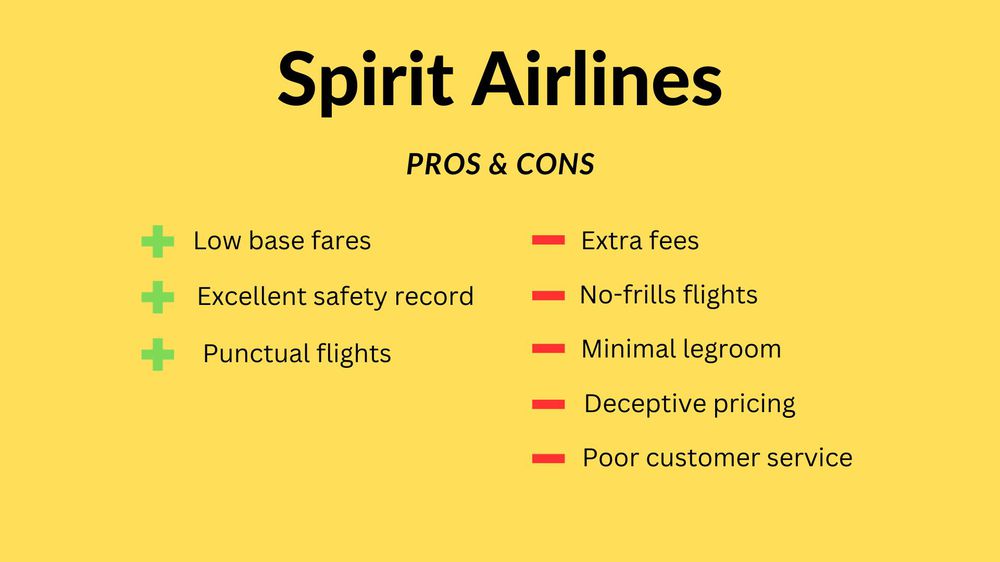
By stripping away the traditional “frills” of air travel, Spirit has created a high-margin business that caters to a specific demographic: the price-sensitive traveler. Understanding why Spirit is so cheap requires a deep dive into its unbundled pricing strategy, its operational leaness, and the specific labor economics that allow it to undercut the competition while remaining a significant player in the domestic market.
The Unbundled Pricing Model: A Study in Business Finance
The primary driver behind Spirit’s low ticket prices is a concept known as “unbundling.” In traditional airline finance, the ticket price is a composite of many services: the flight, a carry-on bag, a snack, beverage service, and even seat selection. Spirit disrupts this by isolating the core product—transportation from Point A to Point B—and pricing everything else as an add-on.
The “Bare Fare” Philosophy
Spirit markets its base ticket as the “Bare Fare.” From a financial perspective, this allows the airline to lower the “Customer Acquisition Cost” by appearing at the very top of search results on travel aggregators like Expedia or Google Flights. By offering a base price that barely covers the fuel and landing fees associated with a single passenger, Spirit attracts a high volume of customers. This strategy is less about the profit on the ticket itself and more about getting the consumer into the “Spirit ecosystem” where higher-margin sales can occur.
Ancillary Revenue: The Real Profit Engine
The genius of Spirit’s financial model lies in its ancillary revenue—income generated from non-ticket sources. While legacy carriers might rely on high-priced business class tickets to drive profits, Spirit makes its money through baggage fees, seat assignments, on-board refreshments, and even printed boarding passes at the airport.
In recent fiscal years, Spirit has often reported that ancillary revenue accounts for nearly half of its total operating revenue. Because these services have very low overhead—charging $50 for a bag that costs the airline almost nothing to transport—the profit margins on these add-ons are significantly higher than the margin on the flight itself. This allows the airline to remain profitable even when the base fare is sold at near-cost or as a loss leader.
Operational Efficiency and Cost Minimization Strategies
To maintain low prices, Spirit must maintain the lowest possible Cost per Available Seat Mile (CASM). This is the gold standard metric in airline finance, measuring how much it costs to fly one seat one mile. Spirit’s CASM is consistently among the lowest in the industry, achieved through rigorous standardization and high asset utilization.
Fleet Standardization and Maintenance Savings
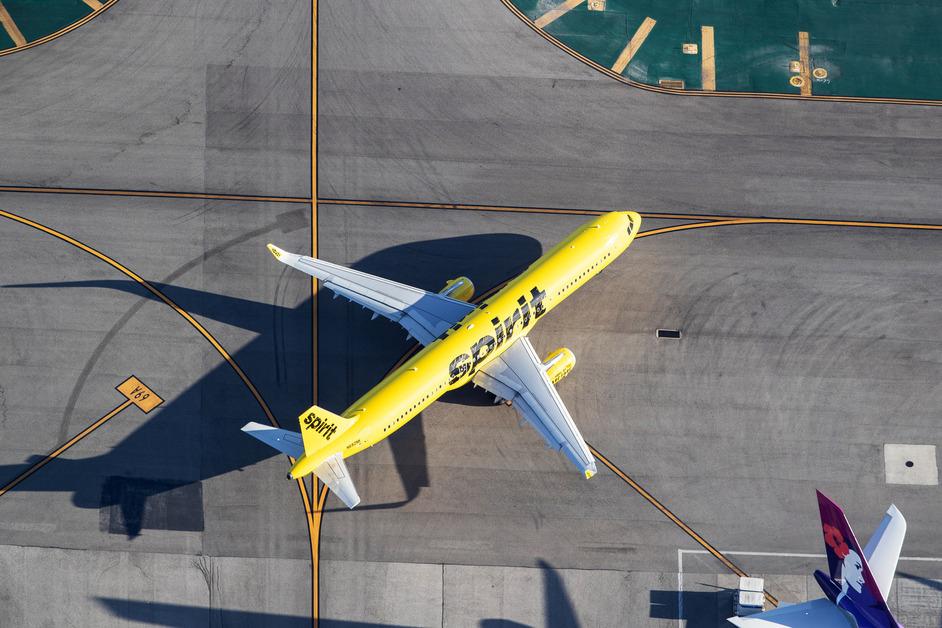
One of the most significant expenses for any airline is maintenance and pilot training. Spirit mitigates these costs by operating an all-Airbus A320 family fleet. From a business finance perspective, this is a strategic move that simplifies the entire supply chain.
When an airline operates only one type of aircraft, it only needs to stock one set of spare parts. Pilots only need to be certified on one platform, and mechanics do not need specialized training for multiple manufacturers. This “homogeneity of assets” reduces capital expenditure (CAPEX) and operating expenses (OPEX) significantly, allowing those savings to be passed down to the consumer in the form of lower fares.
High Aircraft Utilization Rates
An airplane only makes money when it is in the air. Spirit’s financial model relies on keeping their aircraft moving more than almost any other carrier. While a legacy airline might let a plane sit at a gate for two hours between flights to allow for a relaxed boarding process and cleaning, Spirit operates with “tight turns.”
By minimizing the time spent on the ground, Spirit can squeeze more flights out of a single aircraft per day. This high utilization rate spreads the fixed costs of the aircraft (leasing, insurance, and base depreciation) over a larger number of paying passengers. In simple terms, if a Spirit plane flies 12 hours a day while a competitor’s plane flies 8, Spirit is generating 50% more revenue-generating opportunities from the same multi-million dollar asset.
Labor Economics and Point-to-Point Logistics
Beyond the physical assets, the way Spirit manages its human capital and its route map is a critical component of its low-cost structure. The airline avoids the expensive complexities of the “hub-and-spoke” model favored by major carriers, opting instead for a leaner, more direct approach.
Optimized Staffing and Outsourcing
Labor is typically the largest or second-largest expense for an airline. Spirit manages this through a combination of competitive labor contracts and high productivity requirements. Spirit’s employees often perform multiple roles, and the airline maintains a lower headcount per aircraft than its full-service counterparts.
Furthermore, Spirit aggressively outsources non-core functions. Ground handling, cleaning, and heavy maintenance are often contracted out to third-party providers in different regions. This shifts fixed labor costs into variable costs, allowing the airline to scale expenses up or down based on flight volume, which protects the company’s cash flow during seasonal downturns.
Secondary Airports and Reduced Landing Fees
The “Point-to-Point” model is another financial advantage. Instead of funneling all passengers through expensive, congested hubs like Chicago O’Hare or Atlanta Hartsfield-Jackson, Spirit often utilizes secondary airports or flies direct routes between mid-tier cities.
Secondary airports (like Fort Lauderdale instead of Miami, or Latrobe instead of Pittsburgh) charge significantly lower landing fees and gate leases. These savings are a direct “pass-through” to the ticket price. Additionally, flying point-to-point reduces the risk of expensive cascading delays that often plague hub-and-spoke systems, where a delay in one hub can ground flights across the entire country.
The Financial Risk and Reward for the Consumer
For the individual traveler, Spirit Airlines is a tool for personal finance management. However, using this tool effectively requires an understanding of the “Total Cost of Ownership” (TCO) for a flight. The low headline price is only a saving if the passenger understands the rules of the ULCC game.
Calculating the Total Cost of Ownership (TCO)
In personal finance, the TCO refers to the total price of a product including all hidden or ongoing costs. When booking a Spirit flight, a financially savvy traveler must calculate the cost of their “Bare Fare” plus the cost of any bags and seat selections they require.
If the total comes to $150 and a legacy carrier is offering a “bundled” ticket for $180, Spirit is the clear financial winner. However, if the passenger fails to pre-pay for a bag and is forced to pay $70 at the gate, the financial advantage evaporates. Spirit’s model relies on a segment of the population that is willing to trade comfort and convenience for a lower TCO.
When the Cheap Seat Makes Financial Sense
From a business finance perspective, Spirit serves as a vital “low-entry” option that keeps the entire industry competitive. For students, budget-conscious families, or solo travelers with only a backpack, Spirit provides access to air travel that would otherwise be financially out of reach.
By forcing legacy carriers to lower their prices on competing routes (a phenomenon known as “The Spirit Effect”), Spirit actually saves money for consumers who never even step foot on their planes. The presence of a low-cost leader in the market creates a downward pressure on pricing, benefiting the overall economy by increasing the mobility of the workforce and the accessibility of tourism.

Conclusion: The Bottom Line on Spirit’s Financial Success
Spirit Airlines is cheap because it has fundamentally reimagined the airline as a logistics company rather than a hospitality provider. By focusing on asset utilization, ancillary revenue streams, and fleet standardization, Spirit has built a financial fortress that thrives on low margins and high volume.
While the “Spirit experience” may not offer the luxury of a premium cabin, its business model is a testament to the power of financial discipline. For the airline, the goal is maximum efficiency and ROI on every seat mile. For the consumer, Spirit offers a way to navigate the world without the burden of paying for services they don’t need. In the intersection of business finance and personal budgeting, Spirit Airlines remains a dominant force by proving that, in the world of travel, the bottom line is often the only line that matters.
aViewFromTheCave is a participant in the Amazon Services LLC Associates Program, an affiliate advertising program designed to provide a means for sites to earn advertising fees by advertising and linking to Amazon.com. Amazon, the Amazon logo, AmazonSupply, and the AmazonSupply logo are trademarks of Amazon.com, Inc. or its affiliates. As an Amazon Associate we earn affiliate commissions from qualifying purchases.