
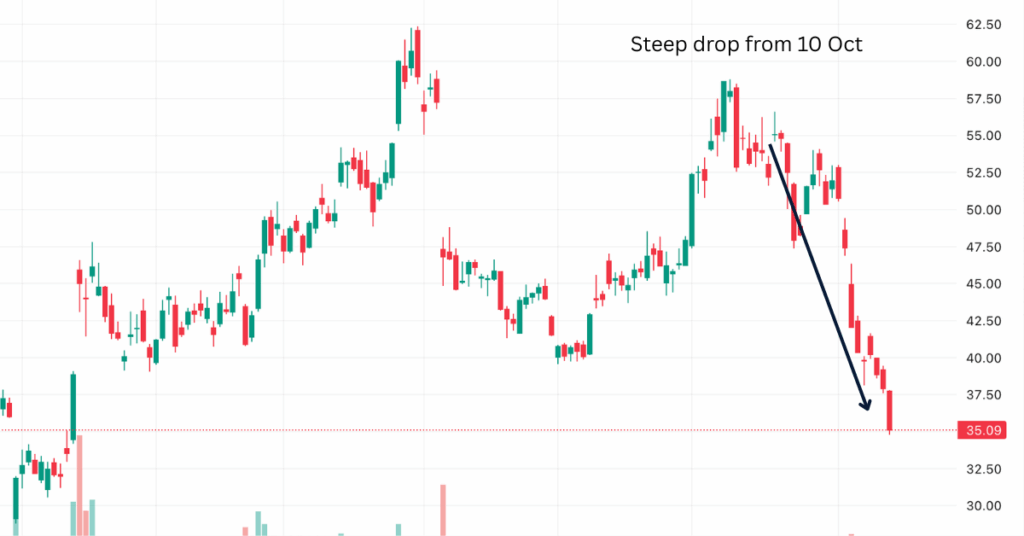
Super Micro Computer, Inc. (SMCI) has been a dazzling star in the burgeoning artificial intelligence (AI) sector, experiencing an extraordinary surge that captivated investors and analysts alike. Yet, as often happens with high-growth stocks that climb too quickly, the trajectory isn’t always a smooth upward line. Recent market movements have seen SMCI’s stock experience notable declines, prompting a critical question among investors: why is SMCI stock dropping? Understanding these pullbacks requires a meticulous examination of broader market forces, company-specific fundamentals, and shifts in investor sentiment, all viewed through the lens of financial prudence and investment strategy. This article will delve into the multifaceted reasons behind SMCI’s recent stock performance, offering insights for current and prospective investors navigating the volatile landscape of the AI hardware market.
Navigating the Broader Market Currents: Sector-Wide Influences
No single stock exists in a vacuum; its performance is inextricably linked to the broader market and sector-specific trends. SMCI, as a prominent player in the technology and AI hardware space, is particularly sensitive to macroeconomic shifts and investor appetites for growth stocks.
The Dynamics of Profit-Taking and Valuation Adjustments
After an astronomical ascent, a stock like SMCI often becomes a prime candidate for significant profit-taking. Many investors who bought in early, or even during its initial climb, may decide to cash in their substantial gains, leading to sell-offs that exert downward pressure on the stock price. This is a natural market phenomenon, especially when a stock’s valuation expands rapidly, pushing it into territory that some consider overvalued by traditional metrics.
- Excessive Growth Premium: SMCI’s rapid growth earlier this year priced in a future of robust expansion in AI infrastructure. When a stock’s valuation significantly outpaces its current earnings and even aggressive future projections, it creates a “growth premium.” Any hint of a slowdown, or even a normalization of growth, can trigger a re-evaluation of this premium, leading to price corrections.
- Sector Rotation: Investment capital frequently rotates between different sectors. At times, investors might shift their focus from high-growth technology stocks, especially those with elevated valuations, towards more value-oriented sectors or those perceived as more defensive amidst economic uncertainty. This rotation can draw capital away from stocks like SMCI, contributing to a decline.
Macroeconomic Headwinds and Interest Rate Sensitivities
The macroeconomic environment plays a crucial role in shaping investor behavior and, consequently, stock performance. Concerns about inflation, interest rate hikes, and the overall economic outlook can have a disproportionate impact on growth stocks.
- Higher Interest Rates: When central banks raise interest rates, it increases the cost of borrowing for companies and makes future earnings less valuable in present terms through discount rate calculations. This typically pressures high-growth stocks, whose valuations often rely heavily on projected future earnings, more than established companies with stable current cash flows. Higher rates also make less risky fixed-income investments more attractive, potentially drawing capital away from equities.
- Economic Slowdown Fears: Persistent inflation, geopolitical tensions, or other factors can fuel anxieties about a potential economic slowdown or recession. In such environments, investors tend to become more risk-averse, favoring companies with strong balance sheets and predictable earnings over those in highly cyclical or rapidly evolving sectors. A contraction in corporate spending, particularly in areas like data center upgrades or new AI initiatives, could directly impact SMCI’s revenue streams.
Unpacking Company-Specific Fundamentals and Performance Indicators
While market-wide forces set the stage, a stock’s movements are ultimately driven by the underlying health and prospects of the company itself. For SMCI, scrutiny often turns to its financial performance, competitive positioning, and future outlook.
Earnings, Guidance, and Analyst Expectations
Even a company delivering stellar results can see its stock drop if those results don’t meet the market’s exceptionally high expectations. In the case of SMCI, which has enjoyed remarkable success, the bar for continued outperformance is set incredibly high.
- Missing Elevated Expectations: Investors and analysts often project aggressive growth for companies like SMCI, fueled by the enthusiasm around AI. If the company’s actual earnings, revenue, or, critically, its forward guidance, fall even slightly short of these lofty predictions, it can trigger a significant sell-off. The market isn’t just reacting to the present; it’s reacting to the future outlook relative to what it hoped the future would be.
- Cautious Outlook: Management’s commentary on future quarters, especially regarding supply chain stability, component availability (e.g., advanced GPUs), or customer demand trends, can heavily influence investor sentiment. A more cautious-than-expected outlook, even if prudent, can be interpreted negatively by a market accustomed to aggressive optimism.
- Gross Margin Pressures: In a competitive hardware market, gross margins are a key indicator of pricing power and operational efficiency. Any signs of margin compression, perhaps due to increased component costs, competitive pricing, or a shift in product mix, could signal financial strain and erode investor confidence.
Valuation Concerns and Competitive Landscape
SMCI’s meteoric rise also brought its valuation metrics into sharp focus. Investors began to weigh its price against industry peers and its own historical performance.

- Valuation Stretch: After significant rallies, a company’s price-to-earnings (P/E) ratio, price-to-sales (P/S) ratio, and other valuation metrics can become stretched compared to industry averages or even its own growth trajectory. When this happens, investors may perceive the stock as “expensive,” making it more vulnerable to corrections. They might seek alternative investments that offer similar growth at a more palatable valuation.
- Intensifying Competition: The AI server market is lucrative and attracting significant investment. Established tech giants and emerging players are vying for market share. Increased competition could lead to pricing pressures, reduced market share, or higher R&D expenses for SMCI, impacting future profitability. Concerns about the sustainability of its competitive advantage – be it in liquid cooling, rapid deployment, or modular designs – can dampen enthusiasm.
- Supply Chain Dependencies: While SMCI has showcased impressive supply chain agility, its business heavily relies on the availability of cutting-edge components, particularly GPUs from companies like Nvidia. Any disruption in the supply of these critical components, or a shift in allocation priorities by suppliers, could directly impact SMCI’s ability to fulfill orders and recognize revenue, posing a significant operational risk.
The Role of Analyst Sentiment and Institutional Flow
Beyond hard numbers, the collective opinion of financial analysts and the movement of large institutional capital play a substantial role in shaping a stock’s short-to-medium-term trajectory.
Analyst Downgrades and Price Target Revisions
Wall Street analysts often have considerable sway over investor perception. Their recommendations can act as catalysts for stock movements.
- Shift in Ratings: A downgrade from a prominent investment bank or research firm can trigger immediate selling pressure. Such downgrades usually stem from a re-evaluation of the company’s fundamentals, competitive landscape, or macroeconomic outlook, leading analysts to lower their long-term growth projections or increase their perceived risk profile.
- Reduced Price Targets: Even if an analyst maintains a “buy” rating, a significant reduction in their price target can signal a tempered outlook for the stock’s future appreciation. This can lead to a reassessment by investors who might have been holding based on higher target prices.
- Consensus Shift: When multiple analysts begin to express similar concerns or lower their ratings/targets, it can create a snowball effect, reinforcing negative sentiment across the market and accelerating declines.
Institutional Investor Activity and Short-Selling Pressure
Large institutional investors, such as mutual funds, hedge funds, and pension funds, control vast amounts of capital, and their buying or selling patterns can significantly move a stock.
- Institutional Selling: If major institutional holders decide to trim their positions or exit entirely, it can create substantial selling volume that individual investors cannot easily absorb. This might happen due to portfolio rebalancing, risk management strategies, or a fundamental change in their investment thesis for SMCI.
- Increased Short Interest: A rise in short interest – the number of shares borrowed and sold by investors betting on a price decline – indicates a growing bearish sentiment. While short-selling can be a temporary phenomenon, sustained high short interest can exert continuous downward pressure and signal potential underlying weaknesses perceived by sophisticated traders.
- Program Trading and Algorithmic Reactions: In today’s high-frequency trading environment, algorithms can amplify market movements. Negative news, analyst downgrades, or even small price declines can trigger programmed sell orders, especially in volatile stocks, exacerbating downward trends.
Looking Ahead: A Prudent Investor’s Perspective
While recent declines may be unsettling for SMCI investors, it’s crucial to adopt a long-term, analytical perspective rather than reacting solely to short-term volatility. Every stock correction offers an opportunity for re-evaluation.
Distinguishing Short-Term Noise from Long-Term Fundamentals
A healthy market correction can often separate speculative froth from genuine fundamental strength. Investors should focus on whether the core growth drivers for SMCI – the ongoing demand for AI infrastructure, its technological innovations in server design, and its execution capabilities – remain intact.
- Evaluate Growth Trajectory: Is the AI market still projected for robust growth? Does SMCI continue to hold a significant competitive edge in specialized areas like liquid-cooled servers or rack-scale solutions? A temporary dip in stock price doesn’t necessarily mean a permanent erosion of the company’s long-term potential.
- Financial Health: Examine SMCI’s balance sheet, cash flow generation, and profitability. A company with strong financials is better positioned to weather market downturns and invest in future growth.
- Intrinsic Value Assessment: For value-oriented investors, a stock drop might present an opportunity to acquire shares at a more attractive price relative to their estimated intrinsic value. This involves fundamental analysis, comparing the current price to the company’s assets, earnings power, and future cash flow potential.

Risk Management and Diversification
Investing in high-growth, high-volatility stocks like SMCI requires a robust risk management strategy.
- Portfolio Diversification: Avoid over-concentrating your portfolio in a single stock or sector. Diversification across different industries, asset classes, and geographies can help mitigate the impact of sharp declines in any one investment.
- Investment Horizon: Understand your own investment goals and time horizon. Short-term traders might react differently than long-term investors focused on compound growth over several years.
- Dollar-Cost Averaging: For those confident in SMCI’s long-term prospects, employing a dollar-cost averaging strategy – investing a fixed amount regularly, regardless of the stock price – can help smooth out the impact of price fluctuations.
The recent decline in SMCI stock is a complex interplay of market dynamics, company-specific factors, and shifts in investor sentiment. While the initial surge was fueled by incredible enthusiasm for AI, the pullback serves as a reminder of market cyclicality and the importance of due diligence. For investors, understanding these drivers is paramount to making informed decisions and navigating the often-turbulent waters of the stock market with greater confidence and strategic insight.
aViewFromTheCave is a participant in the Amazon Services LLC Associates Program, an affiliate advertising program designed to provide a means for sites to earn advertising fees by advertising and linking to Amazon.com. Amazon, the Amazon logo, AmazonSupply, and the AmazonSupply logo are trademarks of Amazon.com, Inc. or its affiliates. As an Amazon Associate we earn affiliate commissions from qualifying purchases.