
The Nasdaq Composite and the Nasdaq-100 have long been the primary barometers for the global technology sector and growth-oriented investing. For over a decade, these indices enjoyed a nearly uninterrupted ascent, fueled by low interest rates, digital transformation, and the explosive growth of “Big Tech.” However, financial markets are rarely a one-way street. When the Nasdaq begins to slide, it often sends ripples through the entire global economy, leaving investors to wonder: what exactly is driving the decline?
Understanding why the Nasdaq falls requires a multi-dimensional analysis of macroeconomic policy, sector-specific fundamentals, and shifts in investor psychology. Because the Nasdaq is heavily weighted toward high-growth technology companies, it is uniquely sensitive to changes in the financial environment that might not affect more traditional “value” sectors, such as utilities or consumer staples, to the same degree.
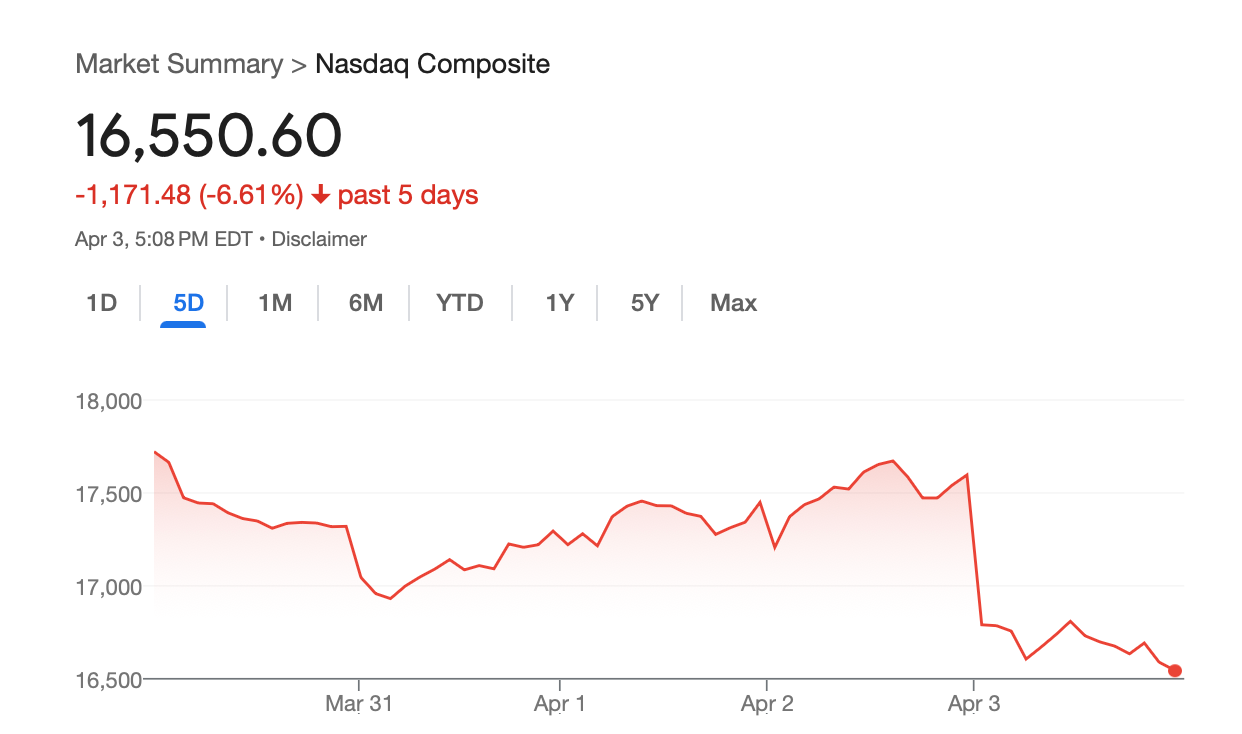
The Macroeconomic Landscape: Interest Rates and the Cost of Capital
The single most influential factor behind a falling Nasdaq is typically the movement of interest rates. To understand why, one must look at how growth stocks are valued. Most technology companies are valued based on their future cash flows rather than their current dividends or book value. In a financial model known as Discounted Cash Flow (DCF), the value of a company today is determined by its projected earnings years or even decades into the future, “discounted” back to the present using a specific interest rate.
The Impact of Federal Reserve Policy
When the Federal Reserve or other central banks raise interest rates to combat inflation, the “discount rate” used in these valuation models increases. As the discount rate rises, the present value of those future earnings decreases. This is why technology stocks, particularly those that are not yet profitable but promise high growth in the future, are often the first to be sold off when the Fed signals a “hawkish” stance.
Higher rates also increase the cost of borrowing. Many companies within the Nasdaq rely on debt to fund research and development, aggressive acquisitions, and capital expenditures. As the cost of servicing this debt rises, profit margins are squeezed, leading to downward revisions in earnings guidance, which in turn triggers a drop in share prices.
The Yield Curve and Bond Market Competition
The bond market acts as a direct competitor to the stock market. When the yields on 10-year U.S. Treasury notes rise, they provide a “risk-free” alternative for investors. If an investor can get a guaranteed 4% or 5% return from a government bond, they are less likely to risk their capital in a volatile tech stock that might be trading at a high price-to-earnings (P/E) multiple. This “flight to yield” creates selling pressure on the Nasdaq as institutional investors rebalance their portfolios away from equities and toward fixed-income assets.
Valuation Correction: Moving from Euphoria to Fundamentals
Market cycles are often driven by periods of “irrational exuberance,” where stock prices decouple from their underlying financial realities. When the Nasdaq falls significantly, it is often a sign of “multiple compression”—a period where investors are no longer willing to pay a premium for growth and instead demand more reasonable valuations.
The De-risking of High-Multiple Equities
During bull markets, it is common to see tech companies trading at 50, 80, or even 100 times their annual earnings. While these valuations may be sustainable when capital is cheap and the economy is booming, they become precarious during a slowdown. A falling Nasdaq often represents a “return to earth” for these multiples. As the market de-risks, investors shift their focus from “revenue growth at any cost” to “sustainable profitability and free cash flow.” Companies that cannot demonstrate a clear path to profitability often see their stock prices crater by 50% or more during these corrective phases.
Earnings Season Disappointments
The Nasdaq is often pushed lower by the collective weight of its largest components, such as Apple, Microsoft, Alphabet, and Nvidia. Because these companies represent such a massive percentage of the index’s total market capitalization, a single disappointing earnings report from one of them can drag the entire index down. If these “market generals” suggest that consumer spending is slowing or that enterprise cloud spending is cooling, it signals to the market that the era of hyper-growth may be pausing, leading to a broad-based sell-off.
Sector-Specific Headwinds in Technology

Beyond the broad economy, specific trends within the tech industry itself can contribute to a declining Nasdaq. Technology is not a monolithic block; it is composed of various sub-sectors, including semiconductors, software-as-a-service (SaaS), hardware, and digital advertising, each of which faces its own unique challenges.
The Semiconductor Cycle and Supply Chain Shifts
Semiconductors are the lifeblood of the modern economy, powering everything from AI data centers to smartphones and electric vehicles. However, the chip industry is notoriously cyclical. When a period of oversupply follows a period of high demand, prices for chips fall, and the earnings of semiconductor giants suffer. Additionally, geopolitical tensions—such as export restrictions on advanced AI chips or shifts in global manufacturing hubs—create uncertainty. Since the semiconductor sector is a massive component of the Nasdaq, any sign of a “chip slump” invariably pulls the index lower.
Post-Pandemic Normalization
The COVID-19 pandemic accelerated digital adoption by nearly a decade in some sectors, leading to a massive pull-forward of demand for laptops, collaboration software, and e-commerce services. As the world returned to physical offices and brick-and-mortar stores, many of these “pandemic darlings” saw their growth rates plummet. The Nasdaq’s fall in recent years has often been a reflection of this normalization, as the market recalibrates for a world where digital growth is steady rather than explosive.
The Artificial Intelligence Hype Cycle
Recently, the Nasdaq has been buoyed by immense excitement over Generative AI. However, this has also created a “bubble” risk. If the massive investments being made into AI infrastructure do not translate into immediate enterprise productivity or revenue growth, the market may experience an “AI hangover.” When investors begin to question whether the return on investment (ROI) for AI justifies the soaring stock prices of AI-related firms, the result is often a sharp corrective move in the index.
Geopolitical Instability and Regulatory Pressure
The Nasdaq does not exist in a vacuum; it is deeply affected by the global political environment. As technology becomes more central to national security and global trade, it becomes a target for regulatory intervention and geopolitical maneuvering.
Regulatory Crackdowns and Antitrust Suits
Large-cap tech companies are under constant scrutiny from regulators in the United States, the European Union, and China. Antitrust lawsuits targeting the dominant market positions of search engines, app stores, and social media platforms can lead to multi-billion dollar fines or, in extreme cases, orders to break up the companies. These legal battles create long-term uncertainty, causing institutional investors to reduce their exposure to the affected companies, which puts downward pressure on the Nasdaq.
Global Instability and Liquidity Crunches
In times of geopolitical conflict or global economic instability, “risk-off” sentiment takes hold. Investors prioritize liquidity and safety, often selling their most liquid assets—which include heavily traded Nasdaq stocks—to cover losses elsewhere or to move into cash and gold. Furthermore, fluctuations in the strength of the U.S. dollar play a role. A very strong dollar can hurt the international earnings of Nasdaq-listed multinationals, as their foreign sales are worth less when converted back into greenbacks, leading to lower reported profits.
Strategies for Navigating a Nasdaq Downturn
For the individual investor, a falling Nasdaq can be a source of significant anxiety. However, from a financial planning perspective, market downturns are a natural part of the long-term investment cycle. Navigating these periods requires a disciplined approach to portfolio management.
The Role of Diversification and Rebalancing
One of the most common reasons investors suffer during a Nasdaq crash is an over-concentration in technology. If a portfolio is 80% tech-heavy, a 20% correction in the Nasdaq will be devastating. Diversifying into other sectors—such as healthcare, energy, or financials—can provide a buffer. Additionally, regular rebalancing—selling some winners and buying laggards—ensures that an investor isn’t caught holding too much of an overvalued sector when the tide turns.
Dollar-Cost Averaging
For those with a long-term time horizon, a falling Nasdaq can represent a buying opportunity. Dollar-cost averaging (DCA) involves investing a fixed amount of money at regular intervals, regardless of the price. When the Nasdaq is falling, your fixed investment buys more shares. Over time, this lowers the average cost per share and removes the emotional stress of trying to “time the bottom” of the market, which is notoriously difficult even for professional traders.

Maintaining a Long-Term Perspective
Historically, the Nasdaq has recovered from every major crash, including the dot-com bubble of 2000 and the financial crisis of 2008. While the “why” behind the fall is important for understanding current market conditions, the “when” of the recovery is usually driven by the relentless pace of technological innovation. As long as technology continues to drive global productivity, the fundamental value of the companies within the Nasdaq is likely to grow over the long term, making periods of falling prices a temporary hurdle rather than a permanent loss of capital for the patient investor.
aViewFromTheCave is a participant in the Amazon Services LLC Associates Program, an affiliate advertising program designed to provide a means for sites to earn advertising fees by advertising and linking to Amazon.com. Amazon, the Amazon logo, AmazonSupply, and the AmazonSupply logo are trademarks of Amazon.com, Inc. or its affiliates. As an Amazon Associate we earn affiliate commissions from qualifying purchases.