
The Nasdaq Composite Index, long heralded as a beacon for innovation and growth, often experiences periods of volatility and downturns that can leave investors questioning the health of the broader market. As home to many of the world’s leading technology and growth companies, the Nasdaq’s movements frequently reflect shifts in investor sentiment, economic conditions, and the performance of the tech sector itself. Understanding why this prominent index declines is crucial for investors seeking to navigate the complexities of modern financial markets.
A downturn in the Nasdaq is rarely attributable to a single factor. Instead, it typically results from a confluence of macroeconomic pressures, industry-specific challenges, evolving investor sentiment, and geopolitical events that collectively erode confidence and prompt a reassessment of future growth prospects. For an index heavily weighted towards companies whose valuations are often predicated on strong future earnings potential rather than immediate profits, these shifts can trigger significant price corrections. This article delves into the primary forces that frequently contribute to the Nasdaq’s downward movements, offering insights into the underlying dynamics that shape its trajectory and providing context for long-term investment strategies.

Understanding the Nasdaq: A Growth-Oriented Bellwether
Before dissecting the reasons for its declines, it’s essential to grasp what the Nasdaq represents. Unlike the Dow Jones Industrial Average, which is price-weighted and composed of 30 large, established companies, or the S&P 500, which is market-cap-weighted and represents a broader cross-section of the U.S. economy, the Nasdaq is intrinsically linked to technology and growth.
The Nasdaq Composite vs. Nasdaq 100
The term “Nasdaq” often refers to the Nasdaq Composite Index, which includes virtually all stocks listed on the Nasdaq stock market – over 3,000 companies. While diverse, it has a significant concentration of technology, biotechnology, and other growth-oriented firms.
A more specific and frequently quoted index is the Nasdaq 100 Index, which comprises the 100 largest non-financial companies listed on the Nasdaq. This index is even more heavily concentrated in mega-cap technology and innovative growth companies, making it an even purer proxy for the performance of the tech sector. When people speak of the “Nasdaq being down,” they often implicitly refer to the performance of these major tech giants, whose collective weight profoundly influences both indices.
The Dominance of Technology and Growth Stocks
The defining characteristic of the Nasdaq is its heavy weighting towards technology and growth stocks. Companies like Apple, Microsoft, Amazon, Alphabet (Google), and Meta (Facebook) constitute a significant portion of its market capitalization. These companies are often characterized by high growth rates, significant research and development investments, and business models that thrive on innovation and scaling.
Their valuations tend to be more sensitive to future earnings projections and interest rates. When the economic outlook darkens or the cost of capital rises, the discount rate applied to these future earnings increases, making their current valuations less attractive and more prone to correction. This inherent sensitivity is why the Nasdaq often leads both bull markets during periods of optimism and bear markets during economic contraction.
Macroeconomic Headwinds Weighing on Tech
The most pervasive and impactful forces driving a Nasdaq downturn are often macroeconomic in nature. These broad economic trends and policy decisions create a challenging environment for all businesses, but particularly for growth-oriented technology companies.
The Shadow of Rising Interest Rates
One of the most significant macroeconomic factors affecting the Nasdaq is the trajectory of interest rates, particularly those set by central banks like the U.S. Federal Reserve.
Impact on Valuation Models
Growth stocks, which dominate the Nasdaq, are valued heavily on their future earnings potential. Higher interest rates increase the “discount rate” used in financial models to calculate the present value of those future earnings. A higher discount rate means future profits are worth less today, leading to downward revisions in stock valuations. For companies that might not be profitable yet but promise significant growth, this effect is even more pronounced.
Increased Borrowing Costs
Many technology companies, especially younger ones or those in expansion mode, rely on debt financing to fund their operations, research and development, and growth initiatives. As interest rates rise, the cost of borrowing increases, squeezing profit margins and making it more expensive to fuel future growth. This can force companies to scale back ambitious projects or rely more heavily on equity financing, which can dilute existing shareholders.
Attractiveness of “Risk-Free” Alternatives
When interest rates on safe assets like U.S. Treasury bonds rise, they become more attractive to investors seeking lower-risk returns. This phenomenon can draw capital away from riskier growth stocks, which offer higher potential returns but also greater volatility. The shift of capital from “risk-on” assets (like tech stocks) to “risk-off” assets (like bonds) is a common driver of Nasdaq declines.
Inflationary Pressures and Consumer Spending
Persistent high inflation can also act as a powerful headwind for the Nasdaq. When the cost of goods and services rises rapidly, several negative effects cascade through the economy.
Inflation erodes consumer purchasing power, potentially leading to a slowdown in discretionary spending on technology products and services. For tech companies that rely on robust consumer demand, this can translate into lower revenue growth. Furthermore, inflation increases the operational costs for businesses—from raw materials and manufacturing to labor and logistics. These higher input costs can compress profit margins, even for established tech giants, making their earnings less attractive to investors.
Fears of an Impending Economic Slowdown
The specter of a recession or significant economic slowdown is another major catalyst for Nasdaq downturns. During periods of economic contraction, businesses and consumers tend to reduce spending, leading to lower corporate revenues and profits. Tech companies, while often seen as resilient, are not immune. Enterprise software sales might slow, advertising revenues for platforms could dip, and consumer electronics purchases might decline.
Such fears often lead to a “flight to quality” among investors, where capital moves from speculative growth stocks to more stable, value-oriented companies or defensive sectors like utilities and consumer staples. This risk-off sentiment can trigger broad sell-offs across the Nasdaq.
Sector-Specific Challenges and Valuation Rethinks
Beyond macroeconomics, issues specific to the technology sector or a re-evaluation of its companies’ worth can also instigate a Nasdaq slump.
Re-evaluating Lofty Valuations
During periods of exuberance, especially in the wake of significant technological advancements or market trends (like the dot-com bubble or the COVID-19 pandemic-driven tech boom), many tech stocks can reach exceptionally high valuations based on optimistic future growth projections. When these projections don’t materialize as expected, or when the broader economic environment changes, investors tend to re-evaluate whether current stock prices are justified.
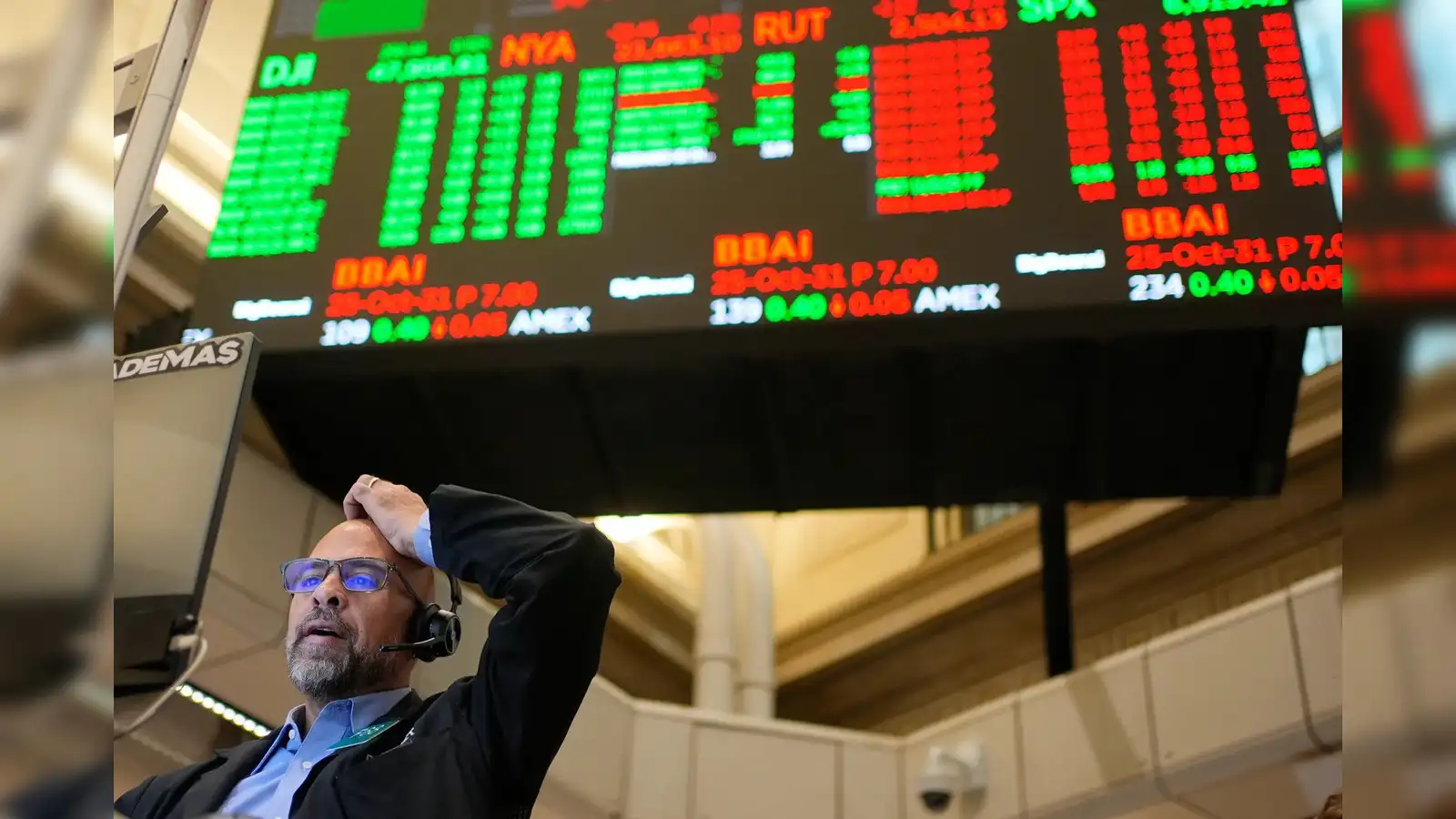
This “valuation reset” often involves investors becoming more discerning, prioritizing profitability and free cash flow over revenue growth alone. Companies with strong balance sheets and sustainable business models tend to weather these periods better, while highly leveraged or unprofitable growth stocks can experience severe corrections.
Post-Pandemic Normalization and Growth Slowdown
The COVID-19 pandemic significantly accelerated digital transformation and boosted demand for many tech products and services, from e-commerce and remote work solutions to streaming and cloud computing. Many tech companies experienced unprecedented growth during this period.
However, as economies reopened and life normalized, some of this demand began to wane. The “pull-forward” of demand meant that future growth was effectively borrowed from the present. Companies that had over-hired or over-expanded based on pandemic-era growth rates faced slower revenue expansion, inventory gluts, and reduced profitability. This normalization can lead to disappointing earnings reports, missed guidance, and subsequent stock price declines as investors adjust their expectations to a more sustainable, albeit slower, growth trajectory.
Regulatory Scrutiny and Geopolitical Tensions
The tech sector, particularly its largest players, has faced increasing regulatory scrutiny worldwide. Concerns over antitrust violations, data privacy, content moderation, and market dominance can lead to investigations, fines, and forced changes in business practices. Such regulatory headwinds create uncertainty and can dampen investor enthusiasm, as potential legal battles or operational restrictions could impact future profitability.
Furthermore, geopolitical tensions—such as trade wars, international conflicts, or supply chain disruptions (e.g., semiconductor shortages)—can directly affect tech companies. Many tech firms have complex global supply chains and operate in multiple markets, making them vulnerable to international instability, tariffs, and export controls.
Investor Psychology and Market Dynamics
The collective behavior and sentiment of investors play a significant role in market movements, often amplifying or mitigating the impact of fundamental economic and corporate news.
The Shift from Risk-On to Risk-Off
Market sentiment can swing dramatically between “risk-on” and “risk-off” phases. In a risk-on environment, investors are eager to take on more risk in pursuit of higher returns, favoring growth stocks and emerging markets. During a risk-off phase, investors become more cautious, prioritize capital preservation, and move towards safer assets.
Nasdaq downturns frequently coincide with a shift to risk-off sentiment, driven by fears of recession, inflation, or geopolitical instability. This shift leads to broad selling pressure, as investors shed perceived riskier assets.
Profit-Taking and Market Corrections
Even in healthy markets, periods of rapid appreciation are often followed by profit-taking. After a sustained bull run, investors may sell off a portion of their holdings to lock in gains. While this is a natural market function, coordinated profit-taking can accelerate a downturn, especially when combined with other negative catalysts. A market correction (typically defined as a decline of 10% or more from a recent peak) is often a healthy rebalancing of the market, but it can feel jarring to investors.
Technical Factors and Momentum Shifts
Technical analysis, which studies past market data to predict future price movements, also plays a role. When the Nasdaq breaks key support levels, or when technical indicators signal overbought conditions followed by rapid selling, it can trigger algorithmic trading and further selling by momentum traders. Negative momentum can create a self-fulfilling prophecy, pushing prices down even if the underlying fundamentals haven’t drastically changed.
Navigating Volatility: Strategies for Investors
For investors, a Nasdaq downturn can be unsettling, but it also presents opportunities for those with a long-term perspective. Understanding the reasons behind the decline can help inform more resilient investment strategies.
The Importance of a Long-Term Perspective
Historically, the stock market, including the Nasdaq, has recovered from every downturn and reached new highs over the long run. Short-term volatility is an inherent characteristic of investing. For long-term investors, focusing on time in the market rather than timing the market is crucial. Downturns can be periods to acquire quality assets at lower prices.
Diversification Beyond Growth
While the Nasdaq offers exposure to high-growth areas, over-reliance on a single sector or style of investing can magnify losses during specific market conditions. Diversifying across different asset classes (stocks, bonds, real estate), geographies, and investment styles (growth, value, income, defensive) can help cushion the impact of a Nasdaq downturn. A well-diversified portfolio aims to ensure that not all investments move in the same direction simultaneously.
Dollar-Cost Averaging in a Downturn
Dollar-cost averaging involves investing a fixed amount of money at regular intervals, regardless of market fluctuations. During a downturn, this strategy means buying more shares when prices are low, which can lead to a lower average cost per share over time. This systematic approach removes emotion from investing and can be particularly effective during volatile periods.
Focusing on Fundamentals
When the market is volatile, it’s a good time to revisit the fundamentals of the companies in one’s portfolio. Are the companies still growing? Do they have strong balance sheets, competitive advantages, and sustainable business models? A focus on solid companies with robust long-term prospects, rather than speculative bets, can provide greater resilience during market corrections.

Conclusion: The Road Ahead for the Nasdaq
The Nasdaq’s journey is a microcosm of the broader economic and technological landscape. Its downturns are seldom simple; they are complex interactions of macroeconomic policies, industry-specific challenges, and the ebb and flow of investor confidence. While periods of decline can be challenging, they are also an integral part of market cycles, often clearing the way for future innovation and growth. For investors, understanding these dynamics, maintaining a professional and insightful approach, and adhering to sound financial principles are key to navigating the volatility and ultimately benefiting from the long-term potential that the Nasdaq continues to offer. The “why” behind its dips provides invaluable lessons for making informed decisions on the path to financial success.
aViewFromTheCave is a participant in the Amazon Services LLC Associates Program, an affiliate advertising program designed to provide a means for sites to earn advertising fees by advertising and linking to Amazon.com. Amazon, the Amazon logo, AmazonSupply, and the AmazonSupply logo are trademarks of Amazon.com, Inc. or its affiliates. As an Amazon Associate we earn affiliate commissions from qualifying purchases.