
The Dow Jones Industrial Average (DJIA), often simply called “the Dow,” is one of the most widely watched barometers of U.S. stock market health. Comprising 30 large, publicly owned companies traded on the New York Stock Exchange and NASDAQ, it acts as a bellwether for the broader economy and corporate performance. When the Dow experiences a significant decline, it naturally sparks concern and prompts the question: why is it down? The reasons are rarely singular; instead, they typically stem from a complex interplay of macroeconomic forces, corporate fundamentals, geopolitical events, and investor sentiment. Understanding these contributing factors is crucial for investors and anyone seeking to comprehend the intricate dynamics of financial markets. A downward trend in the Dow can signal anything from a minor correction to the precursor of a broader economic slowdown, making its movements a constant subject of analysis and speculation.

Understanding the Dow Jones Industrial Average
Before delving into the reasons for its decline, it’s essential to understand what the Dow Jones Industrial Average represents and how its movements are interpreted. Unlike broader market indices like the S&P 500 or the Russell 2000, which track hundreds or thousands of companies, the Dow focuses on a select group of established industrial giants.
What is the Dow Jones?
The Dow Jones Industrial Average is a price-weighted average of 30 significant stocks traded on major stock exchanges in the United States. Established in 1896 by Charles Dow, editor of The Wall Street Journal, and statistician Edward Jones, it was originally designed to measure the performance of the industrial sector of the U.S. stock market. Over time, its composition has evolved to include companies from various sectors, reflecting the shifting landscape of the American economy. While its name retains “Industrial,” the index now includes companies like Apple, Microsoft, Disney, and JPMorgan Chase, representing technology, entertainment, finance, and consumer goods, among others. Its price-weighted methodology means that stocks with higher share prices have a greater impact on the index’s value than those with lower share prices, regardless of their market capitalization. This contrasts with market-capitalization-weighted indices, where larger companies inherently carry more weight. Despite criticisms regarding its narrow focus and weighting methodology, the Dow remains an influential indicator due to its historical significance and the prominence of its component companies. Its movements are often reported first by news outlets and are widely considered a quick pulse-check on market direction.
How the Dow Reflects Market Health
While not a comprehensive representation of the entire U.S. stock market, the Dow Jones Industrial Average is widely regarded as a key indicator of the health and sentiment surrounding large-cap blue-chip companies. Its components are generally well-established, financially stable corporations that have a significant impact on various sectors of the economy. Therefore, a decline in the Dow often suggests that these dominant firms are facing headwinds, which can, in turn, signal broader economic challenges or a cooling of investor enthusiasm. For instance, if several Dow components that are bellwethers for specific industries (e.g., a major bank, a large tech company, or a prominent manufacturer) report disappointing earnings or issue cautious guidance, it can pull the entire index down and create a ripple effect across the market. Conversely, strong performance from these giants can instill confidence. However, it’s crucial to remember that the Dow’s narrow scope means it might not always accurately reflect the performance of smaller companies or emerging sectors. Nevertheless, its status as a leading economic indicator, influencing headlines and investor psychology, remains undiminished. A falling Dow often prompts investors to re-evaluate their portfolios and consider the underlying reasons for the collective decline of these economic powerhouses.
Key Macroeconomic Factors Driving Downturns
The performance of the Dow Jones is inextricably linked to the broader macroeconomic environment. Large-scale economic shifts and global events often exert the most significant influence on corporate profitability and investor confidence, thereby dictating market trends.
Inflationary Pressures and Interest Rate Hikes
One of the most potent drivers of a Dow downturn is persistent inflation, coupled with the central bank’s response. When inflation, the rate at which prices for goods and services are rising, accelerates, it erodes purchasing power for consumers and increases costs for businesses. This can compress corporate profit margins, as companies either absorb higher input costs or pass them on to consumers, potentially dampening demand. In response to high inflation, central banks, such as the U.S. Federal Reserve, typically raise benchmark interest rates. Higher interest rates make borrowing more expensive for businesses, impacting investment and expansion plans. For consumers, increased rates mean higher costs for mortgages, car loans, and credit card debt, leading to reduced discretionary spending. Furthermore, higher interest rates make bonds and other fixed-income investments more attractive relative to stocks, as they offer a better guaranteed return, drawing capital away from the equity market. The present value of future corporate earnings also decreases when discount rates rise, making stocks less appealing from a valuation perspective. This dual effect of reduced profitability and less attractive valuations often leads to a broad market sell-off, pulling the Dow down significantly.
Economic Slowdown and Recession Fears
The specter of an economic slowdown or outright recession is another major catalyst for a declining Dow. An economic slowdown is characterized by a significant deceleration in economic activity, often evidenced by declining GDP growth, rising unemployment, and reduced consumer and business spending. In a recession—a more severe and prolonged contraction—these indicators worsen considerably. When economic growth stalls, corporate revenues typically decline, and profit margins are squeezed due to lower demand and increased competition. Businesses may scale back production, freeze hiring, or even lay off workers, further exacerbating the downturn. Investor confidence plummets during such periods as future earnings prospects become highly uncertain. Fear of recession leads to a “risk-off” mentality, where investors flee from equities (perceived as risky assets) into safer havens like government bonds or cash. This widespread selling pressure disproportionately affects large-cap stocks like those in the Dow, as they often have extensive global operations that are vulnerable to both domestic and international economic weakness. Market analysts meticulously watch indicators like inverted yield curves, purchasing managers’ indices (PMIs), and consumer confidence reports for signs of an impending slowdown.
Geopolitical Tensions and Global Events
Beyond purely economic metrics, geopolitical tensions and unforeseen global events can create profound uncertainty and trigger sharp declines in the Dow. Conflicts, trade wars, political instability in key regions, and large-scale natural disasters can disrupt global supply chains, increase commodity prices (especially energy), and dampen international trade. For example, a conflict involving major oil-producing nations can cause crude oil prices to surge, increasing costs for transportation, manufacturing, and consumers, which feeds into inflation and reduces corporate profits. Trade disputes, such as tariffs imposed between major economies, can hinder global commerce, negatively impacting multinational corporations that rely on international markets for revenue and supply. Moreover, political instability can deter foreign investment and lead to capital flight. Pandemics, like COVID-19, have also demonstrated their capacity to halt economic activity globally, causing unprecedented market volatility and sharp downturns. The unpredictability of these events means that markets often react swiftly and sometimes irrationally to headlines, leading to rapid sell-offs as investors scramble to price in the unknown risks. The Dow, with its components often having significant global exposure, is particularly susceptible to these broader international shifts and uncertainties.
Corporate Performance and Sectoral Weakness
While macroeconomic forces set the stage, the individual performance of the 30 companies within the Dow Jones Industrial Average plays a direct and critical role in its day-to-day movements. Weakness in key components can significantly drag down the entire index.
Earnings Misses and Profit Warnings
The bedrock of stock valuation lies in corporate earnings. Companies within the Dow, like any publicly traded entity, are constantly scrutinized for their quarterly and annual financial results. When several Dow components report earnings that fall short of analyst expectations—known as an “earnings miss”—it signals a potential underlying weakness in their business operations or the broader economy. An even more concerning development is a “profit warning,” where a company publicly lowers its future earnings guidance. This suggests that management foresees challenging times ahead, such as reduced demand, rising costs, or increased competition. For a highly influential index like the Dow, a flurry of earnings misses or profit warnings from several of its components can create a wave of negative sentiment. Investors react by selling off shares of the affected companies, which directly pulls the index lower. Furthermore, these negative reports can have a contagion effect, leading investors to speculate that other companies, even those yet to report, might face similar challenges, thereby instigating broader market apprehension and selling across the index.

Sector-Specific Challenges
The Dow, despite its diverse composition, can also be disproportionately affected by challenges within specific dominant sectors. For instance, if the technology sector (which includes major Dow components like Apple and Microsoft) faces headwinds such as regulatory scrutiny, supply chain disruptions, or a slowdown in consumer spending on tech products, it can significantly weigh on the index. Similarly, a downturn in the financial sector (represented by institutions like JPMorgan Chase and Goldman Sachs) due to rising loan defaults, tightening credit conditions, or increased regulatory burdens can pull the Dow down. Manufacturing companies (e.g., Boeing, Caterpillar) are highly sensitive to global trade conditions, commodity prices, and industrial demand; a contraction in these areas can impact their profitability and, consequently, the Dow. The cyclical nature of certain industries means that specific sectors will underperform during different phases of the economic cycle. When these underperforming sectors constitute a significant portion of the Dow’s weighting, their collective weakness can be a primary reason for the index’s decline, even if other sectors remain relatively stable.
Valuation Concerns and Market Sentiment
Beyond fundamental earnings, market sentiment and concerns over valuations also significantly influence the Dow’s direction. Even if companies are performing adequately, a market correction can occur if investors collectively decide that stock prices have become too expensive relative to their intrinsic value or future earnings potential—a state often described as being “overbought.” High price-to-earnings (P/E) ratios, particularly when interest rates are rising, can signal that the market is due for a correction. Fear, rather than greed, begins to dominate investor psychology. Negative news, whether economic or geopolitical, can trigger a “risk-off” environment, prompting investors to divest from equities regardless of the underlying corporate fundamentals, simply to preserve capital. This shift in sentiment can lead to panic selling, where investors rush to offload holdings, exacerbating downward movements. Media narratives, analyst downgrades, and social media trends can amplify these shifts in sentiment, creating a self-fulfilling prophecy of declining prices. When confidence erodes, and a bearish outlook takes hold, even good news may be discounted, making it harder for the Dow to recover.
Investor Psychology and Technical Factors
While fundamentals and macroeconomic trends provide the underlying rationale for market movements, investor behavior and technical trading patterns often dictate the speed and severity of Dow downturns. Human emotion and automated trading systems play a powerful role.
Panic Selling and Contagion Effects
One of the most immediate and visceral reasons for a rapid Dow decline is panic selling. When markets turn bearish, fear can quickly spread among investors, leading to a herd mentality. Individual investors, seeing prices drop, may rush to sell their holdings to cut losses, fearing further declines. Institutional investors, driven by mandates or risk management strategies, may also liquidate positions en masse. This cascade of selling creates a contagion effect, where the initial decline triggers more selling, pushing prices down further. This can create a downward spiral, where the market’s fall becomes self-fulfilling, at least in the short term. The speed of information dissemination in the modern age, coupled with the accessibility of trading platforms, means that panic can spread globally in minutes, leading to sharp, volatile drops in indices like the Dow. During such periods, the market often deviates significantly from underlying economic fundamentals, driven purely by overwhelming fear and a desperate desire to exit positions.
Technical Breakdowns and Support Levels
Beyond human emotion, technical analysis and algorithmic trading also play a significant role in market downturns. Technical analysts study historical price charts and trading volumes to identify patterns and predict future price movements. Key technical indicators include moving averages, support and resistance levels, and trend lines. When the Dow breaks below significant “support levels”—price points where buying interest has historically been strong enough to halt a decline—it can trigger further selling. This is because many traders and algorithms are programmed to sell once these thresholds are breached, anticipating further downside. Similarly, a breakdown below a major moving average (e.g., the 50-day or 200-day moving average) can signal a shift from a bullish to a bearish trend, prompting more selling. Algorithmic trading, which accounts for a substantial portion of daily trading volume, can exacerbate these movements. When an algorithm detects certain technical triggers, it can execute trades rapidly and in large volumes, accelerating a market decline faster than human traders could react, potentially turning a modest sell-off into a steep plunge.
Navigating a Down Market: Strategies for Investors
While a declining Dow can be unsettling, it’s a normal part of market cycles. For long-term investors, understanding how to navigate these periods effectively is crucial for preserving capital and potentially finding future opportunities.
Diversification and Asset Allocation
One of the most fundamental strategies for mitigating risk during a market downturn is diversification. Spreading investments across different asset classes (stocks, bonds, real estate, commodities), industries, geographies, and company sizes helps reduce the impact of a decline in any single area. If the Dow is falling due to weakness in large-cap U.S. industrial stocks, a diversified portfolio might still have exposure to international markets, small-cap companies, or fixed-income assets that are performing better. Strategic asset allocation, which involves determining the appropriate mix of these asset classes based on an individual’s risk tolerance and financial goals, ensures that a portfolio is robust enough to withstand volatility. During market corrections, some asset classes, particularly bonds, often act as a cushion, helping to offset equity losses. Rebalancing the portfolio periodically helps maintain the desired asset mix, ensuring that no single component becomes overly dominant or risky.
Long-Term Perspective and Dollar-Cost Averaging
For most individual investors, adopting a long-term perspective is perhaps the most powerful strategy during a down market. Historical data consistently shows that equity markets, despite periodic downturns, tend to rise over the long run. Short-term volatility and declines are often noise that distracts from this overarching trend. Panic selling during a downturn locks in losses and prevents participation in the inevitable rebound. Instead, a strategy like dollar-cost averaging can be highly effective. This involves investing a fixed amount of money at regular intervals, regardless of market conditions. When the Dow is down, your fixed investment buys more shares at lower prices. When the market eventually recovers, these “cheaper” shares contribute significantly to overall portfolio gains. This disciplined approach removes emotion from investing and capitalizes on market fluctuations without attempting to time the market, which is notoriously difficult even for professional investors.
Rebalancing and Identifying Opportunities
A down market, while challenging, can also present unique opportunities for astute investors. When valuations become more attractive, it can be an opportune time to buy high-quality assets at a discount. This is where rebalancing comes into play. If your target asset allocation is, for example, 60% stocks and 40% bonds, and stocks have fallen significantly, you might find your portfolio has shifted to 50% stocks and 50% bonds. Rebalancing would involve selling some bonds (which likely performed better during the downturn) and buying more stocks to restore the 60/40 balance. This essentially means buying low and selling high. Identifying companies with strong fundamentals, solid balance sheets, and compelling long-term growth prospects that have been unfairly penalized in a broad market sell-off can yield substantial returns when the market recovers. This requires careful research and a willingness to go against the prevailing negative sentiment, but the rewards can be significant for those with conviction.
Conclusion
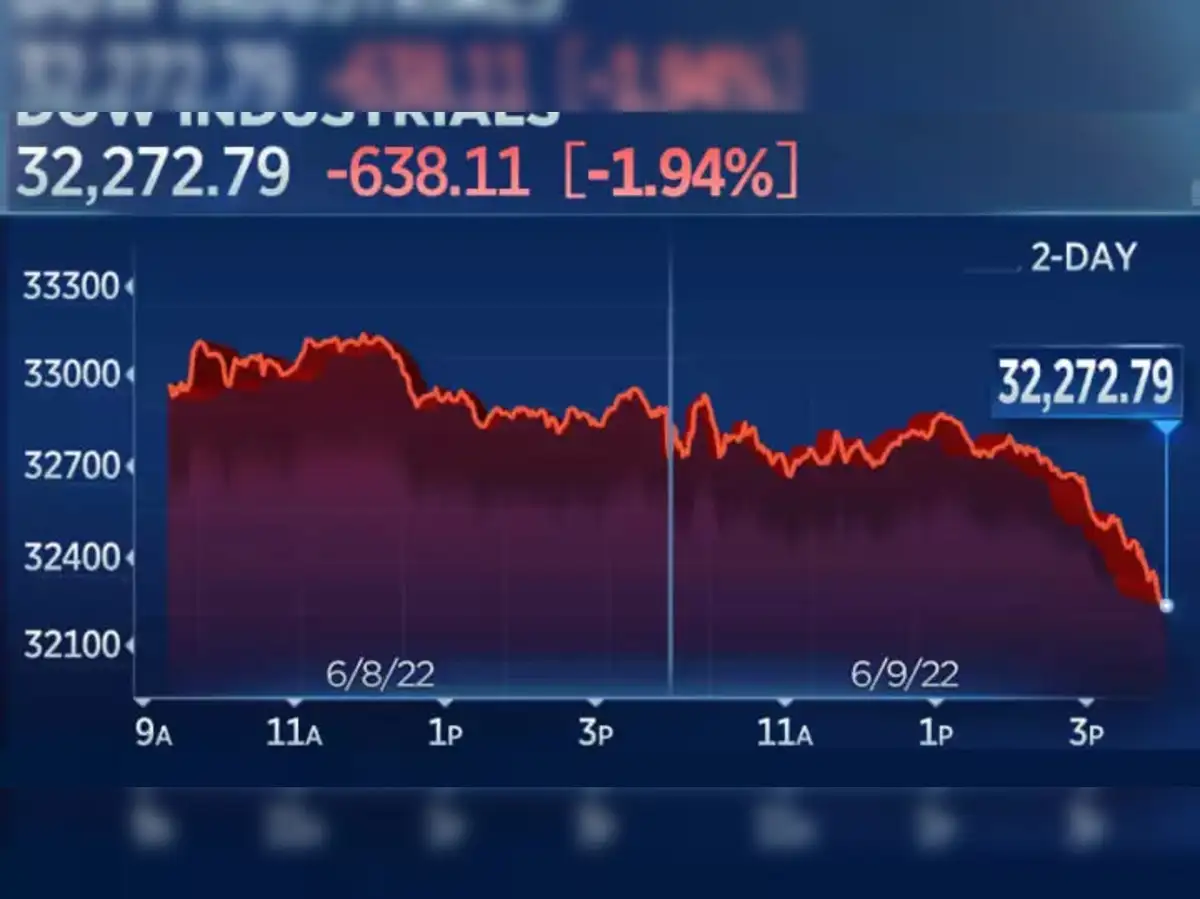
The Dow Jones Industrial Average is a venerable benchmark whose fluctuations are often a window into the health of corporate America and the broader economy. When the Dow is down, it’s rarely due to a single isolated event, but rather a confluence of factors ranging from macroeconomic headwinds like inflation and recession fears, to specific corporate earnings disappointments, geopolitical tensions, and even the self-fulfilling prophecies of investor psychology and technical trading.
Understanding these multifaceted reasons is crucial for investors. While a declining Dow can be a source of anxiety, it is also an inherent part of healthy market cycles. For long-term investors, adopting a disciplined approach through strategies like diversification, dollar-cost averaging, and maintaining a long-term perspective can help navigate these downturns successfully. Moreover, periods of market weakness often create compelling opportunities for those who are prepared to identify and invest in high-quality assets at reduced valuations. Ultimately, the Dow’s movements serve as a constant reminder that financial markets are complex, dynamic ecosystems driven by an intricate dance between fundamentals, global events, and human emotion.
aViewFromTheCave is a participant in the Amazon Services LLC Associates Program, an affiliate advertising program designed to provide a means for sites to earn advertising fees by advertising and linking to Amazon.com. Amazon, the Amazon logo, AmazonSupply, and the AmazonSupply logo are trademarks of Amazon.com, Inc. or its affiliates. As an Amazon Associate we earn affiliate commissions from qualifying purchases.