
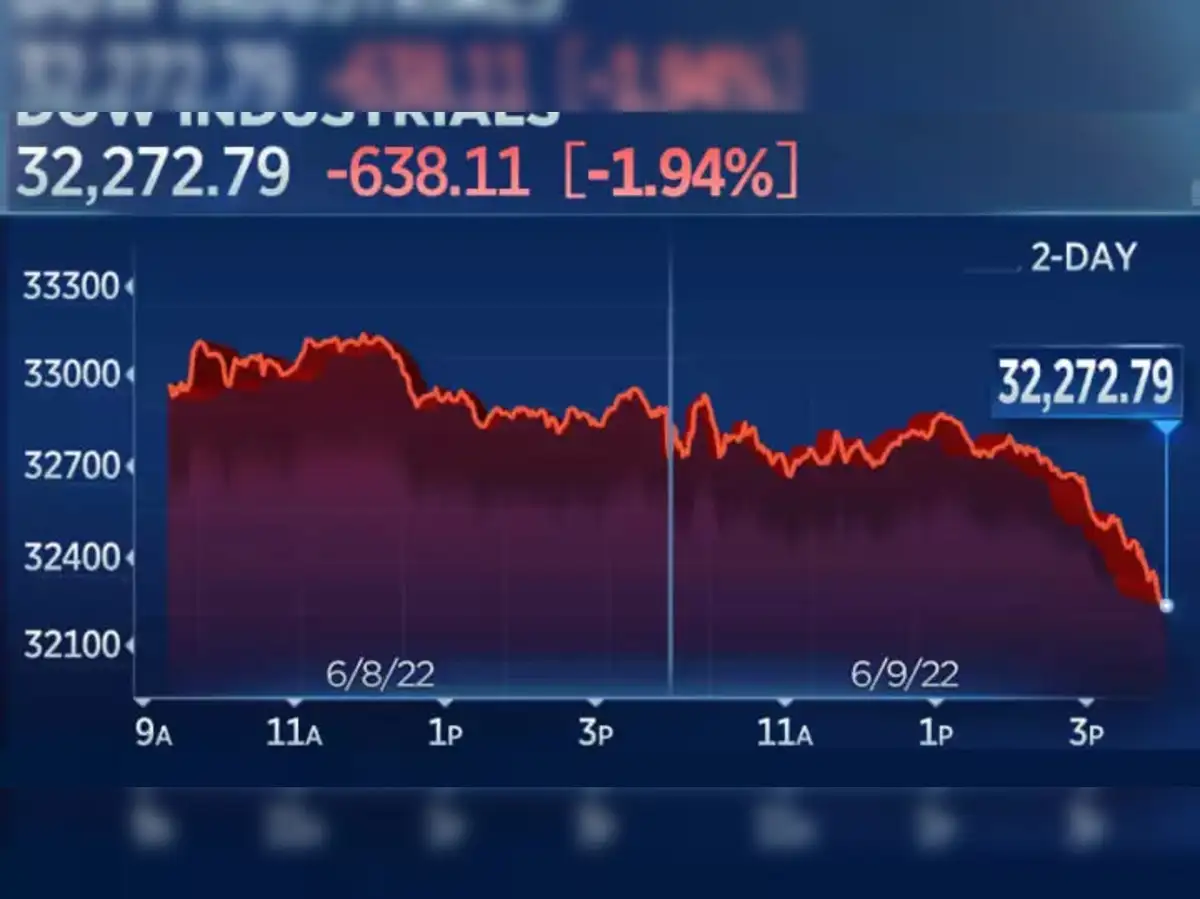
The Dow Jones Industrial Average (DJIA), often simply referred to as “the Dow,” stands as one of the most widely watched barometers of the U.S. stock market and, by extension, the broader American economy. Comprising 30 large, publicly-owned companies listed on U.S. stock exchanges, it offers a snapshot of the health and sentiment driving major industrial sectors. When the Dow experiences a significant downturn, it naturally triggers questions, concerns, and sometimes even panic among investors, economists, and the general public. Understanding why the Dow is down requires a nuanced look at a confluence of factors, ranging from macroeconomic forces to specific corporate performances and even psychological elements within the market itself. A single day’s dip rarely tells the full story; instead, it often reflects underlying currents that have been building over time, or a sudden shock that reverberates across the financial landscape. This article will delve into the primary reasons behind a Dow downturn, offering a comprehensive perspective for those seeking to navigate the complexities of modern finance.
Macroeconomic Headwinds and Shifting Economic Tides
One of the most potent forces behind a decline in the Dow is the broader macroeconomic environment. The health of the economy directly impacts corporate profitability, consumer spending, and investor confidence, all of which are critical drivers of stock market performance.
Inflationary Pressures and Central Bank Policy
Inflation, the persistent rise in the price of goods and services, erodes purchasing power and can significantly dampen corporate earnings. When inflation runs hot, central banks, most notably the U.S. Federal Reserve, typically respond by raising interest rates. Higher interest rates increase the cost of borrowing for businesses and consumers alike, slowing economic growth, making business expansion more expensive, and reducing discretionary spending. For investors, higher interest rates also make bonds and other fixed-income investments more attractive relative to stocks, causing a reallocation of capital away from equities. The expectation or realization of aggressive rate hikes can send shivers through the market, pushing the Dow lower as investors brace for reduced corporate profits and a tighter financial environment.
Recession Fears and Decelerating Growth
The specter of a recession – a significant, widespread, and prolonged downturn in economic activity – is a major catalyst for stock market declines. Indicators such as slowing GDP growth, rising unemployment rates, and declining manufacturing output can signal an impending economic contraction. Businesses facing reduced demand, tighter credit conditions, and lower consumer confidence often scale back investments, hiring, and production, which directly impacts their revenues and earnings. Since stock prices are fundamentally tied to future earnings potential, a gloomy economic outlook almost inevitably translates into lower valuations and a falling Dow. Investors often sell off equities in anticipation of, or during, a recession to preserve capital and reduce exposure to riskier assets.
Global Economic Shocks and Geopolitical Instability
In an increasingly interconnected world, economic shocks originating far from U.S. borders can profoundly impact the Dow. Disruptions to global supply chains, as witnessed during the pandemic, can lead to shortages, increased costs, and reduced profitability for multinational corporations, many of which are Dow components. Geopolitical events, such as international conflicts, trade wars, or significant political instability in key economic regions, can introduce immense uncertainty, disrupt global commerce, and lead to spikes in commodity prices (like oil), all of which can weigh heavily on investor sentiment and corporate bottom lines. The Dow, representing companies with significant international exposure, is particularly vulnerable to these global tremors.
Corporate Performance and Sector-Specific Challenges
While macroeconomic factors paint the big picture, the individual performance of the 30 companies within the Dow carries immense weight, as do broader trends affecting specific industries.
Disappointing Earnings Reports and Outlooks
Ultimately, stock prices reflect investor expectations for future corporate earnings. When Dow components release quarterly earnings reports that fall short of analyst expectations, or if their management teams issue conservative or negative outlooks for future quarters, it can trigger sharp declines in their stock prices. Given the Dow’s price-weighted methodology, significant drops in a few high-priced components can have a disproportionate impact on the index. These disappointing results can stem from various issues, including weaker-than-expected sales, rising input costs, increased competition, or poor strategic execution. A cluster of such reports across multiple Dow companies often signals a broader weakening in corporate profitability.
Industry-Specific Headwinds and Regulatory Shifts
Certain sectors within the Dow can face unique challenges that drag down the entire index. For instance, a downturn in the housing market might specifically impact home improvement retailers or financial institutions. Surging oil prices could hurt airlines and transportation companies, while benefiting energy producers. Technological shifts, changing consumer preferences, or increased regulatory scrutiny (e.g., antitrust investigations for tech giants, new environmental regulations for manufacturers) can create significant headwinds for specific industries, affecting the Dow components operating within those spaces. If these challenges impact several prominent Dow companies simultaneously, their collective decline can be a major factor in the index’s overall dip.
Valuations and Investor Sentiment

Even if earnings are holding up, the Dow can decline if investors believe stock valuations have become excessively stretched. When prices grow faster than underlying earnings, P/E ratios (price-to-earnings) expand, indicating that investors are paying more for each dollar of earnings. If this trend becomes unsustainable, or if a perceived risk emerges, investors may begin to take profits, leading to a correction. Investor sentiment, a notoriously fickle beast, plays a huge role. Fear and greed often drive short-term market movements. A sudden shift from optimism to pessimism, perhaps triggered by a specific news event or technical indicator, can lead to widespread selling even without a fundamental change in economic or corporate conditions.
Market Psychology and Technical Factors
Beyond the tangible economic and corporate fundamentals, the very mechanics of market behavior and the psychology of investors can contribute significantly to a Dow downturn.
Investor Fear and Panic Selling
Markets are not purely rational. Fear, often amplified by media headlines and social media, can become contagious. When a downturn begins, whether due to a valid fundamental reason or not, it can trigger a domino effect of panic selling. Investors, fearing further losses, rush to liquidate their holdings, driving prices down even faster. This creates a feedback loop: falling prices induce more fear, which leads to more selling, and so on. This phenomenon, known as a “capitulation,” can often push the Dow well below its intrinsic value before a rebound occurs. Understanding that emotional responses can override logical decision-making is crucial for long-term investors.
Technical Breakdowns and Algorithmic Trading
Technical analysis, which studies past market data, primarily price and volume, to forecast future price movements, can also influence Dow performance. When the index breaks below key “support levels” – prices at which it has historically found buying interest – it can signal further downside to technical traders, prompting them to sell. Similarly, complex algorithmic trading programs, which execute trades based on pre-programmed rules and market signals, can exacerbate market moves. A cascade of sell signals from these algorithms, often reacting to price movements or volatility levels, can lead to rapid, high-volume selling that accelerates a Dow downturn, especially in illiquid or volatile conditions.
Liquidity and Market Structure
The ease with which an asset can be bought or sold without affecting its price, known as liquidity, can also play a role. In periods of high uncertainty or stress, liquidity can dry up as buyers become scarce. This means that even a relatively small amount of selling can have a disproportionate impact on prices, causing sharp declines. Changes in market structure, such as the rise of passive investing (e.g., index funds and ETFs), can also concentrate capital in certain areas, and when those areas face selling pressure, the impact on broad market indexes like the Dow can be magnified.
Navigating Market Volatility: A Long-Term Perspective
While a falling Dow can be unsettling, it is an inherent part of the economic and market cycle. Understanding the underlying reasons allows investors to make informed decisions rather than reactive ones.
Maintaining a Long-Term Investment Horizon
For most individual investors, short-term market fluctuations should not dictate long-term investment strategy. The Dow, despite its dips, has historically trended upwards over extended periods, reflecting the resilience and growth of American innovation and enterprise. Panic selling during a downturn often locks in losses and causes investors to miss the inevitable rebound. Maintaining a long-term perspective and avoiding emotional reactions are paramount to successful investing.
Diversification and Risk Management
A well-diversified portfolio helps mitigate the impact of specific downturns. While the Dow represents 30 large companies, a broader portfolio might include smaller cap stocks, international equities, bonds, real estate, and other asset classes that may not move in lockstep with the Dow. Regular portfolio rebalancing ensures that risk exposures remain aligned with an investor’s goals and risk tolerance, helping to protect against overconcentration in any single asset or sector that might be disproportionately affected by a Dow decline.

Seeking Professional Financial Guidance
For many, the complexities of market analysis and portfolio management during volatile periods can be overwhelming. Engaging with a qualified financial advisor can provide objective insights, help develop a tailored financial plan, and guide decision-making based on individual circumstances rather than market noise. A professional can help investors understand the implications of a Dow downturn for their specific portfolio and ensure they remain disciplined and focused on their long-term financial objectives.
In conclusion, a “down Dow” is rarely attributable to a single cause but rather a complex interplay of macroeconomic forces, corporate performance, geopolitical events, and market psychology. While it signals periods of uncertainty and challenges, it also offers opportunities for astute investors to learn, adapt, and position themselves for future growth. Understanding the multifaceted reasons behind such movements is the first step towards navigating the inevitable ebbs and flows of the financial markets with confidence and foresight.
aViewFromTheCave is a participant in the Amazon Services LLC Associates Program, an affiliate advertising program designed to provide a means for sites to earn advertising fees by advertising and linking to Amazon.com. Amazon, the Amazon logo, AmazonSupply, and the AmazonSupply logo are trademarks of Amazon.com, Inc. or its affiliates. As an Amazon Associate we earn affiliate commissions from qualifying purchases.