
In the modern economic landscape, where consumerism is often a click away and subscription models quietly erode monthly balances, the concept of a budget is frequently misunderstood. Many view budgeting as a restrictive practice—a financial “diet” that prohibits enjoyment. However, in the realm of professional personal finance, a budget is not a cage; it is a blueprint. It is the tactical map that allows an individual to navigate from their current financial state toward a future of security, wealth, and independence.
Understanding why budgeting is important requires a shift in perspective. It is the process of assigning a mission to every dollar you earn. Without this intentionality, wealth remains accidental and fleeting. To truly master one’s financial life, one must embrace budgeting as the primary tool for wealth creation and risk management.
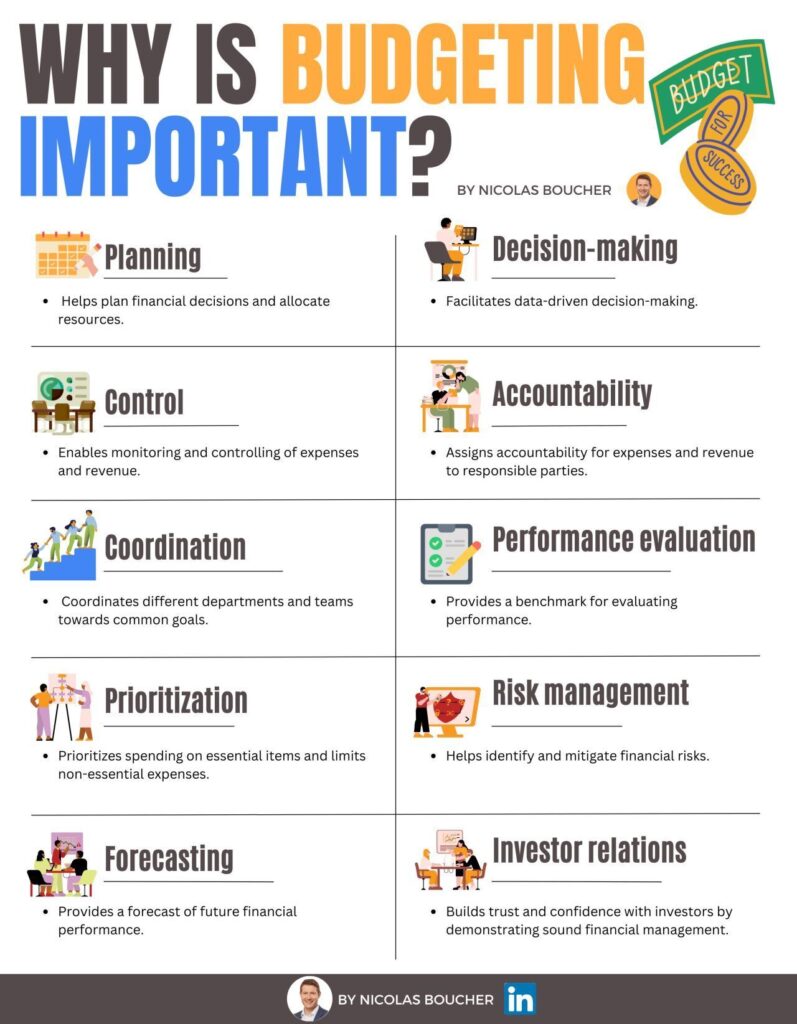
The Psychology of Financial Control: Breaking the Cycle of Living Paycheck to Paycheck
The most immediate benefit of budgeting is the psychological shift from being a passive observer of your finances to an active manager. Most individuals suffer from “financial drift,” a state where income arrives and evaporates without a clear understanding of its destination. This lead to the precarious “paycheck to paycheck” cycle, which affects not only those with low incomes but also high-earning professionals who fall victim to lifestyle inflation.
Understanding Cash Flow and Awareness
The first step in any successful financial strategy is the objective observation of cash flow. Budgeting forces an individual to confront the reality of their spending habits. This awareness often reveals the “latte factor”—a metaphor for the small, repetitive expenses that aggregate into significant annual leaks. By tracking every inflow and outflow, you bridge the gap between what you think you spend and what you actually spend. This clarity is the antidote to the anxiety that arises when one’s bank account balance nears zero at the end of the month.
Reducing Financial Stress and Anxiety
Financial stress is one of the leading causes of mental health struggles and relationship friction. When you operate without a budget, every unexpected expense—a flat tire, a medical bill, or a broken appliance—feels like a catastrophe. A budget mitigates this stress by introducing predictability. When you know exactly how much is allocated for necessities and how much is reserved for emergencies, the “unknown” loses its power to cause panic. You are no longer reacting to your environment; you are operating within a predefined framework.
Strategic Asset Allocation: Turning Savings into Wealth
Budgeting is the engine of investment. It is impossible to build a significant portfolio if you do not first generate a surplus. In the world of personal finance, the “gap”—the difference between your income and your expenses—is your most powerful tool for wealth creation. Budgeting is the process of intentionally widening that gap.
The Role of the Emergency Fund
A professional budget prioritizes the creation of a liquidity buffer. Before one can look toward the stock market or real estate, one must ensure their foundation is secure. Most financial experts recommend an emergency fund consisting of three to six months of essential living expenses. This fund acts as a “financial shock absorber.” By budgeting specifically for this fund, you ensure that a temporary job loss or an economic downturn does not force you into high-interest debt, which would otherwise derail your long-term wealth-building efforts.
Funding Your Future: Retirement and Compound Interest
The most significant “expense” in any budget should be your future self. Budgeting allows you to automate your investments, ensuring that contributions to 401(k)s, IRAs, or brokerage accounts happen before any discretionary spending occurs. This is the “Pay Yourself First” principle. Because of the power of compound interest, the dollars you budget for investment in your 20s and 30s are worth far more than those invested later in life. A disciplined budget ensures that you are not sacrificing your long-term security for short-term gratification.

Budgeting as a Tool for Goal Realization
Without a budget, goals are merely wishes. Whether you desire to buy a home, start a business, or travel the world, these milestones require capital. Budgeting transforms these abstract desires into concrete timelines. By identifying a target amount and a deadline, you can reverse-engineer your monthly spending to ensure the goal is reached.
Short-Term vs. Long-Term Financial Milestones
A robust budget categorizes goals into different horizons. Short-term goals might include saving for a holiday or a new laptop, while long-term goals involve home ownership or early retirement. By utilizing “sinking funds”—a budgeting technique where you save small amounts over time for a specific upcoming expense—you avoid the need to rely on credit cards. This disciplined approach ensures that your lifestyle remains sustainable and that your major life transitions are funded by assets rather than liabilities.
Eliminating Debt and Interest-Based Drags
Debt is the greatest thief of building wealth. High-interest debt, such as credit card balances, functions like a reverse investment, where compound interest works against you. Budgeting is the primary weapon in the fight against debt. Through methods like the “Debt Snowball” (paying off smallest balances first for psychological wins) or the “Debt Avalanche” (paying off highest interest rates first to save money), a budget provides the structure needed to systematically eliminate these burdens. Every dollar freed from a debt payment is a dollar that can eventually be redirected toward an investment.
Modern Financial Methodologies and Tools
The importance of budgeting has led to the development of various frameworks designed to suit different personalities and financial situations. There is no one-size-fits-all approach, but the common thread across all successful methods is consistency and data-driven decision-making.
The 50/30/20 Rule and Zero-Based Budgeting
Two of the most effective methodologies are the 50/30/20 rule and Zero-Based Budgeting. The 50/30/20 rule suggests allocating 50% of income to “Needs,” 30% to “Wants,” and 20% to “Savings and Debt Repayment.” This provides a high-level structure that is easy to maintain. Conversely, Zero-Based Budgeting is a more granular approach where every single dollar of income minus every single dollar of expense (including savings) equals zero. This ensures total accountability for every cent. Both methods serve the same purpose: preventing “leakage” where money disappears into unmonitored categories.
Leveraging Digital Platforms for Real-Time Tracking
In the digital age, budgeting has evolved beyond the manual ledger. Professional financial tools and apps now allow for real-time synchronization with bank accounts, categorizing transactions via AI and providing visual representations of spending trends. These tools allow individuals to see their “burn rate” in real-time. Using technology to automate the tracking process reduces the friction associated with budgeting, making it easier to stick to a plan over the long term. However, the tool is only as effective as the strategy behind it; the fundamental importance remains in the user’s commitment to the data.

Conclusion: The Path to Financial Sovereignty
Ultimately, budgeting is important because it provides the freedom to live life on your own terms. It is the difference between being a servant to your bills and being the master of your capital. By fostering awareness, enabling strategic investment, facilitating the achievement of goals, and utilizing modern tools, budgeting serves as the bedrock of financial health.
True wealth is not merely about the amount of money earned, but about the amount of money kept and how effectively that money is put to work. A well-constructed budget is the primary instrument for ensuring that your financial resources are aligned with your personal values and long-term aspirations. In an unpredictable world, the discipline of budgeting remains the most reliable path to lasting prosperity and peace of mind. Regardless of your current income level, the best time to start budgeting was yesterday; the second best time is today.
aViewFromTheCave is a participant in the Amazon Services LLC Associates Program, an affiliate advertising program designed to provide a means for sites to earn advertising fees by advertising and linking to Amazon.com. Amazon, the Amazon logo, AmazonSupply, and the AmazonSupply logo are trademarks of Amazon.com, Inc. or its affiliates. As an Amazon Associate we earn affiliate commissions from qualifying purchases.