
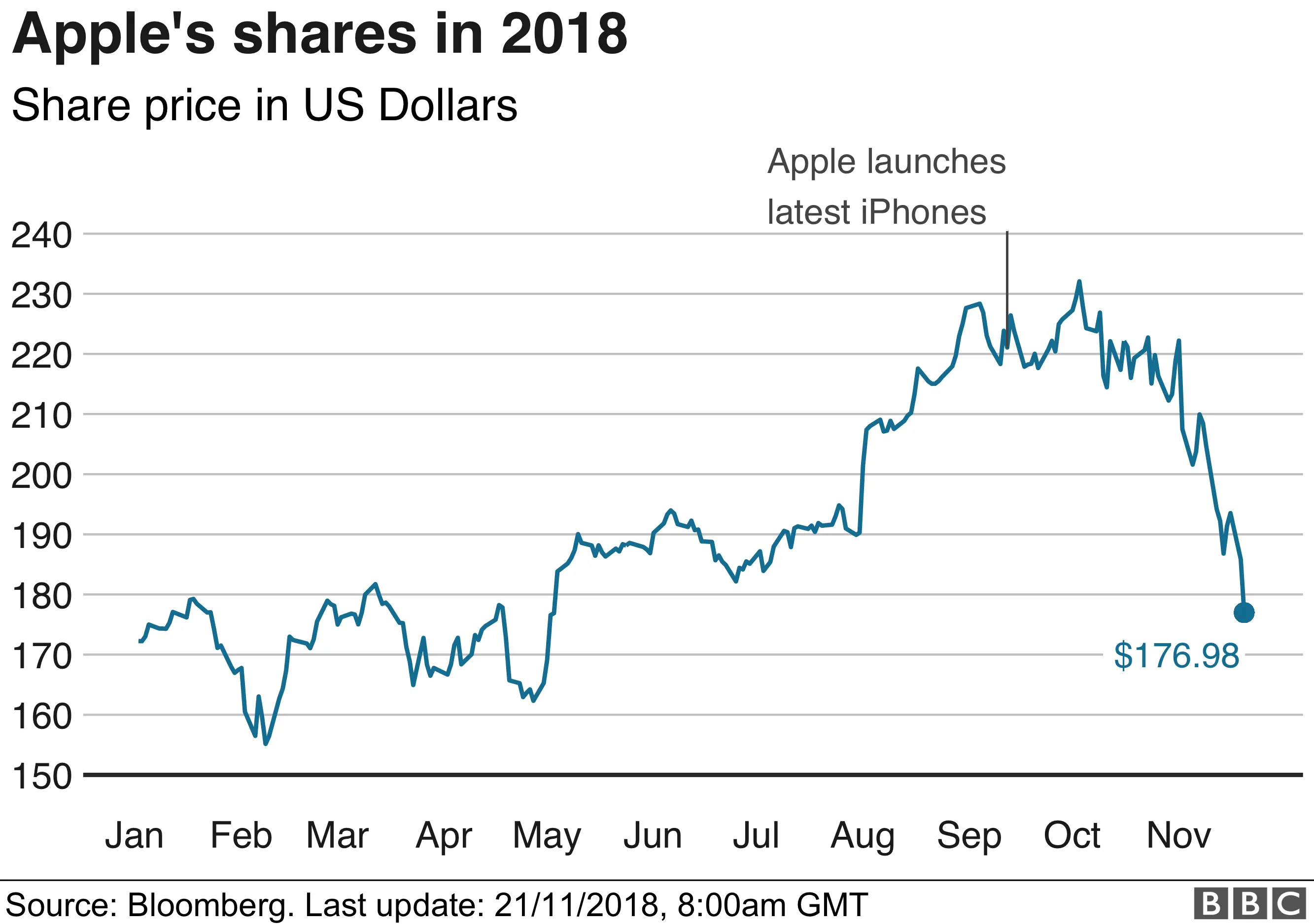
Apple Inc. (AAPL) has long been a titan in the investment world, a cornerstone of many portfolios, and a benchmark for technological innovation and market capitalization. Its consistent growth, robust balance sheet, and loyal customer base have often insulated it from the volatility that plagues many other companies. However, even Apple is not immune to economic headwinds and specific operational challenges, which can lead to periods of stock depreciation. Understanding the factors driving a decline in Apple’s stock price requires a nuanced look at macroeconomic conditions, company-specific performance metrics, valuation dynamics, and geopolitical considerations, all through a financial lens.
Macroeconomic Pressures and Shifting Investor Sentiment
The broader economic environment plays a significant role in determining investor appetite for even the strongest equities. Apple, despite its resilience, operates within this larger ecosystem, and its stock price often reflects prevailing macroeconomic sentiment.
Inflation, Interest Rates, and Recessionary Fears
Periods of high inflation typically lead central banks to raise interest rates to cool down the economy. Higher interest rates make borrowing more expensive for companies and consumers, impacting corporate profitability and consumer spending power. For growth stocks like Apple, higher interest rates also make future earnings less valuable in present terms, often leading to a contraction in their price-to-earnings (P/E) multiples.
Furthermore, the specter of a recession can trigger a flight to safety, with investors pulling capital out of equities and into less volatile assets like bonds or cash. Even companies with strong fundamentals, like Apple, can see their stock prices decline as investors de-risk their portfolios and anticipate a slowdown in consumer demand for discretionary products. This generalized market downturn can drag down even high-quality stocks irrespective of their individual performance.
Broad Market Downturns and Sector Rotation
Technology stocks, in particular, often bear the brunt of market corrections due to their higher valuations and growth-dependent nature. When the broader market, especially the tech sector, experiences a downturn, Apple’s stock frequently moves in tandem. Investors might engage in “sector rotation,” shifting capital away from growth-oriented tech stocks into more defensive sectors, like utilities or consumer staples, perceived to be less sensitive to economic cycles. This reallocation of capital can exert downward pressure on Apple’s share price, even if its intrinsic business performance remains robust.
Apple’s Own Performance Hurdles and Business Challenges
While macro factors set the stage, specific performance metrics and operational challenges within Apple can also directly impact investor confidence and, consequently, its stock valuation.
Slowdown in Core Product Sales
Apple’s financial success has historically been anchored by its flagship iPhone. Any indication of slowing iPhone sales, particularly in crucial markets, can alarm investors. Factors such as market saturation, longer upgrade cycles, intense competition from Android manufacturers, or reduced consumer purchasing power can all contribute to dampened iPhone demand. While Apple has diversified into services, a significant drop in its most profitable product category inevitably impacts overall revenue growth and earnings per share (EPS). Similar concerns can arise from stagnant or declining sales of other hardware products like Macs and iPads, which, while smaller contributors than the iPhone, collectively represent substantial revenue streams.
Services Growth Deceleration
Apple has heavily emphasized the growth of its Services segment (App Store, Apple Music, iCloud, Apple Pay, advertising, etc.) as a key future growth driver. This segment boasts higher gross margins than hardware, making it attractive to investors seeking sustainable profitability. However, if the pace of services growth decelerates, or if the company faces regulatory challenges that could limit its services revenue (e.g., antitrust investigations into App Store fees), investor enthusiasm might wane. The market expects robust, consistent growth from this segment to justify Apple’s premium valuation.
Supply Chain Disruptions and Production Constraints
Apple operates a vast and complex global supply chain. Geopolitical tensions, pandemics, natural disasters, or labor shortages can disrupt manufacturing and logistics, leading to production shortfalls and delays in product availability. When Apple cannot meet demand, it directly impacts sales revenue and profitability. The financial markets are quick to react to any news of significant supply chain issues, as they represent a tangible threat to near-term earnings guidance and long-term operational efficiency.
Currency Exchange Rate Headwinds
As a global company, Apple generates a significant portion of its revenue outside the United States. When the U.S. dollar strengthens against other major currencies, international sales, when converted back into dollars, yield less revenue. This “currency headwind” can eat into reported earnings, even if sales volumes remain strong in local currency terms. Investors account for these foreign exchange impacts when assessing profitability and future earnings potential.
Valuation Scrutiny and Future Growth Prospects
A company’s stock price doesn’t just reflect current performance; it also heavily incorporates future expectations. When these expectations shift or when a stock’s valuation appears stretched, it can trigger a sell-off.
Premium Valuation and P/E Multiple Compression
Apple has often traded at a premium valuation compared to the broader market and many of its peers, a reflection of its strong brand, profitability, and perceived resilience. However, in an environment where interest rates are rising and economic growth is slowing, investors tend to scrutinize these premium valuations more closely. A high P/E multiple suggests that investors are paying a lot for future earnings growth. If the outlook for that growth diminishes, or if the cost of capital increases, investors may no longer be willing to pay such a premium, leading to a contraction in the P/E multiple and a corresponding decline in the stock price. This is often less about the company performing poorly and more about a re-evaluation of how much investors are willing to pay for each dollar of earnings.
Innovation Concerns and Lack of “Next Big Thing”
While Apple continues to innovate with incremental improvements and new product categories like the Vision Pro, some investors express concerns about the lack of a truly “revolutionary” product on the horizon that could ignite another massive growth cycle akin to the iPhone. If investors perceive Apple’s innovation pipeline as less impactful or its ability to capture new market segments as diminishing, it could temper long-term growth expectations and, by extension, its stock valuation. Diversification into new services or niche hardware segments is important, but a truly disruptive product could reignite significant investor excitement.
Analyst Downgrades and Revised Guidance
Financial analysts continually assess Apple’s performance and prospects. A series of analyst downgrades, based on revised sales forecasts, profitability estimates, or competitive pressures, can signal a negative shift in market sentiment. Similarly, if Apple itself provides conservative revenue guidance for upcoming quarters, or misses earnings expectations, it can significantly impact the stock price as investors recalibrate their financial models and expectations.
Geopolitical Risks and Regulatory Scrutiny
External factors, beyond direct economic or operational performance, can also introduce significant risk and volatility to Apple’s stock.
Geopolitical Tensions, Particularly with China
China is both a critical manufacturing hub for Apple and a massive consumer market. Any escalation in geopolitical tensions, trade disputes, or nationalistic sentiment between the U.S. and China can create substantial operational and market risks for Apple. Threats of tariffs, supply chain decoupling, or boycotts of foreign brands can directly impact Apple’s production capabilities and sales volume, leading to investor uncertainty and stock price declines. The increasing scrutiny on global tech companies’ operations in China adds another layer of complexity.
Regulatory and Antitrust Investigations
Apple faces increasing regulatory scrutiny worldwide, particularly regarding its App Store policies, control over its ecosystem, and market dominance. Antitrust investigations in the U.S., Europe, and other jurisdictions could potentially lead to forced changes in business practices, reduced App Store commissions, or requirements to open up its platforms to third-party app stores or payment systems. These regulatory interventions could negatively impact Apple’s services revenue, profit margins, and overall control over its lucrative ecosystem, posing a tangible financial risk that investors actively monitor.
Navigating Volatility: A Long-Term Investor’s Perspective
For long-term investors, periods of Apple stock decline, while unsettling, can offer opportunities for re-evaluation and strategic positioning. Understanding the root causes—whether they are transient macroeconomic headwinds, specific company challenges, or a re-calibration of valuation multiples—is crucial. Apple’s fundamental strengths, including its massive cash reserves, consistent share buyback program, dividend policy, and strong brand loyalty, provide a degree of resilience. However, no stock is immune to market dynamics. Investors should assess their individual risk tolerance, portfolio diversification, and investment horizon when reacting to fluctuations in Apple’s stock price, always prioritizing a thorough understanding of the underlying financial drivers.
aViewFromTheCave is a participant in the Amazon Services LLC Associates Program, an affiliate advertising program designed to provide a means for sites to earn advertising fees by advertising and linking to Amazon.com. Amazon, the Amazon logo, AmazonSupply, and the AmazonSupply logo are trademarks of Amazon.com, Inc. or its affiliates. As an Amazon Associate we earn affiliate commissions from qualifying purchases.