
Amazon.com, Inc. (AMZN) has long been a titan of the global economy, a darling of investors, and a ubiquitous presence in daily life. From its origins as an online bookstore, it has blossomed into an e-commerce giant, a leading cloud infrastructure provider with Amazon Web Services (AWS), a formidable force in digital advertising, and an innovator in logistics and entertainment. For years, its stock performance was characterized by relentless growth, rewarding long-term shareholders handsomely. However, recent periods have seen a notable departure from this trajectory, with Amazon’s stock experiencing significant declines. This downturn has prompted many investors, analysts, and market observers to question the underlying causes: why is Amazon stock dropping?
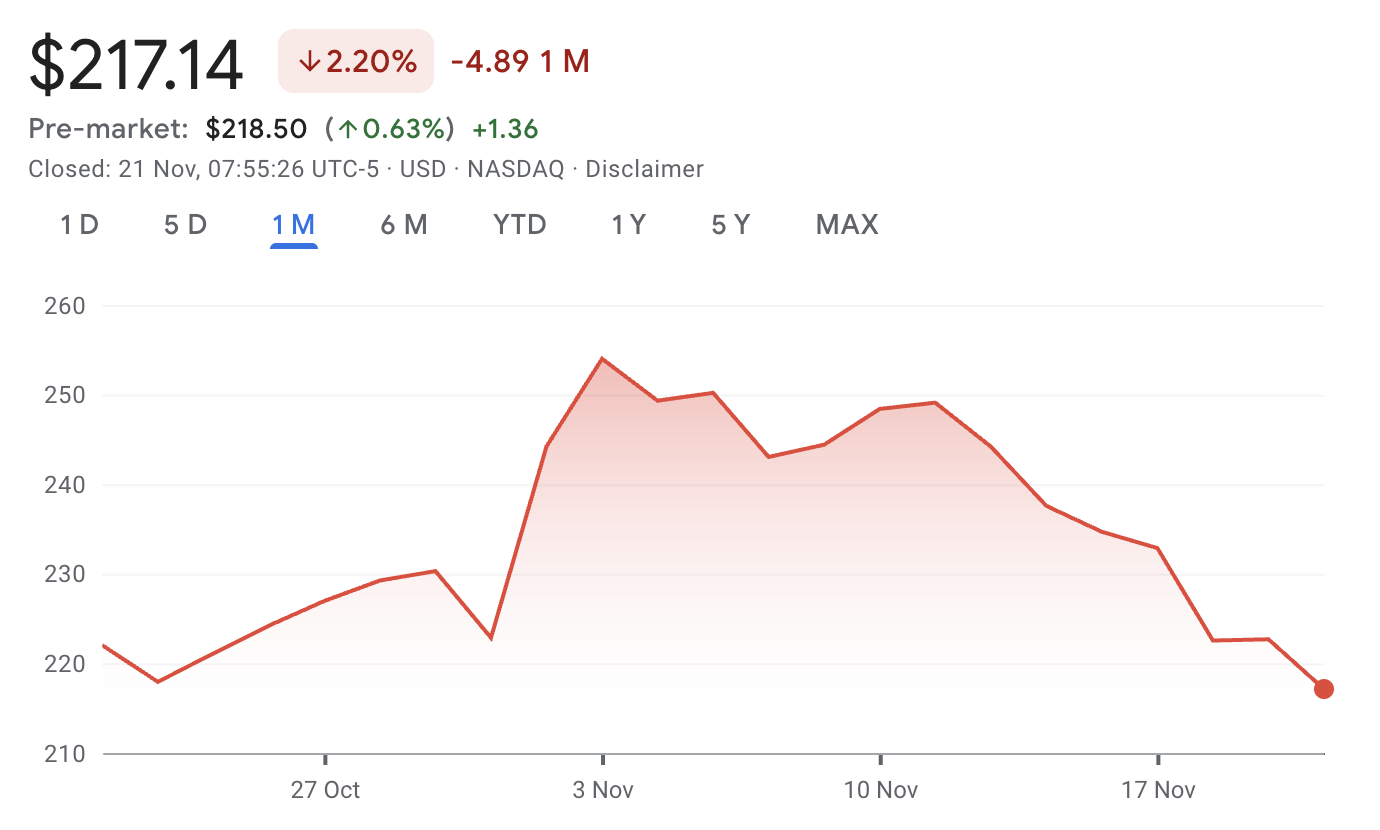
The answer is multifaceted, stemming from a complex interplay of macroeconomic forces, company-specific challenges, a fundamental shift in investor sentiment, and a re-evaluation of valuation metrics that favored growth over profitability for many years. Understanding these drivers is crucial for anyone seeking to comprehend the current investment landscape and Amazon’s position within it. This deep dive will explore the primary factors contributing to Amazon’s stock performance, offering an insightful perspective on the current state and potential future outlook for this influential company within the broader financial ecosystem.
Macroeconomic Headwinds and Shifting Market Sentiment
No company, regardless of its size or market dominance, operates in a vacuum. Amazon’s recent stock performance has been significantly impacted by broader macroeconomic trends that have reshaped investor priorities and dampened overall market enthusiasm, particularly for growth stocks.
Rising Interest Rates and Inflationary Pressures
One of the most potent forces impacting Amazon’s stock has been the rapid escalation of interest rates by central banks worldwide, notably the U.S. Federal Reserve. For over a decade, a low-interest-rate environment fueled high valuations for growth companies like Amazon. Low rates made future earnings streams more valuable in present-day terms (lower discount rates) and made borrowing cheaper for expansion. However, as inflation surged to multi-decade highs, central banks aggressively tightened monetary policy.
Higher interest rates have a dual negative effect on Amazon. Firstly, they increase the cost of capital for Amazon itself, making financing for its vast infrastructure projects (warehouses, data centers) and new initiatives more expensive. Secondly, and perhaps more critically for its valuation, higher rates reduce the present value of future earnings. A significant portion of Amazon’s value has always been tied to its anticipated long-term growth. When future cash flows are discounted at a higher rate, their present value decreases, putting downward pressure on the stock price.
Furthermore, persistent inflation erodes consumer purchasing power. As households face higher costs for essentials like food, fuel, and housing, discretionary spending on non-essential items sold through Amazon’s e-commerce platform tends to decline. This directly impacts Amazon’s revenue growth, particularly in its retail segment, which has historically been a major driver of top-line expansion.
Economic Slowdown Fears and Recessionary Concerns
The aggressive stance by central banks to combat inflation has heightened fears of an impending economic slowdown or even a recession. Historically, during periods of economic contraction, consumer spending tightens significantly, and businesses scale back investments. For Amazon, this translates into potential headwinds for both its e-commerce and cloud computing (AWS) segments.
In a recessionary environment, consumers are likely to reduce their online shopping, opt for cheaper alternatives, or delay purchases of big-ticket items. This directly affects Amazon’s core retail business. Simultaneously, enterprises, facing their own economic uncertainties, may seek to optimize or even cut back on their cloud spending, which could slow the growth trajectory of AWS – a segment that has been a consistent profit engine for Amazon. The prospect of reduced demand from both consumers and businesses leads investors to de-risk their portfolios, often selling off growth stocks perceived as more vulnerable during downturns, in favor of more defensive assets. This broader market shift contributes significantly to the downward pressure on Amazon’s stock.
Geopolitical Instability and Supply Chain Disruptions
While not always a direct impact, ongoing geopolitical tensions (e.g., conflicts, trade disputes) and persistent supply chain vulnerabilities also contribute to a climate of uncertainty that dampens investor confidence. Amazon, with its global operations and vast logistical network, is susceptible to disruptions in international trade, increased shipping costs, and unpredictable inventory flows. While Amazon has made significant strides in building out its own logistics, global events can still introduce cost pressures and operational complexities, ultimately affecting profitability and investor sentiment.
Company-Specific Challenges and Strategic Shifts
Beyond the pervasive macroeconomic environment, Amazon has also contended with several company-specific issues and strategic adjustments that have weighed on its stock performance. These challenges often relate to its immense scale, operational complexity, and ongoing investment cycles.
Decelerating E-commerce Growth Post-Pandemic
The COVID-19 pandemic provided an unprecedented boom for Amazon’s e-commerce business. Lockdowns and social distancing measures forced a massive shift in consumer behavior towards online shopping, pulling forward years of anticipated growth into a compressed period. Amazon responded by aggressively expanding its fulfillment network, hiring hundreds of thousands of new employees, and increasing its operational capacity.
However, as pandemic restrictions eased and life returned to a semblance of normalcy, this accelerated growth began to normalize. Comparisons to the pandemic-fueled peaks became incredibly challenging, leading to significantly decelerated revenue growth rates in the e-commerce segment. Furthermore, the massive investment in capacity during the boom led to excess capacity and inefficiencies once demand normalized, resulting in higher fixed costs that squeezed profit margins in the retail division. This slowdown in its historical core business has been a major point of concern for investors.
Increased Operating Costs and Labor Expenses
Amazon’s commitment to rapid growth and operational excellence has always come with substantial costs. However, in recent years, these costs have escalated significantly. Wage inflation across the board, particularly for front-line warehouse and delivery workers, has increased Amazon’s labor expenses. The company has also faced increasing pressure from unionization efforts and regulatory scrutiny regarding working conditions, which can lead to further cost increases and operational constraints.
Beyond wages, Amazon’s vast logistics network, which spans millions of square feet of warehouse space and a complex delivery fleet, incurs immense costs related to fuel, maintenance, technology, and utilities. The energy crisis in certain regions and broader inflationary pressures have driven these operational costs even higher. These rising expenses directly impact Amazon’s bottom line, reducing profitability and free cash flow – metrics that have become paramount for investors in the current economic climate.
Investments in New Initiatives and Profitability Trade-offs
Amazon has a long history of investing heavily in new ventures and long-term growth opportunities, often at the expense of short-term profitability. While this strategy has historically paid off with ventures like AWS, current market conditions make investors less tolerant of such trade-offs. Amazon continues to pour capital into areas like artificial intelligence (AI), satellite internet (Project Kuiper), grocery expansion (Amazon Fresh, Whole Foods), healthcare (One Medical), and streaming content.
While these investments are aimed at securing future growth, they can be a significant drag on current earnings. The market, which previously rewarded “growth at any cost,” now demands a clearer path to profitability and return on investment for these new initiatives. The substantial capital expenditure and operating expenses associated with these ambitious projects can contribute to lower reported profits and free cash flow in the near term, thus impacting investor confidence and stock valuation.
Competitive Pressures Across Multiple Verticals
Despite its dominance, Amazon faces fierce competition across all its major business segments. In e-commerce, it contends with traditional retailers expanding their online presence, direct-to-consumer (DTC) brands, and global players. In cloud computing, AWS, while a leader, faces strong competition from Microsoft Azure and Google Cloud, which are aggressively expanding their offerings and market share. In advertising, it competes with Google and Meta for digital ad dollars. Even in entertainment, it battles Netflix, Disney+, and other streaming services. This pervasive competition limits pricing power, demands continuous innovation, and necessitates ongoing investment, all of which can pressure margins and require strategic dexterity from Amazon’s leadership.
Valuation Reset and Investor Expectations
Perhaps one of the most fundamental shifts impacting Amazon’s stock, particularly in the context of the Money category, is a broad recalibration of how investors value growth companies. The investment landscape has moved away from prioritizing top-line growth above all else.
The End of the “Growth at Any Cost” Era
For much of the past decade, and especially during the pandemic, investors rewarded companies that could demonstrate rapid revenue growth, even if it came at the expense of profitability or free cash flow. Amazon was a prime example of a company that consistently invested for the long term, often generating modest profits relative to its revenue, but demonstrating incredible scale and market expansion. The belief was that profitability would eventually materialize, and the market was willing to pay a premium for future potential.
However, with rising interest rates, capital is no longer “free.” Investors have become far more discerning and are now prioritizing companies that can demonstrate sustainable profitability, strong free cash flow generation, and efficient capital allocation. The market has shifted from a “growth at any cost” mentality to one that values “profitable growth.” This paradigm shift has inherently impacted Amazon, whose historical strategy leaned heavily into market share expansion and investment rather than maximizing short-term earnings.
Market Re-evaluation of Tech Multiples
The broader technology sector, particularly companies that are valued based on high growth expectations rather than current earnings, has experienced a significant contraction in valuation multiples. During periods of low interest rates and abundant liquidity, investors were willing to pay high price-to-earnings (P/E) ratios or price-to-sales (P/S) ratios for tech companies, anticipating exponential future growth.
As interest rates rise and economic uncertainty looms, these multiples compress. Investors become less willing to pay a premium for future growth, instead demanding more certainty and stronger current fundamentals. Amazon, despite its diversification, is still largely categorized as a technology-growth stock. Therefore, it has been disproportionately affected by this sector-wide re-rating. Its valuation, once supported by lofty growth projections, has been reset to reflect the new economic reality and investor focus on tangible earnings and free cash flow.
Impact on Future Earnings Projections
Analysts, responding to both macroeconomic shifts and company-specific challenges, have revised their future earnings projections for Amazon. Slower e-commerce growth, higher operating costs, and increased discounting of future profits due to higher interest rates lead to lower forecasted earnings per share (EPS) and free cash flow. When these projections are downgraded, it naturally leads to a reassessment of the stock’s intrinsic value by institutional investors and retail traders alike, often resulting in selling pressure.
Investor Considerations and Future Outlook
Despite the numerous headwinds, a balanced perspective requires acknowledging Amazon’s enduring strengths and strategic adjustments. For investors, understanding these long-term drivers is crucial.
Long-Term Growth Drivers Remain Intact (AWS, Advertising, International)
While its e-commerce segment faces normalization, Amazon’s other key segments continue to exhibit robust long-term potential. Amazon Web Services (AWS) remains the undisputed leader in cloud computing, benefiting from the ongoing digital transformation of businesses globally. Its profitability and market dominance are formidable. Amazon’s burgeoning advertising business is another high-margin growth engine, leveraging its vast trove of consumer data and traffic. Furthermore, international expansion, though capital-intensive, presents significant untapped market opportunities for both e-commerce and AWS. These segments provide powerful diversification and potential future earnings streams that could stabilize and propel the company forward in the long run.
Management’s Strategy for Profitability and Efficiency
Recognizing the shift in investor sentiment, Amazon’s leadership has publicly committed to improving operational efficiency and focusing more intensely on profitability. This has manifested in various ways, including a slowdown in hiring, targeted layoffs in less profitable or redundant areas, and a more disciplined approach to capital expenditures. The company is actively working to optimize its fulfillment network to reduce excess capacity and associated costs, while also seeking to improve the profitability of its grocery and other emerging ventures. This strategic pivot towards efficiency and profitability, if executed effectively, could reassure investors and lead to a more sustainable growth trajectory.
The Role of Diversification in an Investment Portfolio
For individual investors, Amazon’s stock drop serves as a salient reminder of the importance of diversification. Even seemingly invincible companies can face significant challenges. Relying too heavily on a single stock, regardless of its past performance, exposes an investor to undue risk. A well-diversified portfolio, spread across various asset classes, industries, and geographies, is crucial for mitigating the impact of any single stock’s downturn and for achieving long-term financial goals. Investors should evaluate Amazon not in isolation, but within the context of their broader investment strategy and risk tolerance.

Conclusion
The recent decline in Amazon’s stock is not attributable to a single factor but rather a confluence of powerful forces. The overarching macroeconomic environment of rising interest rates, persistent inflation, and recessionary fears has created a challenging backdrop for growth stocks. Simultaneously, company-specific issues, such as the normalization of e-commerce growth post-pandemic, escalating operating costs, and the continued heavy investment in new ventures, have pressured profitability. This has been compounded by a fundamental shift in investor expectations, moving away from “growth at any cost” towards a demand for profitable growth and strong free cash flow, leading to a re-evaluation of tech sector valuations.
While the short-term outlook presents significant headwinds, Amazon’s long-term potential remains anchored in its dominant position in cloud computing (AWS), its rapidly growing advertising business, and its vast international opportunities. Management’s stated commitment to efficiency and profitability may also pave the way for a more stable and attractive investment in the future. For investors, understanding these complex dynamics is key to making informed decisions about Amazon’s place within their financial strategies, always balanced against the broader principles of diversification and long-term planning. The journey of Amazon’s stock, like the broader market, is a testament to the ever-evolving nature of investment and the interplay of global economics and corporate strategy.
aViewFromTheCave is a participant in the Amazon Services LLC Associates Program, an affiliate advertising program designed to provide a means for sites to earn advertising fees by advertising and linking to Amazon.com. Amazon, the Amazon logo, AmazonSupply, and the AmazonSupply logo are trademarks of Amazon.com, Inc. or its affiliates. As an Amazon Associate we earn affiliate commissions from qualifying purchases.