
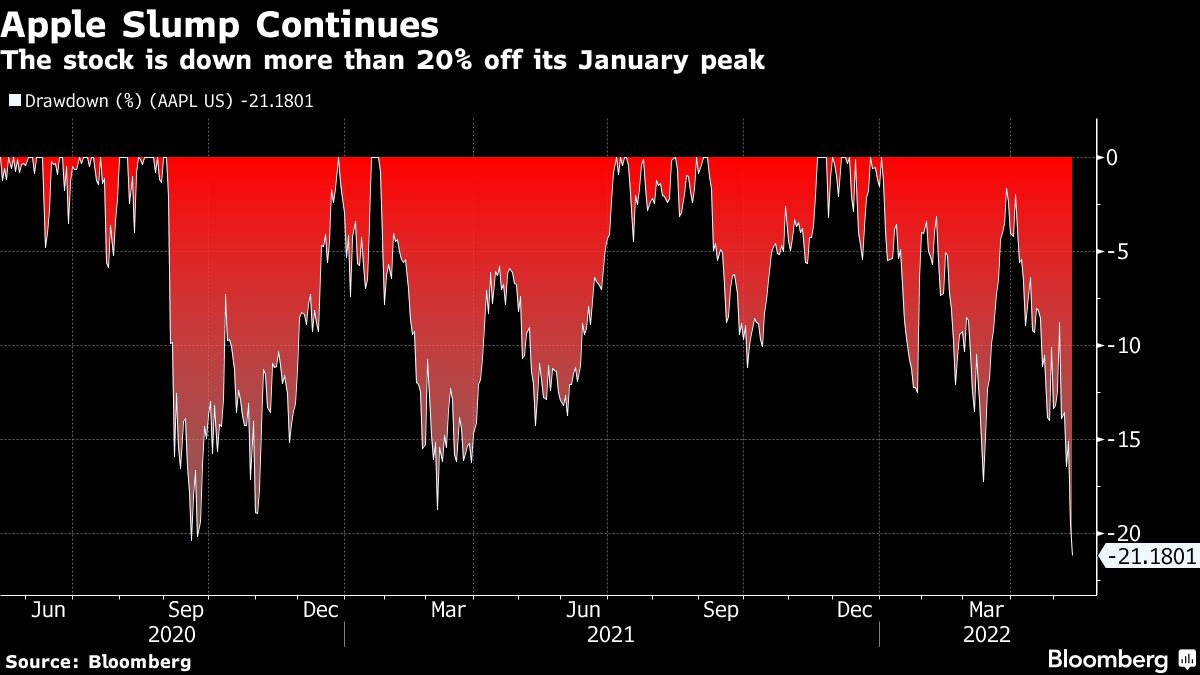
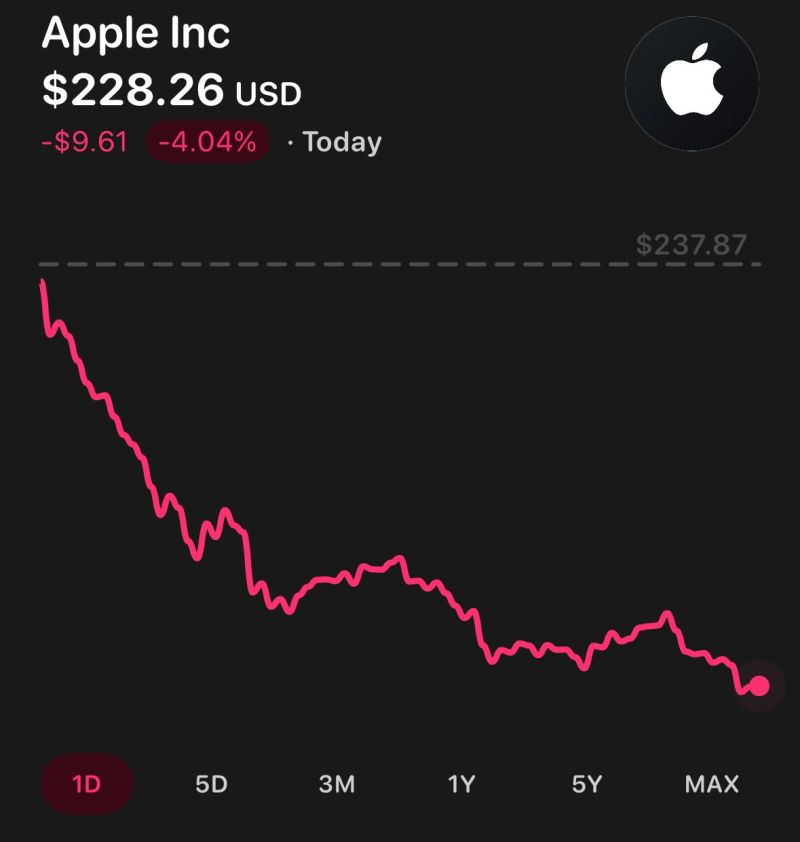
The daily movements of Apple (AAPL) stock are a constant source of fascination for investors, analysts, and the general public alike. As one of the world’s most valuable companies and a prominent bellwether for the technology sector, a significant dip in AAPL’s share price rarely goes unnoticed. While short-term fluctuations are a natural part of the stock market, an observable downtrend for a stock as resilient as Apple often prompts a deeper investigation into the confluence of macroeconomic forces, company-specific developments, and shifts in investor sentiment that might be at play. Understanding “why AAPL is down today” requires a nuanced look into the financial ecosystem, acknowledging that a single answer is rarely sufficient, and instead, a complex interplay of factors is often the culprit. This analysis will delve into the potential drivers behind a hypothetical downturn, strictly within the realm of investing and financial markets.
Macroeconomic Headwinds Weighing on Tech Giants
Even the most robust companies like Apple are not immune to the broader economic currents that sweep across global markets. Macroeconomic factors often serve as the foundational drivers behind market-wide movements, and technology stocks, particularly those with high growth expectations, can be especially sensitive to these shifts.
Interest Rate Hikes and Inflationary Pressures
One of the most potent macroeconomic forces impacting equity valuations is the trend in interest rates, largely dictated by central banks like the Federal Reserve. When central banks raise interest rates, it increases the cost of borrowing for businesses and consumers alike. For companies, higher borrowing costs can translate to reduced investment in growth initiatives or increased debt servicing expenses, impacting future profitability. For consumers, higher rates can reduce disposable income, potentially dampening demand for premium-priced products like iPhones, Macs, and Apple’s array of services.
Furthermore, inflationary pressures play a significant role. High inflation erodes purchasing power, making consumers more cautious about discretionary spending. While Apple’s brand loyalty is strong, persistent inflation can lead some consumers to delay upgrades or opt for more affordable alternatives. From an investor’s perspective, higher interest rates also make future earnings streams less valuable when discounted back to the present, a phenomenon that disproportionately affects growth stocks with earnings projected far into the future. This “discounting effect” can lead to a re-evaluation and subsequent markdown of share prices for companies like Apple, even if their operational performance remains strong.
Geopolitical Tensions and Supply Chain Disruptions
Global geopolitics can cast a long shadow over multinational corporations. Apple, with its vast international presence, manufacturing hubs predominantly in Asia (especially China), and reliance on a complex global supply chain for components, is particularly susceptible to geopolitical tensions. Trade disputes, tariffs, sanctions, or even regional conflicts can disrupt the flow of goods, increase production costs, and limit market access.
For instance, any escalation in US-China relations can directly impact Apple’s manufacturing capabilities, its access to the Chinese consumer market (a significant revenue driver), or its ability to source critical components. Factory lockdowns due to health crises, port congestion, or labor shortages in key manufacturing regions can lead to production delays, hindering Apple’s ability to meet product demand. Such disruptions can result in missed sales targets, increased operational expenses, and ultimately, a negative impact on the company’s financial performance, prompting investors to sell shares.
Broader Market Sentiment and Risk Aversion
Sometimes, Apple’s downturn isn’t entirely company-specific but rather a reflection of broader market sentiment. In periods of economic uncertainty, recession fears, or increased market volatility, investors often exhibit “risk aversion,” leading them to divest from growth-oriented or technology stocks in favor of more defensive sectors or safe-haven assets. When major market indices like the S&P 500 or the Nasdaq Composite experience significant drops, even fundamentally strong companies like Apple can be dragged down in the tide.
This phenomenon is often exacerbated by algorithmic trading and passive investing, where large exchange-traded funds (ETFs) and index funds automatically sell positions across a basket of stocks when outflows occur, regardless of individual company performance. In such scenarios, AAPL’s fall might be less about its own merits and more about its sheer size and representation within broader market indices, making it a natural target for rebalancing or de-risking strategies by institutional investors.
Company-Specific Catalysts and Investor Concerns
While macroeconomic factors set the stage, specific news or developments related to Apple itself can act as direct catalysts for a stock price decline. These factors often trigger immediate reactions as investors reassess the company’s future earnings potential and competitive standing.
Weakening Demand or Sales Forecasts
One of the most immediate and impactful reasons for AAPL to decline is news suggesting a slowdown in demand for its flagship products or services, or a reduction in its own sales forecasts. Reports from supply chain partners indicating lower component orders, analyst downgrades citing weakening consumer spending trends, or even a cautious outlook provided by Apple’s management during an earnings call can send shivers through the market.
For example, if reports suggest that iPhone sales are softening in key markets like China or Europe, or that the adoption rate of new services is not meeting expectations, investors might project lower future revenues and profits. Since Apple’s valuation is heavily tied to its growth trajectory, any perceived deceleration can trigger a significant re-evaluation of its stock price, especially if the current valuation bakes in aggressive growth assumptions.
Regulatory Scrutiny and Antitrust Challenges
Apple operates within an increasingly scrutinized regulatory environment globally. Governments and antitrust bodies in the US, Europe, and other regions are actively examining the market dominance of large technology companies, including Apple. Concerns often revolve around its App Store policies (e.g., mandatory commissions, restrictive payment systems), its ecosystem’s perceived “walled garden,” and potential anti-competitive practices.
Any new lawsuit, investigation, or proposed legislation that threatens to alter Apple’s business model – particularly its highly profitable Services segment, which includes the App Store – can spook investors. A regulatory outcome that forces Apple to change its App Store commission structure, open up its ecosystem to third-party app stores, or reduce its control over hardware and software integration could have a material impact on its revenue streams and profitability, leading to a bearish outlook and subsequent stock decline.
Competitive Landscape and Innovation Doubts
While Apple is a known innovator, questions about its ability to maintain its competitive edge and introduce truly groundbreaking products can weigh on investor sentiment. If competitors release compelling devices or services that challenge Apple’s offerings, or if investors perceive a lull in Apple’s innovation pipeline, it can create doubt about the company’s long-term growth prospects.
For instance, if rival smartphone manufacturers introduce highly differentiated features at competitive prices, or if new entrants emerge in areas like augmented reality (AR) or electric vehicles (EVs) where Apple is rumored to be investing, it could raise concerns about Apple’s future market share. A lack of clarity or enthusiasm surrounding upcoming product categories could lead investors to believe Apple’s best growth days are behind it, prompting a re-evaluation of its premium valuation.
Supply Chain or Production Issues
Specific and identifiable issues within Apple’s vast supply chain can also directly cause a stock drop. This could include a major factory closure due to a local lockdown, a significant component shortage (e.g., specialized chips), or labor disputes affecting manufacturing partners. When production is hampered, Apple’s ability to meet consumer demand for its products is compromised, directly impacting sales and revenue.
Such issues often have a dual impact: not only do they affect current quarter sales, but they can also create a backlog and delay product launches or availability, impacting future quarters. News of these disruptions can quickly lead analysts to revise their earnings estimates downward, pushing the stock lower as investors price in reduced profitability and potential market share losses due to unavailability.
Analyst Revisions and Investor Sentiment Shifts
The collective opinion and actions of market participants, from institutional giants to individual traders, play a crucial role in daily stock price movements. Shifts in analyst ratings or large-scale investor activity can trigger significant selling pressure.
Downgrades and Price Target Adjustments
Research analysts from major investment banks continuously monitor Apple’s performance and prospects. A downgrade from a “Buy” to a “Hold” or “Sell” rating, or a significant reduction in a stock’s price target, can have an immediate and pronounced effect on AAPL’s share price. These revisions often come after a re-evaluation of the company’s fundamentals, macroeconomic outlook, or competitive position.
When a respected analyst firm lowers its outlook on Apple, it signals to the broader market that there might be headwinds or risks that were not fully appreciated. This can prompt institutional investors, who often rely on such research, to reduce their positions, and retail investors may follow suit, creating a wave of selling pressure that drives the stock down.
Institutional Investor Activity
Large institutional investors—mutual funds, hedge funds, pension funds, and sovereign wealth funds—control vast sums of capital. Their buying and selling activity can significantly influence a stock’s trajectory. If several major institutions decide to trim their positions in AAPL, perhaps due to portfolio rebalancing, profit-taking after a strong run, or a shift in their investment thesis, the sheer volume of shares being sold can exert substantial downward pressure.
These large-scale movements can be triggered by internal mandates (e.g., reducing exposure to a specific sector), changes in risk appetite, or simply a strategic reallocation of capital. Given Apple’s enormous market capitalization, even a small percentage of institutional holders reducing their positions can translate into hundreds of millions or billions of dollars in selling, which the market must absorb.
Retail Investor Reactions and Momentum Trading
While institutional activity drives much of the volume, the collective actions of retail investors and the impact of momentum trading algorithms also contribute to daily fluctuations. News, analyst downgrades, or even technical signals can cause a cascade of retail selling, especially in highly liquid and widely held stocks like Apple.
Momentum trading strategies, which buy stocks that are rising and sell those that are falling, can amplify these movements. If AAPL starts to trend down, algorithms designed to detect and profit from such momentum might kick in, adding to the selling pressure. Social media sentiment and financial news headlines can also quickly sway retail investor decisions, leading to exacerbated short-term volatility.
Technical Analysis and Market Dynamics
Beyond fundamental and sentiment-driven factors, the study of historical price and volume data, known as technical analysis, offers insights into market psychology and potential future price movements. These technical indicators can sometimes explain why a stock falls, even in the absence of obvious news.
Key Support and Resistance Levels
Stocks often trade within certain price ranges, defined by “support” and “resistance” levels. Support levels are prices at which buying interest is strong enough to prevent the stock from falling further, while resistance levels are prices where selling interest is strong enough to prevent further gains. If AAPL’s stock price breaks below a significant support level, particularly one that has held firm on previous occasions, it can signal a loss of confidence among traders and trigger further selling.
A break below a key support level can activate stop-loss orders placed by traders, which automatically sell shares once a certain price threshold is breached, adding to the selling momentum. Conversely, if a stock is unable to break through a resistance level multiple times, it can also lead to sellers taking profits, contributing to a decline.
Trading Volume and Volatility
The volume of shares traded on a particular day can provide crucial context to price movements. If AAPL is down on unusually high trading volume, it suggests strong conviction behind the selling pressure. High volume on a down day often indicates that a significant number of investors are actively exiting their positions, suggesting a fundamental shift in perception or a major event that is driving the sell-off.
Increased volatility, as measured by rapid and significant price swings, also indicates uncertainty and potential price discovery. When AAPL experiences heightened volatility on a down day, it can be a sign that the market is struggling to establish a fair value, with a battle between buyers and sellers leading to aggressive movements in both directions, but ultimately with sellers gaining the upper hand.
Options Market Activity
The options market can sometimes foreshadow or amplify movements in the underlying stock. Significant activity in AAPL’s options chain, particularly an increase in the purchase of “put” options (which bet on a stock’s decline) or the selling of “call” options (which bet on a stock’s rise), can reflect a bearish sentiment among sophisticated traders.
Large blocks of put options bought by institutional investors can indicate their expectation of a near-term price drop or a strategy to hedge existing stock positions. Such activity can sometimes exert pressure on the underlying stock as market makers adjust their own hedges, which may involve selling AAPL shares to balance their options exposure, thus contributing to the downward trend.
What Does a Downturn Mean for Investors?
For investors, a day where AAPL is down can evoke various reactions, from panic to opportunity. It’s crucial to distinguish between short-term market noise and long-term investment principles.
Short-Term Volatility vs. Long-Term Fundamentals
A single day’s decline, or even a week’s, in AAPL’s stock price should be viewed within the broader context of its long-term performance and underlying business fundamentals. Apple has demonstrated remarkable resilience and growth over decades, navigating numerous economic cycles and competitive challenges. Investors should assess whether the reasons for the downturn represent a temporary setback or a fundamental deterioration of Apple’s competitive advantage, innovation capabilities, or market position. True long-term investors focus on the health of the business, its earnings, cash flow, and strategic direction rather than daily price swings.
Opportunity for Long-Term Investors?
For investors with a long-term horizon, pullbacks in strong, fundamentally sound companies like Apple can sometimes represent buying opportunities. A temporary dip, driven by macroeconomic concerns or short-term news, might allow investors to acquire shares at a more attractive valuation than previously available. This strategy, often referred to as “buying the dip,” requires conviction in Apple’s future growth prospects and an understanding that short-term pain can lead to long-term gains. However, this is only advisable if the investor has thoroughly re-evaluated their investment thesis and believes the underlying reasons for Apple’s success remain intact.

The Importance of Diversification
Finally, a downtrend in even a seemingly “safe” stock like Apple underscores the perennial importance of diversification within an investment portfolio. Concentrating too heavily in a single stock, regardless of its strength, exposes an investor to undue risk. A diversified portfolio, spread across various companies, sectors, and asset classes, can help mitigate the impact of any single stock’s poor performance, protecting overall wealth and fostering more stable returns over time.
In conclusion, “why AAPL is down today” is rarely a simple question with a single answer. It is almost always a complex tapestry woven from global economic conditions, company-specific news, shifts in investor sentiment, and technical market dynamics. For investors, understanding these layers of influence is critical to making informed decisions, maintaining a long-term perspective, and adhering to sound financial principles that prioritize diligent research and prudent diversification over reactive emotional responses.
aViewFromTheCave is a participant in the Amazon Services LLC Associates Program, an affiliate advertising program designed to provide a means for sites to earn advertising fees by advertising and linking to Amazon.com. Amazon, the Amazon logo, AmazonSupply, and the AmazonSupply logo are trademarks of Amazon.com, Inc. or its affiliates. As an Amazon Associate we earn affiliate commissions from qualifying purchases.