
The ascent of Bitcoin from a niche cryptographic experiment to a multi-trillion-dollar asset class is one of the most significant financial narratives of the 21st century. While its price has historically been defined by extreme volatility, the recent surges have been driven by a confluence of fundamental shifts in the global financial landscape. To understand why Bitcoin has gone up, one must look beyond the daily price charts and examine the structural changes in institutional adoption, macroeconomic policy, and the mathematical certainty of its supply schedule.
For years, Bitcoin was often dismissed by the traditional financial establishment as a speculative bubble. However, the narrative has shifted. Today, the price appreciation of Bitcoin is less about “hype” and more about its integration into the global monetary system.
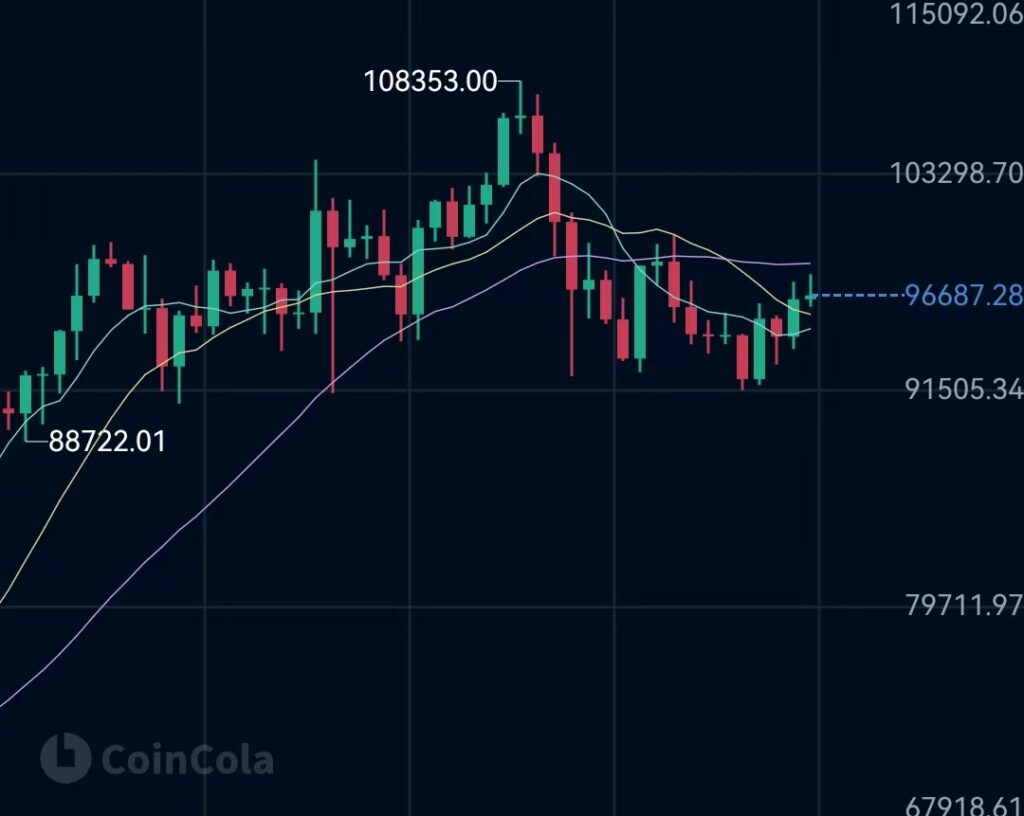
The Institutional Influx: Spot ETFs and the Legitimacy of the Asset Class
The single most significant driver of Bitcoin’s recent price appreciation is the arrival of Wall Street. For over a decade, the “Holy Grail” for crypto investors was the approval of a Spot Bitcoin Exchange-Traded Fund (ETF) in the United States. When the Securities and Exchange Commission (SEC) finally granted approval to several high-profile issuers in early 2024, it marked a paradigm shift in how capital flows into the ecosystem.
The Power of Simplified Access
Before the advent of Spot ETFs, investing in Bitcoin required navigating specialized exchanges, managing digital wallets, and dealing with the complexities of private keys. This created a massive barrier to entry for institutional investors, pension funds, and retail investors who preferred the safety of traditional brokerage accounts. The ETFs, managed by giants like BlackRock and Fidelity, removed these hurdles. By allowing investors to buy Bitcoin through a standard ticker symbol, billions of dollars in “sidelined” capital suddenly had a regulated, familiar pathway to enter the market.
Liquidity and “Big Money” Participation
Institutional adoption provides more than just capital; it provides liquidity and stability. When multi-trillion-dollar asset managers add Bitcoin to their balance sheets or offer it to their clients, it signals a massive reduction in “existential risk.” The perception that Bitcoin could be banned or regulated into oblivion has largely dissipated, replaced by the understanding that it is now a permanent fixture of the financial world. This institutional stamp of approval has created a feedback loop: higher prices attract more institutional interest, which leads to further investment.
Scarcity and the Halving Cycle: Understanding Supply Dynamics
While demand has increased through institutional channels, Bitcoin’s supply remains fixed. In the world of fiat currency, central banks can print more money to address economic crises, which often leads to the devaluation of the currency. Bitcoin operates on an entirely different logic: algorithmic scarcity.
The 2024 Halving Event
Every four years, the Bitcoin network undergoes an event known as “the halving.” This is a hard-coded adjustment that cuts the reward given to Bitcoin miners in half, effectively reducing the rate at which new Bitcoin enters circulation. Historically, the year leading up to and the year following a halving have seen significant price increases.
The rationale is simple supply and demand: if the growth of supply is cut by 50% while demand remains constant or increases, the price must rise to reach a new equilibrium. The most recent halving has reinforced this “Stock-to-Flow” model, reminding investors that unlike the US Dollar or the Euro, Bitcoin’s supply is capped at 21 million coins, and its issuance rate is perfectly predictable.
The “HODL” Mentality and Illiquid Supply
Another factor driving the price upward is the behavior of long-term holders. Data from on-chain analytics shows that a significant portion of the Bitcoin supply is held in wallets that rarely, if ever, sell. As more Bitcoin is moved into “cold storage” (offline wallets) and institutional vaults, the “liquid supply” available on exchanges for purchase shrinks. When a surge of new demand hits a market where very few people are willing to sell, the result is a vertical price movement.
Macroeconomic Catalysts: Inflation, Interest Rates, and Global Liquidity
Bitcoin does not exist in a vacuum; its price is deeply sensitive to the global macroeconomic environment. As the world’s major economies navigate the aftermath of unprecedented monetary expansion, Bitcoin has increasingly been viewed as a hedge against the traditional financial system.

The “Digital Gold” Narrative
In an era of high inflation and currency debasement, investors look for “hard assets” that can preserve purchasing power. Gold has traditionally filled this role, but Bitcoin is increasingly seen as “Digital Gold.” It shares gold’s scarcity but adds the benefits of portability, divisibility, and transparency. As central banks struggle to manage debt levels and maintain the value of their currencies, both retail and institutional investors have turned to Bitcoin as a “safe haven” asset that sits outside the control of any single government.
The Shift in Federal Reserve Policy
The price of Bitcoin is also highly correlated with global liquidity—the total amount of money circulating in the global economy. When the Federal Reserve and other central banks signal a “pivot” toward lower interest rates or increased liquidity, “risk-on” assets tend to perform well. Lower interest rates make borrowing cheaper and reduce the yield on “safe” investments like government bonds, pushing investors to seek higher returns in assets like Bitcoin. The anticipation of a more dovish monetary policy has frequently acted as a tailwind for Bitcoin’s price growth.
Regulatory Maturation and the Mitigation of Risk
For much of its history, the “regulatory overhang” was a dark cloud hanging over the crypto market. Fears of a total ban in major economies or aggressive crackdowns by securities regulators kept many conservative investors away. However, recent years have seen a move toward clarity rather than prohibition.
Legal Victories and Clearer Frameworks
Several landmark court cases and legislative developments have favored the growth of the industry. Legal rulings that challenged the SEC’s overreach regarding digital assets provided the market with much-needed confidence. Furthermore, regions like the European Union have implemented comprehensive frameworks (such as MiCA), providing a “rulebook” for companies to operate legally.
While regulation often brings compliance costs, it also brings the “rules of the road” that large corporations require before committing capital. The transition from a “Wild West” environment to a regulated financial sector has de-risked the asset class in the eyes of many, contributing to its upward price trajectory.
The Departure of Bad Actors
The collapse of several high-profile, fraudulent, or poorly managed crypto firms in previous years actually served as a cleansing mechanism for the market. By removing leverage and “bad actors” from the system, the industry was able to rebuild on a more solid foundation. The current price increase is supported by more robust infrastructure and a focus on “spot” buying (buying the actual asset) rather than the excessive speculative leverage that characterized previous cycles.
Network Growth and the Evolution of Utility
Finally, the underlying value of the Bitcoin network itself has grown. While its primary use case remains a store of value, the network’s utility has expanded, creating more reasons for participants to buy and hold the asset.
Layer 2 Solutions and Increased Activity
The development of the Lightning Network and other “Layer 2” solutions has made Bitcoin more functional for small, fast transactions. This expands Bitcoin’s potential from being just an “investment” to being a global, borderless payment rail. Additionally, new protocols have allowed for more complex data to be stored on the Bitcoin blockchain, leading to record-breaking transaction fees and increased revenue for the miners who secure the network. A more active and utilized network is fundamentally more valuable.
The Network Effect
Metcalfe’s Law states that the value of a network is proportional to the square of the number of its connected users. As more people, corporations, and even nation-states (such as El Salvador) adopt Bitcoin, the network becomes exponentially more secure and more valuable. Each new user adds to the “moat” surrounding Bitcoin, making it harder for competitors to displace it and more likely that its price will continue to reflect its growing dominance in the digital age.

Conclusion: A Multi-Faceted Appreciation
The rise in Bitcoin’s price is not the result of a single factor but a “perfect storm” of economic, technological, and regulatory developments. The introduction of Spot ETFs has unlocked institutional demand, while the halving has tightened supply. Simultaneously, macroeconomic instability has solidified Bitcoin’s role as a hedge against inflation, and regulatory clarity has invited a more mature class of investors into the fold.
As Bitcoin continues to mature, its price action increasingly reflects its role as a fundamental piece of global financial infrastructure. For the modern investor, understanding these drivers is essential to navigating a landscape where digital assets are no longer the exception, but the rule.
aViewFromTheCave is a participant in the Amazon Services LLC Associates Program, an affiliate advertising program designed to provide a means for sites to earn advertising fees by advertising and linking to Amazon.com. Amazon, the Amazon logo, AmazonSupply, and the AmazonSupply logo are trademarks of Amazon.com, Inc. or its affiliates. As an Amazon Associate we earn affiliate commissions from qualifying purchases.