
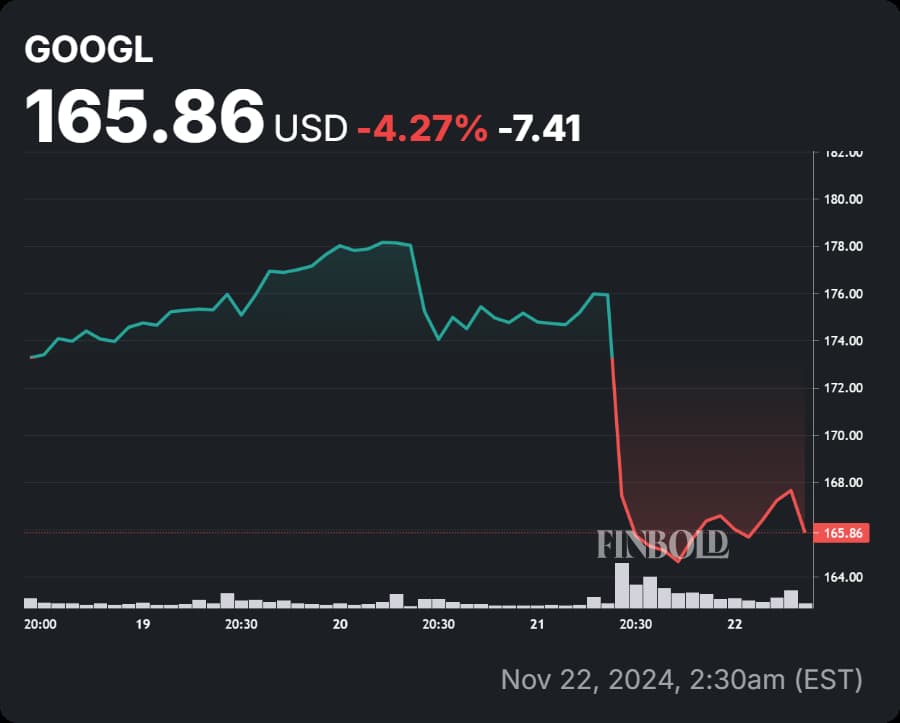
In the complex ecosystem of the Nasdaq, few tickers command as much attention as Alphabet Inc. (GOOGL/GOOG). When Google’s parent company experiences a downward shift in its stock price, the ripple effects are felt across the broader technology sector and the portfolios of millions of retail and institutional investors. Understanding why Google stock is down on any given day requires a multi-faceted analysis of quarterly financial performance, the shifting landscape of digital advertising, regulatory challenges, and the high-stakes race for dominance in generative artificial intelligence.
For investors, volatility in Alphabet’s valuation is rarely the result of a single factor. Instead, it is usually a confluence of macroeconomic pressures and company-specific headwinds that prompt a reassessment of the company’s near-term growth trajectory.
Earnings Volatility and the Reality of Ad Revenue Growth
The most common catalyst for a significant drop in Google’s stock price is the release of quarterly earnings reports. Even when Alphabet reports billions in profit, the stock can tumble if those figures fail to meet the lofty expectations of Wall Street analysts or if the internal composition of that revenue signals a slowdown in core areas.
Deciphering the Search and YouTube Metrics
Google’s “Search and Other” segment remains the cornerstone of its financial empire. When a quarterly report suggests that search revenue growth is decelerating, investors react swiftly. This deceleration is often viewed as a sign that the company is reaching a saturation point or that competitors are successfully peeling away market share.
YouTube, another massive engine for Alphabet, is equally sensitive. As the premier platform for long-form and short-form video, YouTube’s advertising revenue is a bellwether for the health of the digital marketing industry. If brand advertisers pull back on spending due to recessionary fears or if TikTok continues to encroach on the “Shorts” demographic, the resulting revenue miss can send the stock into a tailspin. Investors look closely at the “Cost per Click” (CPC) and “Impressions” metrics; a decline in the value Google can extract from its users is often interpreted as a fundamental weakening of its competitive moat.
The Cloud Growth Conundrum
While advertising pays the bills, Google Cloud is the high-growth frontier that investors use to justify Alphabet’s premium valuation. Google Cloud has historically trailed behind Amazon Web Services (AWS) and Microsoft Azure. When Cloud growth slows—even if it remains in double digits—it suggests that Google is failing to capture the enterprise market at the same rate as its peers. In a market that prizes growth above all else, a “miss” in Cloud revenue is often punished more severely than a miss in mature ad segments.
The Generative AI Arms Race and Capital Expenditure
In recent years, the narrative surrounding Google has shifted from its search dominance to its perceived vulnerability in the age of Generative AI. The rise of platforms like ChatGPT and Perplexity has introduced a “new search” paradigm that threatens the traditional ad-link model.
The Cost of Innovation in the LLM Era
One of the primary reasons Google stock may face downward pressure is the astronomical cost associated with building and maintaining Large Language Models (LLMs). To compete with Microsoft and OpenAI, Alphabet has been forced to aggressively ramp up its capital expenditure (CAPEX). This involves spending billions of dollars on high-end semiconductors, specifically NVIDIA’s H100 and H200 chips, and expanding data center infrastructure.
For the value-conscious investor, high CAPEX is a double-edged sword. While it is necessary for future-proofing the company, it immediately compresses profit margins. When Google’s management announces an increase in projected spending for the fiscal year, the market often reacts negatively in the short term, prioritizing immediate cash flow over the potential for long-term AI-driven revenue.
Margin Compression and Investor Skepticism
There is also a lingering skepticism regarding how Google will monetize AI without cannibalizing its existing search business. If an AI “Snapshot” provides a direct answer at the top of a search results page, users may have no reason to click on the sponsored links that generate Google’s revenue. This “Innovator’s Dilemma” weighs heavily on the stock price. Until Google can prove that its Gemini integration leads to higher revenue per user rather than lower, the stock remains susceptible to volatility every time a competitor announces a breakthrough.
Regulatory Headwinds and the Antitrust Landscape

Alphabet operates under a microscope. As one of the largest companies in the world, it is a constant target for antitrust regulators in the United States, the European Union, and beyond. Regulatory news is a frequent driver of “headline risk,” causing sudden dips in the stock price as investors price in the possibility of massive fines or forced structural changes.
The Department of Justice vs. Google Search
The U.S. Department of Justice (DOJ) has pursued significant antitrust litigation against Google, focusing on its dominance in search and its lucrative deals to remain the default search engine on Apple’s Safari and other platforms. Investors fear that a court ruling against Google could dismantle these distribution agreements, leading to a sudden and significant loss of search volume.
The threat of “remedies” is particularly frightening to the market. If a judge were to order a breakup of the company—separating the ad-tech business from the search business, for example—the fundamental investment thesis for Alphabet would be shattered. Even the mere progression of these cases through the court system creates a cloud of uncertainty that keeps many institutional investors on the sidelines.
Global Oversight and the Digital Markets Act
In Europe, the Digital Markets Act (DMA) has forced Google to change how it presents search results and how it handles user data across its various services (Maps, YouTube, Search). These compliance requirements are not just legal hurdles; they have practical implications for how effective Google’s ads can be. If Google is restricted from tracking users across its ecosystem, the value of its targeted advertising diminishes. When the EU announces new probes or non-compliance penalties, the stock often reflects the anticipated impact on international revenue.
Macroeconomic Trends and Sector-Wide Tech Rotations
Sometimes, Google stock is down not because of anything the company did, but because of broader shifts in the financial markets. As a “Mega-Cap” tech stock, Alphabet is a staple of many index funds and ETFs. This means it is often subject to systemic movements.
Interest Rates and the Cost of Capital
The Federal Reserve’s monetary policy has a profound impact on growth stocks. When interest rates are high or rising, the “discount rate” applied to future earnings increases, which lowers the present value of companies like Alphabet. High rates also make the cost of borrowing more expensive for the businesses that buy Google ads. If a high-interest-rate environment leads to a cooling economy, corporate marketing budgets are often the first to be slashed, directly impacting Google’s top line.
Institutional Sentiment and “Big Tech” Fatigue
Markets often move in cycles of “rotation.” After a period of significant outperformance by the “Magnificent Seven” (the group of elite tech stocks including Alphabet), institutional investors may decide to take profits and move capital into undervalued sectors like energy, utilities, or small-cap stocks. This “sector rotation” can lead to a multi-day slide in Google’s stock price regardless of the company’s fundamental health. When the largest players in the market decide to rebalance their portfolios, the sheer volume of selling pressure can overwhelm the daily buying demand.
Long-Term Outlook: Is This a Buying Opportunity or a Structural Shift?
When assessing why Google stock is down today, the ultimate question for the investor is whether the decline is a temporary “dip” to be bought or the beginning of a long-term decline.
Alphabet’s Valuation in a New Competitive Reality
Historically, Alphabet has traded at a more conservative Price-to-Earnings (P/E) ratio compared to peers like Microsoft or Amazon. When the stock drops, its valuation often becomes highly attractive to value investors. If the P/E ratio falls significantly below its five-year average, the market may eventually view the stock as “oversold,” leading to a price correction.
However, the “new reality” of AI competition means that historical P/E averages may no longer be the best yardstick. Investors must decide if they believe Google’s data advantage and massive user base are enough to maintain its 90%+ share of the search market, or if the landscape has fundamentally shifted in favor of decentralized, AI-first platforms.
Strategic Pivots Toward an AI-First Future
Despite the current downward pressure, Alphabet continues to pivot its entire business model around artificial intelligence. From AI-driven efficiency in its data centers to the integration of Gemini into Workspace and Android, the company is playing a long game.
Today’s stock decline often reflects the market’s impatience with the timeline of these innovations. Investors want to see immediate ROI, while Google is focused on building the foundational infrastructure for the next decade of computing. For those with a long-term horizon, these periods of downward volatility are often viewed as necessary consolidations in a larger growth story. For the day trader or the short-term speculator, however, the combination of regulatory threats, high spending, and competitive pressure makes Alphabet a high-stakes environment where every headline can shift the needle.
aViewFromTheCave is a participant in the Amazon Services LLC Associates Program, an affiliate advertising program designed to provide a means for sites to earn advertising fees by advertising and linking to Amazon.com. Amazon, the Amazon logo, AmazonSupply, and the AmazonSupply logo are trademarks of Amazon.com, Inc. or its affiliates. As an Amazon Associate we earn affiliate commissions from qualifying purchases.