
The stock market, often seen as a barometer of economic health, is inherently cyclical. Its movements—both upward and downward—are influenced by a complex interplay of economic fundamentals, geopolitical events, corporate performance, and investor psychology. When the market experiences a significant downturn, often characterized as a “correction” (a drop of 10% or more) or a “bear market” (a drop of 20% or more), it can trigger widespread anxiety among investors. Understanding the underlying causes of such declines is crucial not only for making informed financial decisions but also for maintaining perspective during periods of volatility. This article delves into the primary reasons why the stock market might decline, offering insights for both seasoned investors and those new to the world of finance.
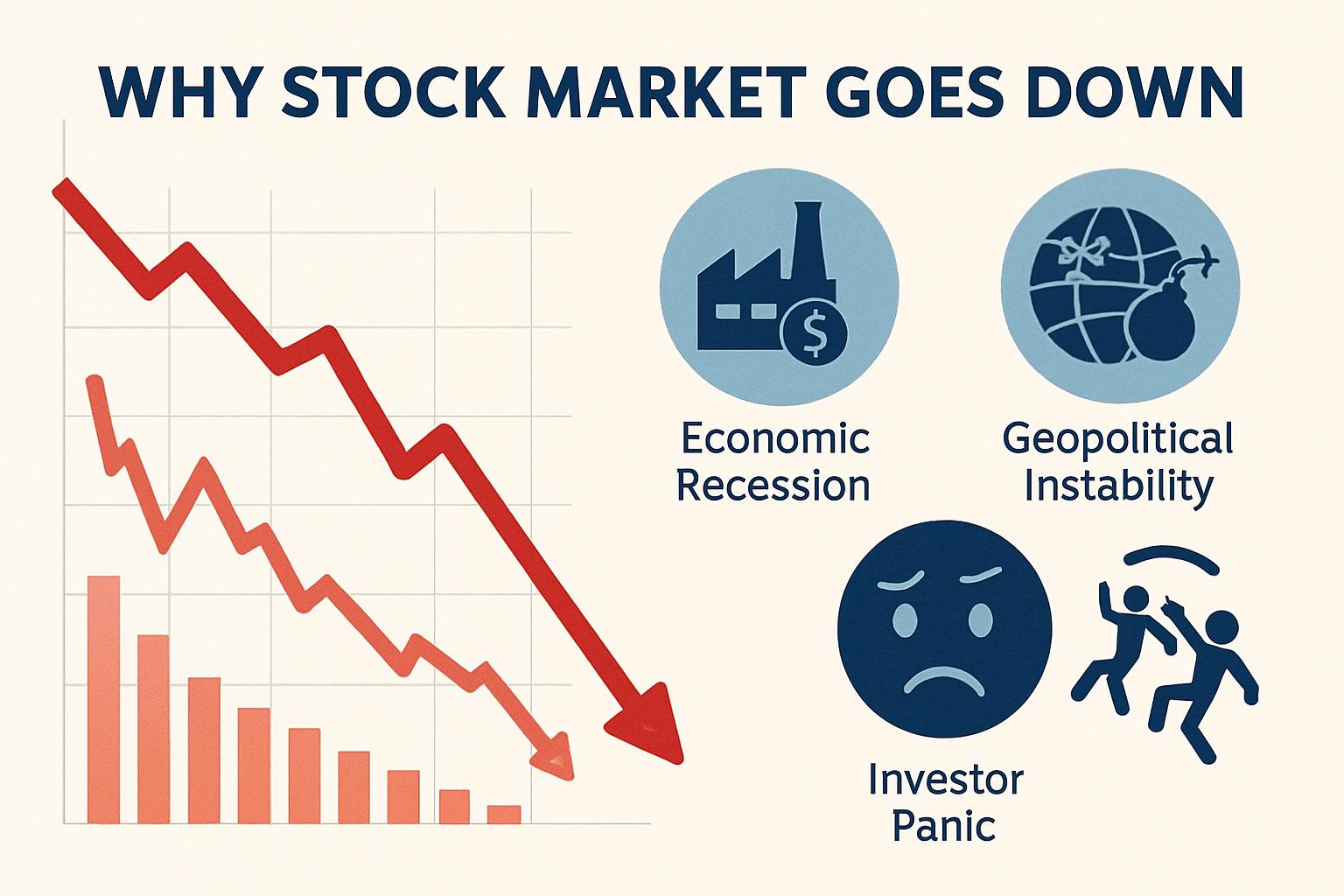
Economic Fundamentals and Their Impact
At the core of any stock market movement are the fundamental economic conditions that dictate the health and profitability of businesses. When these conditions deteriorate, the market often follows suit, reflecting reduced confidence in future earnings.
Interest Rate Hikes and Monetary Policy
Central banks, such as the U.S. Federal Reserve, wield significant power over economic activity through their monetary policy tools, most notably interest rates. When inflation becomes a concern, central banks typically raise interest rates to cool down the economy. Higher interest rates make borrowing more expensive for businesses, increasing their operational costs and potentially cutting into profits. For consumers, higher rates mean more expensive loans for homes, cars, and other purchases, leading to reduced spending. Moreover, higher bond yields, which become more attractive as interest rates rise, can draw capital away from equities, making stocks less appealing in comparison. The anticipation or execution of rate hikes often signals slower economic growth ahead, prompting investors to sell off riskier assets like stocks.
Inflationary Pressures
Persistent and high inflation is a silent destroyer of wealth and a significant drag on economic growth. When the cost of goods and services rises rapidly, it erodes the purchasing power of consumers, leading to reduced demand for products and services. For businesses, inflation translates into higher costs for raw materials, labor, and transportation. While some companies can pass these costs onto consumers, others might see their profit margins shrink. Furthermore, high inflation creates uncertainty, making it difficult for companies to plan and invest for the future. As corporate earnings are threatened by rising costs and diminished consumer demand, investors naturally become less optimistic, leading to a market downturn.
Recession Fears and Slowing Economic Growth
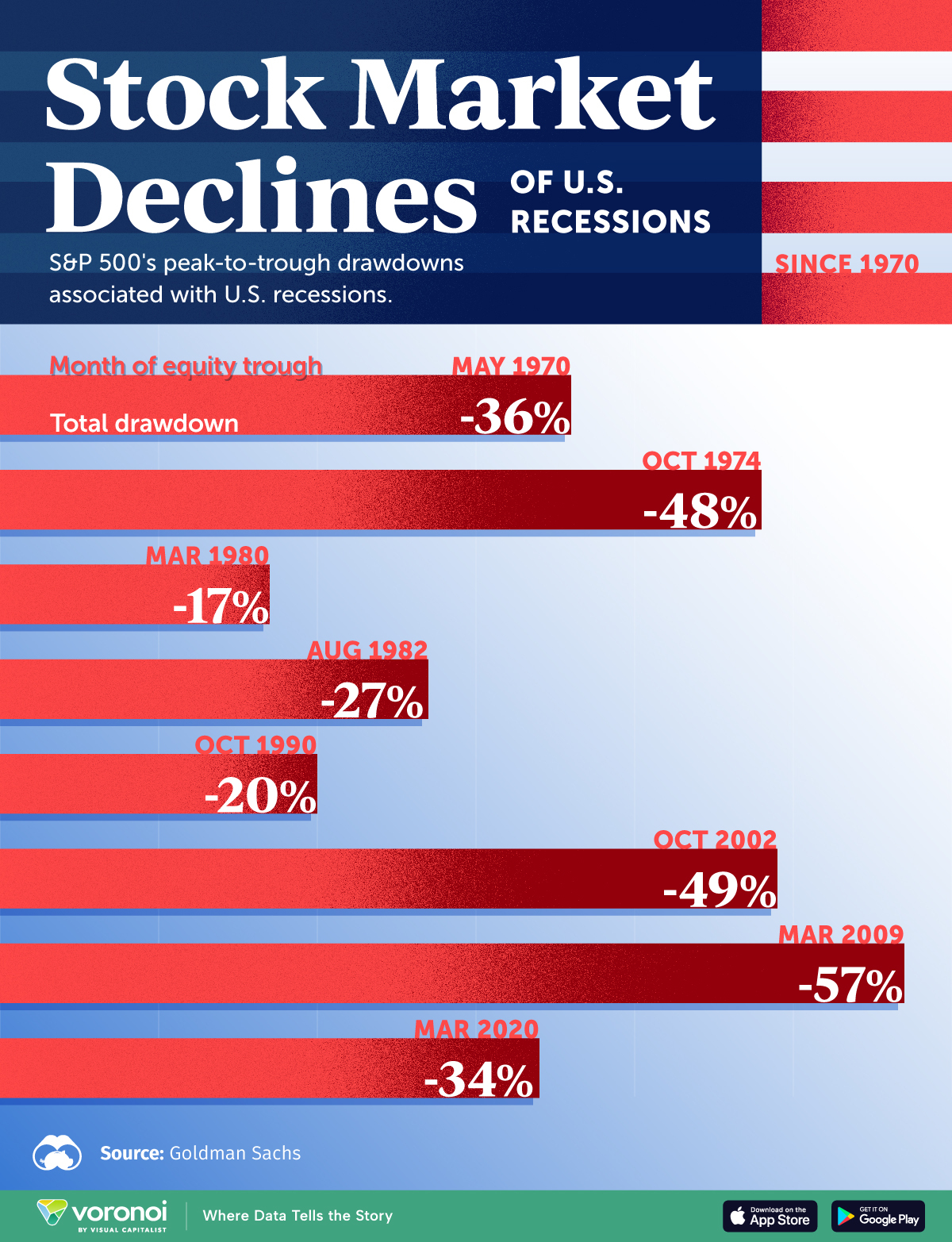
A recession, defined technically as two consecutive quarters of negative GDP growth, is a period of significant economic contraction. The mere fear or anticipation of a recession can be enough to trigger a stock market decline. Investors begin to price in lower corporate earnings, increased unemployment, and reduced consumer spending that typically accompany an economic downturn. Leading indicators such as an inverted yield curve (where short-term bond yields are higher than long-term yields), declining manufacturing output, or a significant drop in consumer confidence can signal an impending recession. As these fears mount, institutional and individual investors often de-risk their portfolios by selling stocks, especially those in cyclical industries that are highly sensitive to economic fluctuations.
Geopolitical Events and Global Instability
Beyond domestic economic policies, the interconnectedness of the global economy means that international events can have profound and immediate impacts on financial markets worldwide. Uncertainty born from geopolitical tensions is a powerful catalyst for market volatility.
Wars and Conflicts
Armed conflicts and wars are among the most disruptive geopolitical events for the stock market. They introduce immense uncertainty, disrupt global supply chains, and often lead to significant spikes in commodity prices, particularly oil and gas. For instance, the Russia-Ukraine conflict profoundly impacted global energy markets and exacerbated existing inflationary pressures, creating a domino effect across various industries. Companies with operations or significant markets in affected regions face direct risks, while the broader market can react to the increased risk premium, fear of escalation, and the potential for a wider economic fallout. Defense stocks might see gains, but the overall market sentiment tends to turn negative.
Trade Wars and Sanctions
In an era of globalized trade, disputes between major economic powers can have far-reaching consequences. Trade wars, characterized by tariffs and retaliatory measures, increase costs for importers and exporters, disrupt international supply chains, and can shrink global trade volumes. Economic sanctions imposed by one country or bloc on another can similarly restrict commerce, affect the profitability of multinational corporations, and create bottlenecks in the production of goods. These measures can lead to reduced corporate revenues, increased operational risks, and ultimately, a decline in investor confidence across affected sectors and the broader market. The uncertainty surrounding trade policies makes it difficult for businesses to plan long-term, further contributing to market jitters.
Political Uncertainty and Policy Shifts
Significant political events, such as contentious elections, changes in government, or shifts in regulatory policy, can introduce considerable uncertainty into financial markets. A change in political leadership might signal upcoming changes in taxation, industry regulation, or international trade agreements, all of which can impact corporate profitability and economic growth. For example, a shift towards stricter environmental regulations might negatively impact fossil fuel companies, while a move towards greater government spending could stimulate certain sectors. The market abhors uncertainty, and prolonged periods of political instability or unpredictable policy-making can lead investors to pull back, driving down stock prices as they await clarity on future economic conditions and business environments.
Corporate Earnings and Sector-Specific Headwinds
While macroeconomic factors set the stage, the performance of individual companies and specific industries plays a crucial role in shaping investor sentiment and market direction. Disappointing corporate results can act as a powerful downward force.

Disappointing Earnings Reports
Ultimately, the value of a company’s stock is tied to its profitability and future earning potential. When a significant number of major companies report earnings that fall short of analyst expectations, or if they lower their future guidance, it sends a negative signal across the market. This can indicate underlying economic weakness, industry-specific challenges, or a misjudgment by management regarding future demand or operational efficiency. A string of poor earnings reports from bellwether companies, particularly in influential sectors like technology or finance, can trigger a broader market sell-off as investors reassess the overall economic outlook and the health of corporate America.
Supply Chain Disruptions
The COVID-19 pandemic vividly illustrated the fragility and importance of global supply chains. Disruptions, whether caused by pandemics, natural disasters, geopolitical conflicts, or even technological failures, can severely impact a company’s ability to produce and deliver goods. This leads to product shortages, increased costs for components and shipping, and ultimately, reduced sales and profit margins. Companies that cannot source parts or deliver finished products efficiently will see their revenues suffer. Persistent supply chain issues can ripple across multiple industries, creating widespread headwinds that depress corporate earnings and consequently, stock valuations.
Sector-Specific Challenges
Not all industries move in lockstep. While a broad economic downturn affects most sectors, sometimes specific industries face unique challenges that can lead to significant declines within their segment, potentially dragging down broader indices. For example, a sudden shift in consumer preferences could hit the retail sector, while technological advancements might disrupt traditional industries. Regulatory changes (e.g., new environmental laws for energy companies or anti-trust actions for tech giants), intense competition, or shifts in commodity prices (for energy and materials sectors) can disproportionately affect certain industries. When these challenges impact large, market-leading companies within a sector, the ripple effect can be felt throughout the entire stock market.
Investor Sentiment and Market Psychology
Beyond the tangible economic and corporate factors, the collective mood and psychological biases of investors play a substantial, often irrational, role in market movements. Fear and greed are powerful forces that can amplify gains and exacerbate losses.
Fear, Uncertainty, and Doubt (FUD)
Investor sentiment is a critical, albeit intangible, driver of market behavior. When fear, uncertainty, and doubt (FUD) grip the market, rational decision-making often gives way to panic selling. News cycles, social media trends, and even financial pundits can amplify negative sentiment, leading to herd mentality where investors sell simply because others are selling, regardless of underlying fundamentals. This emotional response can create a self-fulfilling prophecy, driving prices down even further than what economic realities might justify. Such periods are often characterized by heightened volatility, with sharp intraday swings driven more by emotion than by concrete data.
Technical Factors and Market Corrections
Technical analysis, which involves studying past market data, primarily price and volume, to predict future price movements, can also contribute to market downturns. Many algorithms and traders use technical indicators to identify support and resistance levels. When key support levels are broken, it can trigger automatic sell orders and further bearish sentiment. A “market correction,” typically defined as a 10% decline from a recent peak, often occurs as a natural re-evaluation after a period of rapid growth. While corrections are normal and healthy, they can quickly turn into deeper bear markets if underlying fundamentals don’t improve or if investor sentiment remains overwhelmingly negative, leading to further technical breakdowns.
Speculative Bubbles Bursting
Periods of irrational exuberance can lead to the formation of speculative bubbles, where asset prices become detached from their intrinsic value, driven purely by speculation and the belief that prices will continue to rise indefinitely. Examples include the dot-com bubble of the late 1990s or the housing bubble of the mid-2000s. When these bubbles eventually burst, they do so dramatically, leading to sharp, sudden, and often prolonged market downturns. The initial decline often triggers margin calls for leveraged investors, forcing more selling and accelerating the collapse. The fallout from a burst bubble can have significant psychological and financial impacts, leading to a prolonged period of cautious investing.
The Investor’s Perspective: Navigating Downturns
Understanding why the stock market goes down is the first step; the next is knowing how to react. For individual investors, market downturns, while unsettling, are an inevitable part of the investment journey and can even present opportunities.
The Importance of Diversification
One of the most fundamental principles of investing, especially pertinent during downturns, is diversification. Spreading investments across various asset classes (stocks, bonds, real estate, commodities), different sectors, and geographical regions helps to mitigate risk. When one part of your portfolio is underperforming, others might be stable or even gaining, cushioning the overall impact. A well-diversified portfolio is designed to weather different economic conditions and reduce the exposure to any single point of failure, making it more resilient during market corrections.
Long-Term Vision and Disciplined Investing
Successful investors often share a common trait: a long-term perspective. Short-term market fluctuations, while attention-grabbing, are often just noise in the grand scheme of things. Focusing on long-term financial goals and maintaining a disciplined investment strategy, rather than reacting emotionally to daily market swings, is crucial. This means sticking to your asset allocation, regularly contributing to your investments (e.g., through dollar-cost averaging), and avoiding impulsive decisions driven by fear or greed. History shows that the stock market has always recovered from downturns, eventually reaching new highs over extended periods.
Rebalancing and Opportunity
Market downturns, despite the fear they engender, can present significant opportunities for savvy investors. When stock prices fall, quality companies become available at lower valuations. This can be an opportune time to rebalance your portfolio, selling assets that have performed well and buying more of those that have declined but still have strong long-term prospects. This “buying the dip” strategy, while requiring courage and conviction, can significantly boost long-term returns. It reinforces the idea that market declines are not just risks, but also chances to acquire valuable assets at a discount.
Conclusion
The stock market’s descent is rarely attributable to a single factor but rather a complex interplay of economic forces, geopolitical shifts, corporate performance, and the unpredictable nature of human psychology. From rising interest rates and inflation to global conflicts, disappointing earnings, and pervasive fear, numerous elements can conspire to push market indices lower. While these downturns can be unsettling, they are an intrinsic and normal part of the market cycle. For investors, a deep understanding of these causes, combined with a disciplined, long-term investment strategy that emphasizes diversification and the ability to spot opportunities, is the most robust defense against volatility and the most reliable path to achieving financial goals.
aViewFromTheCave is a participant in the Amazon Services LLC Associates Program, an affiliate advertising program designed to provide a means for sites to earn advertising fees by advertising and linking to Amazon.com. Amazon, the Amazon logo, AmazonSupply, and the AmazonSupply logo are trademarks of Amazon.com, Inc. or its affiliates. As an Amazon Associate we earn affiliate commissions from qualifying purchases.