
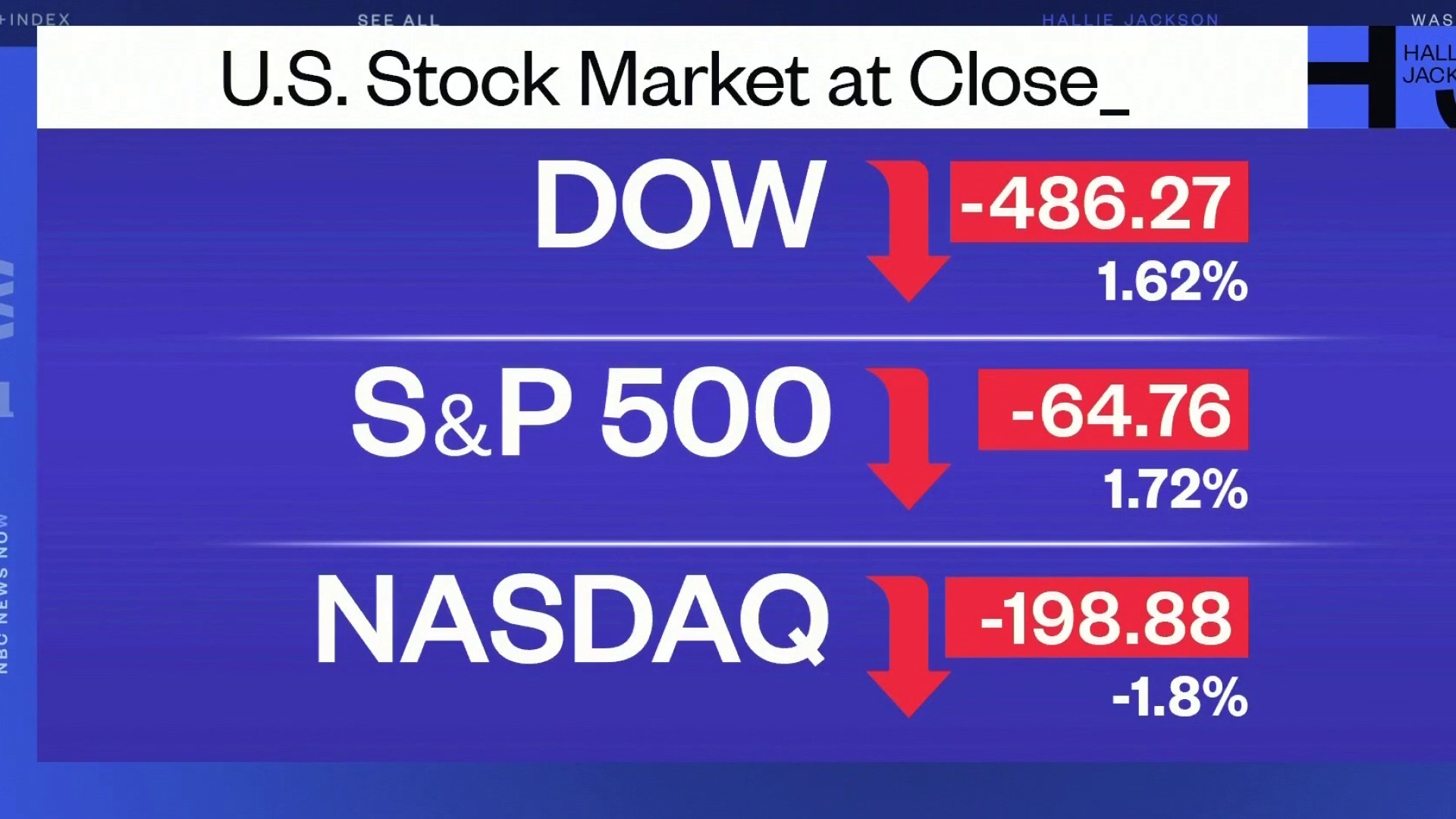
For many investors, opening a brokerage app to see a sea of red can be a jarring experience. The stock market is often described as a “forward-looking mechanism,” meaning it is constantly trying to price in future expectations. When those expectations shift—whether due to a sudden economic report, a change in central bank policy, or geopolitical instability—the market reacts, sometimes violently. Understanding why the stock market dropped today requires looking beyond the surface-level numbers and examining the complex interplay of macroeconomic data, corporate health, and human psychology.

While a single-day drop can feel like a localized event, it is usually the result of broader systemic shifts. In this analysis, we will explore the fundamental catalysts behind market downturns, the role of investor sentiment, and how seasoned investors interpret these movements to maintain a long-term perspective.
Macroeconomic Catalysts: The Global Forces Shaping Prices
The primary driver of broad market movement is the macroeconomic environment. Because the stock market is essentially a collection of companies that operate within a global economy, any change in the “cost of doing business” or the “purchasing power of consumers” will immediately affect valuations.
The Influence of Interest Rates and Central Bank Policy
Central banks, such as the Federal Reserve in the United States, exert the most significant influence over the financial markets. When inflation runs high, central banks typically raise interest rates to cool the economy. Higher interest rates make borrowing more expensive for both companies and consumers. For a corporation, this means higher interest payments on debt, which eats into profit margins. For consumers, it means more expensive mortgages and car loans, leading to reduced discretionary spending. When the market receives news that suggests interest rates will stay “higher for longer,” stock prices often drop because future corporate earnings are being discounted at a higher rate.
Inflationary Pressures and Labor Market Data
Inflation is a double-edged sword for the stock market. While moderate inflation can signal a growing economy, runaway inflation erodes the value of future dividends and earnings. Investors keep a close eye on the Consumer Price Index (CPI) and the Producer Price Index (PPI). If these reports come in “hotter” than expected, the market interprets it as a sign that the central bank will have to become more aggressive with rate hikes. Similarly, the labor market plays a crucial role. A surprisingly strong jobs report might seem like good news, but in an inflationary environment, it can lead to fears of a “wage-price spiral,” prompting the market to sell off in anticipation of tighter monetary policy.
Geopolitical Tensions and Trade Disruptions
The global economy is deeply interconnected. Conflict in oil-producing regions can lead to a spike in energy costs, which acts as a tax on both businesses and households. Trade disputes, tariffs, or supply chain bottlenecks in key manufacturing hubs can disrupt the flow of goods, leading to uncertainty. The stock market hates uncertainty more than anything else. When geopolitical risks escalate, investors often engage in a “flight to quality,” selling off “risky” assets like stocks and moving their capital into “safe-haven” assets like gold or government bonds.
Corporate Performance and Sector-Specific Headwinds
While macroeconomic factors affect the “tide” that lifts or lowers all boats, individual sector performance and corporate earnings reports provide the specific reasons for a market decline. Sometimes, a drop in the broad index is driven by a few heavily weighted sectors or “bellwether” companies.
Earnings Misses and Lowered Guidance
Four times a year, publicly traded companies release their quarterly earnings. These reports are the “report cards” of the corporate world. If a major company—especially one with a massive market capitalization—reports lower-than-expected revenue or profits, its stock price will likely fall. However, the “guidance” is often more important than the past quarter’s results. Guidance is the company’s forecast for future performance. If a CEO expresses caution about the upcoming months due to softening demand or rising costs, it can trigger a sell-off that spreads across the entire sector.
The Ripple Effect of the Tech Sector
In the modern market, the technology sector often accounts for a disproportionate share of major indices like the S&P 500 or the Nasdaq 100. Because many tech companies are valued based on their potential for high growth in the distant future, they are particularly sensitive to interest rate changes. If the tech sector faces a downturn—perhaps due to a shift in AI sentiment or regulatory crackdowns on big tech—it can drag the entire market down with it, even if other sectors like healthcare or utilities are performing well.
Regulatory Changes and Legislative Impacts
Government intervention can also be a catalyst for a market drop. New tax laws, anti-trust lawsuits, or changes in environmental regulations can fundamentally alter the profitability of specific industries. For example, if the government announces a new “windfall tax” on energy companies or stricter regulations on the banking sector, the stocks in those niches will react immediately. Investors quickly calculate the potential impact on bottom-line profits and adjust their positions accordingly, often leading to a sharp decline in the affected indices.

The Role of Investor Psychology and Market Sentiment
Markets are not just driven by spreadsheets and data points; they are driven by people. Human emotions—primarily fear and greed—play a massive role in day-to-day price fluctuations. When a market drop begins, psychological triggers often accelerate the decline.
The “Fear Gauge” and Panic Selling
The VIX, often referred to as the “Fear Gauge,” measures the market’s expectation of volatility over the next 30 days. When the VIX spikes, it indicates that investors are becoming nervous. This nervousness can lead to panic selling, where investors sell their holdings not because the underlying fundamentals of the companies have changed, but because they fear the price will go even lower. This creates a self-fulfilling prophecy: selling leads to lower prices, which leads to more fear, which leads to more selling.
Algorithmic Trading and Margin Calls
In the modern era, a significant portion of daily trading volume is executed by computers using complex algorithms. These algorithms are often programmed to sell when certain “technical levels” are broken. For instance, if a major index drops below its 200-day moving average, it can trigger a wave of automated sell orders, causing the price to plummet in a matter of minutes. Additionally, many institutional and retail investors trade on “margin” (borrowed money). When stock prices drop significantly, brokers may issue “margin calls,” forcing investors to sell their positions to cover their debts, which adds further downward pressure on the market.
Momentum and Trend Following
Just as momentum can drive a market to record highs, it can also accelerate a downturn. Many traders follow the “trend.” When the trend turns bearish, these participants move to the sidelines or take “short” positions (betting that the price will go down). The lack of “buyers on the dip” means that even a small amount of selling pressure can result in a significant drop in price, as there is no one on the other side of the trade willing to support the current valuation.
How to Navigate Volatility: Strategies for Long-Term Wealth
While seeing the market drop is uncomfortable, it is a normal and healthy part of the market cycle. Historically, the stock market has spent the majority of its time in an uptrend, but that upward trajectory is interrupted by periodic corrections (a 10% drop) and bear markets (a 20% drop or more).
The Importance of Diversification
The oldest rule in investing remains the most effective: don’t put all your eggs in one basket. A well-diversified portfolio that includes different asset classes (stocks, bonds, real estate, cash) and different sectors (tech, staples, energy) is better equipped to handle a market drop. When one sector is struggling, another may be holding steady or even rising. Diversification reduces the “idiosyncratic risk” of any single event wiping out your portfolio.
Staying the Course and Avoiding Market Timing
One of the most common mistakes investors make is trying to “time the market”—selling at the top and buying at the bottom. In reality, even professional fund managers struggle to do this consistently. Most of the market’s best days occur shortly after its worst days. If an investor panics and sells during a drop, they risk missing the subsequent recovery. For long-term investors, the focus should be on “time in the market” rather than “timing the market.” Maintaining a consistent contribution strategy, such as dollar-cost averaging, allows you to buy more shares when prices are low and fewer when prices are high.
Rebalancing and Seeking Opportunity
For the savvy investor, a market drop is not just a risk; it is an opportunity. When prices fall, the “valuation” of high-quality companies becomes more attractive. This is the time to rebalance your portfolio. If your target allocation is 60% stocks and 40% bonds, and a market drop has pushed your stock allocation down to 50%, rebalancing involves selling some bonds to buy stocks at a discount. This disciplined approach forces you to “buy low and sell high,” which is the fundamental secret to long-term wealth accumulation.
Conclusion: Viewing Downturns as Part of the Financial Journey
In conclusion, when the stock market drops today, it is rarely due to a single, isolated reason. It is usually a confluence of macroeconomic shifts, corporate earnings revisions, and a sudden change in investor sentiment. Whether it is the Federal Reserve signaling a change in interest rates or a major tech giant missing its revenue targets, the market is simply doing its job: processing new information and adjusting prices to reflect a new reality.
For the disciplined investor, market volatility is the price of admission for long-term returns. By understanding the mechanics behind these drops and maintaining a diversified, long-term strategy, you can transform a day of market “chaos” into a moment of clarity. Remember that the market is cyclical; downturns are temporary, but the growth of the global economy has historically been persistent. Staying focused on your financial goals rather than daily price fluctuations is the surest path to achieving financial independence.
aViewFromTheCave is a participant in the Amazon Services LLC Associates Program, an affiliate advertising program designed to provide a means for sites to earn advertising fees by advertising and linking to Amazon.com. Amazon, the Amazon logo, AmazonSupply, and the AmazonSupply logo are trademarks of Amazon.com, Inc. or its affiliates. As an Amazon Associate we earn affiliate commissions from qualifying purchases.