
The financial markets, much like the tides, are subject to ebbs and flows. Periods of robust growth and seemingly unending optimism are inevitably punctuated by downturns – moments when indices tumble, portfolios shrink, and headlines scream about significant losses. These market drops, whether sharp corrections or prolonged bear markets, are not random occurrences but rather complex phenomena driven by a confluence of economic indicators, geopolitical events, investor psychology, and corporate performance. Understanding the underlying causes of these declines is crucial for investors, policymakers, and anyone seeking to navigate the often-turbulent waters of global finance.
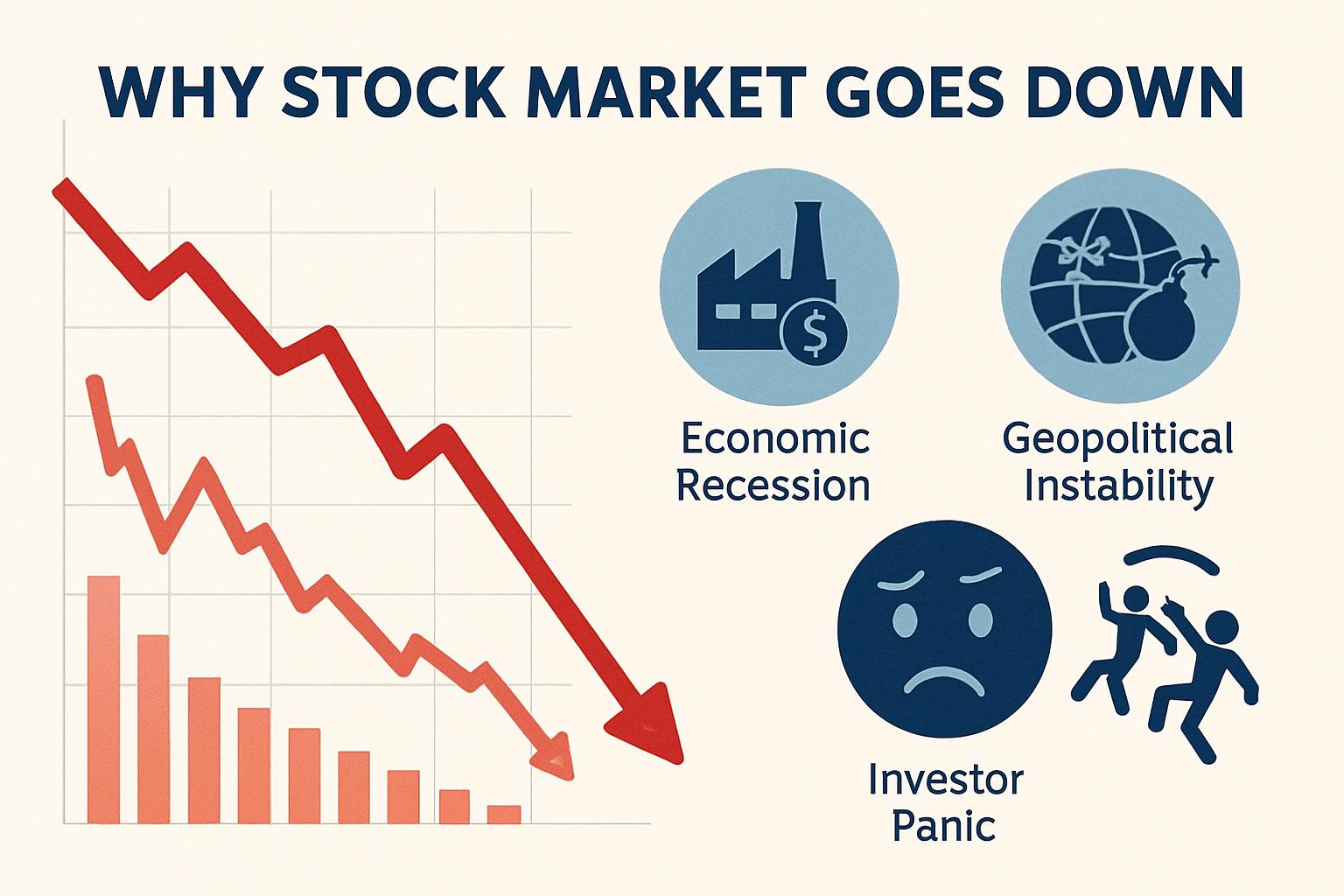
For many, a market drop triggers alarm and uncertainty. Was it an unforeseen black swan event, or were there discernible warning signs? The truth often lies somewhere in between, with a combination of factors accumulating to shift market sentiment from bullish enthusiasm to cautious apprehension, and eventually, to outright fear. Dissecting these forces allows us to not only comprehend past downturns but also to better prepare for future volatility, transforming what might seem like a crisis into an opportunity for informed decision-making. In this exploration, we will delve into the primary catalysts that typically trigger market declines, moving beyond surface-level panic to uncover the structural and psychological underpinnings of financial market corrections.
Understanding Market Corrections and Crashes
Market drops are a fundamental, albeit often unsettling, aspect of economic cycles. It’s important to distinguish between different types of declines, as their causes, duration, and implications for investors can vary significantly. Not every dip is a full-blown crisis, but each requires an understanding of its context.
The Cyclical Nature of Markets
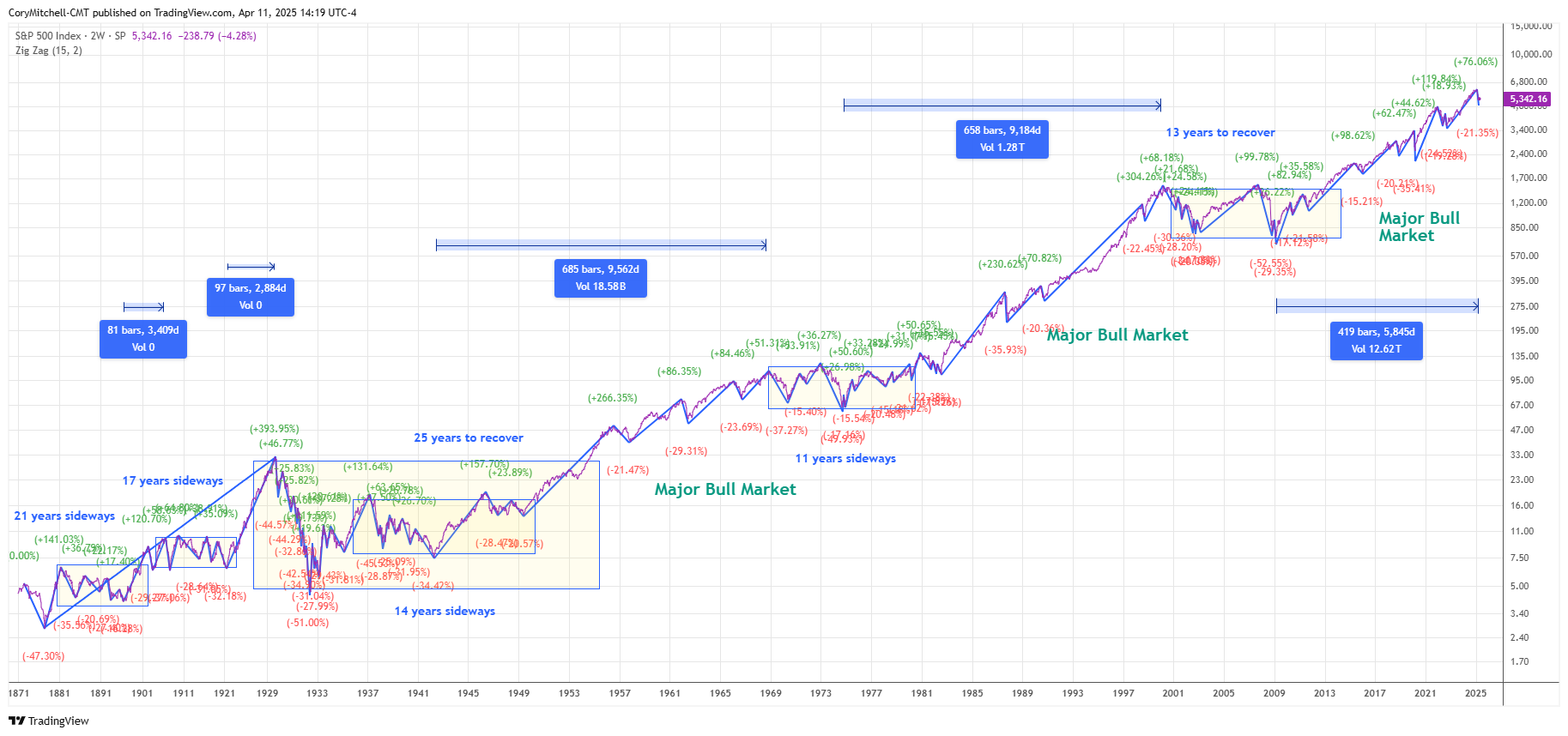
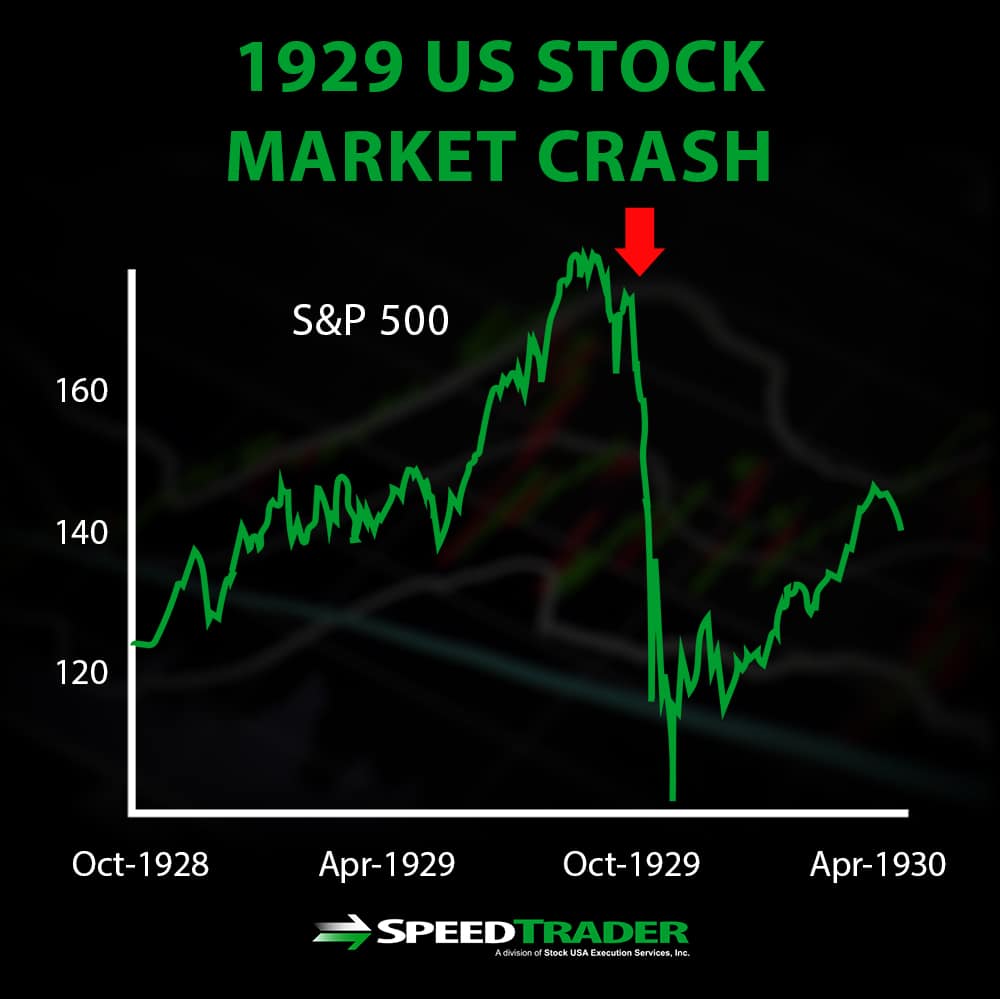
Financial markets inherently operate in cycles, reflecting the expansion and contraction phases of the broader economy. These cycles are driven by various factors, including technological innovation, credit availability, consumer spending, and business investment. Periods of economic expansion, characterized by rising corporate profits and investor confidence, typically lead to bull markets where asset prices trend upwards. However, these expansions cannot last indefinitely. Eventually, imbalances build up – whether it’s excessive speculation, inflated asset valuations, or unsustainable debt levels – setting the stage for a reversal. A market drop is often a necessary reset, correcting these imbalances and allowing the economy to recalibrate before the next growth phase. History is replete with examples, from the dot-com bubble burst to the 2008 financial crisis, each demonstrating the cyclical rhythm of prosperity followed by contraction. Understanding this cyclical nature helps investors view downturns not as anomalies, but as integral parts of the long-term investment landscape.
Distinguishing Corrections from Bear Markets
While both corrections and bear markets represent declines in asset values, they differ in severity and duration. A market correction is typically defined as a decline of 10% to 20% from a recent peak in a major market index, such as the S&P 500. Corrections are relatively common and often short-lived, typically lasting from a few weeks to several months. They can be triggered by minor economic hiccups, profit-taking, or a temporary shift in investor sentiment. Historically, corrections have occurred, on average, once every 1-2 years and are considered a healthy part of market functioning, preventing assets from becoming excessively overvalued.
A bear market, on the other hand, is a more severe and prolonged downturn, characterized by a decline of 20% or more from recent highs. Bear markets are less frequent but can last for many months, or even years, often coinciding with broader economic recessions. They are typically driven by significant structural issues, such as prolonged high inflation, widespread corporate bankruptcies, or a systemic financial crisis. The psychological impact of a bear market is also more profound, leading to sustained investor pessimism and often a flight to safety. Recognizing these distinctions helps investors temper their reactions and apply appropriate strategies during different types of market volatility.
Key Economic Drivers Behind Market Declines
Beyond the inherent cycles, specific economic conditions and policy decisions frequently act as direct catalysts for market downturns. These drivers affect corporate profitability, consumer spending, and the perceived value of assets.
Inflationary Pressures and Interest Rate Hikes
One of the most potent triggers for a market drop is persistent and rising inflation. When the cost of goods and services escalates rapidly, it erodes the purchasing power of consumers and increases the cost of doing business for companies. Higher input costs, from raw materials to wages, compress profit margins, which ultimately impacts corporate earnings and stock valuations.
In response to runaway inflation, central banks, like the U.S. Federal Reserve, typically resort to interest rate hikes. The primary tool for combating inflation, raising interest rates, makes borrowing more expensive for businesses and consumers alike. This dampens demand, slows economic activity, and aims to bring prices back under control. However, higher interest rates also have several direct negative impacts on the stock market:
- Reduced Corporate Borrowing and Investment: Companies find it more costly to borrow money for expansion, innovation, or even day-to-day operations, slowing growth.
- Lower Consumer Spending: Higher rates translate to more expensive mortgages, car loans, and credit card debt, leaving consumers with less discretionary income.
- Discounting Future Earnings: Higher interest rates reduce the present value of future corporate earnings. Investors demand a higher discount rate for future profits, making growth stocks, which derive much of their value from anticipated future earnings, particularly vulnerable.
- Increased Attractiveness of Bonds: As interest rates rise, bonds become more attractive alternatives to stocks, offering a safer, fixed-income stream, which can draw capital away from equities.
The prospect or reality of aggressive rate hikes can quickly cool an overheated market, leading to significant declines as investors recalibrate their expectations for economic growth and corporate profitability.
Slowing Economic Growth and Recession Fears
Another critical driver of market drops is a significant deceleration in economic growth, often leading to fears of an impending recession. A recession is typically defined as two consecutive quarters of negative GDP growth. During periods of slowing growth:
- Corporate Earnings Decline: Businesses experience reduced sales and profit margins as consumer and business demand wanes. This directly impacts stock prices, which are fundamentally linked to a company’s ability to generate profits.
- Unemployment Rises: As economic activity slows, companies may lay off workers, increasing unemployment rates. This further dampens consumer confidence and spending, creating a negative feedback loop.
- Reduced Investment: Businesses become more cautious, postponing or canceling investment projects, which further inhibits growth.
Market participants are forward-looking, meaning they often begin pricing in a recession long before it is officially declared. Indicators such as an inverted yield curve (where short-term bond yields are higher than long-term yields), declining manufacturing orders, and weakening consumer sentiment can signal an economic slowdown, prompting investors to sell off riskier assets and move into safer havens, thereby driving down market indices.
Global Supply Chain Disruptions and Commodity Shocks
In an increasingly interconnected world, disruptions to global supply chains can have far-reaching economic consequences, often manifesting as market drops. Events such as natural disasters, pandemics (like COVID-19), or geopolitical conflicts can bottleneck the flow of goods and components, leading to shortages and increased production costs for businesses worldwide.
Closely related are commodity shocks, particularly sharp increases in the prices of essential commodities like oil, natural gas, or industrial metals. For example, a sudden surge in crude oil prices can significantly increase transportation costs for nearly all industries, from manufacturing to retail. This acts as a tax on consumers and businesses, reducing disposable income and profit margins.
- Increased Production Costs: Companies reliant on specific commodities face higher input costs, which either get passed on to consumers (contributing to inflation) or squeeze profit margins.
- Logistical Challenges: Shortages of critical components can halt production lines, leading to missed sales targets and reduced output.
- Impact on Consumer Spending: Higher energy prices, for instance, mean consumers have less money for other goods and services, slowing overall economic activity.
These disruptions create uncertainty and can directly impact corporate profitability across various sectors, leading investors to re-evaluate their holdings and contribute to a market downturn.
Geopolitical Events and Their Ripple Effects
While economic fundamentals are paramount, geopolitical events can act as powerful, often sudden, catalysts for market drops. These events introduce uncertainty and risk, causing investors to re-evaluate global stability and economic prospects.
International Conflicts and Political Instability
Major international conflicts, such as wars or significant military skirmishes, can send immediate shockwaves through financial markets. The uncertainty surrounding such events – their potential escalation, impact on trade routes, and humanitarian costs – causes investors to shed riskier assets.
- Disruption of Trade and Supply Routes: Conflicts in key regions can interrupt the flow of goods, particularly essential commodities like oil and gas, leading to price spikes and shortages globally.
- Sanctions and Retaliation: Governments may impose economic sanctions on belligerent nations, which can disrupt international commerce, supply chains, and financial systems, impacting multinational corporations.
- Increased Defense Spending: While some sectors might benefit, overall economic resources can be diverted, and the specter of war can deter foreign investment.
Similarly, significant political instability within major economies or globally, such as coups, widespread civil unrest, or unprecedented changes in government policy, can unnerve investors. This is because political stability is a cornerstone of economic predictability and security for businesses. A lack of clarity on future policies regarding taxation, regulation, or trade can lead to a wait-and-see approach, discouraging investment and potentially triggering capital flight.
Trade Wars and Tariffs
In recent decades, the rise of trade wars and the imposition of tariffs have proven to be significant sources of market volatility. When nations engage in disputes by imposing duties on imported goods, it can disrupt established supply chains, increase the cost of goods for consumers and businesses, and reduce overall global trade volumes.
- Increased Costs for Importers: Tariffs make imported goods more expensive, which can reduce profit margins for companies that rely on those imports or force them to pass increased costs onto consumers.
- Retaliatory Measures: Targeted countries often retaliate with their own tariffs, leading to a tit-for-tat escalation that further harms international trade.
- Reduced Export Competitiveness: Domestic industries may find their exports less competitive in foreign markets due to retaliatory tariffs.
- Uncertainty: The unpredictable nature of trade disputes creates significant uncertainty for businesses trying to plan their supply chains, investments, and market strategies, often leading to a slowdown in economic activity and investor apprehension.
These geopolitical factors, by their very nature, are difficult to predict and quantify, often leading to sharp, sudden market reactions as investors grapple with new, unforeseen risks.
Investor Sentiment and Behavioral Finance
Beyond hard economic data and geopolitical events, the collective mood and psychological biases of investors play a profound role in exacerbating, and sometimes initiating, market drops. Behavioral finance highlights how emotions often override rational decision-making, particularly during times of stress.
The Power of Fear and Greed
Human emotions, specifically fear and greed, are powerful forces that drive market dynamics. During bull markets, greed often takes hold, leading investors to chase rising asset prices, sometimes ignoring fundamentals or taking on excessive risk. This can inflate asset bubbles, where prices detach from intrinsic value, fueled by the belief that prices will continue to rise indefinitely.
However, when a negative catalyst emerges, fear can quickly become the dominant emotion. The fear of losing money can trigger panic selling, where investors rush to liquidate their holdings, even at a loss, to avoid further declines. This collective rush to exit positions can overwhelm buying interest, pushing prices down far more rapidly and severely than economic fundamentals alone might suggest. This emotional cascade can turn a healthy correction into an exaggerated downturn, as rational analysis is supplanted by an instinct for self-preservation.
Herd Mentality and Panic Selling
Related to fear and greed is the phenomenon of herd mentality, where individuals base their decisions on the actions of the larger group, rather than independent analysis. In a rising market, herd mentality can fuel speculative bubbles as investors jump on the bandwagon. Conversely, during a downturn, it can accelerate panic selling. As prices begin to fall, investors see others selling and fear being left behind, leading them to sell as well. This creates a self-fulfilling prophecy, where selling begets more selling, amplifying the market’s decline.
Panic selling is particularly dangerous because it often leads investors to sell at the bottom of a market, locking in losses that could have been recovered had they maintained a long-term perspective. The psychological pressure to “do something” when everyone else seems to be reacting can be immense, overriding carefully constructed investment plans and long-term goals.
The Role of Algorithmic Trading
In modern markets, the human element of fear and greed is increasingly augmented by algorithmic trading. These high-speed, automated systems execute trades based on pre-programmed rules and market signals. While they can provide liquidity and efficiency, they can also exacerbate market volatility during downturns.
- Amplified Selling Pressure: If algorithms are programmed to sell when certain price thresholds or technical indicators are met, a cascade of automated selling orders can be triggered during a market decline. This can lead to flash crashes or accelerate existing downturns, as machines react instantaneously and en masse, without the emotional deliberation that might slow human traders.
- Reduced Liquidity: In times of extreme volatility, some algorithms may also reduce their trading activity, pulling back bids and offers, which can further reduce market liquidity and make price declines even steeper as there are fewer buyers to absorb selling pressure.
While algorithms don’t experience emotion, their programming can reflect and amplify the underlying sentiment of the market, making their role in accelerating market drops significant.
Proactive Strategies for Investors Amid Downturns
While market drops are an inevitable part of investing, how an investor responds can significantly impact their long-term financial health. Rather than succumbing to panic, adopting a strategic and disciplined approach can turn periods of volatility into opportunities.
Diversification and Risk Management
One of the most fundamental principles of investing, and arguably the most crucial during turbulent times, is diversification. Spreading investments across various asset classes (e.g., stocks, bonds, real estate, commodities), different industries, and geographical regions can cushion the blow of a downturn in any single area. If one sector or country is struggling, others might be performing better, helping to stabilize the overall portfolio.
- Asset Allocation: A well-designed asset allocation strategy, tailored to an individual’s risk tolerance and financial goals, helps ensure that the portfolio isn’t overly concentrated in high-risk assets that are most vulnerable during a bear market.
- Risk Assessment: Regularly assessing and adjusting risk exposure is vital. This includes not just market risk but also concentration risk, liquidity risk, and inflation risk. Understanding one’s personal risk tolerance is paramount to avoid making impulsive decisions during market volatility.
A robust risk management framework ensures that no single event or asset class can disproportionately derail the entire investment plan, making market drops less terrifying and more manageable.
Long-Term Perspective and Dollar-Cost Averaging
For most individual investors, adopting a long-term perspective is perhaps the most powerful defense against market volatility. Short-term fluctuations, while unnerving, often dissipate over extended periods. Historically, markets have always recovered from downturns, eventually reaching new highs. Focusing on long-term growth objectives rather than reacting to daily news cycles helps investors avoid the emotional pitfalls of panic selling and missed recovery opportunities.
Dollar-cost averaging (DCA) is a highly effective strategy that complements a long-term view. DCA involves investing a fixed amount of money at regular intervals (e.g., monthly) regardless of market conditions. When prices are high, your fixed investment buys fewer shares; when prices are low (during a market drop), it buys more shares.
- Mitigates Timing Risk: DCA removes the need to try and “time the market,” a notoriously difficult and often unsuccessful endeavor.
- Averages Out Purchase Price: Over time, this strategy helps to average down the cost basis of your investments, potentially leading to better returns when the market eventually recovers.
- Behavioral Benefit: It instills discipline and prevents emotional decisions, as the investment schedule is pre-determined.
During a market drop, DCA allows investors to take advantage of lower prices, effectively buying assets “on sale” without having to guess the exact bottom.
Rebalancing Portfolios and Identifying Opportunities
A market downturn, while challenging, also presents a unique opportunity for strategic action: rebalancing portfolios and identifying undervalued assets.
- Portfolio Rebalancing: Over time, different asset classes grow at different rates, potentially skewing a portfolio away from its target asset allocation. A market drop can significantly alter these weightings. Rebalancing involves selling off assets that have become overweighted (often those that performed relatively well) and buying more of those that have become underweighted (often those that have fallen sharply). This allows investors to systematically “buy low and sell high” and restore their desired risk profile.
- Identifying Opportunities: Bear markets often indiscriminately drag down the prices of both struggling and fundamentally strong companies. This creates opportunities to acquire shares of high-quality companies at significantly reduced valuations. Intelligent investors conduct thorough research during these periods, looking for businesses with solid balance sheets, strong competitive advantages, and robust long-term growth prospects that are temporarily undervalued due to market-wide pessimism.
Instead of viewing market drops solely as a threat, savvy investors see them as a chance to optimize their portfolios, acquire quality assets at attractive prices, and position themselves for the inevitable market recovery. This disciplined and opportunistic approach is key to thriving through market volatility and achieving long-term financial success.
aViewFromTheCave is a participant in the Amazon Services LLC Associates Program, an affiliate advertising program designed to provide a means for sites to earn advertising fees by advertising and linking to Amazon.com. Amazon, the Amazon logo, AmazonSupply, and the AmazonSupply logo are trademarks of Amazon.com, Inc. or its affiliates. As an Amazon Associate we earn affiliate commissions from qualifying purchases.