
The daily gyrations of the stock market are a constant source of fascination and, at times, anxiety for investors, economists, and the general public alike. When a major benchmark like the Dow Jones Industrial Average (DJIA) experiences a significant decline, it often triggers a flurry of questions: What happened? What does it mean for my investments? And what does it signal for the broader economy? Understanding why the Dow, or any major index, falls on a given day requires dissecting a complex interplay of macroeconomic forces, corporate performance, investor sentiment, and technical market dynamics. It’s rarely a single cause but rather a confluence of factors that coalesce to push prices lower.

Understanding the Dow Jones Industrial Average
To comprehend a fall, one must first grasp what the Dow Jones Industrial Average represents and why its movements are so closely watched.
What is the DJIA?
The Dow Jones Industrial Average is one price-weighted stock market index, acting as a barometer for the health of the U.S. economy. Comprising 30 large, publicly owned companies trading on the New York Stock Exchange (NYSE) and NASDAQ, it includes some of the most influential and widely recognized corporations in the world, spanning diverse sectors such as technology, industrials, consumer goods, healthcare, and financials. Examples range from Apple and Microsoft to Boeing, Goldman Sachs, and Johnson & Johnson.
Created in 1896 by Charles Dow, the index was initially intended to track the performance of the industrial sector. While its composition has evolved significantly over the decades to reflect changes in the American economy, it remains a widely cited indicator of large-cap U.S. equity market performance and overall investor confidence. A movement in the Dow signifies a collective shift in the perceived value or future prospects of these 30 economic stalwarts.
The Mechanics of a Market Decline
When the DJIA “falls,” it means that the average share price of its 30 component companies has declined over the trading day. This drop signifies a period where selling pressure has outweighed buying interest. Investors, individually and institutionally, have collectively decided that the current prices are too high relative to perceived future value, or they are liquidating assets for other reasons.
A decline is not merely a numerical change; it reflects a shift in investor sentiment, often driven by new information or changing expectations. If a significant number of these blue-chip companies report disappointing earnings, or if broader economic news suggests tougher times ahead, investors may begin to sell off their holdings. Because the Dow is price-weighted, companies with higher stock prices have a greater influence on the index’s movement than those with lower prices, even if the latter has a larger market capitalization. Therefore, a substantial drop in a single high-priced component stock can have a disproportionate impact on the overall index.
Macroeconomic Headwinds and Investor Sentiment
Often, the most significant drivers of broad market movements are macroeconomic factors that shape the overall economic landscape and, consequently, investor confidence.
Inflationary Pressures and Interest Rate Hikes
One of the most potent forces influencing market direction is inflation. When the cost of goods and services rises persistently, it erodes purchasing power for consumers and increases operational costs for businesses, potentially squeezing profit margins. Central banks, most notably the U.S. Federal Reserve, typically respond to high inflation by raising benchmark interest rates.
Higher interest rates are designed to cool down an overheating economy by making borrowing more expensive. This impacts businesses seeking loans for expansion, consumers taking out mortgages or car loans, and effectively slows demand. For the stock market, higher rates can be a double-edged sword:
- Discounting Future Earnings: Higher interest rates reduce the present value of future corporate earnings, making stocks less attractive relative to safer assets like bonds.
- Increased Debt Costs: Companies with significant debt burdens face higher interest payments, eating into their profits.
- Reduced Consumer Spending: As borrowing costs rise and economic activity slows, consumer spending—a major driver of corporate revenue—can falter.
A hawkish stance from the Fed, even if necessary to combat inflation, often triggers market apprehension, leading to sell-offs in anticipation of slower economic growth and reduced corporate profitability.
Geopolitical Tensions and Global Economic Concerns
The interconnectedness of the global economy means that events far from Wall Street can have immediate and profound impacts on the Dow. Geopolitical tensions, such as military conflicts, trade wars, or significant diplomatic disputes, introduce uncertainty and risk into the market. These events can disrupt global supply chains, drive up commodity prices (especially energy), reduce international trade, and deter foreign investment.
For instance, a conflict in a major oil-producing region could send crude oil prices soaring, increasing costs for transportation, manufacturing, and ultimately, consumers. A trade dispute leading to tariffs can reduce the profitability of multinational corporations that rely on international sales and complex supply networks. This uncertainty often leads investors to retreat from riskier assets like stocks and flock to perceived safe havens, causing equity markets to decline. Global economic slowdowns in key trading partners, such as China or Europe, can also dampen demand for U.S. exports and affect the earnings of globally-exposed Dow components.
Recession Fears and Economic Data
The specter of an economic recession is a perennial concern for investors. A recession, typically defined as two consecutive quarters of negative Gross Domestic Product (GDP) growth, implies a significant contraction in economic activity, leading to job losses, reduced consumer spending, and declining corporate profits.
Markets are forward-looking, meaning they often react to the prospect of a recession long before it is officially declared. Key economic indicators are therefore scrutinized daily for clues about the economy’s direction. Negative surprises in reports such as:
- Consumer Price Index (CPI): High inflation data, prompting rate hike fears.
- Producer Price Index (PPI): Rising costs for businesses, signaling potential future inflation.
- Jobless Claims/Unemployment Rate: Spikes in unemployment or weakening job growth.
- Manufacturing and Services Purchasing Managers’ Index (PMI): Declines indicating a slowdown in industrial activity or service sector expansion.
- Retail Sales: Weak consumer spending figures.
Any data point suggesting an economic slowdown or persistent inflation can trigger a broad market sell-off as investors brace for potential earnings declines and reduced economic activity.
Corporate Earnings, Sector-Specific Challenges, and Analyst Revisions
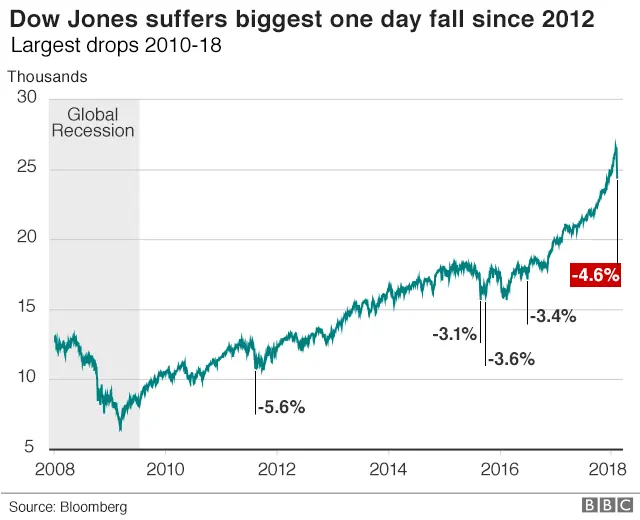
While macro factors set the stage, micro-level issues related to specific companies and industries within the Dow can often be the immediate catalyst for a fall.
Disappointing Corporate Earnings Reports
Quarterly earnings season is a critical period for public companies, including the 30 components of the Dow. During this time, companies report their financial results, including revenue, net income, and earnings per share (EPS). Investors and analysts scrutinize these reports against their expectations.
When a major Dow component, especially one with a high price weighting, reports earnings that miss analyst estimates or issues a weaker-than-expected outlook (known as “guidance”), its stock price can fall sharply. If several Dow companies or a particularly influential one disappoints on the same day, it can drag the entire index down. Negative guidance is often more impactful than past performance, as it signals future challenges that haven’t yet been priced into the stock. Factors like rising input costs, supply chain issues, or slowing consumer demand often feature in these weaker outlooks.
Sectoral Weakness and Industry-Specific Headwinds
The Dow comprises companies from various sectors. Sometimes, an entire sector can face specific headwinds that lead to a broad decline among its constituents, which then impacts the overall index.
- Technology Sector: Regulatory scrutiny, anti-trust concerns, or a slowdown in digital advertising spending can affect tech giants.
- Financial Sector: Rising interest rates might initially help banks, but a looming recession or increased loan defaults can hurt them significantly.
- Industrial Sector: Higher commodity prices, labor shortages, or a slowdown in global trade can impact manufacturing and heavy industry companies.
- Consumer Staples/Discretionary: Inflation can erode consumer purchasing power, hurting companies that sell non-essential goods (discretionary) and potentially shifting demand even for essential goods (staples).
If a dominant Dow component belongs to a sector experiencing significant challenges, its individual decline can be substantial enough to pull the average down. The “domino effect” occurs when weakness in one large company or sector signals broader issues, causing investors to re-evaluate similar companies or even the entire market.
Analyst Downgrades and Market Commentary
Financial analysts play a significant role in influencing investor perceptions. They conduct in-depth research on companies and issue ratings (e.g., buy, hold, sell) and price targets. When a prominent analyst or investment bank downgrades a Dow component’s stock rating, it can trigger immediate selling pressure. Such downgrades often come with a detailed rationale, highlighting risks like slowing growth, increased competition, or valuation concerns, which can persuade other investors to sell.
Similarly, influential market commentators, economists, or even policymakers can sway market sentiment with their public statements. A negative forecast from a respected economic figure, or a concerning remark from a central bank official, can lead to widespread selling as investors react to new information or adjust their risk assessments.
Technical Factors and Market Dynamics
Beyond fundamental and macroeconomic reasons, purely technical aspects of market trading can contribute to a daily decline in the Dow.
Profit-Taking and Volatility
Markets rarely move in a straight line upwards. After a period of sustained gains, investors may decide to “take profits” by selling shares that have appreciated significantly. This natural market behavior can lead to a temporary pullback or a more substantial correction, even if the underlying fundamentals of the economy or companies remain strong. Profit-taking can be triggered by reaching certain price targets or simply a desire to lock in gains after a substantial rally.
Market volatility, characterized by rapid and often unpredictable price fluctuations, can also contribute to sudden drops. Volatility can be fueled by algorithmic trading, where computer programs execute trades at high speeds based on pre-set conditions, or by sudden, unexpected news events that trigger a wave of selling or buying.
Futures and Options Expiration
Certain days of the trading calendar can see increased volatility due to the expiration of financial derivatives like stock index futures and options contracts. On “Quadruple Witching” days, for example (the third Friday of March, June, September, and December), stock index futures, stock index options, stock options, and single stock futures all expire simultaneously. This can lead to increased trading volume and price swings as traders unwind or roll over their positions, sometimes influencing the underlying cash market indices like the Dow.
Algorithmic Trading and Program Selling
A significant portion of today’s market trading is executed by high-frequency trading (HFT) firms and algorithmic systems. These computer programs can analyze market data and execute trades in milliseconds. While they provide liquidity, they can also amplify market moves. If a trigger event occurs (e.g., a negative economic data release, a breach of a technical support level), these algorithms can initiate large-scale selling programs almost simultaneously, leading to rapid and steep declines, sometimes referred to as “flash crashes,” though these are rare for the Dow’s overall movement. The speed and scale of algorithmic trading mean that small negative catalysts can be quickly exaggerated into significant market downturns.
Navigating Market Declines: A Long-Term Perspective for Investors
For individual investors, a fall in the Dow can be unsettling. However, it’s crucial to adopt a disciplined, long-term perspective rather than reacting emotionally to daily fluctuations.
The Importance of Diversification
Diversification remains a cornerstone of prudent investing. By spreading investments across various asset classes (stocks, bonds, real estate), different industries, geographic regions, and company sizes, investors can mitigate the impact of a downturn in any single area. While a major index like the Dow falling can affect most portfolios, a well-diversified portfolio is designed to weather specific sector or company-specific shocks.
Maintaining a Long-Term Investment Horizon
History shows that market corrections and downturns are a normal, albeit uncomfortable, part of the investment cycle. The stock market has consistently recovered from every major downturn over the long run. Investors with a long-term horizon (many years or decades) are often best served by staying invested through periods of volatility. Attempting to time the market by selling during a dip and trying to buy back in lower often leads to missed gains when the market inevitably recovers. Strategies like dollar-cost averaging, where one invests a fixed amount regularly regardless of market movements, can help reduce risk by buying more shares when prices are low and fewer when they are high.
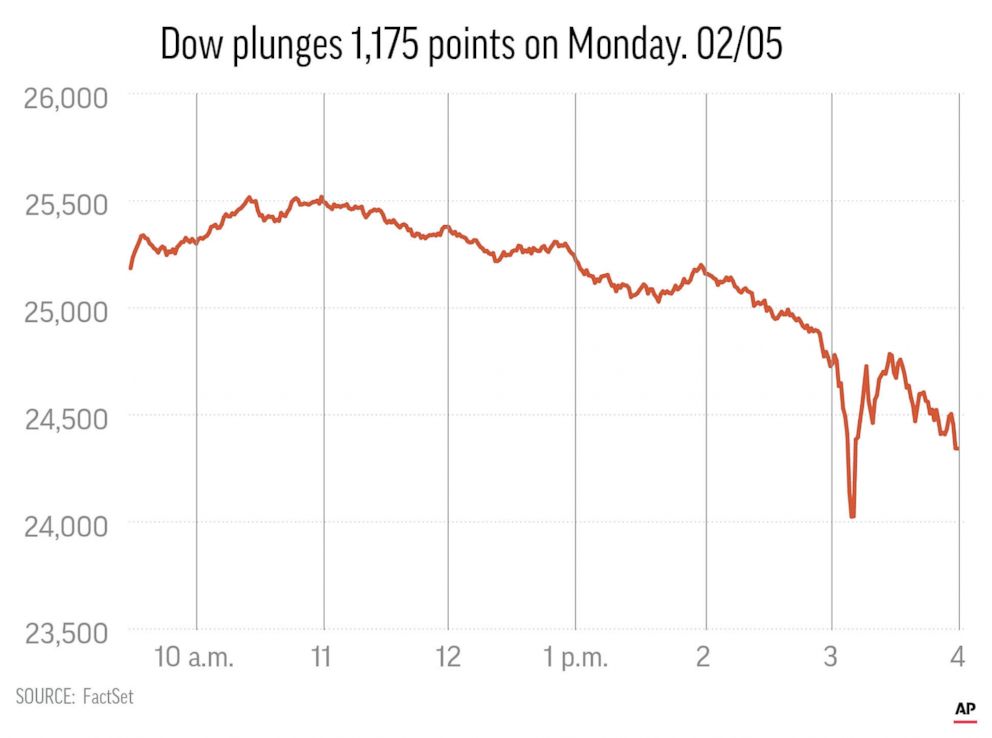
Opportunity in Volatility
For long-term investors, market declines can present valuable opportunities. When the Dow falls, quality companies often trade at temporarily reduced prices. This can be an opportune moment to purchase shares of strong companies at a discount, potentially enhancing future returns. Periods of volatility are also a good time to rebalance a portfolio, ensuring it still aligns with one’s risk tolerance and financial goals. Instead of panic selling, viewing downturns as chances to re-evaluate and potentially acquire solid assets can be a more constructive approach.
In conclusion, a fall in the Dow Jones Industrial Average on any given day is a complex event stemming from a multitude of factors, ranging from global economic trends and central bank policies to specific corporate earnings, sector-wide challenges, and even the technical mechanics of trading. While unsettling in the short term, these fluctuations are a normal aspect of healthy financial markets. For the prudent investor, understanding these dynamics and maintaining a disciplined, long-term approach, underpinned by diversification and a focus on intrinsic value, is key to navigating the inevitable ups and downs of the market cycle.
aViewFromTheCave is a participant in the Amazon Services LLC Associates Program, an affiliate advertising program designed to provide a means for sites to earn advertising fees by advertising and linking to Amazon.com. Amazon, the Amazon logo, AmazonSupply, and the AmazonSupply logo are trademarks of Amazon.com, Inc. or its affiliates. As an Amazon Associate we earn affiliate commissions from qualifying purchases.