
Tesla, Inc. has long been the poster child for the modern retail investing era. For years, its stock price seemed to defy the traditional laws of financial gravity, propelled by visionary promises, a cult-like following, and a dominant lead in the electric vehicle (EV) sector. However, the market is a fickle master. Recently, Tesla has faced significant downward pressure, leaving investors to wonder if the “Tesla Premium” is finally evaporating.
Understanding why Tesla stock dropped requires a multi-faceted analysis of the “Money” niche—specifically focusing on macroeconomic shifts, fundamental valuation metrics, and the changing competitive landscape of global business finance.
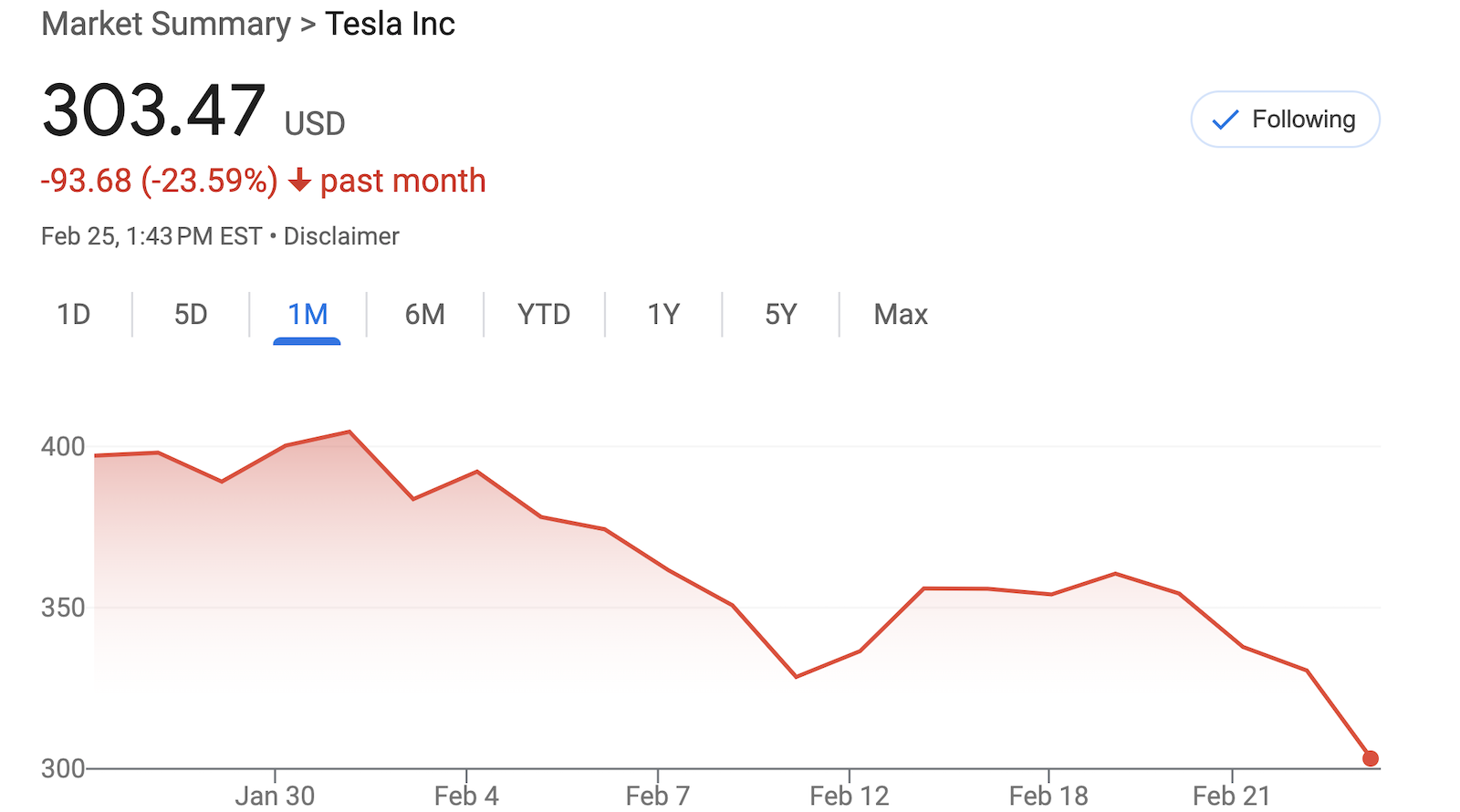
Macroeconomic Headwinds and the High-Interest Rate Environment
In the world of investing, Tesla is categorized as a “growth stock.” Growth stocks are valued based on their future cash flows rather than their current earnings. When interest rates are low, these future earnings are highly valuable. However, when central banks—led by the Federal Reserve—pivot to a high-interest-rate environment to combat inflation, the calculus changes overnight.
The Impact of Fed Policy on Growth Stocks
From a business finance perspective, higher interest rates increase the “discount rate” used in financial models. When you discount future profits at a higher rate, their “present value” shrinks. For a company like Tesla, which trades at a significantly higher price-to-earnings (P/E) ratio than traditional automakers, this mathematical shift leads to immediate downward pressure on the stock price. Investors move their capital out of high-risk growth assets and into “safer” yields, such as Treasury bonds, which offer guaranteed returns in a high-rate climate.
Shift in Consumer Purchasing Power
Beyond the technicalities of stock valuation, high interest rates have a practical impact on Tesla’s bottom line: auto loans. Most consumers do not buy Teslas with cash; they finance them. As interest rates climbed from near-zero to over 5%, the monthly payment for a Model 3 or Model Y increased substantially for the average consumer. This effectively makes the car more expensive even if Tesla keeps the sticker price the same. To maintain demand, Tesla has been forced to lower prices, which directly affects its revenue per unit.
Fundamental Valuation and Earnings Pressure
For years, Tesla’s main selling point to Wall Street was its industry-leading profit margins. While legacy automakers like Ford or GM struggled with thin margins, Tesla enjoyed software-like profitability. This narrative has recently come under fire, causing a re-evaluation of the company’s stock.
Narrowing Profit Margins and the Price War Strategy
To combat slowing demand and rising interest rates, Tesla initiated a global price war. By slashing prices across its lineup, the company aimed to prioritize volume and market share over short-term profits. From an investing standpoint, this is a double-edged sword. While it keeps the factories running, it erodes the “gross margin”—a key metric investors use to justify Tesla’s high valuation. When Tesla reported a significant dip in its automotive gross margins, the market reacted defensively. Investors began to fear that Tesla was losing its “tech company” status and was being re-rated by the market as a “traditional car company,” which commands much lower valuation multiples.
Missed Delivery Estimates and Production Bottlenecks
Stock prices are driven by expectations. When a company misses its quarterly delivery targets, it signals to the market that growth is stalling. Tesla has faced several logistical challenges, including shipping diversions in the Red Sea and an arson attack at its Gigafactory Berlin. Additionally, the ramp-up of the Cybertruck—a highly complex and unconventional vehicle—has been slower and more expensive than many analysts anticipated. In business finance, “execution risk” is a major factor in stock pricing; any sign that the company is struggling to meet its ambitious production goals leads to a sell-off.
Competitive Dynamics in the Global EV Market

Tesla once enjoyed a near-monopoly on the “cool, high-performance EV” market. That era has officially ended. The explosion of competition has forced investors to reconsider Tesla’s long-term market share.
The Rise of Chinese Manufacturers (BYD and Beyond)
The most significant threat to Tesla’s dominance comes from China. BYD (Build Your Dreams) recently overtook Tesla as the world’s top seller of electric vehicles. Unlike Tesla, BYD offers a wide range of affordable models that cater to the mass market. Chinese manufacturers benefit from a highly integrated supply chain, lower labor costs, and significant government subsidies. For investors, the concern is that Tesla is being squeezed in its most important growth market. If Tesla cannot compete on price and variety in China, its global growth narrative is fundamentally compromised.
Legacy Automakers Catching Up
While the “EV transition” has been slower for some legacy brands than expected, companies like Hyundai, Kia, and BMW have successfully launched competitive electric models that are winning over consumers. These companies have decades of experience in manufacturing, distribution, and marketing. As the “novelty” of owning a Tesla wears off, consumers are looking for alternatives that offer different styling, better build quality, or more traditional dealership service networks. This fragmentation of the market means Tesla must spend more on R&D and potentially marketing—costs that further weigh on its financial performance.
Key Man Risk and Governance Concerns
In the niche of business finance and corporate identity, the leadership of a company is as important as the product itself. Tesla’s stock is uniquely tied to the persona and actions of its CEO, Elon Musk.
The “Elon Musk Premium” and Brand Dilution
Many investors bought Tesla stock because they believed in Musk’s ability to disrupt multiple industries simultaneously. However, his acquisition of X (formerly Twitter) has created what analysts call “Key Man Risk.” Investors are concerned that Musk is distracted, splitting his time between too many high-stakes ventures. Furthermore, his polarizing public presence has, according to some market research, begun to alienate potential Tesla buyers. When the CEO’s personal brand becomes a liability to the corporate brand, institutional investors often reduce their exposure to the stock to mitigate “headline risk.”
Regulatory Hurdles and Legal Challenges
Tesla has also faced a series of legal and regulatory setbacks that have spooked the market. This includes investigations into the safety of its “Full Self-Driving” (FSD) software and a Delaware court’s decision to void Musk’s $56 billion compensation package. These governance issues create uncertainty. In the world of investing, uncertainty is often viewed more negatively than bad news. The lack of a clear, stable governance structure makes it difficult for institutional funds to maintain large, long-term positions in the stock.
The Road Ahead: Future Catalysts for Recovery
Despite the recent drop, many investors remain “bullish” on Tesla’s long-term prospects. For the stock to recover, the company must pivot its financial narrative from being “just a car company” back to being an “AI and Energy titan.”
Full Self-Driving (FSD) and AI Monetization
The “bull case” for Tesla’s valuation relies heavily on its software. If Tesla can successfully solve autonomous driving and launch a “Robotaxi” network, its profit margins could skyrocket. From an investing perspective, this would transform Tesla into a high-margin service provider, similar to Uber or Airbnb, but with its own proprietary hardware. Investors are closely watching every software update for signs that FSD is nearing a “ChatGPT moment” of mass adoption and reliability.
Energy Storage and the Broader Ecosystem
Tesla Energy—the division responsible for Powerwalls and Megapacks—is a growing part of the company’s financial portfolio. As the world transitions to renewable energy, the demand for large-scale battery storage is expected to explode. While this segment currently represents a small fraction of Tesla’s total revenue, it is growing faster than the automotive segment. Diversifying income streams is a classic strategy in business finance to stabilize a company’s stock price against sector-specific downturns.
Conclusion
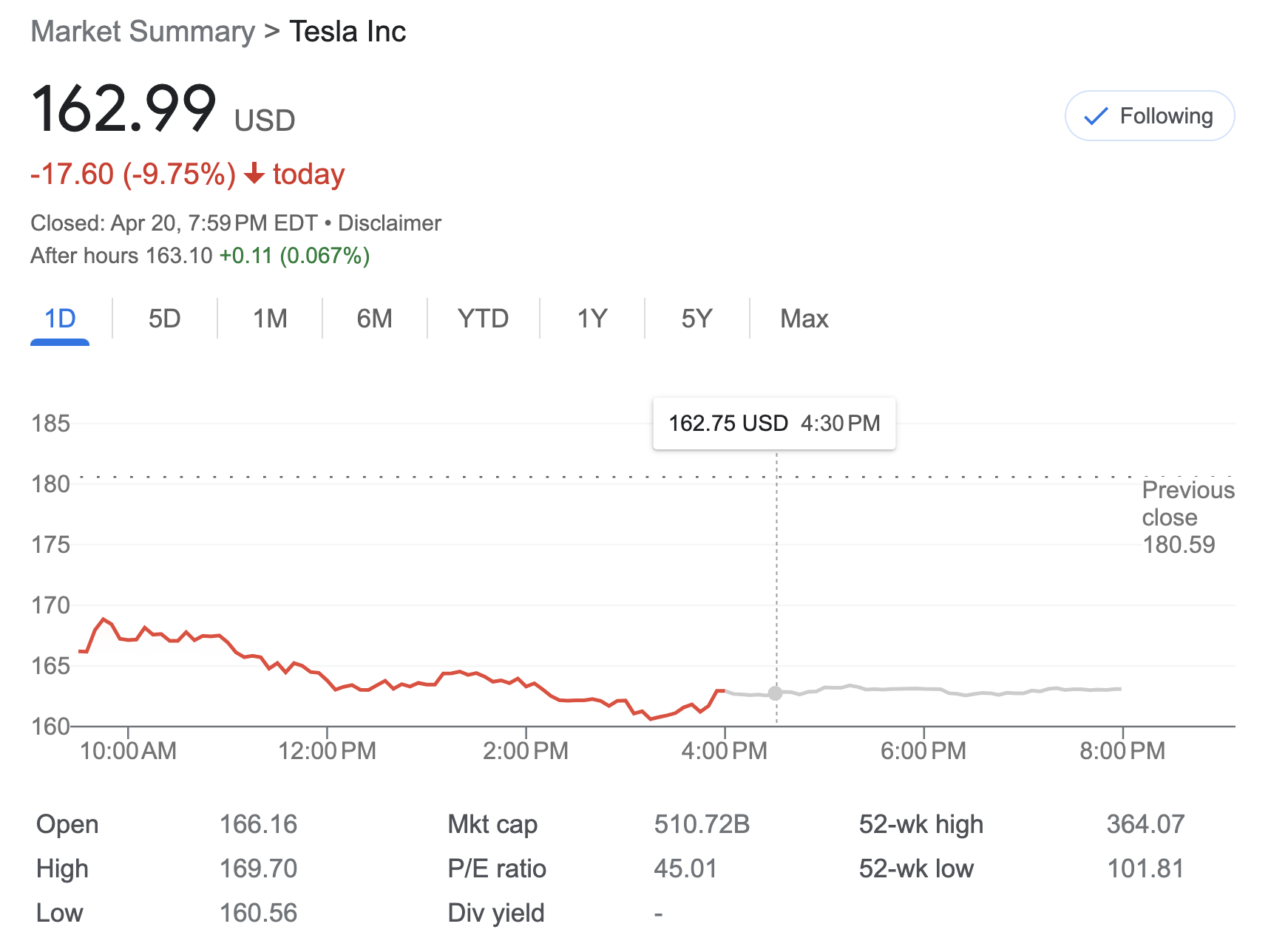
Tesla’s recent stock drop is not the result of a single failure, but rather a “perfect storm” of macroeconomic pressure, narrowing margins, intense global competition, and leadership distractions. For the savvy investor, the current volatility is a reminder that even the most innovative companies are subject to the fundamental laws of finance. Whether Tesla is currently a “bargain” or a “falling knife” depends on one’s belief in its ability to innovate its way out of a traditional manufacturing squeeze and into a new era of AI-driven profitability. As the market continues to digest these factors, Tesla remains one of the most important—and most debated—assets in the modern financial landscape.
aViewFromTheCave is a participant in the Amazon Services LLC Associates Program, an affiliate advertising program designed to provide a means for sites to earn advertising fees by advertising and linking to Amazon.com. Amazon, the Amazon logo, AmazonSupply, and the AmazonSupply logo are trademarks of Amazon.com, Inc. or its affiliates. As an Amazon Associate we earn affiliate commissions from qualifying purchases.