
The narrative surrounding Nvidia, a titan in the semiconductor industry, is often one of relentless innovation and exponential growth, particularly in the realms of gaming, professional visualization, and, most recently, artificial intelligence (AI). Yet, like even the most robust financial instruments, Nvidia’s stock has experienced periods of significant decline, prompting investors and market watchers to ask, “Why did Nvidia fall?” Such downturns are rarely attributable to a single factor but rather a confluence of broader market dynamics, sector-specific headwinds, and unique company challenges that collectively impact its financial performance and investor sentiment. Understanding these forces is crucial for anyone keen on the intricacies of business finance and investing.

Market Volatility and Sector-Specific Headwinds
Even industry leaders like Nvidia are not immune to the broader macroeconomic currents that dictate market movements. A significant portion of any major company’s stock decline can often be traced back to these overarching trends, which create a challenging environment for even the most fundamentally strong businesses.
Broader Market Corrections
During periods of heightened inflation, rising interest rates, or geopolitical instability, the wider market often experiences corrections. Growth stocks, which derive a substantial portion of their valuation from future earnings potential, are particularly vulnerable in such environments. When central banks signal aggressive monetary tightening, investors tend to rotate out of riskier growth assets and into more stable, dividend-paying stocks or even cash. Nvidia, with its historically high valuation multiples reflecting its immense growth trajectory, becomes an obvious candidate for profit-taking during such downturns. The increased cost of capital and reduced liquidity across the financial system can depress valuations across the board, pulling even high-performing stocks like Nvidia down with the tide.
Tech Sector Cooling
Following a period of unprecedented growth fueled by the digital transformation accelerated by the pandemic, the tech sector began to cool. Investor sentiment shifted from an aggressive pursuit of growth at any cost to a more discerning evaluation of profitability and sustainable cash flows. Many tech companies, including those in semiconductors, saw their valuations balloon to unsustainable levels. As interest rates rose and the economic outlook became less certain, investors reassessed the long-term earnings potential of these companies, leading to a re-rating of the entire sector. Nvidia, despite its strong market position, could not escape this gravitational pull, as investors pared down their exposure to the broader technology space, viewing its high price-to-earnings ratios with increased skepticism. This sector-wide de-risking naturally contributed to downward pressure on its stock price.
Semiconductor Cycle Fluctuations
The semiconductor industry is notoriously cyclical, characterized by periods of robust demand and supply shortages followed by oversupply and slower sales. These cycles are driven by a complex interplay of consumer spending, enterprise investment, and technological transitions. Nvidia, as a major player in GPU manufacturing, is inherently exposed to these fluctuations. A “fall” can sometimes coincide with the downswing of a semiconductor cycle, where an oversupply of chips leads to pricing pressures and reduced revenue growth for manufacturers. Predicting and navigating these cycles is a constant challenge for semiconductor companies, and a misjudgment in inventory or demand forecasting can lead to significant financial impacts and, consequently, a decline in stock valuation as investors react to the changing industry landscape.
Demand Shifts and Inventory Management Challenges
Beyond the macroeconomic climate, specific changes in market demand for Nvidia’s core products, coupled with the company’s ability to manage its supply chain and inventory, played a critical role in its periodic financial setbacks.
Gaming Market Slowdown
Nvidia’s heritage is deeply rooted in the gaming industry, where its GeForce GPUs dominate the high-performance segment. While gaming saw an unprecedented boom during the initial phases of the COVID-19 pandemic, this surge began to normalize as economies reopened and discretionary spending habits shifted. Consumers, facing inflationary pressures and economic uncertainties, became more cautious about upgrading their gaming hardware. This meant a slowdown in demand for new GPUs, particularly at the high end, which forms a significant revenue stream for Nvidia. The post-pandemic hangover in the gaming sector directly impacted Nvidia’s sales figures and future revenue projections, contributing to investor concerns about its core business segment.
Cryptocurrency Mining Bust
Perhaps one of the most significant and abrupt demand shifts impacting Nvidia was the implosion of the cryptocurrency mining boom. For several years, GPUs were heavily utilized for mining cryptocurrencies like Ethereum, leading to insatiable demand and often scarcity for gamers. Miners bought GPUs in bulk, creating an artificial surge in Nvidia’s revenue from this segment. However, a sharp decline in cryptocurrency prices, coupled with Ethereum’s “Merge” to a Proof-of-Stake consensus mechanism (which drastically reduced the need for GPU-based mining), caused demand to evaporate almost overnight. The lucrative crypto mining market, which had previously been a significant tailwind for Nvidia, turned into a severe headwind, leaving the company with a substantial inventory of GPUs that were no longer in high demand from miners.
Inventory Overhang
The rapid decline in demand from both the normalizing gaming market and the collapsing crypto mining sector left Nvidia with an acute inventory overhang. The company had ramped up production to meet the previous surging demand, and suddenly found itself with an excess supply of GPUs in its sales channels. This situation necessitated aggressive inventory correction measures, including reduced shipments to channel partners, potential price reductions to clear older stock, and significant write-downs of inventory value. These actions directly impact gross margins and profitability, leading to lower-than-expected earnings reports. From an investment perspective, an inventory overhang signals a misstep in forecasting and directly erodes short-term financial performance, often triggering a sell-off as investors adjust their expectations for future earnings.
Valuation Concerns and Investor Sentiment
Nvidia’s market valuation has historically reflected its status as a high-growth technology leader. However, when growth trajectories falter or new risks emerge, investor sentiment can quickly shift, leading to a re-evaluation of its stock price.
Elevated Valuations
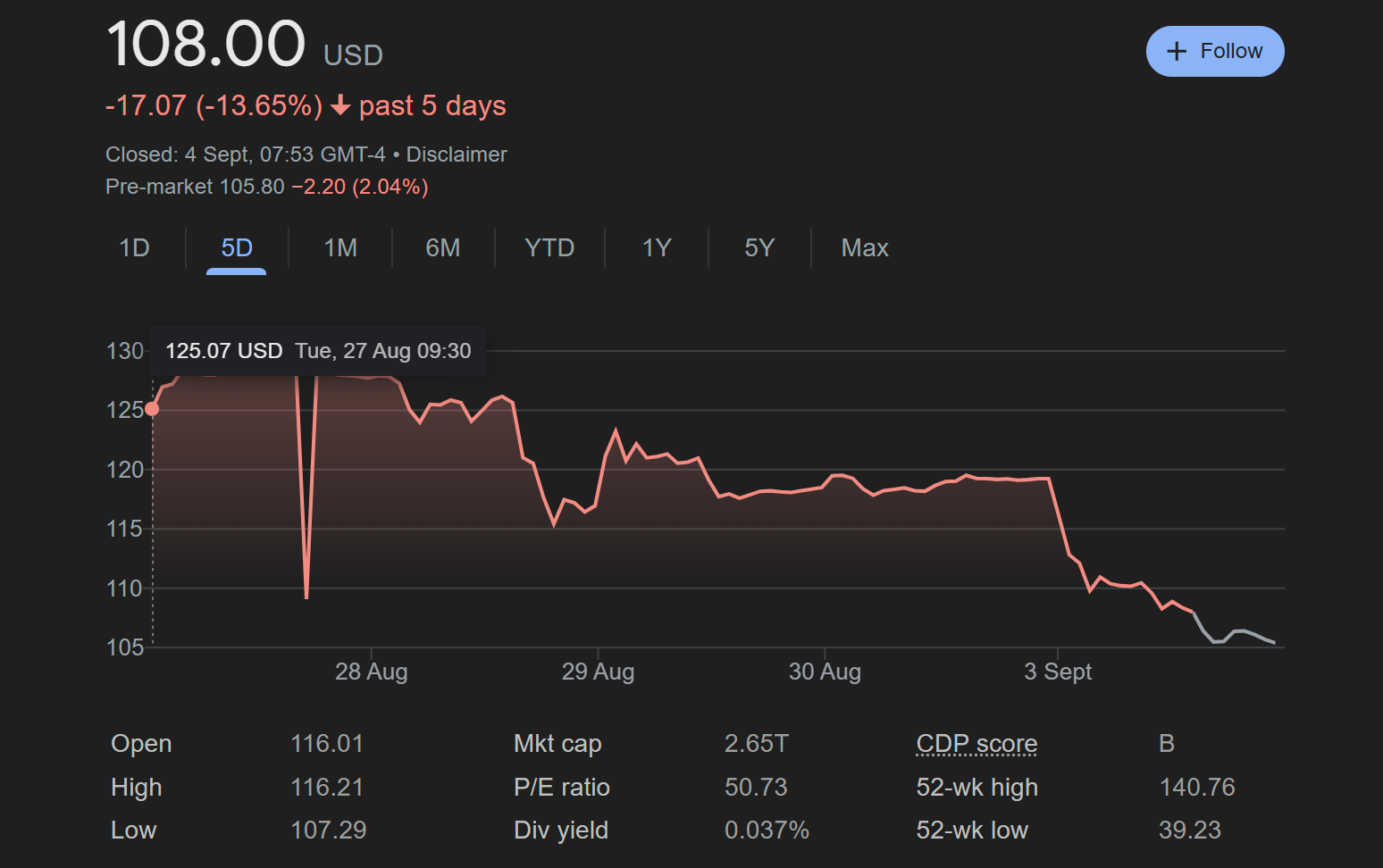
For extended periods, Nvidia’s stock traded at premium valuations, often commanding price-to-earnings (P/E) ratios significantly higher than the broader market or even its tech peers. These elevated multiples were justified by the company’s exceptional revenue growth, expanding profit margins, and its dominant position in rapidly expanding markets like AI and data centers. However, such high valuations inherently bake in lofty future growth expectations. When actual growth starts to decelerate, even slightly, or when external factors introduce uncertainty, these high multiples become difficult to sustain. Investors, seeing a disconnect between the previous growth narrative and emerging realities, tend to re-rate the stock downwards, leading to a sharp “fall” as the market adjusts to more conservative expectations.
Profitability Pressures
The inventory overhang and softening demand directly translate into profitability pressures for Nvidia. When the company has to discount products to clear inventory or takes write-downs on excess stock, its gross margins are negatively impacted. Furthermore, reduced sales volume, even if margins hold up on new products, can lead to lower overall net income. Investors closely scrutinize profitability metrics, as they are a key indicator of a company’s financial health and efficiency. Any indication of sustained pressure on gross margins or earnings per share can trigger a negative reaction, as it suggests the company’s ability to generate cash and create shareholder value is being compromised. The market views these pressures as a tangible erosion of the company’s financial strength, leading to a re-pricing of its shares.
Future Growth Doubts
While Nvidia boasts impressive long-term growth vectors in AI, data centers, and the metaverse, any perceived slowdown or increased competition in these areas can ignite investor doubts. The market is forward-looking; therefore, even strong current performance can be overshadowed by concerns about future prospects. For instance, if competitors launch compelling alternatives, or if the pace of adoption for certain technologies (like the metaverse) appears slower than initially anticipated, investors might question Nvidia’s ability to maintain its growth trajectory. These uncertainties can lead to a reduction in the “growth premium” embedded in Nvidia’s stock price, prompting investors to divest or adopt a more cautious stance, thereby contributing to a downward price movement.
Strategic Responses and Future Outlook
Understanding why Nvidia fell also requires an appreciation of how the company addresses its challenges and pivots towards future opportunities. Strategic financial management and clear communication are key to regaining investor confidence.
Inventory Correction Strategies
In response to the inventory glut, Nvidia implemented various strategies to rebalance its supply chain. This included reducing new product shipments to its channel partners to allow them to sell through existing stock, and in some cases, offering price adjustments. From a financial perspective, these actions are designed to normalize inventory levels, which is crucial for restoring healthy gross margins and preventing further write-downs. While these adjustments can temporarily depress revenue and profitability in the short term, they are essential for long-term financial health and set the stage for a healthier supply-demand balance when new products are eventually introduced. Investors often watch for signs that these correction efforts are succeeding as a signal for potential recovery.
Diversification into Data Center and AI
Despite the gaming and crypto headwinds, Nvidia’s strategic pivot and continued investment in its data center and AI segments have proven to be significant financial stabilizers. These segments have consistently demonstrated robust growth, driven by the escalating demand for accelerated computing in cloud services, artificial intelligence development, and enterprise applications. While other parts of the business experienced a downturn, the strength of the data center division often acts as a counter-balance, showcasing Nvidia’s ability to diversify its revenue streams and capture growth in high-value markets. For investors, the continued expansion and profitability of these areas are crucial for mitigating risks from cyclical consumer markets and underpin the company’s long-term investment thesis.
Long-Term Investment Perspective
Periods when Nvidia’s stock “falls” are often viewed by long-term investors not as a catastrophe, but potentially as an opportunity. While short-term market corrections and sector-specific challenges can certainly impact quarterly results and stock performance, Nvidia’s fundamental strengths remain compelling. Its leadership in GPU technology, its extensive software ecosystem (CUDA), and its strategic positioning in high-growth areas like AI, autonomous vehicles, and the metaverse suggest a strong foundation for future revenue and earnings growth. For investors focused on the long horizon, understanding the temporary nature of many “falls” and the underlying drivers of Nvidia’s business can lead to a perspective where current dips are seen as buying opportunities, assuming conviction in the company’s enduring innovation and market leadership. The cyclical nature of the industry and broader market corrections are inevitable, but a deep dive into the company’s financials and strategic direction often reveals resilience.
aViewFromTheCave is a participant in the Amazon Services LLC Associates Program, an affiliate advertising program designed to provide a means for sites to earn advertising fees by advertising and linking to Amazon.com. Amazon, the Amazon logo, AmazonSupply, and the AmazonSupply logo are trademarks of Amazon.com, Inc. or its affiliates. As an Amazon Associate we earn affiliate commissions from qualifying purchases.