
Nvidia, a titan in the semiconductor industry, has cemented its reputation as a leader in graphics processing units (GPUs) and artificial intelligence (AI) technologies. For years, its stock performance has been a beacon of growth, riding the waves of burgeoning markets in gaming, data centers, professional visualization, and automotive. Yet, even the most formidable companies experience periods of significant decline – a “drop” that can send jitters through the market and spark intense scrutiny from investors, analysts, and the wider financial community. Understanding why a powerhouse like Nvidia might experience such a drop requires a nuanced examination of market dynamics, macroeconomic forces, company-specific fundamentals, and evolving investor sentiment. It’s rarely a singular event but rather a confluence of factors that converge to impact valuation.
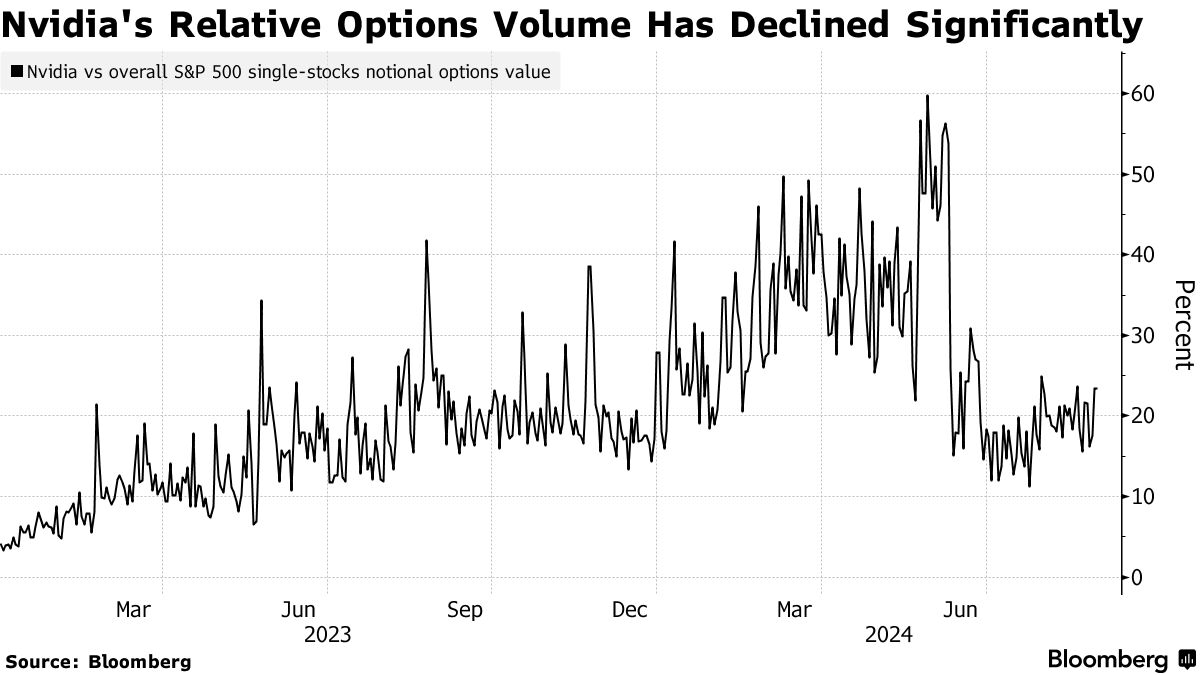
This article delves into the multi-faceted reasons that could lead to a substantial drop in Nvidia’s stock price, viewed through the lens of investment and business finance. We will explore how broader market trends, shifts in industry-specific demand, operational challenges, and strategic decisions all play a critical role in shaping investor confidence and, consequently, share value. For investors, comprehending these underlying drivers is crucial not only for navigating potential risks but also for identifying long-term opportunities in the volatile world of technology investing.
Understanding Market Volatility and Investor Sentiment
The stock market is a complex ecosystem driven by a delicate balance of economic data, corporate performance, and, perhaps most powerfully, investor psychology. A company’s stock price does not merely reflect its current financial health but also the market’s collective expectation of its future earnings and growth potential. When these expectations are challenged, even temporarily, a swift and significant drop can occur.
The Intricacies of Stock Price Movements
A stock’s price is fundamentally determined by supply and demand. When more investors want to sell than buy, the price falls. This imbalance can be triggered by a myriad of factors. For a high-growth, high-valuation stock like Nvidia, the market often bakes in an ambitious growth trajectory. Any sign that this trajectory might be slowing, or that future earnings might fall short of lofty projections, can lead to a disproportionate sell-off. This phenomenon is particularly acute for companies that trade at high price-to-earnings (P/E) ratios, as they are more susceptible to sharp corrections when investor confidence wavers. Furthermore, institutional investors, who hold significant stakes, often employ sophisticated risk management strategies that can involve automatic selling if certain price thresholds are breached, amplifying downward momentum during a drop. This cascade effect can transform an initial dip into a more significant slide, creating a self-fulfilling prophecy of declining value.
How Macroeconomic Factors Influence Tech Stocks
No company operates in a vacuum, and even industry leaders like Nvidia are significantly influenced by broader macroeconomic conditions. Factors such as interest rate hikes, inflation concerns, and recession fears can have a profound impact on investor appetite for growth stocks. When central banks raise interest rates to combat inflation, it typically increases the cost of borrowing for companies and individuals, potentially slowing economic growth. For investors, higher interest rates also make future earnings less valuable in present terms (discounting), which can disproportionately affect companies with high future growth expectations and lower current profitability – a common characteristic of many tech firms.
Moreover, consumer spending power can diminish during inflationary periods or economic downturns, impacting demand for discretionary items like high-end gaming GPUs. Businesses, facing higher costs and uncertain demand, may also scale back their capital expenditures, which could affect sales of Nvidia’s data center GPUs and professional visualization solutions. Geopolitical tensions, trade disputes, and supply chain disruptions (like those seen during the pandemic) further complicate the macroeconomic landscape, introducing uncertainty that can prompt investors to de-risk their portfolios by selling off volatile assets, including technology stocks. A drop in Nvidia’s value might thus be less about company-specific issues and more about a broader flight to safety in the market.
The Role of Investor Psychology and Market Hype
Beyond tangible financial metrics, investor psychology plays a crucial role in stock price dynamics. Market sentiment can shift rapidly, often driven by a mix of fear and greed. During periods of euphoria, stocks can become overvalued based on hype and speculative trading. Nvidia, being at the forefront of exciting technologies like AI and the metaverse, has often been a darling of growth investors, sometimes leading to valuations that anticipate several years of robust growth. When this hype cycle cools, or when the market identifies new risks, a rapid recalibration of expectations can occur.
Negative news, such as a missed earnings forecast, a competitor gaining ground, a regulatory challenge, or even a prominent analyst downgrade, can trigger a wave of selling. Fear can be contagious, leading to panic selling, where investors offload shares regardless of the company’s long-term fundamentals. Conversely, short sellers, who bet on a stock’s decline, can also exacerbate a drop by actively selling shares, further increasing supply and putting downward pressure on prices. Understanding that market drops are often amplified by these psychological factors helps contextualize the sometimes irrational swings in a company’s valuation.
Nvidia’s Business Fundamentals and Financial Performance
While macroeconomic trends set the stage, the specific reasons for an Nvidia drop often tie back to its core business operations and financial performance. Even a robust company can face challenges that impact its profitability and perceived growth trajectory.
Revenue Streams and Profitability Challenges
Nvidia’s primary revenue segments are gaming, data center, professional visualization, and automotive. A significant drop can occur if one or more of these segments underperforms expectations. For instance, if the gaming market experiences a slowdown due to saturation, a lack of compelling new titles, or increased competition, demand for Nvidia’s consumer GPUs could wane. Similarly, if data center growth stalls, perhaps due to slower enterprise adoption of AI or cloud infrastructure, the high-margin server GPU business could suffer.
Profitability can also be squeezed by rising operational costs, such as increased research and development (R&D) expenses to maintain its technological edge, or higher sales and marketing costs. Gross margins, a key indicator of a company’s pricing power and efficiency, are particularly watched. Any indication that these margins are eroding, perhaps due to aggressive pricing by competitors or a shift in product mix towards lower-margin offerings, could signal future profitability challenges and trigger investor concern. During periods of market downturn or uncertainty, investors typically scrutinize a company’s balance sheet and cash flow more intently, seeking reassurance about its financial stability.
Supply Chain Dynamics and Production Bottlenecks
The semiconductor industry is notoriously complex, relying on intricate global supply chains. Nvidia, like many others, depends on third-party foundries (e.g., TSMC) for manufacturing its chips. A drop in Nvidia’s stock can be directly linked to supply chain disruptions – whether these are due to geopolitical events, natural disasters, factory shutdowns, or simply an inability of foundries to keep up with demand. During periods of high demand, if Nvidia cannot procure enough chips to meet customer orders, it leads to lost sales opportunities and customer dissatisfaction. Conversely, if there’s an oversupply of chips due to misjudged demand or an abrupt market contraction, it can lead to excess inventory, price reductions, and inventory write-downs, all of which negatively impact financial results.
The COVID-19 pandemic vividly demonstrated the fragility of these global networks, leading to widespread chip shortages that impacted numerous industries. While shortages initially drove up prices for Nvidia’s products, the subsequent normalization or overcorrection could create a different set of challenges. Production bottlenecks can delay product launches, reduce market share, and ultimately erode investor confidence in the company’s ability to execute its production and delivery schedules efficiently.
Competitive Landscape and Market Share Pressures
Nvidia operates in highly competitive markets. While it holds a dominant position in high-end discrete GPUs, it faces formidable rivals such as AMD across its gaming and data center segments. Intel, a long-time CPU giant, has also re-entered the discrete GPU market, intensifying competition. In the AI and data center space, startups and even large tech giants like Google (with its TPUs) and Amazon (with its Inferentia chips) are developing their own custom silicon, potentially reducing reliance on Nvidia’s offerings over the long term.
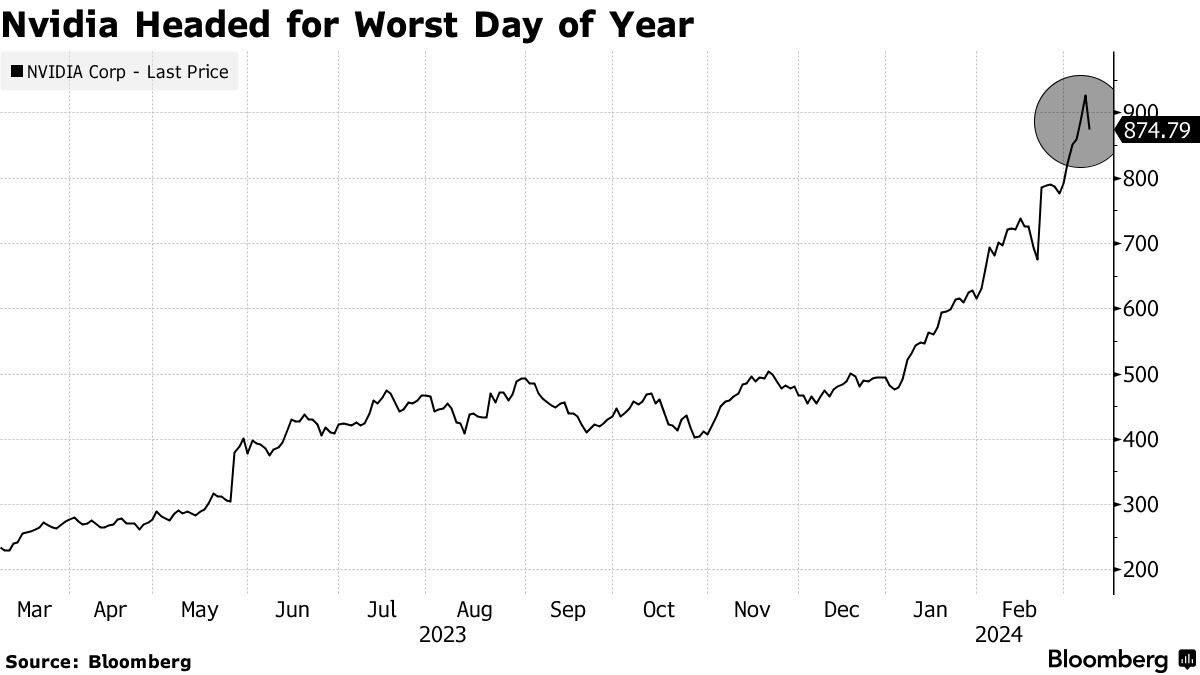
A perceived drop in market share, or an anticipation of increased competition leading to pricing pressures, can significantly impact Nvidia’s stock. Investors constantly assess a company’s competitive moat – its ability to sustain competitive advantages. If new technologies emerge that challenge Nvidia’s dominance, or if a competitor unveils a significantly better or cheaper product, it could signal a weakening of that moat, leading to a re-evaluation of Nvidia’s future growth prospects and a subsequent drop in its stock price. Furthermore, regulatory scrutiny, particularly regarding anti-competitive practices or mergers and acquisitions, can also pose a significant headwind, as seen in the failed Arm acquisition.
Sector-Specific Headwinds and Industry Cycles
Certain industry-specific cycles and external events can uniquely impact segments of Nvidia’s business, leading to broader financial implications.
The Crypto Crash and its Impact on GPU Demand
A significant factor contributing to Nvidia’s historical volatility has been its exposure to the cryptocurrency mining market. During periods when cryptocurrencies like Ethereum were mined using GPUs, demand for Nvidia’s high-performance graphics cards skyrocketed. This created an artificial boost in sales, sometimes leading to inflated prices and component shortages for traditional gamers. However, the inherent volatility of crypto markets means that a “crypto crash” – a sharp decline in cryptocurrency prices or a shift in mining methodologies (like Ethereum’s move to proof-of-stake) – can abruptly erase this demand.
When the crypto mining boom subsides, or miners offload their used GPUs onto the secondary market, Nvidia faces a sudden drop in demand, leading to excess inventory and requiring price adjustments. This can result in significant revenue hits, inventory write-downs, and lower profit margins, directly impacting investor sentiment and causing a stock drop. The market tends to be particularly sensitive to these unpredictable, external demand drivers.
Gaming Market Saturation and Post-Pandemic Normalization
Gaming has historically been Nvidia’s largest revenue segment. While the gaming market continues to grow, it is not immune to cycles of saturation or normalization following periods of accelerated growth. The COVID-19 pandemic, with its lockdowns and increased leisure time at home, provided a significant boost to gaming hardware sales. However, as economies reopened and consumers diversified their spending, a post-pandemic normalization was inevitable.
This normalization can manifest as slower growth in hardware upgrades, extended replacement cycles for GPUs, or a shift in consumer spending towards other forms of entertainment. If Nvidia’s gaming revenue growth significantly decelerates or turns negative, particularly if it was previously projected to continue its rapid ascent, it can lead to a downward revision of earnings expectations and a subsequent stock price drop. Investors will closely watch metrics like average selling prices (ASPs) and unit shipments in the gaming segment for signs of weakness.
Data Center Growth: Opportunities and Hurdles
The data center segment, powered by AI and accelerated computing, has been Nvidia’s fastest-growing and most promising revenue stream. However, even this segment faces potential hurdles. While the long-term trend for AI adoption is strong, short-term macroeconomic headwinds can impact enterprise spending on new infrastructure. Cloud providers, while major customers, may also optimize their spending or develop in-house solutions, reducing their reliance on external vendors.
Furthermore, the data center market is highly competitive and capital-intensive. Nvidia needs to continually innovate and deliver cutting-edge solutions to maintain its leadership. Any perceived slowdown in its innovation cycle, a significant competitive threat, or a failure to capitalize on emerging opportunities (e.g., edge AI, sovereign AI initiatives) could temper investor enthusiasm for this crucial growth driver. Given the high expectations placed on the data center segment to fuel Nvidia’s future growth, any disappointment here could trigger a substantial re-evaluation of the company’s long-term prospects and its current valuation, manifesting as a stock drop.
Future Outlook and Strategic Responses
A drop in stock price is often a market’s reaction to current challenges or anticipated future hurdles. How Nvidia addresses these challenges and communicates its long-term vision is critical for rebuilding investor confidence.
Diversification Beyond Gaming: AI and Enterprise Solutions
Nvidia has been actively diversifying its business beyond its traditional gaming stronghold, with a strong focus on AI, data centers, professional visualization, and automotive. This strategy is crucial for mitigating risks associated with any single market segment. A drop might highlight the market’s concern that this diversification isn’t happening fast enough, or that new segments aren’t growing at the pace needed to offset potential weakness elsewhere.
For investors, continued growth in enterprise AI and cloud computing, coupled with advancements in its software platforms (like CUDA) and full-stack solutions, are vital. Successful execution in these areas can demonstrate resilience and open up new, high-margin revenue streams that can absorb shocks from more volatile segments. Nvidia’s ability to transition from a pure hardware company to a platform provider, leveraging its software ecosystem, is key to its long-term financial stability and attractiveness to investors.
Managing Inventory and Pricing Strategies
Effective inventory management is paramount for a hardware company. Following periods of high demand or supply chain disruptions, Nvidia might find itself with excess inventory. This necessitates careful pricing strategies to clear older stock without cannibalizing sales of new generations or eroding profit margins excessively. Aggressive price cuts, while moving inventory, can signal weaker demand and pressure profitability, leading to further investor concern.
Conversely, maintaining high prices during a demand slump can lead to inventory build-up and missed sales opportunities. A drop in stock could be a market signal that investors are worried about Nvidia’s ability to balance supply and demand efficiently, particularly in its gaming segment, or its capacity to pivot pricing strategies effectively in a volatile market. Transparency and clear communication regarding inventory levels and future sales guidance are essential for calming investor fears during such periods.
Long-Term Growth Prospects and Investor Confidence
Ultimately, investor confidence in Nvidia hinges on its long-term growth prospects and its ability to maintain its technological leadership. The company’s investments in R&D, its strategic acquisitions, and its ability to continuously innovate in rapidly evolving fields like AI and accelerated computing are critical. Any perceived stumble in innovation, or a failure to clearly articulate a compelling vision for future growth, can erode this confidence.
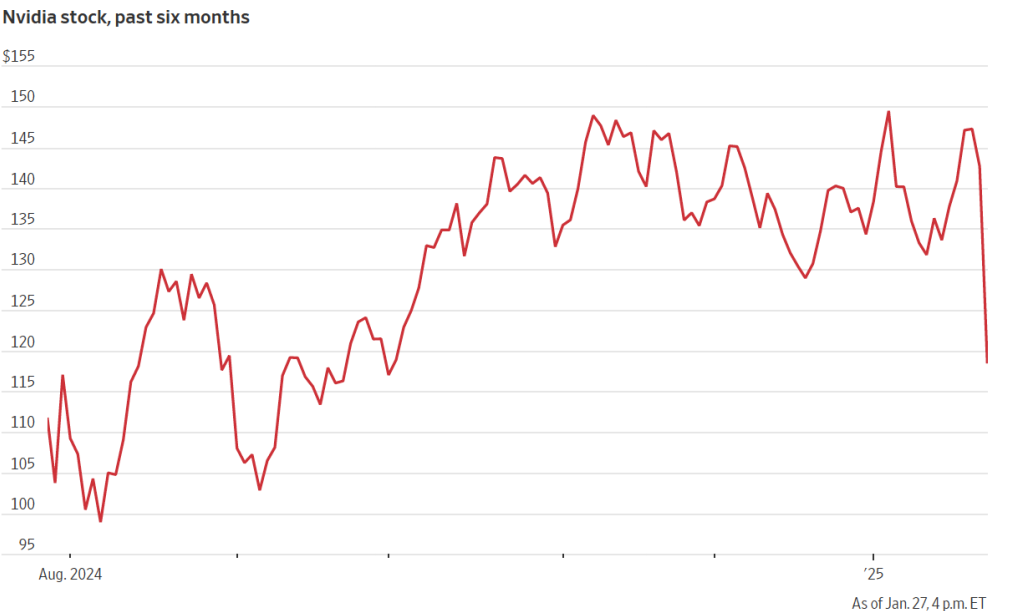
For investors, evaluating a drop means looking beyond short-term fluctuations and assessing whether the underlying growth thesis for Nvidia remains intact. Does the company still possess a strong competitive moat? Are its core markets still expanding? Is its management team making sound strategic decisions? The answers to these questions will determine whether a drop is a temporary setback, offering a buying opportunity for long-term investors, or a more fundamental re-evaluation of the company’s future trajectory. Nvidia’s ability to consistently deliver on its promises and articulate a clear path to sustained innovation and profitability will be key to winning back and retaining investor trust.
aViewFromTheCave is a participant in the Amazon Services LLC Associates Program, an affiliate advertising program designed to provide a means for sites to earn advertising fees by advertising and linking to Amazon.com. Amazon, the Amazon logo, AmazonSupply, and the AmazonSupply logo are trademarks of Amazon.com, Inc. or its affiliates. As an Amazon Associate we earn affiliate commissions from qualifying purchases.