
Nvidia (NVDA) has become the primary barometer for the artificial intelligence revolution. As the leading provider of the high-performance graphics processing units (GPUs) that power large language models and generative AI, the company’s stock price often feels like a proxy for the entire tech sector’s health. However, even the most dominant market leaders are not immune to gravity. When Nvidia experiences a significant pullback, investors often scramble to decipher whether the dip is a temporary correction or a fundamental shift in the AI narrative.
Understanding why NVDA stock drops requires a multi-faceted approach that looks beyond simple earnings beats. It involves analyzing macroeconomic trends, sector-specific headwinds, valuation metrics, and the psychological behavior of institutional investors.

Macroeconomic Pressures and the Broader Market Context
No stock exists in a vacuum, and Nvidia is particularly sensitive to the broader economic environment. When the Federal Reserve adjusts interest rates or when inflation data surprises the market, high-growth tech stocks are often the first to feel the impact.
Interest Rates and Discounted Cash Flows
In the world of finance, the value of a growth stock like Nvidia is largely based on the present value of its future earnings. When interest rates rise, or remain higher for longer than anticipated, the “discount rate” applied to those future earnings increases. This mathematically lowers the current value of the stock. For a company priced on earnings expected five to ten years into the future, a small change in interest rates can lead to a significant double-digit percentage drop in share price.
The Flight to Safety
During periods of economic uncertainty—such as geopolitical tensions or recession fears—investors often undergo a process called “rotation.” This involves moving capital out of high-beta, high-volatility growth stocks like Nvidia and into defensive sectors like utilities, consumer staples, or healthcare. Even if Nvidia’s business fundamentals remain unchanged, the sheer volume of institutional selling during a market-wide “risk-off” event can cause the stock to tumble.
Valuation Concerns and the “Priced to Perfection” Dilemma
One of the most common reasons for an NVDA stock drop is the weight of expectations. Nvidia has consistently outperformed analyst estimates for several quarters, which has created a “priced to perfection” scenario. In this environment, even a “good” earnings report can lead to a stock drop if it isn’t “spectacular.”
The Guidance Gap
Investors do not just look at what Nvidia did in the past quarter; they look at what the company promises for the next one. If Nvidia provides a revenue forecast that is merely in line with expectations rather than significantly above them, the market often reacts negatively. This is frequently referred to as a “whisper number” phenomenon, where the public analyst estimates are lower than what the big institutional traders are actually expecting. Failing to meet these hidden expectations can trigger a sell-off.
High Price-to-Earnings (P/E) Ratios
Nvidia often trades at a significant premium compared to the rest of the semiconductor industry. While its growth justifies a higher multiple, there is a limit to how much investors are willing to pay for every dollar of profit. When the P/E ratio reaches historical highs, any sign of a slowdown in the AI spending cycle can cause the multiple to contract. This “multiple compression” means the stock price drops even if the earnings stay the same, simply because investors are no longer willing to pay such a high premium for those earnings.
Sector-Specific Headwinds and Competitive Shifts
The semiconductor industry is notoriously cyclical, and while the AI boom has altered the traditional four-year cycle, Nvidia still faces unique industry challenges that can weigh on its stock price.
Supply Chain Dependencies and Bottlenecks
Nvidia does not manufacture its own chips; it designs them and relies on Taiwan Semiconductor Manufacturing Company (TSMC) for production. Any disruption in the supply chain—whether due to natural disasters, geopolitical friction in the Taiwan Strait, or capacity limits in advanced packaging (CoWoS)—can hinder Nvidia’s ability to meet the insatiable demand for its H100 and Blackwell chips. If investors sense that Nvidia’s growth is being capped by supply rather than demand, it can lead to a cooling of the stock price.
The Rise of Internal Silicon
While Nvidia currently holds a dominant market share in AI training chips, its biggest customers—companies like Microsoft, Alphabet (Google), Amazon, and Meta—are all developing their own custom AI silicon. These “hyperscalers” want to reduce their dependence on Nvidia’s expensive GPUs to lower their capital expenditures. While these internal chips may not match Nvidia’s performance across all applications, their adoption for specific workloads represents a long-term threat to Nvidia’s total addressable market (TAM), causing some forward-looking investors to trim their positions.
Regulatory and Geopolitical Risks
Export controls are a recurring theme for Nvidia. The U.S. government has frequently updated its restrictions on the sale of high-end AI chips to China, citing national security concerns. Because China has historically represented a significant portion of Nvidia’s revenue, these bans create immediate financial gaps. Although Nvidia often designs “stripped-down” versions of its chips to comply with regulations, the uncertainty surrounding future trade policies creates a “risk premium” that can drag down the stock.
Technical Analysis and Institutional Profit Taking
Sometimes, the reason for a stock drop has nothing to do with the company’s health and everything to do with the mechanics of the stock market itself.
Profit Taking After Massive Runs
After a period of exponential growth, institutional investors (like mutual funds and hedge funds) often have an obligation to rebalance their portfolios. If Nvidia’s surge has caused it to represent too large a percentage of a fund’s total assets, the fund manager must sell shares to maintain diversification. When thousands of funds rebalance simultaneously, it creates downward pressure on the price.
Psychological Resistance and Support Levels
In technical analysis, stocks often face “resistance” at round numbers or previous all-time highs. If NVDA fails to break through a significant price level (for example, $1,000 pre-split or a specific Fibonacci retracement level), short-term traders may interpret this as a sign of exhaustion and begin selling. This can trigger a chain reaction where “stop-loss” orders are hit, further accelerating the decline.
The Role of Options and Volatility
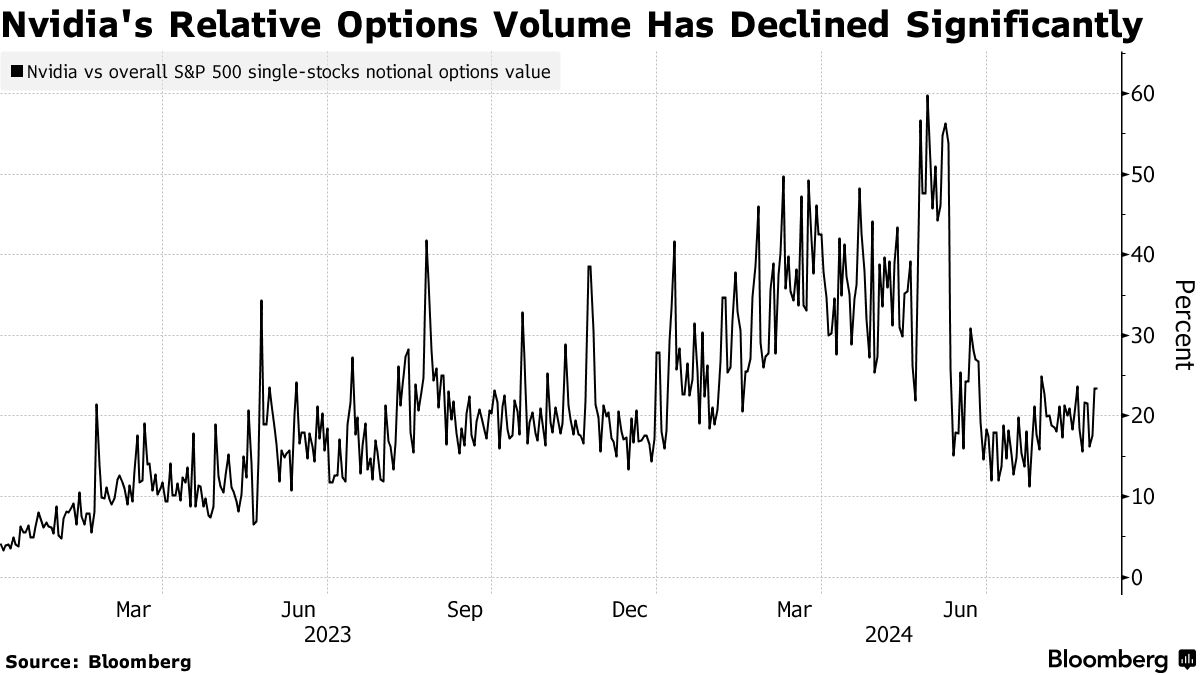
Nvidia is one of the most actively traded stocks in the options market. Large-scale buying or selling of call and put options can force market makers to hedge their positions by buying or selling the underlying stock. This “gamma hedging” can exacerbate price moves in both directions. If a downward trend starts, the delta-hedging of put options can create a “gamma squeeze” to the downside, making a small drop turn into a sharp correction very quickly.
Managing Risk in a High-Growth Semiconductor Portfolio
For the individual investor, a drop in NVDA stock is often a moment of high stress, but it also serves as a crucial reminder of the importance of risk management and long-term perspective.
The Difference Between a Bad Company and a Bad Price
History is full of great companies that saw their stocks drop by 50% or more while their business continued to thrive. Investors must distinguish between “price volatility” and “business impairment.” If Nvidia is dropping because of interest rate fears or general market malaise, the long-term thesis regarding AI remains intact. However, if the drop is due to a fundamental loss of technological edge or a permanent shift in customer spending, the strategy must change.
Diversification Beyond One Name
While it is tempting to go “all-in” on the leader of the AI movement, the volatility of NVDA underscores the need for a diversified portfolio. Exposure to the broader semiconductor sector through ETFs, or into other layers of the AI “stack” (such as software, power infrastructure, or cybersecurity), can help mitigate the impact of a single-stock drawdown.
Dollar-Cost Averaging and Time Horizons
For those who believe in the long-term trajectory of accelerated computing, price drops are often viewed as “sales.” By using a dollar-cost averaging (DCA) strategy, investors can lower their average cost basis over time, reducing the psychological pressure of trying to “time the bottom.” In the high-stakes world of tech investing, time in the market is almost always more important than timing the market.
In conclusion, an NVDA stock drop is rarely the result of a single factor. It is usually a complex interplay of high expectations, macroeconomic shifts, and technical market mechanics. By understanding these dynamics, investors can look past the daily headlines and make informed decisions based on their financial goals and risk tolerance. Whether a drop represents a buying opportunity or a warning sign depends entirely on the investor’s perspective of the AI future and their ability to withstand the inherent volatility of the semiconductor industry.
aViewFromTheCave is a participant in the Amazon Services LLC Associates Program, an affiliate advertising program designed to provide a means for sites to earn advertising fees by advertising and linking to Amazon.com. Amazon, the Amazon logo, AmazonSupply, and the AmazonSupply logo are trademarks of Amazon.com, Inc. or its affiliates. As an Amazon Associate we earn affiliate commissions from qualifying purchases.