
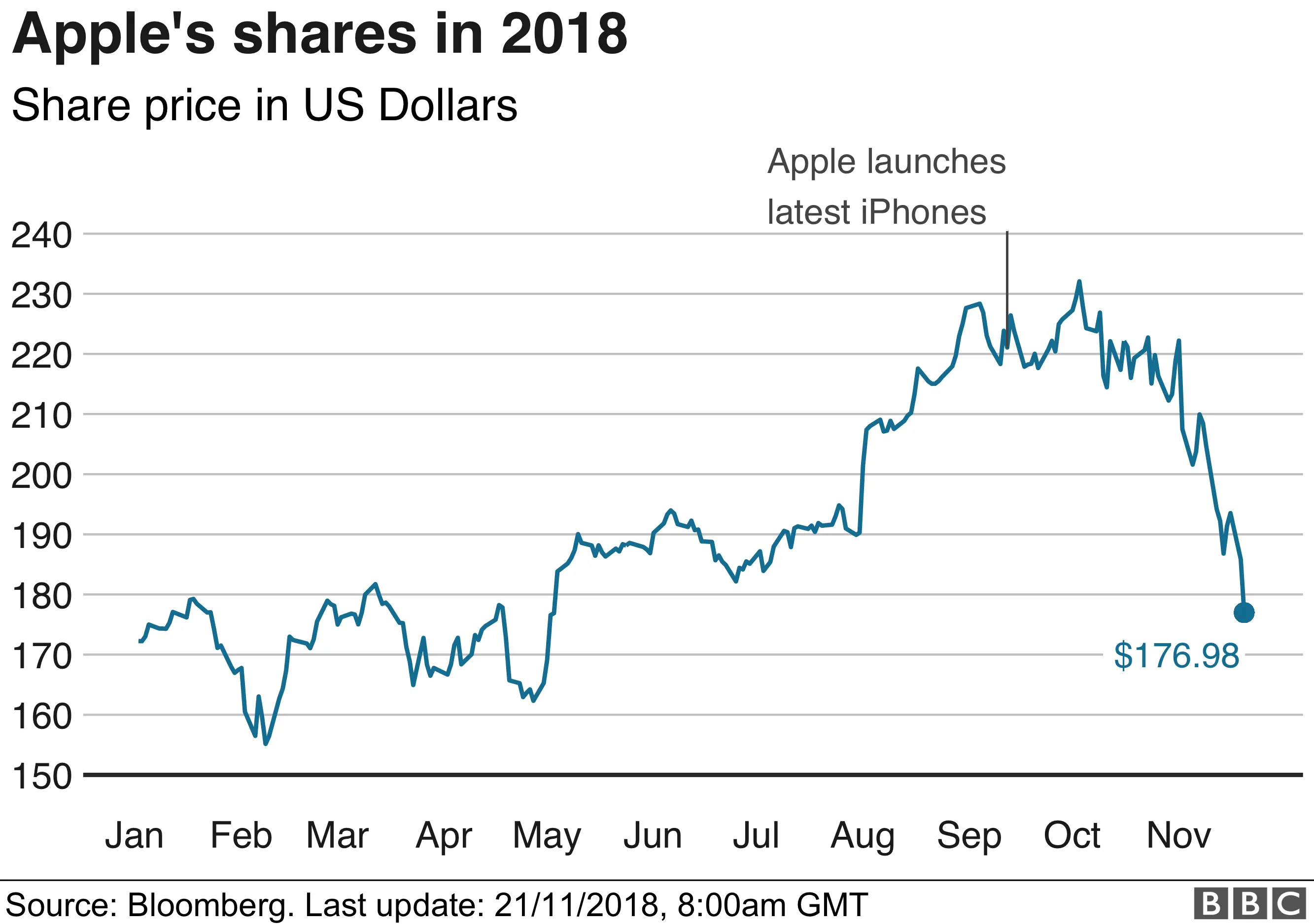
Apple Inc. (AAPL) holds a unique position in the global financial markets, often seen as a bellwether for the broader technology sector and, at times, the entire market. Its colossal market capitalization means that any significant movement in its stock price can have ripple effects, influencing major indices and investor sentiment worldwide. When a stock of Apple’s magnitude experiences a notable decline, it rarely points to a single, isolated factor but rather a confluence of macroeconomic pressures, company-specific challenges, geopolitical shifts, and evolving investor perceptions. Understanding these multifaceted drivers is crucial for investors navigating the complexities of the modern financial landscape.
Macroeconomic Headwinds and Broader Market Dynamics
The environment in which Apple operates is never static, and often, significant stock movements are deeply rooted in the broader economic climate rather than solely in the company’s internal performance.
Rising Interest Rates and Inflationary Pressures
One of the most potent macroeconomic forces impacting growth stocks like Apple has been the global surge in inflation and the subsequent aggressive monetary tightening by central banks. When interest rates rise, the cost of borrowing increases for businesses and consumers alike. For consumers, higher interest rates can translate to higher mortgage payments or credit card interest, reducing their discretionary income – funds often used for premium-priced tech products like iPhones, MacBooks, and Apple Watches.
From an investment perspective, higher interest rates also affect the valuation models of growth companies. Future earnings are discounted at a higher rate, making long-dated growth projections less attractive in present value terms. This phenomenon disproportionately impacts companies with high growth expectations and premium valuations, as their future earnings power is a larger component of their current stock price. Investors may shift capital from growth-oriented equities to less volatile assets or those offering higher yields in a rising rate environment.
Broader Market Sell-offs and Sector Rotation
Apple’s sheer size and influence mean it is rarely immune to broader market downturns. Periods of economic uncertainty, such as fears of a looming recession, often trigger widespread sell-offs across equity markets. As investors become more risk-averse, they tend to liquidate positions in perceived “risky” assets, even those with strong fundamentals like Apple.
Furthermore, market dynamics frequently involve “sector rotation,” where investors shift capital from one industry to another based on economic outlooks. For instance, during times of economic deceleration, funds may flow out of growth-oriented technology stocks and into more defensive sectors like utilities, consumer staples, or healthcare, which tend to be less sensitive to economic cycles. Given Apple’s prominent position within the technology sector, it often bears the brunt of such rotational movements, even if its intrinsic business performance remains robust. Its status as a market leader means it can amplify broad market sentiment, acting as both a driver and a recipient of these movements.
Company-Specific Challenges and Performance Scrutiny
While external factors play a significant role, Apple’s stock performance is also intrinsically linked to its operational execution, product demand, and financial outlook.
Softening Demand and iPhone Sales
The iPhone remains Apple’s flagship product and primary revenue driver. Any indication of softening demand for new iPhone models can send ripples through investor confidence. Factors contributing to this can include market saturation in developed economies, longer upgrade cycles as device quality improves, or increased competition from Android manufacturers offering compelling features at lower price points. Reports of lower-than-expected sales, reduced production targets, or cautious guidance from Apple’s management regarding future iPhone shipments can directly lead to a stock decline. Investors constantly monitor metrics like average selling price (ASP), unit sales, and regional performance to gauge the health of this critical segment.
Supply Chain Disruptions and Production Hurdles
Apple’s intricate global supply chain, heavily reliant on manufacturing hubs primarily in Asia, presents both efficiency and vulnerability. Events like factory lockdowns (e.g., due to COVID-19 outbreaks in China), labor shortages, or disruptions in the availability of key components can severely impact production capacity. When Apple cannot produce enough devices to meet demand, it directly translates to lost sales and missed revenue targets. These production hurdles create uncertainty regarding future earnings and can lead to downward revisions in analyst forecasts, often preceding or coinciding with a stock drop. The company’s efforts to diversify its manufacturing base are a direct response to these vulnerabilities.
Services Revenue Growth Under Scrutiny
While hardware sales are critical, Apple has strategically emphasized its services segment (App Store, Apple Music, iCloud, Apple Pay, etc.) as a key growth driver and a source of recurring revenue. This segment generally boasts higher profit margins than hardware. However, investors continually scrutinize the pace of this growth. Any slowdown in the acceleration of services revenue, or signs of increased competition in digital content and subscriptions, can raise concerns. Investors look for consistent double-digit growth in services to justify Apple’s premium valuation and to offset potential volatility in hardware sales. If this growth falters or becomes less predictable, it can prompt a re-evaluation of the company’s long-term growth trajectory and impact its stock price.
Geopolitical Tensions and Regulatory Scrutiny
Apple, as a global giant, is highly susceptible to the dynamics of international relations and regulatory environments.
US-China Relations and Supply Chain Vulnerabilities
The complex relationship between the United States and China presents a double-edged sword for Apple. China is not only a crucial manufacturing base, responsible for assembling a vast majority of Apple’s products, but also a significant market for its sales. Escalations in trade tensions, imposition of tariffs, or geopolitical disputes between the two nations can disrupt Apple’s supply chain, increase production costs, or lead to boycotts and reduced sales in one of its most vital markets. The geopolitical drive for “decoupling” or diversifying supply chains away from China, while potentially reducing long-term risk, also involves substantial short-to-medium-term costs and complexities that can weigh on investor sentiment and operational efficiency.
Antitrust and App Store Regulations
Around the globe, regulatory bodies are intensifying their scrutiny of big tech companies, including Apple, particularly concerning their market dominance and business practices. The App Store, which collects a commission on many in-app purchases and subscriptions, has become a frequent target of antitrust investigations. Regulators in the European Union, the United States, and other regions are examining whether Apple’s control over its ecosystem stifles competition, unfairly disadvantages developers, or imposes excessive fees. Potential regulatory actions could force Apple to alter its App Store policies, reduce its commission rates, or allow alternative app stores or payment methods. Such changes could directly impact Apple’s highly profitable services revenue stream, leading to investor anxiety and stock depreciation as the market discounts future earnings potential based on these regulatory risks.
Investor Sentiment, Valuation, and Future Outlook
Ultimately, stock prices are a reflection of investor perception and future expectations, which can shift rapidly based on the factors discussed.
Premium Valuation and Profit-Taking
Apple has consistently traded at a premium valuation compared to many of its peers and the broader market, a testament to its strong brand, robust financials, and perceived growth potential. However, when market conditions turn bearish or economic uncertainty increases, investors tend to become more critical of high valuations. A stock trading at a high price-to-earnings (P/E) ratio might be seen as having less room for error. Periods of sustained stock appreciation are often followed by profit-taking, where investors sell shares to lock in gains, particularly if they believe the stock has become overextended or if macroeconomic headwinds make future growth more challenging. This natural market dynamic can contribute to a stock drop without necessarily indicating a fundamental deterioration in the company’s business.
Analyst Revisions and Guidance
The investment community closely tracks Apple’s quarterly earnings reports and, more importantly, its forward-looking guidance. When Apple issues cautious guidance for future quarters, or if its actual results miss analyst expectations, it can trigger a significant sell-off. Similarly, if prominent financial analysts downgrade their ratings on Apple stock or reduce their price targets, it can influence broader investor sentiment and lead to a decline. These revisions reflect a reassessment of the company’s near-term profitability and growth prospects based on the latest available information, incorporating all the macroeconomic, geopolitical, and company-specific factors.

The Path Forward: Resilience and Diversification
Despite periods of stock depreciation, Apple’s underlying strengths often provide a strong foundation for recovery. Its massive cash reserves, unparalleled brand loyalty, robust ecosystem, and ongoing investments in research and development (including areas like augmented reality and autonomous systems) position it for long-term growth. Investors looking beyond short-term fluctuations will often focus on Apple’s ability to innovate, diversify its supply chain, expand its services offerings, and effectively navigate the complex global regulatory landscape. Monitoring these strategic initiatives and their execution provides insight into the company’s potential to rebound and continue its trajectory as a leading global enterprise.
aViewFromTheCave is a participant in the Amazon Services LLC Associates Program, an affiliate advertising program designed to provide a means for sites to earn advertising fees by advertising and linking to Amazon.com. Amazon, the Amazon logo, AmazonSupply, and the AmazonSupply logo are trademarks of Amazon.com, Inc. or its affiliates. As an Amazon Associate we earn affiliate commissions from qualifying purchases.