
The financial landscape is witnessing a seismic shift as Bitcoin, the world’s first and largest cryptocurrency, continues its ascent toward new heights. What was once dismissed as a “peer-to-peer electronic cash system” for tech hobbyists has evolved into a cornerstone of modern portfolio theory. When investors ask why Bitcoin is going up, the answer is no longer found in a single news headline. Instead, it is the result of a “perfect storm” of institutional adoption, programmed scarcity, and a global macroeconomic environment that is forcing a re-evaluation of what constitutes a “safe haven” asset.
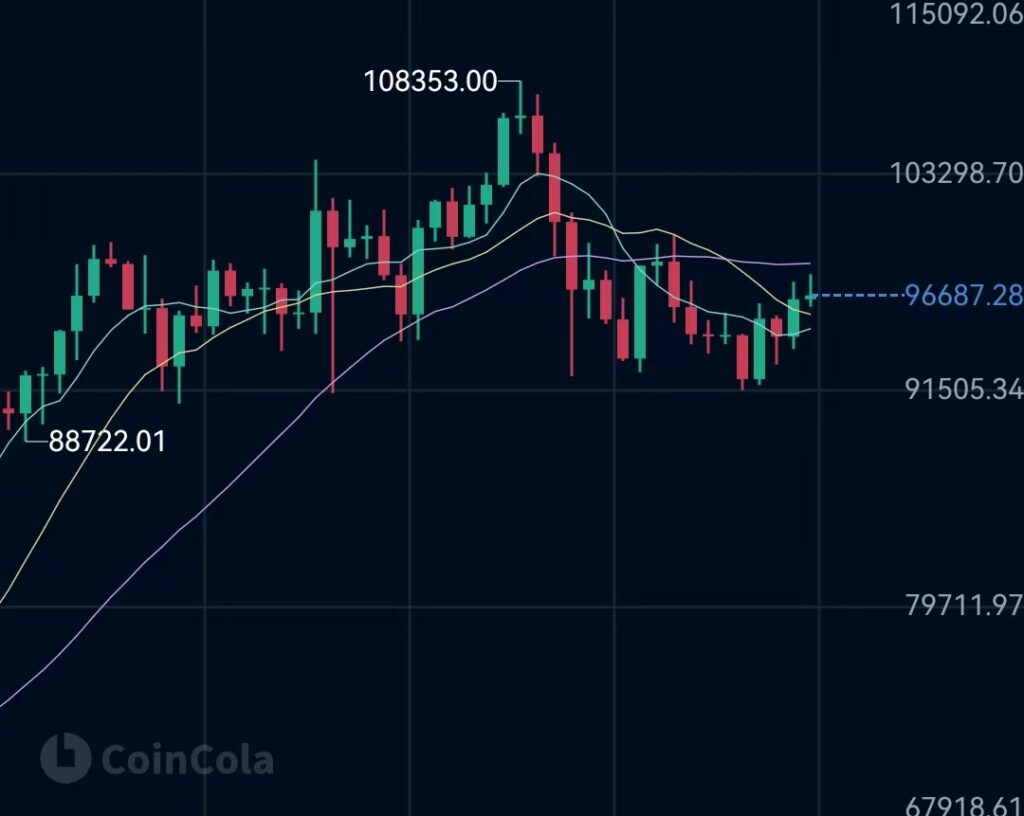
To understand the current price action, one must look beyond the volatility and examine the fundamental economic pillars supporting this rally. From the structural changes brought about by Spot ETFs to the inescapable reality of the four-year halving cycle, Bitcoin is moving through a phase of financial maturation.
Institutional Legitimacy and the Spot ETF Revolution
For over a decade, the primary barrier for major capital entry into Bitcoin was the lack of a regulated, familiar vehicle for investment. The approval of several Spot Bitcoin Exchange-Traded Funds (ETFs) in early 2024 fundamentally changed the plumbing of the financial system, creating a permanent bridge between traditional finance (TradFi) and the digital asset economy.
Wall Street’s Entry: The BlackRock Effect
The entry of the world’s largest asset managers, such as BlackRock, Fidelity, and Franklin Templeton, has provided Bitcoin with a “seal of approval” that was previously lacking. These institutions do not just bring capital; they bring credibility. When BlackRock’s Larry Fink describes Bitcoin as an “international asset” and a “flight to quality,” it signals a shift in the corporate narrative. This institutional embrace has allowed pension funds, sovereign wealth funds, and massive private wealth offices to allocate a percentage of their portfolios to Bitcoin without the custodial risks associated with managing private keys or unregulated offshore exchanges.
Mainstream Accessibility and Liquidity
Before the advent of ETFs, investing in Bitcoin required navigating specialized exchanges, setting up digital wallets, and managing security protocols that many traditional investors found daunting. Now, Bitcoin can be bought as easily as a share of Apple or Amazon through a standard brokerage account. This accessibility has tapped into a massive reservoir of dormant capital—specifically within 401(k)s and IRAs. The constant, daily buy pressure from these ETFs creates a liquidity floor, absorbing sell-offs and driving the price upward as demand consistently outstrips the available supply on exchanges.
Scarcity by Design: The Impact of the Halving Cycle
While demand is skyrocketing due to institutional access, the supply side of the equation is governed by an immutable piece of code: the “Halving.” Bitcoin’s monetary policy is the antithesis of modern central banking. While fiat currencies can be printed in unlimited quantities, Bitcoin is hard-capped at 21 million units, with its production rate slowing down every four years.
The Mechanics of the Supply Squeeze
The Bitcoin halving is an event that cuts the reward for mining new blocks in half. This effectively reduces the daily production of new Bitcoin by 50%. When the “new supply” entering the market drops significantly while demand remains steady or increases (as seen with the ETF inflows), the result is a classic supply-demand imbalance. Historically, the months following a halving event have seen parabolic price increases as the market adjusts to the reality that there simply isn’t enough new Bitcoin to satisfy the appetite of global buyers.
Historical Performance and the Stock-to-Flow Model
Investors often look to the “Stock-to-Flow” model to understand Bitcoin’s value. This model treats Bitcoin like gold or silver—commodities that are difficult to produce and have a high ratio of existing supply (stock) to new annual production (flow). Each halving doubles Bitcoin’s scarcity, making it “harder” money than gold. As the market recognizes Bitcoin’s superior scarcity profile, price appreciation becomes a self-fulfilling prophecy. Investors front-run the expected supply squeeze, leading to the sustained “up-only” momentum observed in recent cycles.

Macroeconomic Tailwinds and the Global Liquidity Cycle
Bitcoin does not exist in a vacuum; it is a sensitive barometer for the health of the global financial system. As central banks struggle to balance inflation, interest rates, and mounting sovereign debt, Bitcoin has emerged as a hedge against the perceived mismanagement of fiat currencies.
Inflationary Pressures and Currency Debasement
The massive expansion of the M2 money supply over the last few years has led to a persistent fear of currency debasement. When the value of the dollar, euro, or yen is diluted through “quantitative easing” or stimulus spending, the nominal price of hard assets—like real estate, gold, and Bitcoin—tends to rise. Bitcoin is increasingly being viewed as “insurance” against the devaluation of traditional money. Unlike fiat, which loses purchasing power over time, Bitcoin’s fixed supply ensures that it cannot be inflated away by government decree.
Interest Rates and the “Risk-On” Sentiment
The global interest rate cycle also plays a pivotal role in Bitcoin’s price trajectory. As central banks, particularly the Federal Reserve, signal a transition from a restrictive monetary policy to a more accommodative one (lowering interest rates), liquidity returns to the markets. In a “low-rate” environment, investors seek higher returns in “risk-on” assets. Bitcoin, being the highest-performing asset class of the last decade, is often the first to benefit from this influx of cheap capital. The expectation of a “Fed pivot” creates a bullish backdrop for Bitcoin, as investors move out of cash and into growth-oriented digital assets.
Bitcoin as the New “Digital Gold”: A Store of Value
The narrative surrounding Bitcoin has matured from a speculative “get-rich-quick” scheme to a strategic “store of value.” This evolution is critical to why the price is going up, as it attracts long-term holders (“HODLers”) rather than just short-term traders.
Geopolitical Uncertainty and Sovereign Risk
In an era of geopolitical instability, the “borderless” nature of Bitcoin becomes an incredible asset. Traditional assets are subject to the jurisdictions, sanctions, and stability of the nations that issue them. In contrast, Bitcoin operates on a decentralized network that no single government can shut down or seize easily. During times of regional banking crises or international conflict, Bitcoin often sees “safe haven” inflows. People in countries with volatile currencies or unstable banking systems use Bitcoin to preserve their wealth, creating a global, non-stop source of demand.
The Evolution of Portfolio Diversification
Financial advisors are increasingly recommending a “non-zero” allocation to Bitcoin. Even a small allocation—1% to 5%—can significantly enhance the Sharpe ratio (risk-adjusted return) of a traditional 60/40 portfolio. This is because Bitcoin has a historically low correlation with traditional equities and bonds over long timeframes. As the “Modern Portfolio Theory” updates to include digital assets, we are seeing a structural reallocation of global wealth. This is not a “bubble” in the traditional sense; it is a massive, one-time repricing of a new asset class as it finds its place in the global financial hierarchy.
Conclusion: A New Era of Financial Sovereignty
The rise in Bitcoin’s price is not a random fluctuation or a product of mere hype. It is the culmination of three powerful forces: the institutionalization of the asset through regulated ETFs, the mathematical certainty of its dwindling supply, and a global macroeconomic environment that is desperate for a hard-money alternative.
As the world continues to digitize and the flaws of centralized financial systems become more apparent, Bitcoin’s value proposition only strengthens. While volatility remains a characteristic of the market, the long-term trend is driven by the fundamental reality that more people, more companies, and more institutions want a piece of the only truly scarce, decentralized digital asset in existence. Bitcoin is going up because it is successfully transitioning from a speculative experiment to a foundational piece of the 21st-century financial infrastructure. For the modern investor, it represents not just a chance for profit, but a vote for a more transparent and immutable monetary future.
aViewFromTheCave is a participant in the Amazon Services LLC Associates Program, an affiliate advertising program designed to provide a means for sites to earn advertising fees by advertising and linking to Amazon.com. Amazon, the Amazon logo, AmazonSupply, and the AmazonSupply logo are trademarks of Amazon.com, Inc. or its affiliates. As an Amazon Associate we earn affiliate commissions from qualifying purchases.