
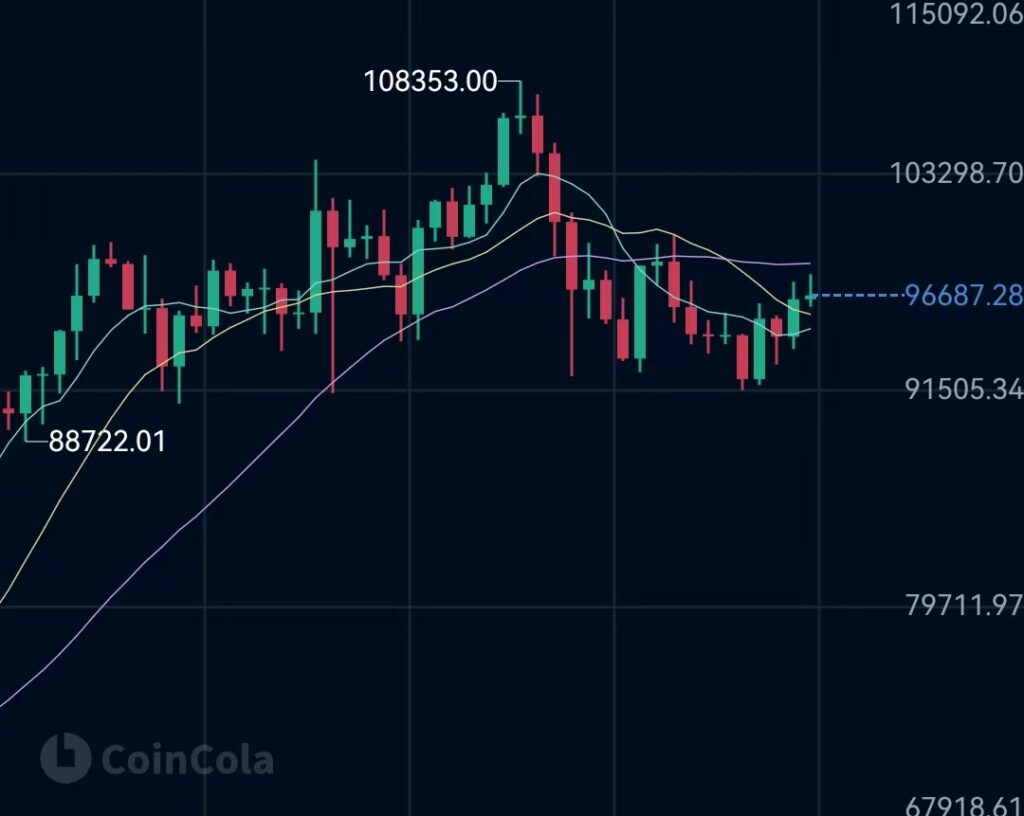
The cryptocurrency market has long been characterized by its volatility, yet the recent and sustained upward trajectory of Bitcoin has captured the attention of seasoned Wall Street veterans and retail investors alike. Unlike the speculative frenzies of the past, the current appreciation in Bitcoin’s value is underpinned by a sophisticated convergence of institutional adoption, programmatic scarcity, and a shifting global macroeconomic landscape. Understanding why Bitcoins are going up requires a deep dive into the financial mechanisms and market sentiment currently driving the world’s premier digital asset toward new heights.
The Institutional Influx and the Era of Spot ETFs
For years, the primary barrier to entry for large-scale capital was the technical and regulatory complexity of acquiring and securing Bitcoin. This changed dramatically with the approval and launch of several Spot Bitcoin Exchange-Traded Funds (ETFs) in the United States. This development represents a watershed moment in the history of personal and corporate finance.
The Democratization of Access
Before the advent of Spot ETFs, investing in Bitcoin required navigating specialized exchanges, managing private keys, and dealing with the anxieties of digital custody. For institutional players—pension funds, insurance companies, and sovereign wealth funds—these hurdles were often insurmountable due to strict compliance mandates. The Spot ETF allows these entities to gain exposure to Bitcoin’s price movements through traditional brokerage accounts, treating it like any other blue-chip stock or commodity. This has opened a massive pipeline of liquidity that was previously locked out of the crypto ecosystem.
Wall Street’s Validation
The entry of giants like BlackRock and Fidelity into the space has provided a “seal of approval” that has fundamentally changed the narrative surrounding digital assets. When the world’s largest asset managers create dedicated Bitcoin products, it signals to the broader market that Bitcoin is no longer a fringe experiment but a legitimate asset class. This institutional validation has triggered a “fear of missing out” (FOMO) among corporate treasuries, who are now looking at Bitcoin as a strategic reserve asset to diversify their balance sheets against fiat currency risks.
The Mechanical Reality of the Bitcoin Halving
One of the most significant drivers of Bitcoin’s price is its unique monetary policy, which is dictated by code rather than a central bank. The “Halving” is a pre-programmed event that occurs approximately every four years, and its impact on the supply-demand equilibrium is a primary reason for the asset’s upward momentum.
Understanding the Supply Squeeze
Bitcoin has a hard cap of 21 million coins. To manage the distribution of these coins, the protocol rewards “miners” with a specific amount of Bitcoin for every block they add to the blockchain. During a Halving event, this reward is cut by exactly 50%. This effectively slashes the daily production of new Bitcoin in half. In any market, when the supply of a sought-after commodity is reduced while demand remains steady or increases, the price must move upward to find a new equilibrium. We are currently witnessing the results of this programmatic scarcity as the “sell pressure” from miners is significantly diminished.
Historical Cycles and Investor Anticipation
The market is a forward-looking mechanism. Savvy investors are well aware of the historical patterns following previous Halvings in 2012, 2016, and 2020. In each instance, the reduction in supply preceded a massive bull run. While past performance is never a guaranteed indicator of future results, the psychological weight of these cycles creates a self-fulfilling prophecy. Investors accumulate Bitcoin in the months leading up to and following the Halving, further reducing the available supply on exchanges and driving prices higher.
Macroeconomic Shifting and the Quest for Sound Money

The broader economic environment plays a crucial role in why Bitcoin is currently trending upward. As global debt levels reach record highs and traditional currencies face the erosive effects of inflation, investors are increasingly looking for “hard assets” that cannot be devalued by government policy.
Bitcoin as “Digital Gold”
The narrative of Bitcoin as a digital version of gold has gained significant traction. Like gold, Bitcoin is scarce, durable, and fungible. However, it is superior to gold in terms of portability and divisibility. In an era of geopolitical instability and fluctuating interest rates, Bitcoin serves as a hedge. When the purchasing power of the dollar or the euro is called into question due to aggressive monetary expansion (quantitative easing), capital tends to flow into assets with a fixed supply. Bitcoin is the only financial asset in the world where the supply is mathematically guaranteed to remain inelastic, regardless of how high the price goes.
Interest Rates and Risk-On Sentiment
The correlation between Bitcoin and traditional financial markets has evolved. While it was once seen strictly as a high-risk speculative play, it is now often viewed through the lens of a “risk-on” asset that performs well when investors are optimistic about future growth. As central banks hint at pivoting away from restrictive interest rate policies, the cost of borrowing decreases and the appetite for growth assets increases. This shift in the interest rate cycle provides a tailwind for Bitcoin, as investors move out of cash and into assets that offer higher potential returns in a low-yield environment.
Regulatory Clarity and the Institutionalization of Digital Assets
In previous years, the “wild west” nature of the cryptocurrency market kept many conservative investors on the sidelines. However, a clearer regulatory framework is beginning to emerge globally, providing the certainty needed for long-term financial planning.
The Shift from Uncertainty to Compliance
Regulatory bodies in major financial hubs are no longer ignoring Bitcoin; they are integrating it. From the MiCA regulations in Europe to the evolving stance of the SEC in the United States, the rules of the game are becoming clearer. While some fear regulation, the professional investment community welcomes it. Clear rules allow for the development of sophisticated financial products, insurance for digital assets, and robust custody solutions. This maturation of the market infrastructure reduces the “tail risk” of a total ban or catastrophic legal failure, making Bitcoin a safer bet for multi-billion dollar portfolios.
Corporate Adoption and Strategic Reserves
Beyond individual investors, we are seeing a shift in how corporations view their cash holdings. Companies like MicroStrategy and Tesla paved the way by converting portions of their fiat reserves into Bitcoin. Today, more businesses are considering similar moves as a way to protect shareholder value from the debasement of traditional currencies. As more companies add Bitcoin to their balance sheets, it creates a “sticky” demand—these are not short-term traders but long-term holders who intend to keep the asset for years, if not decades.
Psychological Maturity and the Diminishing Supply on Exchanges
Finally, the behavior of Bitcoin holders has shifted. The data shows a growing trend of “illiquid supply”—Bitcoin that is moved off exchanges and into “cold storage” (offline wallets) for long-term holding.
The “HODL” Mentality Goes Mainstream
The term “HODL” started as a meme, but it has evolved into a legitimate investment philosophy. On-chain analytics reveal that a record percentage of Bitcoin has not moved in over a year. This suggests that the current price action is being driven by a small portion of the total supply that is actually available for trade. When a massive surge of new demand (from ETFs and retail) hits a market where most of the “product” is being held by people who refuse to sell, the result is an explosive price increase.
Sentiment and the Network Effect
Metcalfe’s Law states that the value of a network is proportional to the square of the number of its connected users. Bitcoin’s network effect is stronger than ever. Every time the price hits a new milestone, it attracts more media attention, which brings in more users, which in turn increases the utility and value of the network. This feedback loop is a powerful engine for price appreciation. As Bitcoin moves from the “early adopter” phase to the “early majority” phase of the technology adoption curve, the influx of new participants creates a persistent upward pressure on the price.
In conclusion, the rise of Bitcoin is not the result of a single factor but a “perfect storm” of financial and technological forces. The structural change brought about by Spot ETFs has provided the necessary capital, the Halving has tightened the supply, and the global macroeconomic climate has created a desperate need for a decentralized, scarce, and digital store of value. As the world continues to digitize, the role of Bitcoin in the global financial system is becoming more pronounced, turning what was once a digital curiosity into the cornerstone of the modern investment portfolio.
aViewFromTheCave is a participant in the Amazon Services LLC Associates Program, an affiliate advertising program designed to provide a means for sites to earn advertising fees by advertising and linking to Amazon.com. Amazon, the Amazon logo, AmazonSupply, and the AmazonSupply logo are trademarks of Amazon.com, Inc. or its affiliates. As an Amazon Associate we earn affiliate commissions from qualifying purchases.