
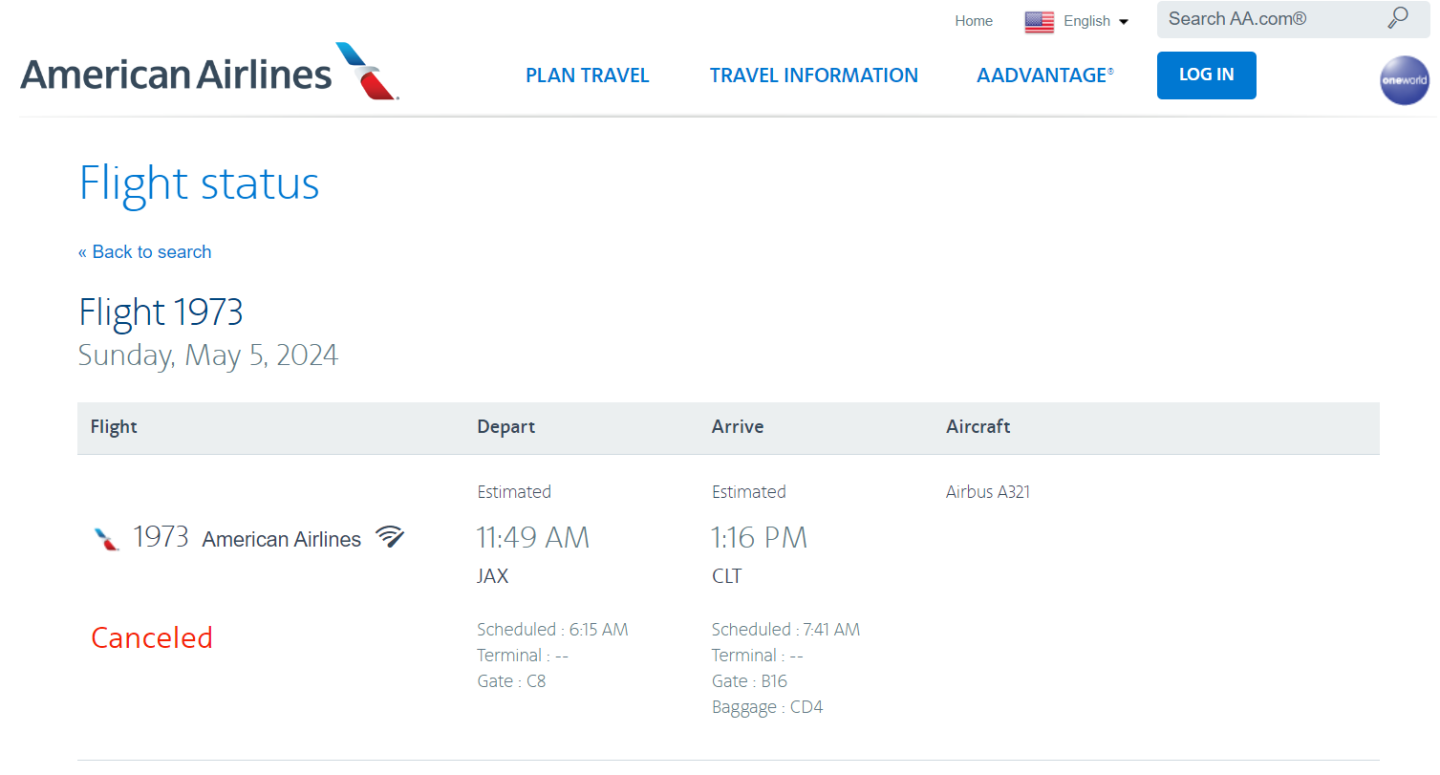
In the contemporary landscape of commercial aviation, the question of why a flight is delayed has shifted from meteorology to methodology. While the general public often blames thunderstorms or visibility, the underlying reality for a carrier as large as American Airlines is increasingly digital. When thousands of passengers find themselves staring at red “Delayed” text on an airport monitor, the culprit is frequently buried within millions of lines of code, legacy mainframe architectures, or the complex interplay of third-party software integrations. Understanding why American Airlines flights are delayed today requires a deep dive into the technological ecosystem that keeps a modern fleet in the air.
The Digital Backbone: Legacy Systems and Modern Integration Challenges
At the core of American Airlines’ operations is a sophisticated but aging technical stack. Like many legacy carriers, American operates on a hybrid infrastructure where cutting-edge customer-facing apps must communicate with backend systems designed decades ago. This creates a “technical debt” that can manifest as systemic delays.
The Fragility of Legacy Mainframes
The global aviation industry still relies heavily on Transaction Processing Facility (TPF) systems—high-volume mainframe operating systems designed in the 1960s and 70s. While these systems are incredibly fast at processing seat reservations and flight loads, they lack the flexibility of modern cloud environments. When American Airlines attempts to roll out a new feature on its mobile app or update its gate management software, the “handshake” between the modern frontend and the legacy backend can fail. If a synchronization error occurs, the system may default to a manual override or a temporary lockout, causing a ripple effect that grounds dozens of flights.
API Dependencies and Data Latency
Modern aviation is a web of Application Programming Interfaces (APIs). American Airlines interacts with APIs from the Federal Aviation Administration (FAA), weather services, fueling companies, and ground handling contractors. A delay “today” is often the result of an API timeout or a data mismatch. For instance, if the digital fuel management system cannot confirm a weight-and-balance calculation due to a latency issue in the cloud server, the pilot cannot legally sign off on the flight manifest. In the world of high-frequency tech, a thirty-second data lag can translate into a thirty-minute departure delay.
Cybersecurity and the Vulnerability of Interconnected Ecosystems
As airlines transition toward more connected “e-enabled” aircraft and paperless cockpits, the surface area for technical disruptions has expanded. Cybersecurity is no longer just about protecting credit card data; it is about ensuring the integrity of the flight schedule itself.
The Ripple Effect of Third-Party Software Updates
We live in an era of continuous deployment, where software updates happen in the background. However, as seen in recent global IT outages, a single faulty kernel-level update from a cybersecurity provider or an operating system patch can paralyze a fleet. American Airlines relies on a suite of digital security tools to protect its internal networks. If a security update conflicts with the proprietary software used for crew scheduling or flight planning, the result is a “soft grounding.” Engineers must then manually roll back updates across thousands of terminals and tablets used by pilots and gate agents, a process that can take hours.
Protecting the Electronic Flight Bag (EFB)
The transition from heavy paper manuals to iPads—known as Electronic Flight Bags—has revolutionized pilot efficiency. However, these devices are nodes in a digital network. Before every flight, pilots must download updated “Notice to Air Missions” (NOTAMs), weather charts, and performance data. If there is a localized outage in the digital distribution network or a failure in the encryption handshake between the airline’s server and the pilot’s hardware, the aircraft cannot move. Security protocols dictate that if the data cannot be verified as untampered, the flight remains at the gate.
AI and Algorithmic Scheduling: When Optimization Meets Reality

American Airlines utilizes advanced Artificial Intelligence (AI) and machine learning models to optimize everything from fuel consumption to crew rotations. While these tools are designed to maximize efficiency, they can also contribute to delays when the algorithms encounter “out-of-bounds” variables.
The Complexity of Crew Tracking Software
Managing tens of thousands of pilots and flight attendants is a monumental computational task. American uses sophisticated crew-tracking software that must account for legal flight time limits, rest requirements, and geographic location. When a technical glitch occurs in this tracking system, the “logic” of the airline breaks. The AI might know a pilot is physically at the airport, but if the digital record fails to update their rest status due to a database sync error, the system will flag that pilot as ineligible to fly. These “ghost” staffing shortages are often purely technical failures rather than a lack of personnel.
Predictive Maintenance and “False Positives”
The move toward predictive maintenance involves using IoT (Internet of Things) sensors on engines and airframes to predict when a part might fail. This is managed by massive data-crunching platforms. Occasionally, these sensors generate “noise” or false positives that require a physical inspection to clear. Today’s delays are often caused by the high sensitivity of these AI-driven diagnostic tools. While they significantly improve long-term safety, the immediate result of a sensor mismatch is a mandatory maintenance hold while technicians run a digital diagnostic to ensure the sensor itself isn’t the only thing malfunctioning.
The Communication Stack: IoT and Real-Time Data Flow
The “Internet of Planes” is a reality for American Airlines. Every Boeing 737 or Airbus A321 in the fleet is a flying data center. The way this data is communicated to the ground determines whether a flight departs on time.
Ground-to-Air Data Links and Gate Contention
When a flight arrives, it immediately connects to the airport’s Wi-Fi or cellular Gatelink system to upload terabytes of flight data and download the next flight’s parameters. In busy hubs like DFW or CLT, the digital bandwidth can become congested. If the “turnaround” data—which includes everything from the digital catering manifest to the updated flight plan—cannot be downloaded due to a local network failure, the flight sits. This is a purely technological bottleneck that has become a leading cause of “unexplained” gate delays.
The Modernization of Air Traffic Control Tech (NextGen)
While not exclusive to American Airlines, the FAA’s transition to the NextGen satellite-based GPS system impacts how AA flights move. Unlike the old ground-based radar, NextGen requires high-tech transponders and GPS receivers on every aircraft. If an AA aircraft experiences a software glitch in its ADS-B (Automatic Dependent Surveillance-Broadcast) system, it loses its “digital footprint” in the ATC system. In the current regulatory environment, a software failure in a navigation component is an immediate ground-stop for that specific airframe, leading to a delay while a software reset or hardware swap is performed.
The Future of Aviation Tech: Moving Toward Autonomous Recovery
To combat these technological delays, American Airlines and its tech partners are investing in “Self-Healing Networks.” The goal is to move away from reactive troubleshooting toward an infrastructure that can automatically reroute data and bypass failed nodes.
Blockchain and Decentralized Data
One emerging tech trend in aviation is the use of blockchain for maintenance logs and parts tracking. By decentralizing this data, American Airlines can ensure that even if a central server goes down, the verified history of an aircraft’s airworthiness remains accessible at the local level. This prevents delays caused by centralized database outages.
Cloud-Native Operations
The long-term solution to the “legacy system” problem is the total migration to cloud-native architectures. By moving operations to platforms like AWS or Microsoft Azure, American Airlines can achieve “high availability.” In a cloud-native world, if one server cluster fails, another automatically takes its place, ideally making the “technical delay” a relic of the past. However, until this transition is complete, the friction between the old world and the new remains a primary reason why flights are delayed today.
In summary, when we ask why American Airlines flights are delayed today, the answer is rarely as simple as a rain cloud. It is an intricate story of software versioning, cybersecurity protocols, API latency, and the ongoing struggle to modernize one of the most complex technical infrastructures on the planet. For the modern traveler, the “delay” is the visible symptom of a digital ecosystem working tirelessly—and occasionally stumbling—to maintain the highest standards of safety and efficiency in a hyper-connected world.
aViewFromTheCave is a participant in the Amazon Services LLC Associates Program, an affiliate advertising program designed to provide a means for sites to earn advertising fees by advertising and linking to Amazon.com. Amazon, the Amazon logo, AmazonSupply, and the AmazonSupply logo are trademarks of Amazon.com, Inc. or its affiliates. As an Amazon Associate we earn affiliate commissions from qualifying purchases.