
Apple Inc. has long stood as a titan of industry, a beacon of innovation, and a darling of the stock market. For decades, its remarkable growth, iconic products, and robust brand loyalty have translated into extraordinary shareholder returns, making it one of the most valuable companies globally. However, even the mightiest trees sway in the wind, and recently, Apple’s stock (AAPL) has faced significant headwinds, prompting investors and analysts alike to question the underlying causes of its fluctuating performance or outright decline. Understanding these dynamics requires a deep dive into macroeconomic forces, company-specific challenges, and shifts in the competitive landscape, all viewed through the lens of financial markets and investor sentiment.
This article will explore the multifaceted reasons contributing to the recent pressures on Apple’s stock, dissecting both the external economic environment and internal corporate factors that are shaping its trajectory. From global inflation and interest rate hikes to maturing product cycles and intensifying competition, a confluence of elements is testing Apple’s resilience and recalibrating investor expectations for future growth.
Macroeconomic Headwinds and Market Dynamics
The broader economic environment plays an indispensable role in the performance of even the most robust companies. Apple, despite its formidable market position, is not immune to the gravitational pull of macroeconomic forces that dictate consumer spending, business investment, and overall market sentiment. Recent global economic shifts have created a challenging backdrop for growth stocks, including AAPL.
Rising Interest Rates and Inflationary Pressures
Central banks worldwide have aggressively hiked interest rates in an effort to combat soaring inflation. While intended to cool economies, these rate increases have a profound impact on equity valuations, particularly for growth-oriented companies like Apple. Higher interest rates make future earnings less valuable in present terms (discounting effect), and they increase the cost of capital for businesses. Moreover, persistent inflation erodes consumer purchasing power, making discretionary spending on premium products like iPhones and MacBooks a more considered decision. For investors, bonds become a more attractive alternative, drawing capital away from riskier equity investments. This shift in the risk-free rate fundamentally revalues all assets, often leading to a downward adjustment in stock prices, especially for those with high valuations predicated on future growth.
Global Economic Slowdown and Consumer Spending
Several major economies are either teetering on the brink of recession or already experiencing a significant slowdown. The ripple effects of geopolitical conflicts, energy crises, and persistent supply chain disruptions have stifled global growth. In such an environment, consumer confidence wanes, leading to reduced spending on non-essential items. Apple’s business is heavily reliant on consumer upgrades and purchases of high-end electronics. A global economic downturn translates directly into fewer iPhone sales, slower Mac upgrades, and reduced uptake of subscription services, thereby impacting revenue growth and profit margins. This broad-based reduction in demand acts as a significant drag on Apple’s financial performance and, consequently, its stock price.
Currency Fluctuations and International Sales
Apple generates a substantial portion of its revenue from international markets. When the U.S. dollar strengthens against other major currencies, Apple’s sales denominated in foreign currencies translate into fewer dollars. This currency headwind effectively reduces reported revenue and profits when converted back to USD, even if sales volumes remain consistent in local currency terms. In periods of dollar strength, Apple either has to raise prices in international markets (potentially dampening demand) or absorb the currency impact, which compresses margins. The volatility in global exchange rates adds another layer of complexity and risk, directly impacting Apple’s top and bottom lines, and presenting a challenge for investors evaluating its true underlying growth.
Product Cycle Maturity and Innovation Challenges
Apple’s historical success has been intrinsically linked to its ability to revolutionize markets with groundbreaking products. However, as its core product categories mature, the company faces the challenge of sustaining its rapid growth trajectory and proving its capacity for continuous, market-defining innovation.
iPhone Saturation and Market Maturation
The iPhone remains Apple’s cash cow, consistently accounting for roughly half of its total revenue. However, the smartphone market, particularly in developed nations, has largely reached saturation. Most consumers already own a smartphone, and the pace of revolutionary innovation has slowed considerably. While Apple continues to release technologically advanced iPhones, the incremental upgrades year-over-year are less compelling for many users, leading to longer upgrade cycles. Instead of upgrading every one or two years, consumers are holding onto their devices for three, four, or even five years. This extended lifespan directly impacts unit sales, making it increasingly difficult for Apple to achieve the exponential iPhone sales growth it once enjoyed. The challenge for Apple is to either expand into new, high-growth markets or find new ways to incentivize upgrades within its existing user base, neither of which is a simple task.
Slowing Growth in Services Revenue
Apple has strategically diversified into services (App Store, Apple Music, iCloud, Apple Pay, Apple TV+, etc.) to reduce its reliance on hardware sales and establish a more recurring revenue stream. The services segment has indeed grown robustly and now represents a significant portion of Apple’s overall business. However, some analysts observe a deceleration in the growth rate of this segment. As the installed base of Apple devices matures and reaches saturation, the pool of potential new subscribers naturally shrinks. Furthermore, competition in the streaming and digital content space is fierce, with numerous established players and aggressive pricing strategies. While services remain a strong profit driver, the expectation of continued hyper-growth might be tempered, leading investors to re-evaluate Apple’s future revenue potential and its ability to offset slowing hardware growth.
The Quest for the Next Big Thing (AR/VR, Apple Car)
A fundamental question for Apple’s long-term growth story is its ability to introduce the next category-defining product. The Mac, iPod, iPhone, and iPad each created or redefined massive markets. In recent years, while Apple Watch and AirPods have been successful additions, they haven’t achieved the same transformative scale as the iPhone. Speculation has long centered around augmented reality (AR) and virtual reality (VR) headsets, and the ambitious “Apple Car” project. Developing entirely new product categories involves immense R&D costs, significant execution risks, and no guarantee of market acceptance. Delays, technical hurdles, or simply a lukewarm market reception for these potential “next big things” could significantly impact investor confidence in Apple’s long-term innovation pipeline and future growth prospects, especially given the high valuation premium often placed on its innovation potential.
Intensifying Competition and Regulatory Scrutiny
Even for a company as dominant as Apple, the competitive landscape is constantly evolving, and regulatory bodies worldwide are increasingly scrutinizing its business practices, posing significant challenges to its operational freedom and profitability.
Android Dominance and Emerging Market Rivals
While Apple commands the premium segment of the smartphone market, the broader global market is overwhelmingly dominated by Android devices. In many emerging economies, where growth potential is highest, Android manufacturers like Samsung, Xiaomi, and Vivo offer a wide range of devices at various price points, often significantly lower than Apple’s entry-level iPhone. This competitive intensity makes it difficult for Apple to gain substantial market share in these crucial growth regions. Furthermore, these rivals are increasingly capable of matching or even surpassing Apple in certain technological specifications, offering compelling alternatives to budget-conscious consumers. The relentless competition puts pressure on Apple to justify its premium pricing and continually differentiate its ecosystem, a task that becomes harder as the market matures.
Antitrust Concerns and App Store Policies
Apple’s control over its App Store, including its mandatory 15-30% commission on in-app purchases and its strict developer guidelines, has come under intense scrutiny from antitrust regulators and governments globally. Lawsuits from developers, such as Epic Games, and investigations by regulatory bodies in the EU, US, UK, and Japan, challenge Apple’s “walled garden” approach. If forced to open its ecosystem to third-party app stores, allow alternative payment methods, or reduce its commission rates, Apple’s highly profitable services revenue stream could face significant pressure. The outcome of these regulatory battles carries substantial financial risk, potentially impacting Apple’s services margins and its ability to dictate terms to developers, which in turn could reshape its entire business model and investor perception of its long-term profitability.
The Cloud and AI Battleground
The future of technology is increasingly moving towards cloud computing, artificial intelligence (AI), and machine learning. While Apple has made strides in integrating AI into its devices (e.g., Siri, computational photography) and offers cloud services (iCloud), it faces formidable competition from hyperscalers like Amazon Web Services (AWS), Microsoft Azure, and Google Cloud Platform, as well as AI leaders like Google and OpenAI. These companies are investing massively in cloud infrastructure and AI research, potentially creating new ecosystems and dominant platforms that could reduce Apple’s strategic relevance in certain future technology domains. Apple needs to demonstrate its continued leadership and innovation in these critical areas to avoid being marginalized in an increasingly cloud- and AI-centric world.
Supply Chain Vulnerabilities and Geopolitical Risks
Apple’s vast global supply chain, a marvel of modern logistics, is also a source of significant vulnerability, particularly in an era marked by geopolitical tensions and global disruptions.
Reliance on Key Manufacturing Hubs (e.g., China)
A substantial portion of Apple’s manufacturing, especially for the iPhone, is concentrated in China. While this has historically provided cost efficiencies and access to a skilled workforce, it exposes Apple to significant risks. Production disruptions due to lockdowns (as seen during the COVID-19 pandemic), labor shortages, or political instability in China can severely impact Apple’s ability to meet demand, leading to delayed product launches and lost sales. The concentration risk also becomes a strategic concern for governments and investors who prefer a more diversified manufacturing footprint. While Apple has begun to explore diversification into countries like India and Vietnam, shifting such a massive production apparatus takes years and billions of dollars, leaving it vulnerable in the interim.
Component Shortages and Production Disruptions
The global electronics industry has been plagued by semiconductor shortages and other component scarcities. Apple, despite its immense purchasing power, is not entirely immune to these issues. Shortages of specific chips, display components, or other raw materials can lead to production bottlenecks, limiting the number of devices Apple can produce and sell. These disruptions can create inventory imbalances, increase manufacturing costs, and ultimately restrict revenue growth. Furthermore, events like natural disasters or unexpected factory closures in crucial supply chain nodes can bring production to a standstill, demonstrating the fragility of an intricately linked global manufacturing system.
U.S.-China Tensions and Trade Policies
The geopolitical rivalry between the United States and China poses a significant and ongoing risk to Apple. Escalating trade tensions, tariffs, export controls, and restrictions on technology transfer could severely impact Apple’s ability to operate smoothly in both countries. China is not only Apple’s primary manufacturing hub but also a crucial market for its products. Any policies that restrict Apple’s access to components from China, or its ability to sell its products in the Chinese market, would have catastrophic financial implications. The uncertainty surrounding U.S.-China relations forces Apple to constantly navigate a complex political landscape, potentially influencing its strategic decisions regarding manufacturing, sales, and intellectual property, and adding an unpredictable layer of risk for investors.
Valuation Concerns and Investor Sentiment
Even with a strong underlying business, a company’s stock price is heavily influenced by how the market values its future prospects. For Apple, its premium valuation comes with high expectations that, if not met, can lead to investor reassessment.
Premium Valuation Amidst Growth Slowdown
For years, Apple’s stock has commanded a premium valuation, reflecting its consistent growth, strong profitability, and perceived future innovation. However, as discussed, several factors suggest a potential slowdown in Apple’s historical growth trajectory. When a company with a high price-to-earnings (P/E) ratio or other valuation multiples experiences slowing growth, investors tend to re-rate its stock downwards. The market begins to question whether the premium is still justified if the growth engine is sputtering. Investors might demand a lower multiple for a company whose growth is moderating, even if it remains highly profitable, leading to a decline in stock price even without a drastic change in earnings.
Dividend Payouts vs. Reinvestment for Growth
Apple has a substantial cash pile and returns a significant portion of it to shareholders through dividends and share buybacks. While these actions are generally seen as shareholder-friendly, some investors may question whether the capital could be more effectively deployed for aggressive innovation, strategic acquisitions, or further diversification into new, high-growth areas. For a growth stock, a balance must be struck between rewarding shareholders and reinvesting sufficiently to fuel future expansion. If the market perceives Apple as prioritizing capital returns over long-term growth investments, or if its buybacks become less effective in boosting EPS due to a high valuation, it could negatively impact investor sentiment and the stock’s future potential.
Shifting Investor Focus from Growth to Value
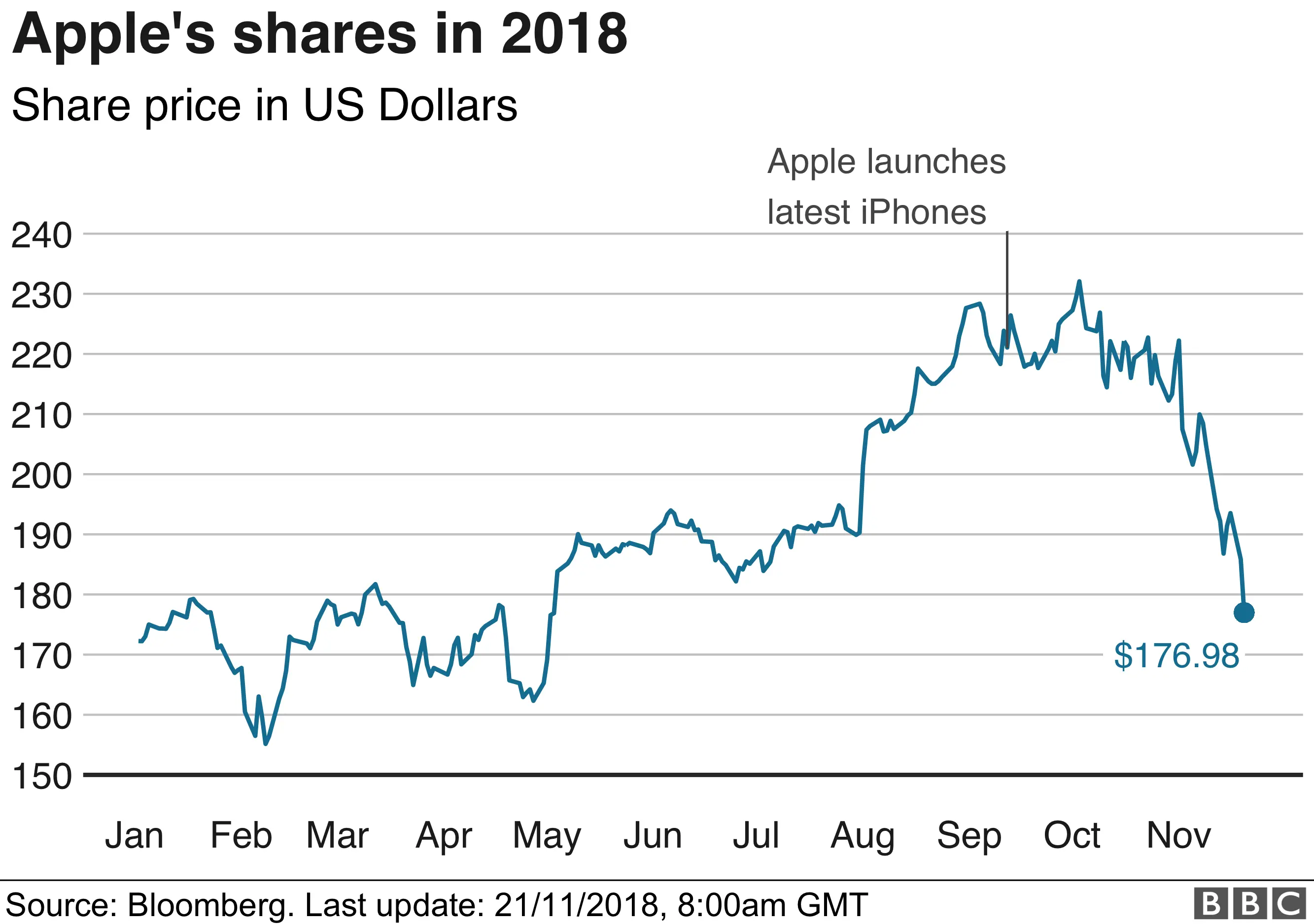
In periods of economic uncertainty and rising interest rates, there is often a broader market rotation away from “growth stocks” (companies valued for their future earnings potential) towards “value stocks” (companies with stable earnings, lower valuations, and often higher dividends). Apple, while a highly profitable company, has historically been categorized more as a growth stock. As market sentiment shifts, investors may reduce their exposure to high-growth, high-valuation names in favor of more defensive or value-oriented investments. This broader market dynamic, driven by macro trends and risk aversion, can exert downward pressure on Apple’s stock, irrespective of company-specific news.
In conclusion, Apple’s stock performance is being shaped by a complex interplay of forces. While the company remains a powerhouse with immense brand loyalty and a robust ecosystem, it is not immune to the gravitational pull of a challenging macroeconomic environment, the natural maturation of its core product categories, intense competition, escalating regulatory pressures, and geopolitical risks. Investors are carefully weighing these factors, leading to a recalibration of expectations and, consequently, pressure on the stock. Navigating these headwinds will require Apple to demonstrate not only its renowned resilience and operational excellence but also its continued capacity for groundbreaking innovation and strategic adaptation in an increasingly complex global landscape.
aViewFromTheCave is a participant in the Amazon Services LLC Associates Program, an affiliate advertising program designed to provide a means for sites to earn advertising fees by advertising and linking to Amazon.com. Amazon, the Amazon logo, AmazonSupply, and the AmazonSupply logo are trademarks of Amazon.com, Inc. or its affiliates. As an Amazon Associate we earn affiliate commissions from qualifying purchases.