
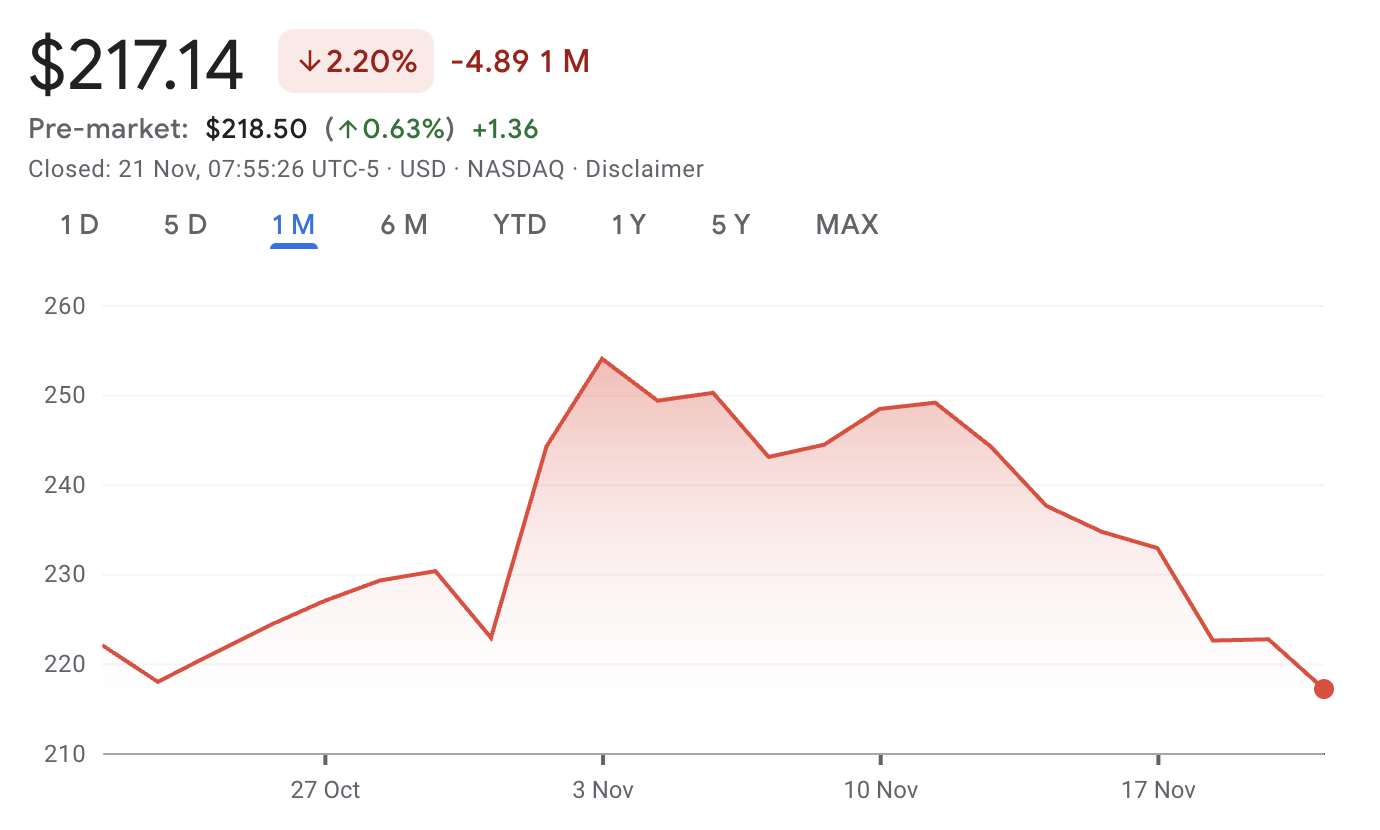
Amazon has long been the titan of the e-commerce and cloud computing worlds, often viewed by investors as a “bulletproof” addition to any growth-oriented portfolio. However, even market leaders are not immune to the gravity of shifting economic cycles and internal structural adjustments. When Amazon’s stock experiences a downward trend, it sends ripples through the broader market, prompting investors to scrutinize the underlying health of the global economy and the tech sector at large.
The recent volatility in Amazon’s share price is rarely the result of a single factor. Instead, it is a complex intersection of macroeconomic pressures, a deceleration in core business segments, and the immense capital requirements of the nascent AI era. Understanding why Amazon stock is dropping requires a deep dive into the financial mechanics of its diverse business model and the external environment in which it operates.
The Macroeconomic Headwinds: Why the Broader Market is Cooling
The primary driver behind any major tech stock’s decline is often found in the broader economic climate. As a massive conglomerate with its hands in retail, logistics, and digital services, Amazon is highly sensitive to the levers of monetary policy and consumer behavior.
Interest Rates and the Discounted Cash Flow Problem
Growth stocks like Amazon are valued based on their future cash flows. When the Federal Reserve maintains elevated interest rates to combat inflation, the “discount rate” applied to those future earnings increases. In simple financial terms, a dollar earned ten years from now is worth less today when interest rates are high than when they are near zero. This fundamental principle of valuation often leads institutional investors to rotate out of high-multiples tech stocks and into more conservative, yield-bearing assets, putting downward pressure on Amazon’s stock price.
Softening Consumer Sentiment and Discretionary Spending
Amazon’s retail division remains the face of the company, and its performance is tied directly to the health of the consumer. While inflation has cooled from its peaks, the cumulative effect of rising prices over the last several years has begun to exhaust household savings. When consumers feel the pinch of high grocery bills, rent, and fuel costs, they often scale back on discretionary purchases—the very items that drive Amazon’s high-volume retail growth. A slowdown in “Units Shipped” or a lower average order value can signal to the market that the retail engine is losing steam.
The Cloud Conundrum: AWS Growth and Market Saturation
For years, Amazon Web Services (AWS) has been the company’s primary profit engine. While the retail side often operates on razor-thin margins, AWS has historically provided the massive cash flow needed to fund Amazon’s ambitious moonshots. However, the narrative surrounding AWS has shifted from one of infinite growth to one of cautious optimization.
Deceleration in the Cloud Sector
Investors have become hypersensitive to any signs of slowing growth in AWS. As the cloud market matures, the law of large numbers makes it increasingly difficult for Amazon to post the 30% or 40% year-over-year growth rates that were common five years ago. Furthermore, during periods of economic uncertainty, corporate clients look to “optimize” their cloud spend. Instead of expanding their digital footprint, many enterprises are focusing on cutting costs within their existing cloud infrastructure, which directly impacts Amazon’s revenue growth.
The High Cost of the AI Arms Race
While Artificial Intelligence is a massive long-term opportunity for AWS, it is currently a capital-intensive endeavor. To compete with Microsoft’s partnership with OpenAI and Google’s Gemini, Amazon must invest billions in specialized hardware—specifically NVIDIA’s H100s and its own proprietary chips like Trainium and Inferentia. This surge in Capital Expenditure (CapEx) can weigh on short-term free cash flow. If investors feel that the “return on investment” for AI is too far in the future, they may punish the stock for its heavy spending in the present.
Operational Challenges in the Retail Sector
Beyond the macro environment and cloud dynamics, Amazon’s core retail business faces internal and competitive hurdles that contribute to investor skittishness.
Logistics Inflation and Labor Costs
Amazon operates one of the most complex logistics networks in the world. This network is vulnerable to fluctuations in fuel prices and labor market tightness. Over the past few years, Amazon has had to significantly increase its starting wages to attract and retain workers in its fulfillment centers. When labor costs rise and delivery efficiency hits a plateau, operating margins in the North American and International segments suffer. Investors closely monitor the “Cost to Serve” metric; if Amazon cannot keep this figure in check, the stock often reflects that failure.
The Rise of Low-Cost Global Competitors
The competitive landscape of e-commerce is changing. New entrants like Temu and Shein have utilized a direct-from-manufacturer model in China to offer ultra-low prices that challenge Amazon’s dominance in the value segment. While Amazon remains the king of convenience and speed via Prime, the price-sensitive consumer is increasingly being lured away by these aggressive competitors. To combat this, Amazon has had to adjust its fee structures for sellers and invest more in advertising, both of which can disrupt the traditional profit margins of the retail business.
Regulatory Scrutiny and Legal Pressure
The “Big Tech” discount is a real phenomenon where companies trade at lower multiples due to the constant threat of government intervention. Amazon is currently in the crosshairs of several regulatory bodies globally, which creates a “dark cloud” of uncertainty over the stock.
The FTC and Antitrust Litigation
The U.S. Federal Trade Commission (FTC) has launched significant antitrust lawsuits against Amazon, alleging that the company uses its power to stifle competition and inflate prices for consumers. While these legal battles often take years to resolve, the threat of a potential breakup or forced changes to the “Buy Box” algorithm makes institutional investors nervous. Legal uncertainty is something the market hates, and any negative headline regarding antitrust proceedings can trigger a sell-off.
European Regulatory Hurdles
In Europe, the Digital Markets Act (DMA) has forced Amazon to change how it handles third-party seller data and how it presents products to consumers. Compliance with these evolving regulations is not just a legal headache; it often requires fundamental changes to the company’s business model that can reduce efficiency or diminish the “flywheel” effect that has made Amazon so successful.
Investor Outlook: Is This a Correction or a Trend?
When analyzing why Amazon stock is dropping, it is essential to distinguish between a temporary market correction and a fundamental breakdown of the business model.
Valuation Metrics and Forward P/E
Historically, Amazon has always looked “expensive” on a Price-to-Earnings (P/E) basis because it reinvests almost all of its profits back into the company. However, as the company matures, investors are looking for more traditional signs of profitability. If the stock price drops while earnings are actually growing, the P/E ratio compresses, potentially making the stock a “value” play. Many analysts watch the Price-to-Sales (P/S) and Enterprise Value-to-EBITDA (EV/EBITDA) ratios to determine if the stock has reached an oversold territory.

Long-term Growth Catalysts
Despite the current downward pressure, it is important to note the potential catalysts that could reverse the trend. Amazon’s advertising business is currently one of its fastest-growing and highest-margin segments. By leveraging the data of millions of shoppers, Amazon has built an ad platform that rivals Google and Meta. If the advertising revenue continues to grow at its current pace, it could eventually offset the slowing growth in AWS and the high costs of the retail division.
Furthermore, Amazon’s integration of AI into its logistics—using machine learning to predict where inventory should be placed before a customer even orders it—could lead to significant margin expansion in the future. The stock’s current drop may simply be the market’s way of “resetting” expectations as Amazon transitions from a pure-play growth company into a more mature, diversified industrial and technological powerhouse.
In conclusion, the decline in Amazon’s stock is a multifaceted issue. It is a reaction to high interest rates, a cooling of the post-pandemic cloud boom, the rising costs of competing in the AI space, and persistent regulatory threats. For the savvy investor, understanding these drivers is the first step in determining whether the current dip is a sign of a company in trouble or a rare opportunity to buy into a global leader at a discount. As with any investment in the “Magnificent Seven,” the key lies in balancing short-term volatility against the long-term structural dominance that Amazon continues to hold over the modern economy.
aViewFromTheCave is a participant in the Amazon Services LLC Associates Program, an affiliate advertising program designed to provide a means for sites to earn advertising fees by advertising and linking to Amazon.com. Amazon, the Amazon logo, AmazonSupply, and the AmazonSupply logo are trademarks of Amazon.com, Inc. or its affiliates. As an Amazon Associate we earn affiliate commissions from qualifying purchases.