
In the early 1990s, the landscape of personal computing was dominated by two-dimensional interfaces, spreadsheets, and basic word processing. The idea of immersive, three-dimensional graphics was largely confined to high-end workstations or expensive arcade cabinets. However, in 1993, three engineers met at a Denny’s restaurant in East San Jose to discuss a radical shift in computing architecture. Those three individuals—Jensen Huang, Chris Malachowsky, and Curtis Priem—founded Nvidia, a company that would eventually evolve from a niche graphics card manufacturer into the backbone of the global artificial intelligence infrastructure.
The founding of Nvidia was not merely a business venture; it was a technical gamble on the future of specialized processing. At a time when the Central Processing Unit (CPU) was considered the sole brain of the computer, the founders hypothesized that a specialized processor could handle the mathematically intensive tasks of graphics and parallel processing more efficiently. This vision laid the groundwork for the modern Graphics Processing Unit (GPU) and, decades later, the hardware necessary to train large language models.

The Genesis of the GPU: Technical Pedigree and the Silicon Valley Kitchen
The technical foundation of Nvidia was built upon the collective expertise of its founders, who were already seasoned veterans in the semiconductor and software industries. Jensen Huang, who has served as the company’s CEO since its inception, brought a deep understanding of microprocessor design from his time at LSI Logic and AMD. Chris Malachowsky and Curtis Priem were both high-level engineers at Sun Microsystems, a titan of the workstation era.
The Founding Trio’s Technical Pedigree
When Huang, Malachowsky, and Priem sat down to map out their new venture, they recognized a fundamental bottleneck in Moore’s Law. While CPUs were getting faster, they were inherently “serial” processors, designed to handle one complex task at a time. The founders realized that the next frontier of computing—3D graphics—required “parallel” processing, where thousands of simple mathematical operations are performed simultaneously.
Curtis Priem, the primary architect of the company’s first products, had already designed the first graphics processor for the PC (the IBM Professional Graphics Controller). His technical objective for Nvidia was to create a hardware-software interface that could democratize high-performance graphics. Chris Malachowsky focused on the hardware engineering and design side, ensuring that the theoretical architectures could actually be manufactured on silicon.
Identifying the Void in 3D Graphics
The early 1990s saw the rise of the “multimedia PC.” However, the hardware was struggling to keep up with the demands of real-time rendering. The founders chose to target the video game market not because they were gamers, but because gaming represented the most computationally demanding consumer application. By solving the technical hurdles of 3D gaming, they believed they could fund the development of a more general-purpose parallel computing platform.
The company’s first major product, the NV1, was an ambitious attempt to integrate 3D graphics, 2D graphics, and audio onto a single chip. While it utilized a unique “quadric” surface rendering technique instead of the industry-standard triangles, it proved that a single dedicated chip could drastically improve the visual fidelity of home computers.
The Architectural Breakthroughs that Defined an Industry
After the mixed success of the NV1, Nvidia pivoted toward the industry-standard “triangle-based” rendering that was being adopted by Microsoft’s DirectX API and Silicon Graphics’ OpenGL. This shift led to a series of architectural breakthroughs that cemented Nvidia’s position as a leader in technical innovation.
RIVA TNT and the GeForce 256
The release of the RIVA TNT (TwiN Texel) in 1998 was a watershed moment. It featured a 128-bit pipeline and was capable of processing two pixels per clock cycle, offering unprecedented performance for the era. However, it was the 1999 launch of the GeForce 256 that changed the industry forever.
Nvidia marketed the GeForce 256 as the “world’s first GPU.” Technically, this was defined by the integration of Transform and Lighting (T&L) hardware directly onto the graphics chip. Previously, the CPU had to handle these complex geometric calculations. By offloading T&L to the GPU, Nvidia freed up the CPU for other tasks and allowed for a massive increase in the complexity of 3D scenes. This was the first major step toward “accelerated computing,” where specialized hardware takes over specific, heavy-duty workloads from the general-purpose processor.

The Invention of the Programmable Shader
By the early 2000s, Nvidia introduced the GeForce 3, the first GPU to feature programmable shaders. This was a critical technological shift. Before this, graphics chips had “fixed-function” pipelines—they could only do exactly what they were hardwired to do. Programmable shaders allowed developers to write code that ran directly on the GPU, enabling realistic water reflections, dynamic lighting, and complex textures. This programmability was the “Trojan horse” that would eventually lead to the use of GPUs for scientific research and artificial intelligence.
CUDA: From Graphics Processor to Universal Compute
While Nvidia was dominating the gaming world, a quiet revolution was happening in the background. Scientific researchers began to realize that the thousands of small cores inside an Nvidia GPU, designed to calculate pixel colors, could also be used to calculate fluid dynamics, weather patterns, and molecular biology simulations.
The Software Layer That Changed Everything
In 2006, under Jensen Huang’s direction, Nvidia released CUDA (Compute Unified Device Architecture). This was a software platform and programming model that allowed developers to use the C++ programming language to run general-purpose code on the GPU.
This was a massive technical risk. Adding CUDA support required significant “die area” on every chip, which increased manufacturing costs without providing an immediate benefit to gamers, who were still the company’s primary customers. However, the founders understood that if they could make parallel programming accessible, they could transform the GPU into a universal computational engine.
Bridging the Gap Between Hardware and High-Level Languages
CUDA removed the need for scientists to “disguise” their data as pixels or triangles to get it to run on a GPU. It provided a direct path to the hardware’s massive parallel throughput. This development effectively birthed the field of GPGPU (General-Purpose computing on Graphics Processing Units). Without the software foresight of the founders, the hardware would have remained a niche tool for visual media. Instead, CUDA became the standard for high-performance computing, setting the stage for the deep learning explosion.
Powering the AI Frontier: Data Centers and Deep Learning
The true brilliance of the founders’ vision became apparent in 2012, when a neural network called AlexNet won the ImageNet competition by a wide margin. AlexNet was trained on two Nvidia GTX 580 GPUs. This event signaled to the tech world that GPUs were not just for games or physics simulations—they were the ideal architecture for neural networks.
Tensor Cores and the Rise of Large Language Models
Nvidia didn’t just sit back and let researchers use their gaming cards. They began designing chips specifically for the data center. The introduction of “Tensor Cores” in the Volta architecture marked a shift from purely graphical math to the specialized matrix multiplication required for deep learning.
Modern AI models, including Large Language Models (LLMs) like GPT-4, require trillions of operations to train. The founders’ decision to focus on throughput and interconnectivity (via technologies like NVLink) allowed Nvidia to build “super-chips” like the H100 and the more recent Blackwell architecture. These are not merely graphics cards; they are massive arrays of processors designed to move and process data at speeds that were unthinkable when the founders were at Sun Microsystems.
The Omniverse and the Future of Digital Twins
The founders’ vision has now expanded into the “Omniverse,” a platform for building and operating industrial metaverse applications. By combining their expertise in real-time ray tracing (RTX) with AI, Nvidia is enabling the creation of “digital twins”—physically accurate virtual representations of factories, cities, and climate systems. This represents the ultimate convergence of the founders’ three-decade journey: using specialized hardware to simulate the complexities of the physical world in real-time.
Legacy of Innovation: Shaping the Next Decade of Technology
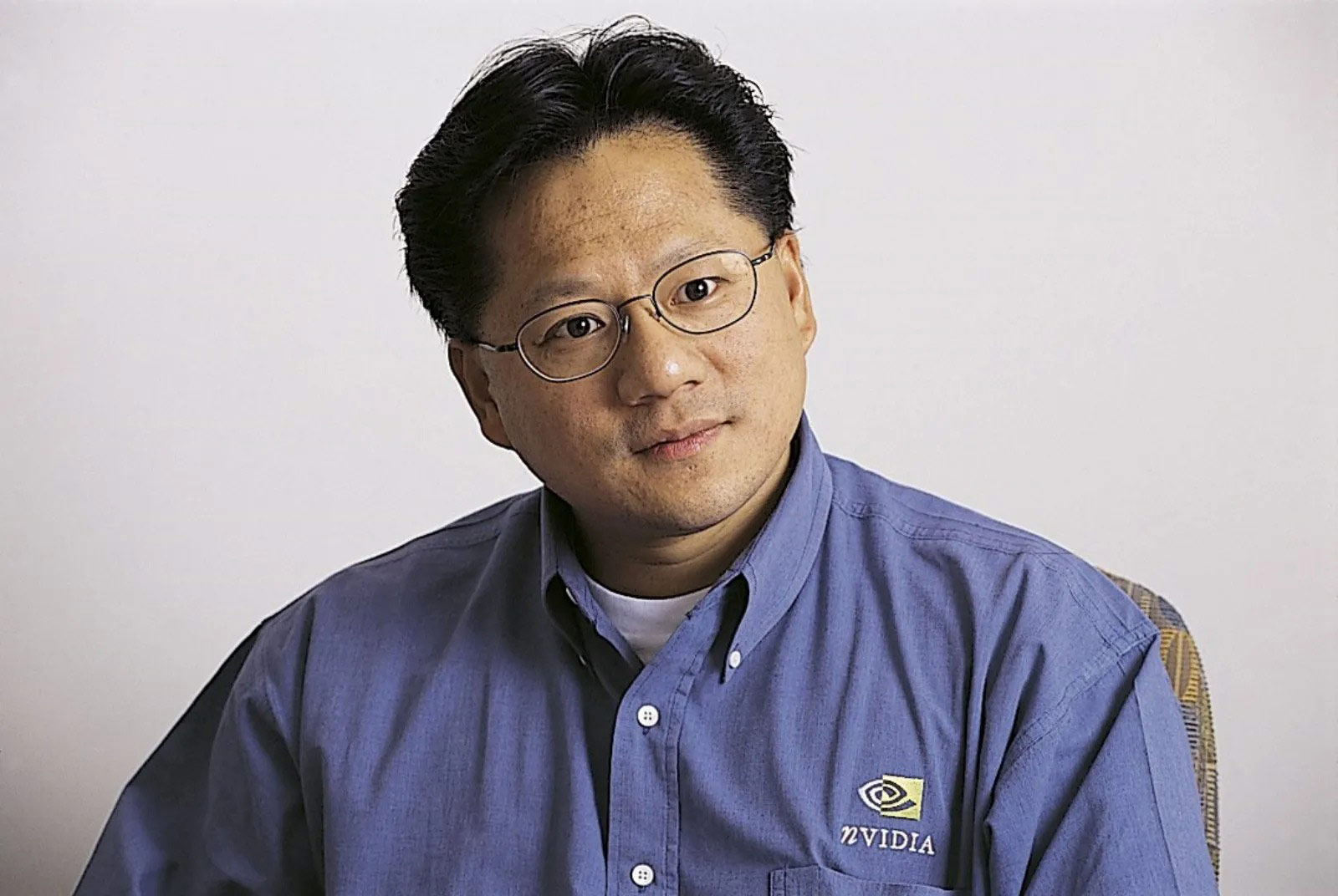
Thirty years after its founding, Nvidia’s influence on the technology sector is peerless. Jensen Huang remains one of the longest-serving CEOs in the industry, maintaining a “flat” organizational structure that encourages rapid iteration and technical risk-taking. Chris Malachowsky remains a Fellow at the company, ensuring the engineering culture stays true to its roots, while Curtis Priem’s early architectural decisions continue to echo in the way modern chips handle data.
The story of who started Nvidia is a story of technical foresight. Huang, Malachowsky, and Priem did not just start a company to build faster video cards; they started a company to solve the problem of parallel computing. By identifying that the CPU could not handle the future of visual and intelligence-based workloads, they engineered a new category of technology that has become the foundational infrastructure for the digital age. From the first NV1 chip to the massive AI factories of today, the founders’ commitment to accelerated computing has redefined what is possible in silicon and software.
aViewFromTheCave is a participant in the Amazon Services LLC Associates Program, an affiliate advertising program designed to provide a means for sites to earn advertising fees by advertising and linking to Amazon.com. Amazon, the Amazon logo, AmazonSupply, and the AmazonSupply logo are trademarks of Amazon.com, Inc. or its affiliates. As an Amazon Associate we earn affiliate commissions from qualifying purchases.