
The landscape of modern technology, from the operating system running on your laptop to the cloud infrastructure powering the global internet, can largely be traced back to a single partnership formed in the mid-1970s. When we ask who started Microsoft, the names Bill Gates and Paul Allen immediately come to the forefront. However, the story of Microsoft’s inception is more than just a biography of two men; it is a chronicle of a technological paradigm shift. It is the story of how a hobbyist’s curiosity about microprocessors transformed into a global software empire that defined the personal computing revolution.
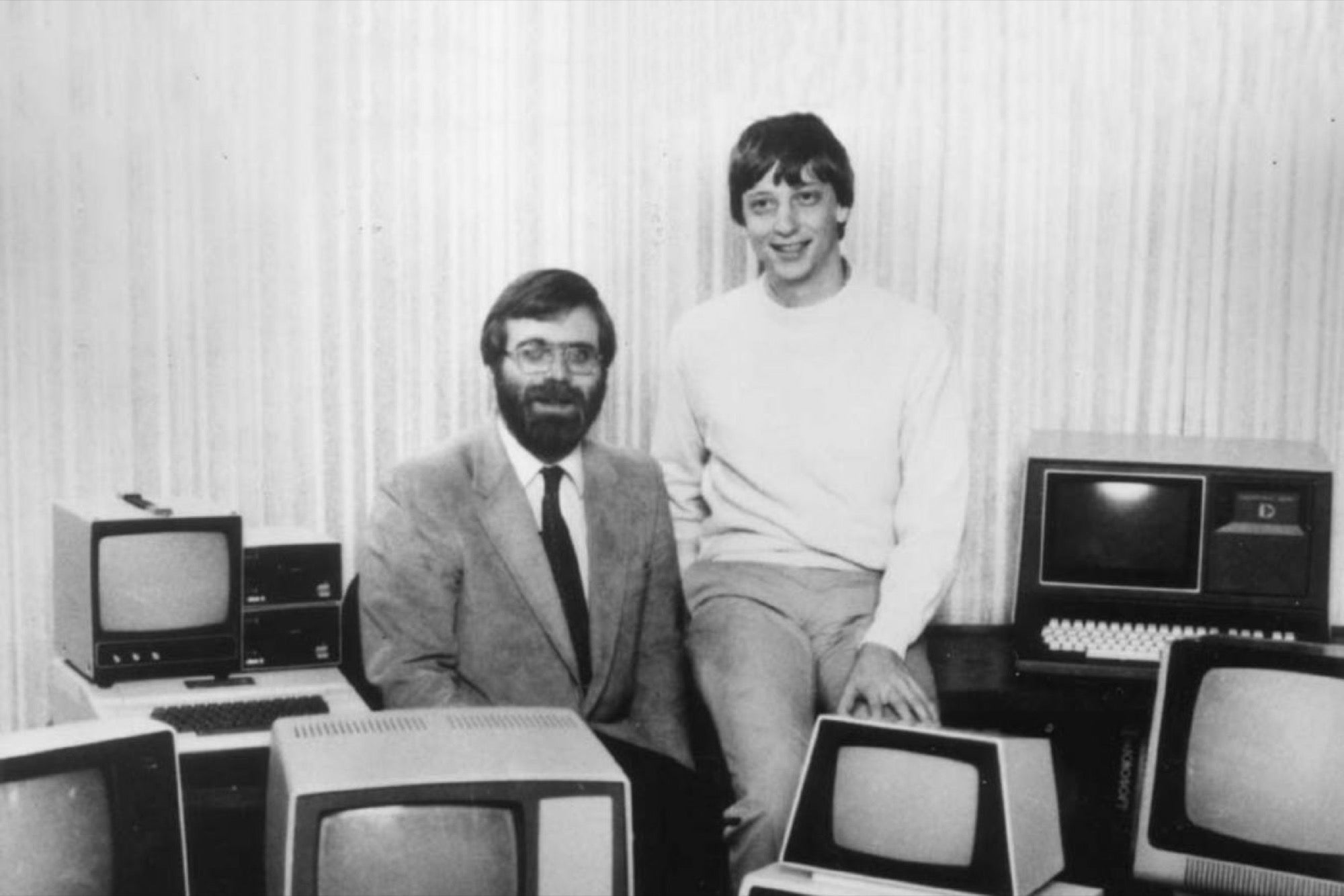
The Visionary Duo: Bill Gates and Paul Allen
The foundation of Microsoft was built on a shared obsession with the potential of computers at a time when they were still the size of refrigerators and reserved for large corporations or academic institutions. Bill Gates and Paul Allen were childhood friends who met at Lakeside School in Seattle. It was here, in the late 1960s, that they first encountered a Teletype terminal connected to a mainframe.
The Lakeside Connection and Early Programming
Gates and Allen spent countless hours debugging systems and learning the intricacies of software at an age when most people had never seen a computer. Their early technical synergy was evident when they formed the “Lakeside Programmers Group.” They weren’t just users; they were explorers of system architecture. They famously found bugs in the Computer Center Corporation’s software to earn free terminal time, demonstrating a deep, intuitive understanding of how code interacts with hardware. This period was crucial because it allowed them to master languages like FORTRAN and LISP, providing the technical vocabulary they would later use to build an industry.
The Shared Technical Vision
While Bill Gates was often noted for his relentless focus and mathematical brilliance, Paul Allen was the “idea man” who kept a pulse on the rapidly evolving hardware market. In 1974, it was Allen who saw a magazine cover featuring the MITS Altair 8800—the world’s first “minicomputer” kit. He realized that if hardware was becoming small and affordable, the world would need sophisticated software to make that hardware useful. He convinced Gates to drop out of Harvard to seize this moment. This realization was the technical spark that shifted their focus from specialized mainframe programming to the nascent world of microcomputing.
The Technical Spark: Developing BASIC for the Altair 8800
The birth of Microsoft as a formal entity in 1975 was predicated on a specific technical achievement: the creation of a BASIC (Beginners’ All-purpose Symbolic Instruction Code) interpreter for the Altair 8800. At the time, the Altair used the Intel 8080 processor, which had a very limited instruction set and almost no existing software ecosystem.
Interpreting a New Era
Gates and Allen, along with Monte Davidoff, wrote a version of BASIC that could run within the Altair’s incredibly constrained 4KB of memory. This was a feat of high-level optimization. They had to write code that was both functional and incredibly “tight,” ensuring that the interpreter left enough room for the user to actually run their own programs. Without a physical Altair to test on, Allen wrote a simulator for the Intel 8080 on a PDP-10 mainframe, while Gates focused on the interpreter code. When Allen flew to Albuquerque to demonstrate the software to MITS, it worked on the very first try. This was the moment Microsoft (originally stylized as “Micro-Soft”) was born.
Establishing the Software-First Model
By successfully licensing their BASIC to MITS, Gates and Allen established a revolutionary business model in the tech world: the independent software vendor. Before Microsoft, software was often bundled for free with hardware or custom-built for specific machines. Gates and Allen proved that software could be a standalone product that could be licensed to multiple hardware manufacturers. This distinction is vital in technology history; it moved the value proposition of computing from the “iron” (the hardware) to the “code” (the software).
Engineering the Standard: The Evolution of MS-DOS

If BASIC put Microsoft on the map, it was the development of the Disk Operating System (DOS) that made them the dominant force in technology. In 1980, IBM approached Microsoft to provide an operating system for their upcoming Personal Computer (PC). Microsoft did not actually have an OS at the time, but their technical intuition led them to a solution that would change the world.
The QDOS Architecture and Refinement
Microsoft acquired the rights to 86-DOS (originally called QDOS, or “Quick and Dirty Operating System”) from Seattle Computer Products. Under the technical leadership of Gates and Allen, Microsoft refined this system to meet IBM’s rigorous standards. They transformed it into MS-DOS, a command-line interface that managed the communication between the computer’s hardware and the software applications. This required a deep understanding of memory management, file systems, and peripheral interfacing. MS-DOS became the “translator” that allowed software developers to write programs for the IBM PC without needing to understand the underlying circuitry of the machine.
The IBM Integration and Portability
The genius of Microsoft’s technical strategy with MS-DOS was the decision to retain the rights to the software while licensing it to IBM. This allowed Microsoft to license MS-DOS to other “IBM-compatible” manufacturers. From a tech perspective, this created a unified software environment. For the first time, a program written for one machine could run on another, provided they both ran MS-DOS. This standardization accelerated the growth of the software industry, as developers now had a massive, uniform install base to target.
The Graphical Leap: The Development of Windows
As the 1980s progressed, the technical limitations of command-line interfaces became apparent. Users wanted a more intuitive way to interact with their machines. Drawing inspiration from research at Xerox PARC and the early work of Apple, Microsoft began developing a Graphical User Interface (GUI) that would sit on top of MS-DOS.
From DOS to the Graphical User Interface (GUI)
The release of Windows 1.0 in 1985 was a significant technical pivot. It introduced the concept of multitasking, allowing users to switch between different programs visually. However, it wasn’t until Windows 3.0 and 3.1 in the early 90s that the technical architecture became robust enough to support high-performance computing. Microsoft’s engineers had to solve the massive challenge of “device independence”—ensuring that Windows could support thousands of different monitors, printers, and graphics cards. This was achieved through the creation of a complex layer of drivers and the Graphics Device Interface (GDI).
Building the Software Ecosystem: Office and Beyond
With the technical foundation of Windows established, Microsoft began building an ecosystem of productivity software. Microsoft Office (Word, Excel, PowerPoint) was engineered to integrate seamlessly with the Windows environment. This was not just a branding move; it was a technical one. By using shared code libraries and OLE (Object Linking and Embedding) technology, Microsoft allowed data to move fluidly between applications. This level of technical integration made the Windows/Office combination the “gold standard” for professional and personal computing for decades.
Technological Legacy: From Microchips to the Cloud
Today, the company started by Bill Gates and Paul Allen has moved far beyond the desktop. While the founders have moved on from daily operations, the technical DNA they instilled—focusing on software as a platform—remains the core of the company’s identity.
The Shift to Azure and Cloud Infrastructure
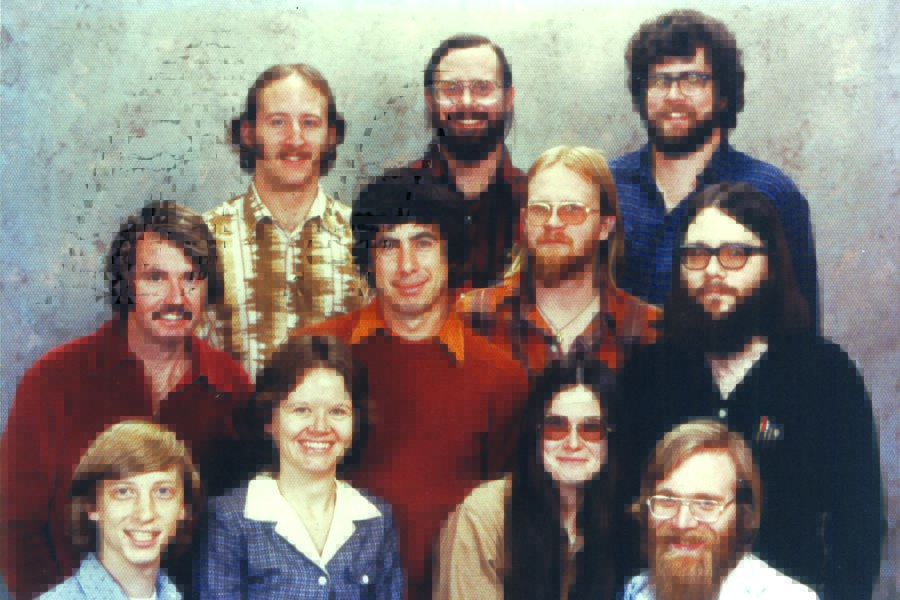
Under the leadership of Satya Nadella, Microsoft underwent another massive technical transformation, pivoting toward the cloud. Microsoft Azure is the modern evolution of the “operating system” concept. Instead of managing a single PC, Azure manages massive data centers distributed globally. The technical challenges shifted from memory management on a single chip to distributed systems, virtualization, and massive-scale data processing. This transition proved that the company’s foundational focus on “platforms for developers” was infinitely scalable.
The Future of AI and Beyond
Microsoft’s recent investments in Artificial Intelligence (AI) and its partnership with OpenAI represent the latest frontier for the company. By integrating Large Language Models (LLMs) into their tech stack through “Copilots,” Microsoft is once again redefining how humans interact with technology. Just as Gates and Allen envisioned a “computer on every desk and in every home,” the modern Microsoft envisions an “AI assistant for every person.”
The story of who started Microsoft is a story of two friends who saw the future in a line of code. Bill Gates and Paul Allen didn’t just build a company; they built the technical architecture of the information age. By understanding the intersection of hardware and software better than anyone else in 1975, they laid the groundwork for the digital world we inhabit today. Their legacy is not just a brand, but a fundamental shift in how humanity uses tools to process information, solve problems, and connect with the world.
aViewFromTheCave is a participant in the Amazon Services LLC Associates Program, an affiliate advertising program designed to provide a means for sites to earn advertising fees by advertising and linking to Amazon.com. Amazon, the Amazon logo, AmazonSupply, and the AmazonSupply logo are trademarks of Amazon.com, Inc. or its affiliates. As an Amazon Associate we earn affiliate commissions from qualifying purchases.