
Workday, Inc. has established itself as a titan in the enterprise cloud applications sector, specifically dominating the realms of human capital management (HCM) and financial management. As a cornerstone of the modern corporate tech stack, the question of “who owns Workday” is not merely a matter of curiosity for retail investors; it is a vital inquiry into the governance, stability, and future trajectory of a company that handles the sensitive data of thousands of global organizations. Understanding the ownership structure of Workday requires a deep dive into its dual-class stock system, its founding visionaries, and the massive institutional engines that fuel its market valuation.

The Architect’s Control: Founders and the Dual-Class Structure
To understand who truly “owns” Workday, one must look beyond the total number of shares and examine the distribution of voting power. Like many high-growth technology companies that emerged in the late 2000s, Workday employs a dual-class share structure. This mechanism is designed to protect the long-term vision of the founders from the short-term pressures of Wall Street.
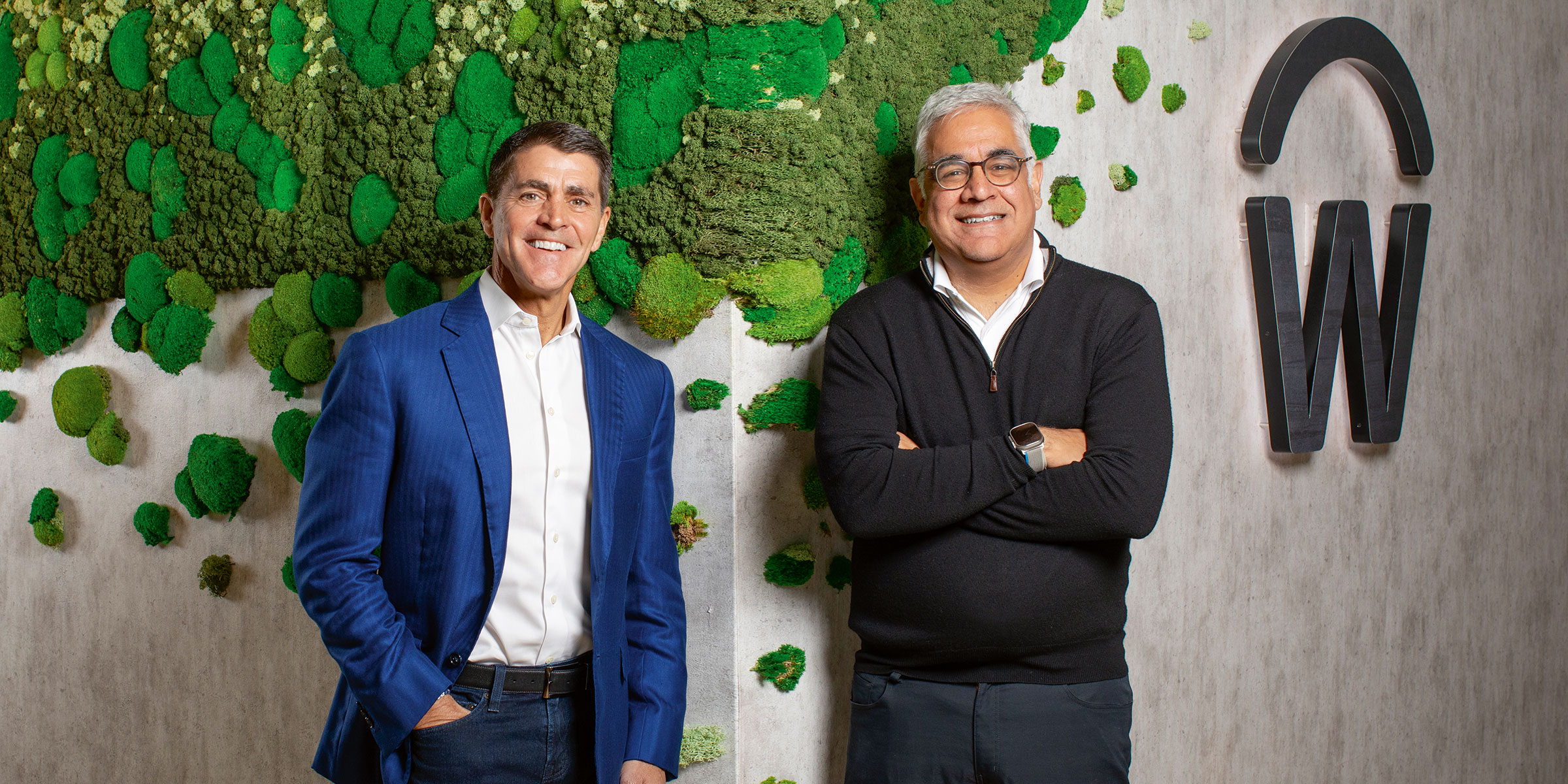
Aneel Bhusri and David Duffield
The story of Workday’s ownership begins with its founders, Aneel Bhusri and David Duffield. Both are veterans of the enterprise software industry, having previously led PeopleSoft before its hostile takeover by Oracle. This experience heavily influenced how they structured Workday.
David Duffield, the co-founder and former chairman, and Aneel Bhusri, the co-founder and current executive chair, hold a significant portion of Class B common stock. While Class A shares—those traded publicly on the NASDAQ under the ticker WDAY—carry one vote per share, Class B shares carry ten votes per share. This means that even if the founders hold a minority of the total equity, they maintain a commanding majority of the voting power. This “founder-led” model ensures that the strategic direction of the company remains in the hands of those who built its culture and core technology.
The Strategic Intent of Voting Control
The concentration of voting power in the hands of Bhusri and Duffield is a deliberate financial strategy. In the volatile world of SaaS (Software as a Service), long-term R&D investments often take years to yield a return. By maintaining control, the founders can ignore quarterly fluctuations in favor of decade-long growth cycles. For investors, this means that buying Workday stock is as much a bet on the founders’ leadership as it is on the software itself. As of recent filings, the founders and executive officers continue to exert enough influence to effectively decide most matters requiring shareholder approval, including board elections and potential acquisitions.
The Institutional Giants: Who Holds the Equity?
While the founders hold the steering wheel, the fuel for Workday’s multi-billion dollar valuation comes from institutional investors. Because Workday is a member of the S&P 500 and the NASDAQ-100, it is a staple in many of the world’s largest mutual funds and exchange-traded funds (ETFs).
Vanguard and BlackRock: The Passive Powerhouses
The largest “owners” of Workday in terms of sheer equity volume are the institutional heavyweights: The Vanguard Group and BlackRock, Inc. These firms own millions of shares on behalf of their clients. Vanguard typically holds a stake of approximately 8% to 10%, while BlackRock follows closely behind.
It is important to distinguish between “active” and “passive” ownership here. For institutions like Vanguard, their ownership is largely passive; they hold Workday stock because it is a component of major indices. However, their presence provides the liquidity and price stability necessary for a large-cap tech company. When these institutions increase their holdings, it often signals a “buy” confidence to the broader market, reinforcing Workday’s status as a blue-chip tech investment.
T. Rowe Price and Fidelity
Beyond the index funds, active management firms like T. Rowe Price and Fidelity Investments often hold significant positions in Workday. These firms conduct rigorous fundamental analysis, looking at Workday’s subscription revenue growth, churn rates, and operating margins. Their ownership suggests a belief in Workday’s ability to outpace its competitors in the cloud finance space. When active managers hold large stakes, they occasionally engage with management regarding fiscal discipline and capital allocation, though the dual-class structure limits their ability to force changes.
Financial Performance as a Driver of Ownership Value
Ownership is only as valuable as the underlying business performance. Workday’s ownership structure is supported by a robust financial engine that has transitioned from aggressive “growth at all costs” to a more balanced profile of growth and profitability.
The Subscription Revenue Model
Workday’s valuation—and therefore the wealth of its owners—is primarily driven by its subscription revenue. Unlike legacy software providers that relied on one-time licensing fees, Workday generates predictable, recurring income. This “sticky” revenue model is highly attractive to long-term institutional owners because it provides a margin of safety. With a retention rate typically exceeding 95%, the company has a guaranteed baseline of income that allows it to reinvest in AI and machine learning without jeopardizing its balance sheet.
Market Capitalization and Valuation Metrics
With a market capitalization that has frequently hovered between $50 billion and $70 billion, Workday is a heavyweight in the software sector. Analysts often value the company based on a multiple of its Enterprise Value to Sales (EV/Sales) or its Price to Free Cash Flow. For the “owners,” the focus has shifted in recent years toward GAAP profitability. As Workday has scaled, it has demonstrated an ability to generate significant free cash flow, which can eventually be used for share buybacks or dividends—moves that directly return value to the shareholders.
The Competitive Landscape: Defending Ownership Stake
In the world of business finance, ownership also implies a responsibility to defend market share. Workday does not exist in a vacuum; it is in a perpetual struggle for dominance against legacy giants and nimble newcomers.
The Rivalry with Oracle and SAP
The primary threat to Workday’s value—and thus the wealth of its owners—comes from Oracle and SAP. Both companies have pivoted aggressively to the cloud. Oracle, led by Larry Ellison (the very man who initiated the PeopleSoft takeover), remains Workday’s fiercest rival. Every time Oracle wins a large enterprise contract over Workday, it theoretically impacts Workday’s stock price and the net worth of its owners. However, Workday’s “Power of One” architecture—a single codeline and a single data model—has historically given it a competitive edge in lower total cost of ownership (TCO) for customers.
Expansion into Financial Management
While Workday started as an HR-focused platform, its future ownership value is heavily tied to its Financial Management suite. The market for cloud-based ERP (Enterprise Resource Planning) for finance is massive and less saturated than the HR market. By capturing the CFO’s office, Workday increases its “moat,” making it harder for competitors to displace them. For investors, this diversification is key to long-term capital appreciation.
Future Outlook: Risks and Governance Evolution
As we look toward the next decade, the ownership profile of Workday may evolve. The dual-class structure, while common, is often a point of contention for corporate governance advocates who prefer a “one share, one vote” policy.
The Potential for Succession and M&A
One of the most significant financial questions facing Workday is succession. As the founders age and potentially reduce their active involvement, how will the voting power shift? Furthermore, Workday has historically been an acquirer rather than a target, purchasing companies like Adaptive Insights to bolster its planning capabilities. However, in the consolidating tech industry, there is always the faint possibility of a mega-merger. The current ownership structure makes a hostile takeover nearly impossible, ensuring that any exit or merger would have to be on terms favorable to Bhusri, Duffield, and the board.

Conclusion: A Balanced Ecosystem of Power
In summary, the “ownership” of Workday is a layered ecosystem. At the top sit Aneel Bhusri and David Duffield, who hold the legal and voting keys to the kingdom. Beneath them are the massive institutional investors like Vanguard and BlackRock, who provide the capital and market legitimacy that sustain the company’s multi-billion dollar valuation.
For the individual investor or the financial analyst, Workday represents a classic example of a modern, founder-led tech firm. It combines the stability of institutional backing with the visionary control of its creators. As the company continues to integrate AI into its core offerings and expands its footprint in the financial sector, its owners—both large and small—will be watching closely to see if this pioneer of the cloud can continue to deliver outsized returns in an increasingly competitive global market.
aViewFromTheCave is a participant in the Amazon Services LLC Associates Program, an affiliate advertising program designed to provide a means for sites to earn advertising fees by advertising and linking to Amazon.com. Amazon, the Amazon logo, AmazonSupply, and the AmazonSupply logo are trademarks of Amazon.com, Inc. or its affiliates. As an Amazon Associate we earn affiliate commissions from qualifying purchases.